Table of Contents
- A Capitol Morning in June 1812
- From Revolution’s Embers to Renewed Hostility
- Impressment, Blockades, and Wounded Honor
- War Hawks Rise: The Fiery Voices in Congress
- James Madison’s Calculated Gamble
- Debating Destiny: The Bitter Battle in Congress
- June 18, 1812: The War of 1812 Declaration Is Signed
- A Nation Divided: Jubilation, Fear, and Outrage
- The War Spreads to the Frontier and the Lakes
- Native Nations Between Empires
- On the High Seas: Frigates, Privateers, and Blockade
- The Home Front: Commerce, Cotton, and Collapse
- 1814: Washington in Flames, the Capitol Tested
- From Despair to Defiance: Baltimore and New Orleans
- Diplomacy at Ghent and the Shape of Peace
- Political Reverberations: Federalists, Republicans, and Union
- Social Memory and the Birth of American Myth
- The Long Shadow of June 18, 1812
- Conclusion
- FAQs
- External Resource
- Internal Link
Article Summary: On June 18, 1812, in Washington, D.C., the United States formally declared war on Great Britain, marking a moment when a young republic chose confrontation over continued humiliation. This article follows the political storms, frontier violence, and maritime crises that led to the war of 1812 declaration, tracing its roots from the end of the American Revolution to the heated debates in Congress. It explores how James Madison, usually cautious and scholarly, became the president who signed America’s first formal declaration of war against another nation. Beyond official documents, it reveals the emotions of ordinary citizens: New England merchants in despair, southern planters anxious yet hopeful, and western settlers demanding vengeance and land. The narrative then moves through the war itself—burning capitals, heroic defenses, and naval duels—showing how the conflict reshaped North America. It also examines Native nations caught between empires and the lasting political consequences, including the decline of the Federalist Party and the rise of a new American nationalism. Throughout, the story returns to Washington on that fateful June day to ask what leaders thought they were risking—and what they believed they might gain. Ultimately, the article argues that the war of 1812 declaration was less an impulsive leap than the culmination of years of pressure, fear, ambition, and wounded pride.
A Capitol Morning in June 1812
On the humid morning of June 18, 1812, Washington, D.C. did not yet look like the capital of a great power. It was a half-built city of muddy streets, scattered boarding houses, and a white-domed Capitol rising awkwardly above fields and marshes. Yet on this unassuming stage, the United States government was about to take a dramatic step: issuing the war of 1812 declaration against the mightiest empire on earth, Great Britain.
Inside the Capitol, the air was close and heavy, thick with the smell of ink, sweat, and damp wool. Clerks hurried along the corridors, arms full of papers, as members of Congress clustered in small knots, whispering, arguing, and glancing over their shoulders as if the walls themselves might listen. Word had spread that President James Madison would receive from Congress a bill declaring that a state of war already existed between the United States and Great Britain. The moment had been building for years, but it still felt unreal. “We are about to decide,” one congressman had written home days earlier, “whether liberty shall be hazarded in a conflict with despotism, or dishonor be embraced to escape the storm.”
Outside, the city stirred with rumors. Carters and clerks, servants and slaves, foreign visitors and American citizens alike traded fragments of gossip at taverns and market stalls. Would the United States truly go to war with Britain again, barely a generation after the Revolutionary War? Merchants feared ruin, while western settlers toasted at rough-hewn bar tables, slamming their cups in favor of war. The entire scene felt poised on a knife-edge, as if the slightest gust of news from the Capitol might tip the future one way or another.
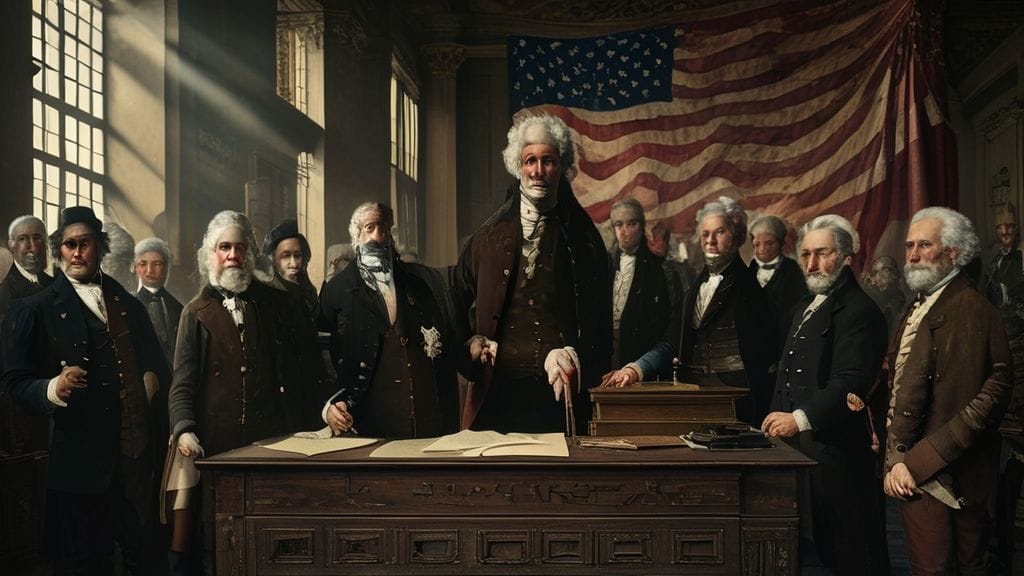
When Madison finally took pen in hand to sign the war bill, the action seemed quiet, almost anticlimactic. There was no cheering crowd in the room, no rousing speech, no trumpets. Just a small circle of men, their faces drawn by fatigue and tension, watching as the president of a young republic put his name to a document that would hurl the United States into a second conflict with its former colonial master. Yet behind that quiet moment was a vast story of clashing ambitions, maritime grievances, frontier bloodshed, and the fragile confidence of a nation still struggling to define itself. The war of 1812 declaration did not come out of nowhere; it was the product of years of slow-burning resentment and calculated political maneuvering.
But this was only the beginning. To understand the meaning of that June day in Washington, one must step back into the uneasy decades that followed the American Revolution, when independence on paper did not yet feel secure in practice, and when the ghost of British power lingered over every diplomatic negotiation and on every sea lane that an American ship dared to cross.
From Revolution’s Embers to Renewed Hostility
The American Revolution had ended in 1783 with the Treaty of Paris, and on parchment the United States appeared to have secured its independence and borders. In reality, the new nation emerged from the conflict fragile and exposed. Its army was small, its navy almost nonexistent, its finances chaotic. Across the Atlantic, Britain remained the world’s dominant naval and commercial power, its red-coated regiments stationed throughout Canada and at various forts that, in theory, should have been evacuated under the terms of peace.
Throughout the 1780s and 1790s, the relationship between the former colonies and the empire they had defied remained cold and wary. British merchants, wary of the upstart republic, often gave preference to colonial producers still loyal to the Crown. In the Old Northwest—the region around the Great Lakes—British agents continued to support Native American confederacies resisting American expansion, funneling weapons and supplies across the border. On frontier homesteads in Ohio and the Indiana Territory, American settlers read these signs clearly: Britain had lost a war, but it had not abandoned its influence on the continent.
Diplomats tried to paper over these tensions. The Jay Treaty of 1794, negotiated under George Washington’s administration, eased some immediate points of contention, including Britain’s retention of certain western forts. But the treaty was controversial and, in many eyes, deeply unsatisfying. It did little to settle broader issues of maritime rights and commercial freedom, and it cemented an image—especially among Republicans—that Federalists were too willing to bow to British demands. Even as official relations stabilized for a time, a sense of unfinished business hung in the air.
Then Europe exploded once more into war. The French Revolution, which many Americans had initially greeted with sympathy or even enthusiasm, soon unleashed a chain of conflicts pitting Revolutionary and then Napoleonic France against much of the rest of Europe, including Britain. By the first decade of the nineteenth century, the struggle between Napoleon and Britain had become a global war, stretching from the Baltic to the Caribbean, and American ships inevitably found themselves in the middle of it.
The United States claimed the right of neutral trade: as a non-belligerent, it argued, its merchant vessels should be free to carry cargoes to and from European ports without interference, so long as they did not carry contraband. Britain, whose survival depended heavily on its control of the seas, took a harsher view. It claimed the right to stop and search neutral ships, to seize goods it considered illegal, and—most explosive of all—to remove sailors it said were British subjects and force them into Royal Navy service. The Atlantic, lifeline of American commerce, became a dangerous arena where rights, profits, and national honor constantly collided.
Impressment, Blockades, and Wounded Honor
Impressment was the cruel heart of the dispute. The Royal Navy, locked in a seemingly endless struggle with France, was always hungry for manpower. British law held that its subjects could not renounce their allegiance, and that in time of war they could be compelled to serve. On the crowded decks of British warships, discipline was brutal, life hard, and desertion common. Many British sailors sought refuge in the American merchant fleet, where pay was better and the lash less frequent. British naval captains, in turn, claimed the right to retrieve these supposed deserters wherever they found them.
American captains protested that many of their men were U.S. citizens, not British deserters at all. But on the wide, gray swells of the Atlantic, far from courts and paperwork, identity could be enforced at gunpoint. British warships regularly halted American vessels, mustered their crews on deck, and plucked out men they insisted were British subjects, often on flimsy evidence. Some were, in fact, deserters from the Royal Navy. Others were naturalized Americans or men who had lived most of their lives in the United States. A few had never seen Britain at all.
Each seized sailor was an individual tragedy; together, they became a collective national humiliation. Estimates vary, but by 1812 thousands of men who claimed to be American citizens had been taken by British press gangs from U.S. ships. American newspapers ran story after story of weeping families, of sailors disappearing into the maw of the Royal Navy, of “free-born Americans” reduced to enforced service under a foreign flag. “Is the ocean to be our prison?” one editorial demanded, “and our flag a mere rag, to be trampled at the pleasure of any British captain?”
Matters worsened as the European war escalated. In 1806 and 1807, Britain issued a series of “Orders in Council” that imposed sweeping restrictions on neutral trade with France and its allies. Napoleon responded with his own decrees, aimed at shutting Britain out of continental ports. The result was a strangling of American commerce from both sides. American ships risked seizure by the British if they attempted to trade with French ports, and by the French if they obeyed British rules. The principles of neutral rights that American leaders had long championed seemed to vanish beneath the cannons of European warships.
The outrage reached a new degree of intensity on June 22, 1807, when the British warship Leopard pursued, fired on, and boarded the American frigate Chesapeake off the coast of Virginia, wounding and killing American sailors and dragging off alleged deserters. The Chesapeake–Leopard affair shocked the nation. This was not merely a commercial slight; it was an armed assault on an American warship in American waters. Crowds in ports from Norfolk to Boston seethed. Newspapers demanded revenge. Yet Thomas Jefferson’s administration, wary of war, responded instead with a different weapon: economic coercion.
The Embargo Act of 1807 sought to punish Britain and France by prohibiting virtually all American exports. In theory, by cutting off access to American goods, the United States could force the European powers to respect its rights. In practice, the embargo devastated American merchants and sailors far more than it affected Britain or France. New England ports sat idle; warehouses filled with unsold produce. Smuggling flourished. The policy bred anger and resentment, especially in the commercial North, and tarnished the reputation of Jefferson’s Republican Party. Yet behind the anger there grew a recognition that peaceful tools were failing. If embargoes, protests, and diplomatic notes could not protect American sailors and American commerce, what could?
War Hawks Rise: The Fiery Voices in Congress
By the time James Madison took office in 1809, the nation’s patience had worn thin. Madison inherited all the festering grievances with Britain—and with France—but he also inherited a divided public and a Congress searching for direction. Out of that Congress emerged a new generation of leaders, younger men who had not personally fought in the Revolution but who grew up on its stories. They looked at British outrages and saw not just policy disputes but an affront to the independence their fathers had bled to secure.
These men would later be known as the “War Hawks.” Among their ranks were Henry Clay of Kentucky, the dynamic Speaker of the House, and John C. Calhoun of South Carolina, sharp-minded and fiercely nationalistic. They were predominantly from the South and West, regions where British influence over Native American tribes and restrictions on American expansion stirred particular anger. Where older politicians urged caution, they spoke of honor, destiny, and the need to assert American rights with force if necessary.
From the floor of the House, Clay thundered that the United States could not forever submit to British orders and insults. Calhoun argued that liberty, once won, must be defended against all encroachments, whether by land or sea. In their rhetoric, the continuing British presence in Canada and on the high seas blended into a single narrative of defiance. Some War Hawks even dreamed openly of conquering Canada, proclaiming that its capture would be, in Clay’s boastful phrase, “a mere matter of marching.” Whether they believed their own bravado is uncertain, but their words carried.
The War Hawks skillfully linked frontier violence to British policy. On the western borderlands, a powerful Shawnee leader, Tecumseh, and his brother Tenskwatawa, the Prophet, were organizing a broad Native confederacy to resist U.S. expansion. Many Americans, including William Henry Harrison, governor of the Indiana Territory, were convinced—sometimes correctly, sometimes not—that British agents in Canada were supplying these Native warriors with arms and encouragement. Each clash on the frontier, each report of a burned cabin or slain settler, could be folded into a larger indictment of British interference.
It’s astonishing, isn’t it, how quickly the language of necessity can turn into the language of inevitability? What had been, for years, a policy argument over maritime law and trade became, under the War Hawks’ persuasion, a question of national existence and masculine honor. The idea of the war of 1812 declaration began to circulate not as a possibility but as a rightful answer to a long chain of insults. War, they argued, was not a reckless gamble but a corrective—a way to restore balance between a bullied republic and an overbearing empire.
James Madison’s Calculated Gamble
At the center of this storm stood James Madison, fourth president of the United States, a man more scholar than general, more essayist than orator. Short, reserved, and plagued by poor health, Madison did not fit the romantic image of a wartime leader. Yet this was the same Madison who had helped craft the Constitution, who had defended it in the Federalist Papers, and who believed deeply in the survival and dignity of the republican experiment.
Madison had spent years wrestling with the great question of his presidency: how to defend American rights without sacrificing American principles. He had seen the Embargo Act fail and watched its milder successors—the Non-Intercourse Act and Macon’s Bill No. 2—struggle to coerce Britain and France into respecting U.S. neutrality. He had sent protest after protest across the Atlantic, only to see British policy continue largely unchanged. The Royal Navy still impressed sailors; the Orders in Council still choked American commerce.
Madison was no natural War Hawk. He worried about the costs and risks of war. The American army was small, poorly trained, and widely dispersed. The navy had a handful of respectable frigates but could not hope to match the Royal Navy’s vast fleets. The nation’s finances were shaky. Regional divisions ran deep. New England’s mercantile interests were strongly opposed to conflict, and even within Madison’s own Republican Party there were skeptics.
Yet the logic of events trapped him. To endlessly endure impressment and restrictive trade policies would, in the eyes of many citizens, reduce the United States to a half-sovereign nation. Each new British seizure of an American ship, each report of seized sailors, eroded faith that peaceful measures would ever suffice. Madison’s political enemies, especially the Federalists, taunted him as weak and indecisive; the War Hawks, ostensibly his allies, urged him to act more boldly. In private conversations and in letters, he began to speak more openly of the need to confront Britain.
By 1812, the president’s thinking had shifted decisively. He came to believe, as one historian later summarized, that “war had become the only alternative to submission.” This was not the language of enthusiasm but of resignation. Madison did not long for glory or conquest as some of the War Hawks did. He simply concluded that without a firm response—without the war of 1812 declaration—the United States would be signaling to the world that its rights and its flag could be violated with impunity.
In early June, after considerable internal deliberation, Madison sent a secret message to Congress. It was not, formally, a declaration of war, but an indictment. He catalogued British wrongs: the impressment of American seamen, the enforcement of the Orders in Council, the instigation of Native American resistance, and the general contempt shown for American sovereignty. The tone was weary yet resolute. If Congress agreed with his assessment, the path was clear. The nation would have to choose.
Debating Destiny: The Bitter Battle in Congress
Madison’s message landed in Congress like a spark in dry tinder. The House of Representatives and the Senate, already divided along regional and partisan lines, plunged into intense debate. For days, the chambers buzzed with speeches, amendments, and procedural maneuvers. Behind closed doors, in the smoky committee rooms and boardinghouse parlors of Washington, legislators weighed the consequences of voting for war—or against it.
Supporters of war, led by Clay and Calhoun, framed the issue in sweeping, often fiery terms. They spoke of national honor, of the insult of seeing the American flag ignored on the high seas, of the injustice of losing thousands of sailors to British impressment. They invoked the memory of the Revolution, asking whether the sacrifices of that earlier generation were to be allowed to wither under a new regime of British bullying. In one speech, a pro-war representative declared that “submission to such treatment would be worse than open conquest.” To them, the war of 1812 declaration was not merely an option; it had become a moral necessity.
Opponents, primarily Federalists from New England and some cautious Republicans, saw matters very differently. They pointed out that Britain was already locked in a life-and-death struggle with Napoleon. Why, they asked, should the United States choose this moment to pick a fight with the very power that stood between Europe and French domination? Others emphasized the practical dangers: the meager state of the U.S. army, the vulnerability of American ports to blockade, the likely devastation to commerce. “You are rushing,” one critic warned, “into a conflict without ship, without soldier, without money.”
The debates grew heated, and sometimes personal. Accusations of cowardice and treason flew across the aisle. Pro-war representatives implied that opponents cared more for British trade than for American dignity. Anti-war voices retaliated by warning that the War Hawks sought glory at the expense of their countrymen’s livelihoods. While much of the rhetoric played out on the House and Senate floors, the underlying pressures came from home districts: western settlers demanding safety and expansion, New England merchants desperate to avoid more disruption, southern planters calculating how war might affect their exports.
Yet behind these visible arguments lay a subtler question: what kind of nation did the United States intend to be? A cautious commercial republic that tolerated insult to preserve trade, or a bolder, more martial state willing to risk conflict for status and self-respect? In the end, that deeper question shaped the voting as much as any specific grievance. The result would be narrow, but decisive enough.
On June 4, the House Foreign Relations Committee, dominated by War Hawks, reported a bill declaring war. The full House debated, amended, and finally, on June 4 and the days following, moved toward a vote. The final tally in the House would be 79 in favor and 49 against—hardly a unanimous cry. In the Senate, after its own contentious debate, the margin was narrower still: 19 to 13. This was not a war embraced by all Americans, but a war pushed through by a determined coalition. The United States was about to step across a threshold from which it would not easily return.
June 18, 1812: The War of 1812 Declaration Is Signed
In the Capitol, the parchment of the war bill passed from chamber to chamber, collecting signatures like the slow progress of a weather front. When both houses had finally approved it, the legislation made its way to the President’s residence—then a large, pale structure that would only later be called the White House. Outside, the sky was heavy with early summer heat; inside, the mood was no less oppressive. Men spoke in low voices. Servants moved quietly along the corridors.
Sometime that day, James Madison placed the document before him and read its contents one last time. It was a formal legal text, yet every line bore the weight of lived grievances: “Be it enacted by the Senate and House of Representatives of the United States of America in Congress assembled, That war be, and the same is hereby declared to exist between the United Kingdom of Great Britain and Ireland and the dependencies thereof, and the United States of America…” With his quill, Madison signed his name. The war of 1812 declaration, as it would later be known, had become law.
Eyewitness descriptions of the exact moment are scarce, but the impact spread quickly through the city. Couriers hurried from office to office carrying copies and summaries. At the State Department, officials began drafting messages to foreign governments and to American diplomats abroad. In the War and Navy Departments—small by European standards but suddenly vital—clerks scrambled to prepare orders, commissions, and calls for volunteers. Word traveled faster than the official proclamations; within hours, taverns in Washington buzzed with news that the United States was at war with Britain again.
For those who had long advocated war, there was a sense of vindication, even exultation. They had pushed, argued, threatened, and they had won. For others, especially merchants and their political allies, the feeling was closer to dread. They imagined British frigates already bearing down on American ports, imagined credit evaporating and ships trapped at anchor. For ordinary citizens—farmers, artisans, enslaved people with no say in the matter—the declaration was an ominous change in the weather of politics, one that might soon sweep through their lives in ways they could not yet foresee.
Yet behind the celebrations and forebodings, one fact stood out starkly: the United States had just taken on, in formal legal language, the greatest naval power in the world. The war of 1812 declaration marked the first time the young republic had declared war on another nation as a unified, constitutional act. In doing so, it tested not only the country’s martial capacity but also its political system. Could a partisan, regionally fractured democracy fight a major war and preserve both its union and its principles? No one in Washington on that June day could answer with certainty. The answer would be written, painfully, over the next two and a half years.
A Nation Divided: Jubilation, Fear, and Outrage
The reaction to the declaration broke along regional fault lines almost as soon as the ink was dry. In much of the South and West, especially in frontier towns where stories of British-backed Native attacks were common, church bells rang and toasts were drunk to “Madison’s War.” Young men crowded around recruiting tables, eager for a chance at adventure and, perhaps, land grants. In Kentucky and Tennessee, local orators proclaimed that at last the nation would humble British arrogance and secure the West.
In New England, the mood could not have been more different. Boston, Salem, New Haven, and other port cities had already suffered heavily under Jefferson’s embargo and subsequent trade restrictions. For their merchants and shipowners, the war of 1812 declaration felt like a final blow. Newspapers with Federalist sympathies denounced the decision as reckless, partisan, and even unconstitutional in spirit if not in letter. They argued that the Republicans were sacrificing the prosperity of the commercial North to the ambitions of agrarian and frontier politicians. One Boston paper darkly warned that “this war, if pursued, may prove the grave of our Union.”
Public meetings in New England passed resolutions condemning the war and calling on the federal government to protect their trade—or, failing that, hinting at more drastic remedies. State governments in the region would soon begin to drag their feet in providing militias or funding. At the tavern tables of Massachusetts and Connecticut, men muttered that the real enemy was not in London but in Washington. The seeds of what would later flower into the Hartford Convention were being sown in the angry, fearful conversations of that summer.
Elsewhere, the war’s meaning was more ambiguous. For enslaved African Americans in the South, the prospect of conflict stirred both dread and fragile hope. Some remembered that during the Revolutionary War, British proclamations had offered freedom to those who fled rebellious masters. Would something similar happen again? Rumors drifted through plantations that British warships might arrive along the coast, that escape might be possible in the chaos. For most, such possibilities remained distant, but the war nonetheless altered the landscape of possibility, however faintly.
Native American communities, especially in the Old Northwest and along the Canadian border, viewed the news with intense anxiety. Many had already tied their hopes to British support as a counterweight to relentless American expansion. Others contemplated neutrality or even alliances with the United States, hoping to preserve some measure of autonomy. For them, the war of 1812 declaration was not an abstract assertion of maritime rights, but a harbinger of new campaigns, treaties, and forced migrations. The conflict would press upon their homelands far more directly than it would upon most of the citizens in whose name it was waged.
The War Spreads to the Frontier and the Lakes
If the war’s justification had centered on the high seas, its opening campaigns played out largely on the frontiers and along the borders with British Canada. American strategists, swayed by the War Hawks’ optimism, believed that striking at Canada would pressure Britain into concessions and perhaps even result in permanent territorial gains. Some went so far as to imagine that Canadians, resentful of British rule, might welcome American “liberation.” This belief would soon collide with reality.
The U.S. Army of 1812 was small, poorly trained, and unevenly led. Despite the war of 1812 declaration, the country had not prepared thoroughly for large-scale conflict. Many officers were aging veterans of the Revolution or political appointees with limited tactical skill. Supply chains were fragile. Militia units, called up from the states, often balked at crossing international borders or serving for extended periods. Yet within weeks of the declaration, American forces were in motion toward Upper and Lower Canada, expecting quick victories.
Instead, the first campaigns brought embarrassment. In the summer of 1812, General William Hull led an invasion from Detroit into Upper Canada. Paralyzed by caution and plagued by supply difficulties, Hull hesitated, retreated, and then—when British and Native forces under General Isaac Brock and Tecumseh moved decisively—surrendered Detroit without a major fight. The news stunned and enraged Americans. An entire army and a strategic city had been lost in what many saw as an act of cowardice. Hull was later court-martialed and sentenced to death, a sentence only partially mitigated by Madison’s decision to spare his life.
Other American attempts to invade Canada that year, including operations across the Niagara River, met with mixed results and often ended in confusion and retreat. British regulars, Canadian militia, and Native allies fought with determination, defending their territory with a cohesion that belied American assumptions of easy conquest. The dream of a quick march to Quebec and beyond began to fade in the face of logistical nightmares and stubborn resistance.
Yet these setbacks did not entirely define the war’s northern theater. Along the Great Lakes, control of the water would prove crucial. American shipbuilders and officers, including Oliver Hazard Perry on Lake Erie, set about creating small fleets capable of challenging British dominance. In these efforts, the improvisational genius of American seamen began to counterbalance the early failures on land. The war, it was becoming clear, would not be over in a single campaigning season. It would grind on, year after year, reshaping lives in the borderlands with each passing month.
Native Nations Between Empires
For Native nations caught between American expansion and British alliance, the war of 1812 was both a continuation and an escalation of an existential struggle. Tecumseh, the Shawnee leader, had spent years trying to build a pan-tribal confederacy stretching from the Great Lakes to the Gulf of Mexico, arguing that Native lands were held in common and could not be ceded piecemeal to the United States. His vision was of a united front that might halt or at least slow the relentless westward push of American settlers.
British agents in Canada, recognizing the value of Native warriors as allies, had provided arms and support to Tecumseh’s movement. But their goals were not identical. For Britain, Native resistance was a tool to preserve its Canadian holdings and to create a buffer against U.S. expansion. For Tecumseh and his followers, the war was about survival as distinct peoples. When the war of 1812 declaration came, it effectively widened Tecumseh’s struggle into part of an Anglo-American conflict over empire and border.
The early campaigns in the Northwest highlighted the prowess of Native-led forces. Tecumseh’s presence during the siege of Detroit, his coordination with General Brock, and his psychological tactics terrified American troops and militia. Stories spread of his composure in battle and his eloquence in counsel. British officers, even those steeped in colonial prejudices, came to admire him. One account cites Brock as saying that Tecumseh was “the Wellington of the Indians,” a backhanded but telling compliment aligning the Shawnee leader with Britain’s greatest general.
Yet the alliance was fraught with tension. British promises to defend Native homelands often clashed with diplomatic pragmatism. When fortunes of war turned, British commanders might prioritize the safety of their own troops or the defense of key strongholds over the protection of Native villages. The tragic climax of Tecumseh’s struggle came in October 1813 at the Battle of the Thames, when an American force under William Henry Harrison defeated a combined British-Native army and Tecumseh was killed. His confederacy began to unravel soon thereafter.
In the American South, a related but distinct conflict unfolded—the Creek War, in which factions within the Muscogee (Creek) nation clashed, some siding with the United States, others resisting, with occasional British and Spanish interference. For Native communities from the Great Lakes to the Gulf, the war of 1812 did not end with the Treaty of Ghent in 1814–15. Instead, it accelerated a pattern of dispossession. The postwar years saw a cascade of new treaties, land cessions, and eventually the forced removals that would scar the nineteenth century. In that sense, June 18, 1812 marked not just a confrontation between two empires but a grim turning point in the struggle for the continent’s indigenous future.
On the High Seas: Frigates, Privateers, and Blockade
If the United States could not quickly conquer Canada, perhaps it could at least show its mettle where the war had begun: on the water. The official U.S. Navy was tiny compared to the Royal Navy, yet it possessed a handful of superbly built heavy frigates—ships like the Constitution, United States, and President—designed to outrun anything they could not outgun, and outfight anything they could not outrun. Manned by skilled seamen and commanded by bold captains, these vessels soon began to earn disproportionate fame.
In the war’s early months, single-ship actions electrified American public opinion. When the USS Constitution defeated HMS Guerriere in August 1812, splintering the British ship’s masts and sending it to the bottom, the victory resonated far beyond the number of guns involved. Here, on the very element Britain claimed as its own, an American warship had decisively bested a Royal Navy frigate. Newspapers trumpeted the news. Crowds cheered in port cities. The nicknames began: “Old Ironsides,” for the way British shot seemed to bounce from the Constitution’s tough hull.
Other victories followed: the USS United States captured HMS Macedonian; Captain Stephen Decatur and others turned naval duels into national legends. These successes did not alter the overall balance of naval power—Britain still possessed hundreds of warships—but they had immense psychological impact. They offered proof that Americans could face British arms on nearly equal terms in at least some arenas. For a nation that had risked so much with the war of 1812 declaration, such reassurance mattered.
Alongside the navy, privateers—privately owned vessels granted government licenses to capture enemy merchant ships—fanned out across the Atlantic. Fast and daring, these ships harried British commerce, seizing prize after prize. While the ethics of privateering were debated even then, in American ports it became a profitable and patriotic enterprise. Captains returned home with captured vessels and cargoes, parading their achievements as blows against British wealth and power.
Britain responded with a tightening blockade. As the war went on, Royal Navy squadrons ringed the American coastline, from New England to the Gulf, intercepting ships, disrupting trade, and even raiding coastal communities. The blockade’s grip varied by region and year, but its long-term effect was suffocating. American exports plummeted; customs revenues dried up; shortages of imported goods drove up prices. The romantic image of heroic frigate duels existed alongside the grim reality of economic strangulation.
Still, on both sides of the ocean, the maritime struggle remained central to how people understood the war. For British policymakers, the conflict was one of many theaters in a global contest with Napoleon; for American leaders, it was proof that their grievances had been real and that their willingness to fight for maritime rights was not mere rhetoric. Years later, when the war’s causes and outcomes were debated, the memory of impressed sailors, blockaded harbors, and triumphant American frigates remained a core part of the story.
The Home Front: Commerce, Cotton, and Collapse
While soldiers marched and ships exchanged broadsides, the war reshaped daily life far from the front lines. In coastal cities and farming towns, in workshops and plantations, people adjusted to shortages, rumors, and the ever-present uncertainty that war brings. The economic impact of the war of 1812 declaration was uneven, falling heavily on some regions while sparing or even benefiting others.
New England suffered acutely. The British blockade, combined with American trade restrictions, devastated maritime commerce. Ships lay rotting at wharves; warehouses overflowed with goods that could not be shipped; insurance rates skyrocketed. Skilled sailors, carpenters, and dockworkers found themselves idle. Stories circulated of once-prosperous merchants reduced to desperation, and of families pawning heirlooms to buy food. Opposition to the war deepened as hardship grew more visible. Town meetings denounced “Mr. Madison’s War,” and state leaders quietly explored ways to shield their citizens from federal policies, edging toward a doctrine of state resistance that would echo decades later in other conflicts.
In the South, the impact was more complex. Cotton planters chafed under export disruptions, but domestic demand for some agricultural products remained strong, particularly where the war machine needed supplies. Inland regions, less directly affected by the blockade, could continue producing grain, livestock, and other staples. In some places, the war even stimulated local industry, as Americans turned to domestic manufacturers for goods previously imported from Britain. The seeds of a more self-sufficient American industrial base—especially in textiles and armaments—were planted during these years of enforced isolation, though their full flowering would come later.
On the frontier, especially in the West, the war intersected with older patterns of scarcity and improvisation. Settlers grew used to hearing distant gunfire or sudden bursts of news about a skirmish at some obscure ford or fort. Women took on greater responsibilities in tending farms and households when men marched off with militia units. Communities organized makeshift defenses, trading information about the movements of British or Native forces through a network of travelers, traders, and gossip. For many, the war was not a series of abstract campaigns but a constant, low-level sense of danger threaded through daily routines.
The federal government, meanwhile, scrambled to finance the war. Without a national bank—the charter of the First Bank of the United States had lapsed in 1811—and with customs revenues dropping due to the blockade, Madison’s administration relied heavily on loans and the sale of government bonds. Wealthy financiers, some of them less than enthusiastic about the conflict, were courted to keep the treasury afloat. Ironically, the pressures of war would help spur the eventual creation of a new national bank in 1816, as leaders recognized that the republic needed more robust financial machinery if it were to survive in a world of great-power conflict.
In letters, diaries, and newspaper columns, Americans recorded their ambivalent feelings about the war sparked by that June declaration. Some wrote proudly of sons and brothers in uniform, of communities rallying together. Others confessed to doubts: was this suffering truly necessary? Would the gains, if any, justify the costs? The war of 1812 declaration had been sold in part as a defense of honor and rights; on the home front, the ledger of sacrifice and benefit remained fiercely debated.
1814: Washington in Flames, the Capitol Tested
By 1814, the wider European conflict that had shaped so much of American policy took a dramatic turn. Napoleon’s empire began to crumble; by the spring, he had been forced to abdicate and sent into exile on Elba. With France temporarily subdued, Britain could redirect more resources to its war with the United States. The marginal North American theater suddenly received greater attention. Veteran British troops, hardened by years of fighting on European battlefields, sailed across the Atlantic.
The result, in August 1814, was one of the most searing moments in the young republic’s history: the burning of Washington. A British force under Major General Robert Ross and Admiral George Cockburn landed in the Chesapeake region, brushed aside ill-prepared American militia at the Battle of Bladensburg—what some wits would later mock as the “Bladensburg Races”—and marched toward the capital. Panic swept through Washington as officials scrambled to evacuate records and valuables.
James and Dolley Madison both played their parts in this drama. Dolley, in a story often retold, stayed at the President’s House long enough to oversee the removal of Gilbert Stuart’s famous portrait of George Washington, ensuring that the symbol of the Revolution would not fall into British hands. Madison himself rode among the troops earlier that day, trying to rally them, only to see them melt away under British assault. As night fell on August 24, British soldiers entered the city almost unopposed.
They burned the Capitol, the President’s House, and other public buildings, flames leaping against the dark sky. The very chambers where Congress had debated the war of 1812 declaration, where Madison had weighed his signature, were now engulfed in fire. The message was unmistakable: Britain could strike at the heart of America’s political life. For many observers abroad, the event seemed to confirm that the United States remained a fragile experiment, vulnerable to the whims of established powers.
Yet behind the catastrophe lay a strange resilience. A sudden violent storm—some described it as a hurricane—swept into the burning city, dousing flames and forcing the British to withdraw sooner than they might have otherwise. The government, though shaken, did not collapse. Madison’s administration regrouped in temporary quarters; Congress vowed to rebuild the capital. The burning of Washington, far from breaking American will, in some ways stiffened it. “Our spirit is not to be broken,” one contemporary account insisted, echoing a sentiment that spread rapidly through the country.
This episode became a defining test of the war’s meaning. If the declaration in 1812 had been a claim of national self-respect, the burning in 1814 was a challenge to that claim—a demand that Americans decide whether their political experiment could withstand humiliation as well as triumph. The answer would soon come at Baltimore and, later, at New Orleans.
From Despair to Defiance: Baltimore and New Orleans
After torching Washington, British forces turned their attention to Baltimore, a key port and symbolically important city. There, in September 1814, the course of the war’s narrative shifted. Baltimore was better prepared than Washington had been. Fort McHenry guarded the harbor approaches, and local militia units, stiffened by experience and a sharper sense of what defeat might mean, dug in for a determined defense.
For twenty-five hours, British ships bombarded Fort McHenry, rockets and shells arcing through the wet night sky. A young American lawyer, Francis Scott Key, watched the bombardment from a truce ship in the harbor, anxiously scanning the darkness for signs that the fort still stood. At dawn, he saw the American flag still flying over the battered fortifications, and later composed verses that would become “The Star-Spangled Banner.” The British, having failed to force their way into the harbor and facing stiff resistance on land, abandoned the attack. Baltimore held.
The defense of Baltimore did more than save a city. It supplied a story of endurance to answer the story of Washington’s destruction. Americans could now point not only to their capacity to suffer blows but to their ability to withstand them and fight back. The narrative arc of the war, so unfavorable after the disasters of 1812 and the burning of 1814, bent subtly toward redemption.
The climax came months later, on January 8, 1815, near New Orleans. There, a British army launched a major assault against entrenched American forces under General Andrew Jackson. Jackson’s eclectic army—regulars, militia, free Black soldiers, Choctaw allies, pirates under Jean Lafitte, and frontiersmen—held strong behind makeshift earthworks. British troops advanced across open ground into withering fire. The attack degenerated into slaughter. When it ended, British casualties numbered in the thousands; American losses were comparatively light.
Unbeknownst to the combatants, a peace treaty had already been signed in Europe. The Battle of New Orleans did not alter the legal terms of the Treaty of Ghent, but it profoundly influenced how Americans remembered the war. News of Jackson’s stunning victory reached the United States roughly at the same time as word of the treaty. For many, the two events fused into a satisfying conclusion: the nation had fought Britain to a standstill and then won a spectacular final triumph, vindicating the risks taken back on June 18, 1812.
In the years that followed, Andrew Jackson’s fame from New Orleans would propel him to the presidency, and the battle itself would loom large in popular memory. It provided the heroic final chapter that transformed a war of mixed results into, in many minds, a “second war of independence.” The war of 1812 declaration, once controversial and divisive, could now be retrospectively framed as the courageous first step toward an eventual, glorious proof of American resilience.
Diplomacy at Ghent and the Shape of Peace
While cannons roared in North America, diplomats labored in the quiet rooms of Ghent, in present-day Belgium, to craft an end to the war. The American delegation included John Quincy Adams, Henry Clay, Albert Gallatin, and others—men whose personalities and ambitions sometimes clashed but who shared a common goal: securing an honorable peace without sacrificing vital interests. The British delegation, confident in their nation’s power but weary of endless conflict, sought to protect imperial holdings and maritime prerogatives.
Initially, British negotiators advanced demands that reflected their military optimism: a Native buffer state in the Northwest to check American expansion; concessions of U.S. territory, particularly in Maine and the Great Lakes region; and other intrusive measures. The Americans rejected these proposals outright. They insisted on a status quo ante bellum peace—that is, a restoration of prewar borders without major concessions from either side. For a time, the talks seemed at risk of collapse.
But as negotiations dragged on, the wider context shifted. British policymakers faced pressing concerns in Europe and mounting war weariness at home. The cost of garrisoning Canada and maintaining blockades along the American coast seemed less and less worthwhile, especially when the war had not yielded decisive gains. American resolve, despite military setbacks, remained firm. Gradually, British demands softened. The Native buffer-state proposal was abandoned, territorial exchanges were scaled back, and the focus narrowed to restoring peace without redrawing the map.
The Treaty of Ghent, signed on December 24, 1814, reflected this convergence. It largely restored prewar boundaries and made no mention of many of the issues that had ostensibly sparked the war: impressment, neutral rights, and the Orders in Council. On paper, such a settlement looked almost like a return to where things had stood before the war of 1812 declaration. Critics would later argue that the United States had fought and bled for a treaty that did not explicitly secure the maritime rights it had claimed to defend.
Yet reality was more complicated. With Napoleon defeated, Britain’s desperate need for impressment faded; the practice effectively ceased, even if it was never renounced in principle. The great European struggle that had driven much of British policy ended, and with it the immediate pressures that had produced the harshest restrictions on neutral trade. In a practical sense, many of the grievances that had driven the United States to war were resolved by changes in the international environment rather than by clauses in the treaty.
For Americans, what mattered increasingly was perception. The war had not been lost. The republic had not been carved up or forced into humiliating concessions. Its army, though often battered, had shown flashes of capability; its navy had earned real respect; its people had endured invasion and the burning of their capital without surrender. The Treaty of Ghent, when read through the lens of New Orleans and Baltimore rather than that of Detroit and Washington, could be embraced as a satisfactory, even honorable peace. It allowed Americans to tell themselves that they had stood up to Britain a second time and survived.
Political Reverberations: Federalists, Republicans, and Union
The war’s end did not simply close a chapter; it reshaped the American political landscape. Before 1812, the Federalist and Republican parties had contested elections bitterly, with fierce disagreements over foreign policy, constitutional interpretation, and economic strategy. The war of 1812 declaration had intensified these conflicts, with Federalists largely opposed and Republicans largely in favor. But the war’s outcome would prove fatal to the Federalist cause.
During the conflict, especially at its darkest moments, some Federalist leaders in New England had flirted with ideas that many Americans later judged to be dangerously close to disunion. At the Hartford Convention in late 1814 and early 1815, delegates from several New England states met to discuss grievances and propose constitutional amendments, including measures to limit the federal government’s war-making power and to protect regional interests. While the convention stopped short of advocating secession, rumors and interpretations quickly cast it as unpatriotic, if not treacherous.
When news of the Hartford Convention’s complaints reached Washington alongside word of the Treaty of Ghent and Jackson’s victory at New Orleans, the timing was disastrous for the Federalists. While the rest of the nation celebrated peace and triumph, the New England opposition appeared petty, regional, and out of step with a rising national pride. The party’s reputation never recovered. Within a few years, it had effectively collapsed as a national force.
The Republican Party, by contrast, emerged strengthened, though it too had been tested. Madison’s administration had survived a major war, improvised financial and military solutions, and navigated a difficult peace. Younger Republicans like Henry Clay and John C. Calhoun, who had championed a more assertive national posture, found their ideas gaining traction. The postwar period, often called the “Era of Good Feelings,” saw Republicans embracing policies—such as a national bank, protective tariffs, and internal improvements—that looked surprisingly like earlier Federalist proposals. In a twist of historical irony, victory in a war originally cast as a Republican crusade helped blur old partisan lines.
Most importantly, the war’s outcome bolstered a sense of American nationhood. The survival of the republic in the face of British power and internal division suggested that the constitutional system could weather crisis. Veterans returned to every state with shared experiences of distant battlefields, knitting together a broader sense of belonging. Songs, stories, and commemorations—of the Constitution’s duels, of the flag over Fort McHenry, of Jackson at New Orleans—provided common reference points. The war of 1812 declaration, so controversial at the moment of its signing, became in retrospect an early test that the nation had passed.
Social Memory and the Birth of American Myth
How a war is remembered often matters as much as how it was fought. In the decades following 1815, the events set in motion by the war of 1812 declaration were reshaped in American memory, sanded down in some places, exaggerated in others, until they fit into a more satisfying national narrative. What had been, in many respects, a muddled, inconclusive conflict came to be seen by many as a second, confirming war of independence.
Writers, politicians, and veterans themselves contributed to this transformation. Popular histories emphasized the heroism of naval officers and frontier generals while glossing over strategic blunders and political infighting. The burning of Washington remained a source of indignation, but it also became a story of eventual resilience. The dramatic defenses of Baltimore and New Orleans, by contrast, grew larger with each retelling. As one nineteenth-century writer put it, “America rose from the war as a youth who, having endured an elder’s blow, stands erect and demands to be treated as a man.” Such phrasing condensed years of messy reality into a neat morality tale.
Not everyone accepted this triumphant narrative. Some contemporaries, including New England critics and cautious observers, continued to point out that the war had failed to secure explicit recognition of neutral rights and had inflicted heavy casualties and economic pain. They warned against turning a complex historical episode into simple myth. But their voices were often drowned out by a younger generation more eager to celebrate than to dissect. The memory of the war of 1812 declaration itself drifted from the realm of controversy into the realm of origin story, the brave decision that had made later glories possible.
For Native Americans and for many African Americans, however, the war’s legacy looked very different. Native communities remembered broken promises, lost leaders like Tecumseh, and the accelerating loss of land in the postwar years. African Americans recalled both the limited opportunities for service that the war had offered and the harsh reassertion of slavery afterward, especially in the South. In some regions, British offers of freedom to enslaved people who fled to their lines did result in liberation for a few, but the broader structure of bondage remained unshaken. These perspectives seldom found their way into the celebratory myths of the nineteenth century.
Even so, the war became part of the bedrock of American civic culture. Schoolchildren learned simplified versions of its battles. Civic parades commemorated key dates. Political candidates invoked its heroes and symbols. By the time later generations looked back, it was hard to recover the sharp divisions and uncertainties that had surrounded the original war of 1812 declaration in Washington. Myth had done its work, binding together disparate experiences into a story of growth, testing, and ultimate affirmation.
The Long Shadow of June 18, 1812
Standing at a distance of two centuries, it is tempting to see June 18, 1812 as merely one date among many in the long ledger of American wars. Yet the decision made in Washington on that day casts a distinct shadow. It was the first time the constitutional machinery for declaring war was fully tested, the first time Congress and the president together committed the republic to a major international conflict by formal act. The war of 1812 declaration thus set a precedent for how the United States would conceive of, justify, and enter war in the future.
In the process, the episode revealed enduring tensions that would surface again and again: between coastal commercial interests and inland expansionists; between ideals of peaceful commerce and assertions of martial honor; between federal authority and regional resistance; between official narratives and the complex experiences of marginalized groups. The debates in Congress, the protests in New England, the optimism on the frontier, the hopes and fears among Native and Black communities—all of these would find echoes in later controversies over U.S. wars.
The war also helped clarify America’s place in the world. Before 1812, the United States was often seen abroad as a fragile offshoot of European politics, vulnerable to pressure, perhaps destined to fracture. After surviving a second confrontation with Britain, Americans increasingly thought of their nation as a durable presence, a power that, though still young and relatively weak, demanded respect. The diplomatic respect accorded to the United States in later nineteenth-century negotiations owed something to the impression—however mythologized—that this small republic had twice stood up to the British Empire and endured.
Yet behind the national pride lay unfinished business. The war hastened the dispossession of Native peoples, deepened the entrenchment of slavery in the South, and sidelined alternative visions of American development that might have prioritized diplomacy and commerce over territorial expansion. As with many turning points, its costs and benefits were unevenly distributed. That complexity does not erase the bravery of those who fought or the sincerity of those who believed the war necessary, but it complicates any simple verdict.
Still, when one returns imaginatively to that humid day in Washington—when Madison bent over parchment, when clerks hurried through the corridors, when ordinary citizens waited in taverns and on dusty streets for news—the weight of the choice is palpable. The war of 1812 declaration was an act of collective will, fraught with risk, born of frustration, pride, and fear. It did not produce the neat diplomatic victory its advocates once envisioned, yet it helped shape the emerging identity of a continent-spanning nation. The echoes of that decision can still be heard whenever Americans debate what it means to defend honor, protect rights, and wage war in the name of the republic.
Conclusion
On June 18, 1812, the United States crossed a threshold. In the halls of a still-unfinished Capitol, a contentious Congress and a cautious president turned years of grievance into formal war. Their war of 1812 declaration emerged from a tangled web of maritime disputes, frontier conflicts, partisan calculations, and restless national ambition. The war that followed was anything but straightforward: marked by early failures and unexpected triumphs, by the burning of one capital and the inspiring defense of others, by the rise and fall of Native confederacies and the quiet endurance of enslaved and free civilians alike.
In narrow legal terms, the final peace restored the status quo and left core issues like impressment unresolved on paper. In broader human terms, however, the conflict altered the trajectory of the United States. It accelerated westward expansion at the expense of Native nations, weakened old party structures, and nurtured a more assertive sense of American nationality. Over time, memory recast the war as a second war of independence, obscuring its ambiguities behind stories of “Old Ironsides,” Fort McHenry’s flag, and Jackson’s stand at New Orleans.
To view the war of 1812 declaration solely through the lens of later myth is to miss its original drama: the doubts of its supporters, the fears of its opponents, the sheer uncertainty of a republic daring to defy an empire. To view it only as a policy miscalculation is to overlook the genuine injuries and aspirations that drove leaders to act. History, in this case, resists easy judgment. What remains undeniable is that the choice made in Washington that June day helped define how Americans would understand power, sovereignty, and sacrifice in the centuries to come. The ink on Madison’s quill did not just summon armies; it helped write a durable, if contested, chapter in the story of a nation still learning what it meant to be independent.
FAQs
- Why did the United States declare war on Great Britain in 1812?
The United States declared war primarily because of British interference with American maritime rights, including the impressment of sailors and the enforcement of the Orders in Council that restricted neutral trade. Additional motives included British support for Native American resistance on the western frontier and a desire among some American leaders to expand into Canada. Over time, questions of national honor and credibility became just as important as specific grievances. - What exactly was the “war of 1812 declaration”?
The war of 1812 declaration was the act of Congress, signed by President James Madison on June 18, 1812, that formally stated a state of war existed between the United States and Great Britain. It was the first full-scale use of the U.S. Constitution’s provision giving Congress the power to declare war. The document listed no detailed conditions; instead, it transformed long-standing disputes into a legal state of conflict. - Was the United States united in supporting the war?
No, the country was deeply divided. Many southerners and westerners, along with the so-called War Hawks in Congress, strongly favored war, citing honor and security. In contrast, New England Federalists and many merchants opposed it, fearing economic ruin and questioning the wisdom of fighting the world’s leading naval power. These divisions were so sharp that some New Englanders later convened the Hartford Convention to protest the war and federal policies. - Did the war achieve its stated goals?
In a narrow sense, the war did not achieve all of its explicit goals, since the Treaty of Ghent did not mention impressment or neutral rights. However, the end of the Napoleonic Wars made those issues largely moot, and Britain effectively stopped impressing American sailors. In a broader sense, many Americans believed the war affirmed U.S. independence, improved its international standing, and fostered a stronger sense of national identity, even if those outcomes were not written into the treaty. - How did the war affect Native American nations?
The war was disastrous for many Native American nations. Leaders like Tecumseh, who allied with Britain in hopes of halting U.S. expansion, were killed, and their confederacies broke apart. After the war, the United States intensified pressure for land cessions, leading to a cascade of treaties that stripped Native peoples of territory. In the long run, the conflict accelerated patterns of displacement and dispossession that would culminate in forced removals later in the nineteenth century. - Why is the War of 1812 sometimes called the “second war of independence”?
The label emerged in later years as Americans looked back on the conflict as a reaffirmation of independence from Britain. Though the war’s military results were mixed, the United States survived a major confrontation with its former colonial ruler without territorial loss or political collapse. Combined with symbolic victories like the defense of Fort McHenry and the Battle of New Orleans, this allowed later generations to see the war as a final test of the Revolution’s promise. - What role did the burning of Washington play in the war’s history?
The burning of Washington in August 1814 was both a military setback and a psychological shock. British troops burned the Capitol and the President’s House, demonstrating the vulnerability of the American capital. Yet the government survived, and the event later took on symbolic meaning as a trial by fire that the republic endured. It helped frame subsequent American victories, especially at Baltimore and New Orleans, as evidence of resilience in the face of humiliation. - How did the war change American politics?
The war hastened the decline of the Federalist Party, whose opposition to the conflict, and especially the Hartford Convention, came to be seen as unpatriotic by many. The Republican Party emerged dominant and increasingly adopted a more nationalistic program, including support for a new national bank, internal improvements, and protective tariffs. The conflict thus helped move American politics toward a more unified, though still contentious, national agenda.
External Resource
Internal Link
Other Resources
- Encyclopaedia Britannica – general search for the exact subject
- Google Scholar – academic search for the exact subject
- Internet Archive – digital library search for the exact subject