Table of Contents
- The Dawn of Discord: England on the Brink
- The Seeds of Civil War: Rival Houses and Fading Kingdoms
- The House of Lancaster: A Crown Under Siege
- The House of York: Ambition and Ancestral Claims
- A Nation Struggling for Stability: Political and Social Tensions
- The Spark That Ignited St Albans
- The Morning of May 22, 1455: Soldiers and Citizens on Edge
- The Battle of St Albans: Clashes in the Market Square
- The Capture of King Henry VI: A Turning Point
- The Deaths That Marked the Beginning of Conflict
- Immediate Aftermath: York’s Temporary Triumph
- The Public Sentiment and the Role of Propaganda
- The War of the Roses: Why This Battle Mattered
- From St Albans to Full-Scale War: The Path of Blood and Betrayal
- The Impact on the English Monarchy and Nobility
- The Common People Caught in the Crossfire
- Cultural Reverberations: Chronicles and Ballads
- Political Lessons and Failures for the Crown
- The Legacy of St Albans: Seeds of Long-Term Conflict
- The Wars That Followed: A Nation Torn Apart
- Modern Reflections: Remembering the War of the Roses
- Conclusion: The Battle that Changed England Forever
- FAQs: Understanding the War of the Roses
- External Resource: Further Reading
- Internal Link: Discover More on History Sphere
The Dawn of Discord: England on the Brink
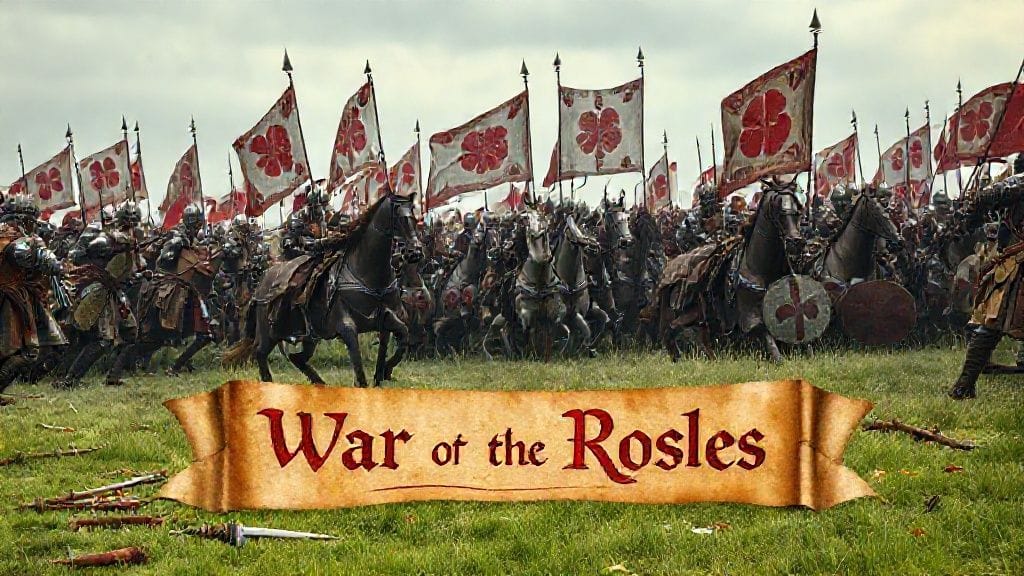
The chill of early spring in 1455 England was not just a weathered whisper of cold winds sweeping through the streets of St Albans; it was a portent of more violent storms to come. The quiet market town, with its bustling cloth trade and medieval stone architecture, was about to transform into a crucible where the fate of a kingdom would begin to unravel. On the 22nd of May, beneath a sky mottled with gray clouds, two rival banners—one red and the other white—advanced across the cobbled streets. What seemed like a mere skirmish in historical hindsight was, in fact, the first bloody crack in a century-long civil struggle known as the Wars of the Roses.
That day, the simmering disputes between the Houses of Lancaster and York exploded into open warfare, forever changing the face of English history. The Battle of St Albans, though relatively small in scale, echoed with the death of nobility, the shifting of power, and the collapse of a fragile monarchy. But to truly grasp why a fight in a modest town would erupt into decades of dynastic warfare, we must first rewind the narrative to the roots of this calamitous conflict.
The Seeds of Civil War: Rival Houses and Fading Kingdoms
England in the mid-15th century was a realm racked by instability and uncertainty. The Hundred Years’ War with France had drained resources and morale, leaving the royal treasury empty and the monarchy vulnerable. King Henry VI, a monarch known for his piety and frailty more than for political acumen, sat on a throne burdened with factional disputes and noble vendettas.
At the heart of the discord lay two powerful factions: the House of Lancaster, loyal to Henry VI and his line, and the House of York, led by Richard, Duke of York, a man with a legitimate claim to the throne through his descent from Edward III. The Lancastrians bore the red rose, a symbol of royal legitimacy since the time of the first Lancastrian king, Henry IV. The Yorkists replied with the white rose, emblematic of their own royal bloodline.
These two dynasties represented more than just personal ambition; they embodied competing visions for England’s future. The Lancastrians defended a monarchy defined by established lineage and traditional rule, while Yorkists argued for reform and stronger leadership under Richard’s potentially more capable authority. The tension was no mere court intrigue—it permeated every layer of society and government.
The House of Lancaster: A Crown Under Siege
Henry VI’s accession to the throne as an infant had already sowed instability. His minority years were marked by regency councils and noble rivalries determined to fill the power vacuum. Even his adulthood was plagued by bouts of mental illness, leaving England without a steady hand at its helm. The weak Lancastrian rule, compounded by poor management of the war with France and economic hardship, alienated many nobles.
Queen Margaret of Anjou, Henry’s consort, was a formidable political actor in her own right, fiercely protective of her husband and child’s rights. Yet her influence deepened divisions, especially as she sought to exclude Yorkists from power. The Lancastrian faction drew strength from loyalty to the crown but suffered from internal discord and the crumbling prestige of their line.
The House of York: Ambition and Ancestral Claims
Richard, Duke of York, was no ordinary nobleman. As a descendant of Edward III through both his father and mother, he wielded a formidable claim, eclipsing that of Henry VI in terms of royal bloodline by some interpretations. His ambition was coupled with genuine concern for the kingdom’s stability, particularly given his reputation as a capable military leader and administrator.
The Yorkists grew restless as they saw Henry VI’s ineffective governance jeopardize England’s survival. Richard’s bid for influence began as an attempt to shape royal policy but eventually escalated into outright confrontation. His following was a coalition of disaffected nobles and courtiers eager for a change—a movement that was destined to clash head-on with the Lancastrian loyalists.
A Nation Struggling for Stability: Political and Social Tensions
Beyond the dynastic rivalry, England simmered with underlying fractures that made civil war almost inevitable. The nobility wrestled for position, often leveraging royal favor to settle old scores and expand territorial control. Local grievances over land, law, and loyalty intensified as government authority waned.
Economic hardship on the common people, driven by poor harvests and rising taxes to fund the failing war in France, further strained the social fabric. Additionally, there was a cultural dimension: the medieval ideals of chivalry and loyalty were being challenged by emerging notions of political pragmatism and self-interest.
Within this volatile milieu, the stage was set for a violent collision.
The Spark That Ignited St Albans
The immediate cause of the Battle of St Albans was a complicated weave of provocations and ambitions. Richard, Duke of York, had been appointed Lord Protector during one of Henry VI’s incapacitations, but his rivals sought to undermine his authority. Feuds between powerful noble families, especially the Percys and the Nevilles, added fuel to the fire.
By mid-1455, Richard marshaled a force that moved toward London, intent on confronting the Lancastrian-controlled government. The Lancastrian forces regrouped near St Albans, a strategic position north of London that guarded the main route into the capital. Both sides understood that controlling St Albans meant controlling the gate to the throne itself.
The Morning of May 22, 1455: Soldiers and Citizens on Edge
On that morning, as dawn broke over St Albans, the townsfolk awoke to the uneasy sight of armed men assembling on the outskirts. Merchants hastily shuttered their stalls; farmers abandoned their wagons. The streets, normally filled with the clatter of trade, now echoed with the marching boots of lords and soldiers.
Henry VI, allegedly reluctant to fight, was present, a living symbol of the beleaguered Lancastrian cause. His queen, Margaret, was absent but soon to become a central figure in the war’s unfolding. Richard of York led his men with a blend of determination and resolve, knowing that the night’s events could spell the end of Lancastrian dominance.
The Battle of St Albans: Clashes in the Market Square
Though brief, the battle was brutal and decisive. Yorkist forces launched a surprise attack, flooding the town and clashing with Henry’s men around the marketplace. The narrow streets worked both for and against the combatants as soldiers fought at close quarters.
Despite being numerically smaller, the Yorkists benefited from superior leadership and motivation, while Lancastrian troops were often poorly coordinated. The medieval carnage saw knights on horseback charging through the alleys, crossbow bolts raining down, and the cries of wounded men piercing the morning air.
The Capture of King Henry VI: A Turning Point
One of the most dramatic moments was the capture of King Henry VI himself. Rather than a glorified monarch, he appeared vulnerable and resigned as Yorkist forces took him into custody. This was a political coup as much as a military victory, unprecedented in English history—a reigning king seized in battle by his nobles.
Richard, Duke of York, now held the ultimate lever of power. But this was only the beginning of a long and bloody contest for the throne. For Henry VI’s supporters, the capture was a wound to rally around, not a defeat to accept.
The Deaths That Marked the Beginning of Conflict
The battle claimed the lives of several prominent nobles, including Edmund Beaufort, Duke of Somerset, a leading Lancastrian and key rival to York. His death was a devastating blow and a signal that the old order was breaking apart violently.
These deaths set a precedent: no matter the lineage or loyalty, blood would be spilled to secure power. This inaugural skirmish was a nightmare foreshadowing the wars to come—a grim reminder that medieval English politics could no longer be settled by whispers and courtly debate alone.
Immediate Aftermath: York’s Temporary Triumph
In the short term, the Battle of St Albans handed Richard, Duke of York, a substantial political victory. He effectively controlled the king and thus the levers of government, allowing him to implement reforms and purge rivals.
However, his triumph was tenuous. Many nobles remained loyal to the Lancastrian cause, and Queen Margaret’s determination ensured the conflict would reignite. Both factions retreated to consolidate power and muster forces for the inevitable next rounds of what would become a decades-long civil war.
The Public Sentiment and the Role of Propaganda
For the common people, the battle was a bewildering and terrifying event. Structures shook in the streets; innocent civilians were caught in the crossfire. Chroniclers of the time expressed both awe and dismay at the spectacle of Englishmen fighting Englishmen.
Each side molded the narrative to its advantage—Lancastrians painted Yorkists as traitors, while Yorkists claimed divine sanction for their cause. This propaganda played a crucial role in maintaining morale and recruiting support, turning the conflict into not only a dynastic war but a battle for public opinion.
The War of the Roses: Why This Battle Mattered
The significance of the Battle of St Albans goes beyond its immediate military outcome. It legitimized armed rebellion against a reigning monarch and shifted the framework of English politics.
The clash illuminated the fragility of monarchy reliant on personal loyalty and exposed the dangers of noble factionalism. Moreover, it created a precedent where claims to power would be enforced not just with laws but with swords and blood.
The red and white roses were no longer mere symbols—they became emblems of a deeply entrenched national trauma.
From St Albans to Full-Scale War: The Path of Blood and Betrayal
Following St Albans, the intermittent conflicts, known as the Wars of the Roses, would waver across the next three decades. Battles such as Blore Heath, Towton, and Bosworth Field were built on the foundation laid that fateful day.
Family betrayals, shifting allegiances, and civil strife devastated the English nobility and countryside. The monarchy itself was repeatedly challenged, culminating in the eventual rise of the Tudor dynasty—born from this chaos yet bringing a new era of stability.
The Impact on the English Monarchy and Nobility
The Lancastrian and Yorkist feud permanently scarred the concept of kingship in England. Monarchs became more cautious, aware that noble support was fragile and power frequently contested.
Nobility suffered enormous losses in life and wealth. Many prominent families were extinguished or irreparably weakened. The disorder facilitated the slow transition toward parliamentary power and a more centralized administrative state, which sought to prevent such conflicts in the future.
The Common People Caught in the Crossfire
It’s easy to overlook how ordinary people experienced these wars. The continuous fighting disrupted agriculture, displaced populations, and plunged many into poverty. Towns like St Albans bore the scars—not just physical destruction, but also a lasting trauma as neighbors found themselves on opposing sides.
The war shaped social attitudes toward authority and loyalty, leaving a legacy of caution and skepticism about noble intentions.
Cultural Reverberations: Chronicles and Ballads
The Wars of the Roses inspired a wealth of contemporary and later cultural works. Chroniclers like Jean de Waurin and chroniclers within England documented the events with varying biases, providing historians today with rich but complex sources.
Ballads, poems, and plays—most famously Shakespeare’s historical tetralogy—ensured that the drama and tragedy of the conflict remained embedded in English collective memory, shaping notions of identity, justice, and power.
Political Lessons and Failures for the Crown
The battle and ensuing war revealed the profound weaknesses of a monarchy dependent on personal loyalty rather than institutional strength. Attempts to govern through favoritism and factional alliances proved fatal, emphasizing the need for better law enforcement and administration.
The Yorkist challenge also highlighted the dangers when royal authority is combined with mental instability, as was the case with Henry VI’s reign.
The Legacy of St Albans: Seeds of Long-Term Conflict
St Albans was more than a battle; it was the symbolic birthplace of a prolonged era of English civil war. Its legacy is a cautionary tale about division within the ruling class and the consequences of fragile legitimacy.
By inaugurating armed conflict between English nobles over the crown, it set the template for political change through violence—an enduring lesson for monarchs and governments in turbulent times.
The Wars That Followed: A Nation Torn Apart
The ensuing Wars of the Roses were characterized by shifting fortunes, ruthless battles, and tragic betrayals. Each victory carried seeds of the next defeat. The crown passed through multiple hands, bloodlines were extinguished, and the realm was thrown into chaos.
Ultimately, it was Henry Tudor’s victory at Bosworth in 1485 that ended the conflict and founded the Tudor dynasty, an outcome impossible to imagine without the spark first lit at St Albans.
Modern Reflections: Remembering the War of the Roses
Today, the War of the Roses remains a powerful subject for historians, novelists, and filmmakers. It embodies the dramatic struggle for power, the fragility of order, and the human costs of political ambition.
St Albans itself, now a quiet town, carries the echoes of that tumultuous day. The battle is remembered not just for its military outcome but for how it ushered England into a new political age.
Conclusion
The Battle of St Albans on that chilly morning of May 22, 1455, was far more than a mere armed skirmish in a sleepy English town. It was the crucible where loyalty fractured, ambition ignited, and a fragile monarchy was thrown into chaos. The clash between Lancaster and York marked the beginning of a bloody chapter in England’s history—the Wars of the Roses—that would take decades and countless lives before its resolution.
This battle reminds us of the human consequences of political instability: families torn apart, a nation splintered, and a people caught in a relentless cycle of violence and betrayal. Yet, it is also a testament to the enduring quest for power, legitimacy, and order—forces as compelling in the 15th century as they are today.
England’s medieval past exploded into the modern era on the cobblestones of St Albans, leaving a legacy that continues to fascinate, warn, and inspire.
FAQs
1. What caused the Battle of St Albans in 1455?
The battle was primarily sparked by the ongoing power struggle between the Houses of Lancaster and York, with political, dynastic, and personal rivalries culminating in armed conflict. The weak rule of Henry VI and noble factionalism exacerbated tensions that exploded into violence.
2. Who were the main figures involved in the battle?
Key figures included Richard, Duke of York, leader of the Yorkist faction; King Henry VI, the Lancastrian king; and Edmund Beaufort, Duke of Somerset, a prominent Lancastrian who was killed in battle.
3. Why is the Battle of St Albans considered the start of the Wars of the Roses?
It was the first significant armed confrontation between the rival houses, marking the transition from political rivalry to open civil war. The capture of the king and deaths of nobility symbolized a breaking point in English politics.
4. What were the immediate consequences of the battle?
Yorkists gained a temporary advantage, controlling the king and government. However, the conflict continued sporadically for decades, with both sides regrouping and fighting numerous battles.
5. How did the common people fare during the Wars of the Roses?
They suffered greatly: economic hardship, social disruption, and the ravages of war left many displaced and impoverished. Civilians often found themselves in the crossfire of noble clashes.
6. How did the Wars of the Roses end?
The war ended with Henry Tudor’s victory at the Battle of Bosworth Field in 1485. Tudor became King Henry VII, uniting the warring factions through marriage and founding the Tudor dynasty.
7. How is the Battle of St Albans remembered today?
It is viewed as a pivotal moment in English history, symbolizing the dangers of factionalism and weak monarchy. The battle is commemorated in historical literature and at St Albans itself.
8. Did the Battle of St Albans influence English governance?
Yes, it highlighted the need for stronger centralized authority and foreshadowed shifts toward parliamentary power and the eventual decline of absolute noble power.

