Table of Contents
- The Death of William of Ockham: An Unfinished Journey
- The Medieval Mindset: Philosophy and Theology in the 14th Century
- Ockham’s Razor: A Radical Cut Through Scholastic Tradition
- The Political Tensions of the Holy Roman Empire in the 1340s
- The Papacy vs. The Empire: A Struggle for Authority
- Munich in 1347: A City at the Crossroads of Power
- William of Ockham’s Last Years: Exile and Intellectual Defiance
- The Mysterious Circumstances of Ockham’s Death
- The Empire’s Shadow: How Ockham’s Legacy Challenged Imperial Rule
- Aftermath in Munich: The Intellectual Vacuum and Political Ripples
- The Spread of Ockhamism Across Europe: From Munich to Oxford
- The Long Shadow of Ockham’s Ideas on Empire and Church
- From Philosophy to Politics: Ockham’s Influence on Later Reformers
- Medieval Munich: Contextualizing a City in Turmoil
- The Interplay of Death and Myth: Ockham’s Posthumous Reputation
- Modern Reflections: Why Ockham’s Death in 1347 Still Matters
- Conclusion: The End of a Sage, The Dawn of Modernity
- FAQs on William of Ockham and His Final Days
- External Resource
- Internal Link
1. The Death of William of Ockham: An Unfinished Journey
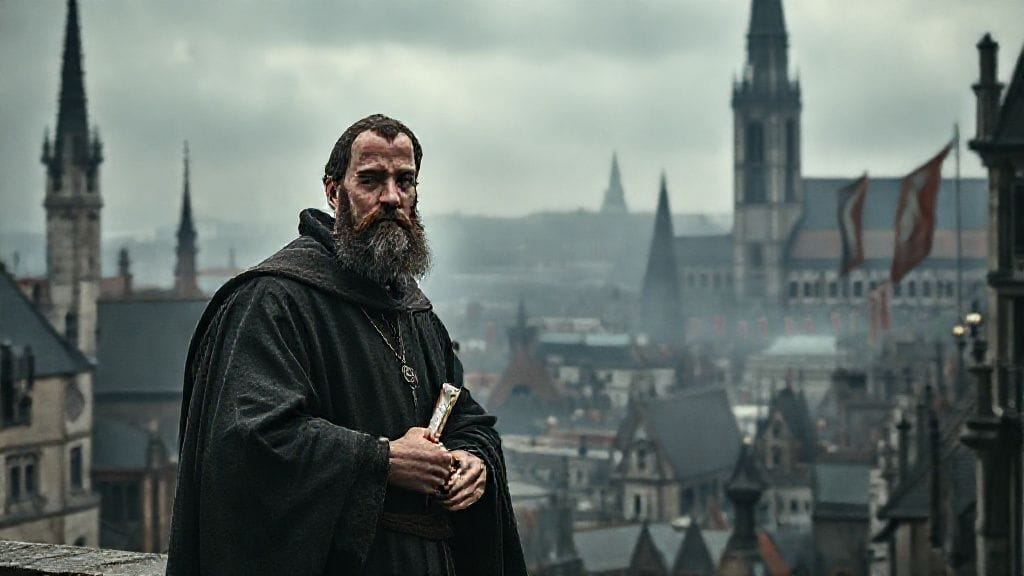
It was a somber autumn in 1347 when William of Ockham, the fierce Franciscan friar and philosopher, breathed his last breath. Imagine the murky streets of Munich, wrapped in the chill of a coming winter, where whispers of imperial power and ecclesiastical authority clashed with the ideas this man had tirelessly championed. His death was not just the end of a life but a turning point, a moment pregnant with tension between faith and reason, empire and papacy, tradition and reform.
Ockham’s last days were shadowed by political exile, intellectual defiance, and a fractious Europe on the verge of chaos. His passing marked the close of a chapter fraught with controversy, but it also opened the gates for radical rethinking of authority itself—both secular and spiritual. To understand the gravity of that moment in Munich, we must trace the origins of his ideas, the stormy political backdrop of the Holy Roman Empire, and the legacy he distilled with his razor-sharp logic.
2. The Medieval Mindset: Philosophy and Theology in the 14th Century
In the early 14th century, the medieval world was a crucible of faith and reason, tradition, and innovation. Theology was king; scholasticism—the methodical dialectic approach to Christian doctrine—dominated universities and monasteries alike. Yet cracks were appearing in this intellectual monolith. The age was unsettled by plagues, wars, and shifting power balances between church and empire, setting a restless stage for thinkers like William of Ockham.
The scholastic tradition looked to reconcile Aristotelian philosophy with Christian dogma, often weaving complex abstractions that left little room for simplicity. Into this environment stepped Ockham—a thinker known for piercing through intellectual excess with his principle of parsimony, now immortalized as “Ockham’s Razor.” This principle urged scholars to eliminate unnecessary assumptions, insisting that explanations should be as simple as possible.
But this razor was more than a mere philosophical tool; it was a weapon aimed at the very heart of theological and political orthodoxy.
3. Ockham’s Razor: A Radical Cut Through Scholastic Tradition
William of Ockham’s most famous contribution, Ockham’s Razor, seemed deceptively simple. “Entities should not be multiplied beyond necessity,” he taught. This powerful dictum cut through the florid speculations of medieval scholasticism, challenging not only methods of reasoning but the authority of accumulated tradition.
Ockham argued for intellectual humility, emphasizing empirical observation and logic over speculative metaphysics. His insistence on simplicity resonated beyond philosophy—it implicitly questioned the grand claims of the papal hierarchy and the emperor’s divine legitimacy. Such a challenge was perilous in an age when political and religious power were inseparably entwined.
It’s incredible, isn’t it, how a single methodological principle could unsettle centuries-old institutional foundations? Ockham’s razor became a symbol of reformist thought, a precursor to modern scientific inquiry, and a thorn in the side of powers that be.
4. The Political Tensions of the Holy Roman Empire in the 1340s
To grasp why Ockham’s death in Munich was so significant, one must understand the storm of political tension enveloping the Holy Roman Empire in the 1340s. The empire itself was a fragmented mosaic of duchies, principalities, and free cities, governed nominally by an emperor whose real power was often precarious.
At this time, Emperor Louis IV, known as Louis the Bavarian, was engaged in a bitter struggle with the papacy over the right to appoint bishops and the limits of imperial sovereignty. This conflict crystallized broader tensions between emerging secular rulers and the church’s claim to universal authority. The empire’s internal divisions made it a fragile landscape, with Munich—Louis’s power base—at center stage.
5. The Papacy vs. The Empire: A Struggle for Authority
The rivalry between papal and imperial power was no abstract political game; it was a battle to control souls and states. Rome’s popes sought to maintain supremacy over Christian Europe, wielding excommunications and interdicts as political weapons. Conversely, the emperors asserted their rights to govern without papal interference, citing ancient privileges and divine mandate.
William of Ockham sided with the imperial cause, an unusual position for a Franciscan friar. He vocally criticized papal claims, arguing that the pope’s authority was not absolute but subject to the community of believers and temporal rulers. His writings were incendiary, leading to his excommunication and eventual flight to the court of Louis IV in Bavaria.
6. Munich in 1347: A City at the Crossroads of Power
Munich, although a relatively small city by today’s standards, was a focal point of cultural and political dynamism in 1347. Under the patronage of Emperor Louis IV, it stood as a bulwark against papal absolutism. The city’s winding streets bustled with merchants, clergy, and scholars, making it a crucible for debate and dissent.
It was here that Ockham spent his final days, a displaced thinker amidst a city rife with imperial ambition and religious tension. Munich’s cold stone walls bore silent witness to a man whose ideas had unsettled the established order yet were embraced as a beacon for those resisting the church’s overreach.
7. William of Ockham’s Last Years: Exile and Intellectual Defiance
The years leading up to 1347 were fraught with trials for Ockham. After his condemnation for heresy, he sought refuge with Emperor Louis IV, becoming both guest and ideological ally. His final writings from this period reveal a man defiant yet worn, deeply engaged in a battle of ideas that transcended mere academic debate.
Despite his exile and poor health, Ockham remained fiercely committed to his principles. His intellectual courage was remarkable, given the dangers: excommunication, imprisonment, even death. His material circumstances grew harder, yet his resolve sharpened; his razor cutting ever deeper into the claims of authority.
8. The Mysterious Circumstances of Ockham’s Death
William of Ockham died in 1347 in Munich under circumstances that remain somewhat obscure. Some accounts suggest illness, others hint at complications from the stress and hardship of exile. Given the political turbulence, whispered rumors circulated that his death may have been hastened by political machinations, though no direct evidence supports conspiracy.
The friar’s passing, however, sealed a chapter of intellectual ferment. Munich mourned a thinker who had challenged the foundations of church and empire, even if many local authorities preferred his ideas to be extinguished alongside him.
9. The Empire’s Shadow: How Ockham’s Legacy Challenged Imperial Rule
It is tempting to assume that because Ockham allied with the emperor, his legacy was entirely supportive of imperial power. The truth is far more complex. While Ockham opposed papal absolutism, he was skeptical of unchecked imperial rule as well.
His writings advocated for limits on both spiritual and secular authority, arguing for the primacy of the people’s consent and the law. This nuance planted seeds for modern concepts of sovereignty and law that would challenge absolute monarchy and create the foundations for constitutional governance.
10. Aftermath in Munich: The Intellectual Vacuum and Political Ripples
After Ockham’s death, Munich grappled with the loss of an intellectual provocateur. His ideas did not vanish; they infiltrated scholarly debates and political theory across Europe. Yet locally, the city saw an uneasy return to the status quo, as imperial and ecclesiastical powers recalibrated their struggle for dominance.
The fragile peace in the Holy Roman Empire was soon to be shattered by the onset of the Black Death, which arrived in 1347 and reshaped Europe’s social and political landscape in unpredictable ways. Ockham’s razor, however, remained sharp in the minds of those seeking reform amidst chaos.
11. The Spread of Ockhamism Across Europe: From Munich to Oxford
Ockham’s ideas traveled far beyond the boundaries of Bavaria. Scholars in Oxford and Paris debated his writings, while later reformers cited his critiques of papal power as justification for religious and political change. In many ways, his death in Munich marked the beginning of Ockhamism as a movement—a call to simplicity, reason, and limits to authority.
His critique of metaphysical excess laid groundwork for the Renaissance and early modern science. The ripples of his thought crossed centuries, influencing theologians, philosophers, and political theorists alike.
12. The Long Shadow of Ockham’s Ideas on Empire and Church
Ockham’s intellectual legacy shaped debates over the nature of sovereignty, law, and individual rights well beyond the medieval period. His emphasis on separating spiritual and temporal powers prefigured the modern secular state. In Germany, England, and beyond, his razor was wielded to dissect absolutism and challenge centralized control.
Likewise, Catholic and Protestant movements found in his skepticism toward centralized ecclesiastical authority a shared foundation, making him a precursor to reform and enlightenment thought.
13. From Philosophy to Politics: Ockham’s Influence on Later Reformers
Figures such as Marsilio of Padua, John Wycliffe, and later Protestant reformers drew upon Ockham’s critiques to argue for reformed church governance and political autonomy. His emphasis on the consent of the governed anticipated social contract theories that would flourished centuries later.
Though often obscured by the grandeur of later historical actors, Ockham’s intellectual courage laid intellectual stepping stones across the chasm between medieval order and modern governance.
14. Medieval Munich: Contextualizing a City in Turmoil
Munich in the mid-14th century was not merely a backdrop but an active participant in the drama of empire and faith. Its status as an imperial city reinforced its role as both sanctuary and battleground for ideas. The city’s legal institutions and public squares witnessed debates that would echo in the halls of power for ages to come.
Understanding Munich’s cultural and political atmosphere helps us grasp the full significance of William of Ockham’s final days spent within its walls.
15. The Interplay of Death and Myth: Ockham’s Posthumous Reputation
Death often transforms historical figures into symbols. Ockham became a mythic figure—a defiant sage who dared to question the divine right and mystical complexities of power. His death in the contested space of Munich enhanced this mystique, making him a martyr to reason, a rebel against hidden authorities.
Chroniclers of the era and later historians have debated the man and the myth, but the resonance of his ideas remains undiminished by time.
16. Modern Reflections: Why Ockham’s Death in 1347 Still Matters
Today, the death of William of Ockham in 1347 is not just a footnote in the annals of medieval history. It symbolizes the fraught transition from medieval to modern thought, from theocratic absolutism to critical inquiry and secular governance.
In an age where the balance between authority and individual rights remains contested, Ockham’s courage to challenge orthodoxy and demand intellectual clarity continues to inspire. The razor that cut through medieval dogma still slices through modern complexity and bureaucracy.
17. Conclusion: The End of a Sage, The Dawn of Modernity
William of Ockham’s death in Munich marked the physical end of a singular life committed to reason and reform, but it also heralded intellectual beginnings that would reshape Europe. His ideas – simple yet revolutionary – breached the ramparts of church and empire, sowing seeds that blossomed into modern philosophy, politics, and science.
The streets of Munich may have quieted after his passing, but his razor-sharp legacy cut across centuries, illuminating the enduring struggle for truth and justice amid power and dogma.
FAQs
1. Who was William of Ockham?
William of Ockham was a 14th-century English Franciscan friar, philosopher, and theologian renowned for his principle of parsimony, known as Ockham’s Razor. He challenged the prevailing scholastic traditions and advocated for limits on both papal and imperial power.
2. Why was Ockham in Munich in 1347?
Ockham fled England after being accused of heresy due to his critiques of the papacy. He sought refuge under Emperor Louis IV in Bavaria, residing in Munich, which was a center of imperial power opposed to papal claims.
3. What were the main political tensions influencing Ockham’s final years?
The main tensions were between the Holy Roman Emperor and the papacy, both vying for supremacy over the Christian world’s spiritual and temporal realms. Ockham sided with the emperor in this ideological struggle.
4. How did Ockham’s ideas challenge church and empire?
By advocating intellectual simplicity and limiting the authority of both pope and emperor, Ockham promoted a vision of governance based on law and consent rather than divine or institutional absolutism.
5. What is the significance of Ockham’s Razor?
Ockham’s Razor is a methodological principle that urges simplicity in explanation, avoiding unnecessary assumptions. It became foundational for modern science and rational thought.
6. How did Ockham’s death affect Munich and the wider empire?
While Munich lost a significant intellectual figure, his ideas continued to influence European thought. His death coincided with a precarious time just before the Black Death, a period of profound social and political upheaval.
7. Did Ockham’s death remain a mystery?
Though some speculate about political motives, there is no concrete evidence of foul play. His death is generally attributed to illness exacerbated by exile and hardship.
8. What is William of Ockham’s lasting legacy?
Ockham’s legacy lies in his critical approach to authority, his foundational philosophical principles, and his impact on later reform movements that paved the way for modernity.