Table of Contents
- A Valley Before Names: The Ancient World of Yosemite
- People of Ahwahnee: Indigenous Homelands and Sacred Geographies
- First Rumors from the Sierra: Explorers, Trappers, and the Edge of an Unknown Valley
- War, Dispossession, and the Road to Discovery in the 1850s
- Artists, Photographers, and the Invention of Yosemite in the American Imagination
- From Battlefield to Sanctuary: The 1864 Yosemite Grant and a Radical New Idea
- State Missteps, Private Ambitions, and the Struggle to Control the Valley
- John Muir, the Sierra Club, and the Moral Argument for Preservation
- Lobbying Congress and Changing Minds: The Political Drama of the Late 1880s
- October 1, 1890: The Day Yosemite National Park Was Drawn on a Map
- Buffalo Soldiers, Rangers, and the First Guardians of a New Park
- Tourists, Tents, and Railroads: Opening the Granite Cathedral to the Masses
- Conflict in Paradise: Grazing, Logging, and the Hetch Hetchy Betrayal
- From Playground to Symbol: Yosemite and the Rise of the National Park Ideal
- Fire, Bears, and Overcrowding: Managing a Loved and Threatened Landscape
- Echoes of Displacement: Indigenous Voices and the Long Road to Recognition
- Science, Climate, and the Fragile Future of Yosemite’s Glacial Stone
- A Living Monument: How 1890 Still Shapes Every Visit to Yosemite Today
- Conclusion
- FAQs
- External Resource
- Internal Link
Article Summary: On October 1, 1890, when Yosemite National Park was established by an act of Congress, the decision crowned decades of conflict, vision, and campaigning that stretched from Indigenous homelands to the halls of Washington, D.C. This article follows that journey from the ancient stewardship of the Ahwahneechee people to the violent incursions of the mid-19th century and the eventual birth of a new idea: that landscapes of staggering beauty should be preserved for all. It explores how artists, photographers, and writers turned a remote Sierra Nevada valley into a national symbol powerful enough to reshape public policy. The narrative shows that when Yosemite National Park was established, it was not simply a legal act, but a cultural turning point that helped define the American identity. Yet behind the celebrations lay stories of dispossession, controversy over resource use, and fierce debates about who nature was really for. By tracing these tensions forward into the 20th and 21st centuries, the article connects that 1890 decision to enduring questions of tourism, conservation, and justice. Ultimately, it argues that the moment Yosemite National Park was established created a living monument—one that still demands moral choices from each generation that inherits it.
A Valley Before Names: The Ancient World of Yosemite
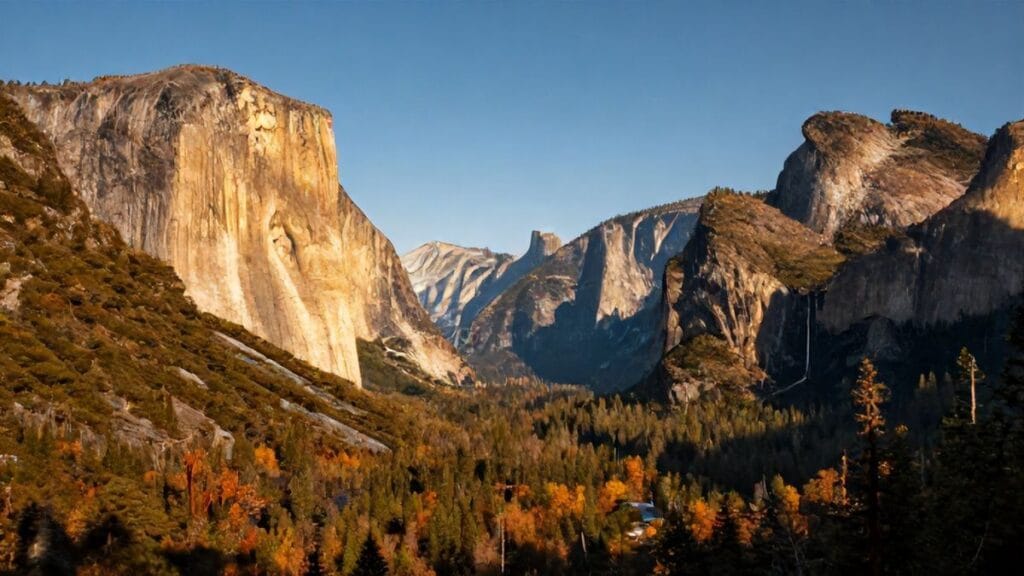
Long before surveyors inked straight lines across government maps, the valley that would one day be called Yosemite lay cradled beneath the Sierra Nevada, a world of stone, water, and sky without written record but rich in memory. Glaciers had carved its walls, then withdrawn, leaving behind a granite amphitheater where waterfalls thundered in spring and hushed to a whisper in late summer. Ponderosa pine and black oak spread across the valley floor, meadows glowed with wildflowers, and the Merced River traced a silver path through the center—a corridor for salmon, for deer, and for the people who lived there. To stand in that place centuries ago was not to gaze upon a “park” or a “landscape” in the modern sense, but to be immersed in a living, relational world, thick with stories and obligations. The future moment when Yosemite National Park would be established was unimaginable, not because the land lacked meaning, but because its meaning was already complete.
The sheer walls of granite that would one day earn names like El Capitan and Cathedral Rocks were, in these earlier times, spiritual presences and geographic markers known by other names, in tongues that existed only in speech. Seasons dictated movements: families moved higher into the uplands in summer, gathered acorns in the valley in autumn, and measured time in the growth of children and the cycles of snow. Fire was not an enemy to be suppressed but a tool, carefully applied to clear underbrush, encourage new shoots, and maintain the open, park-like woodlands that 19th-century visitors would later praise as if untouched by human hands. When we speak of the moment in 1890 when Yosemite National Park was established, we often imagine a beginning. Yet for the people who had lived in and around the valley for thousands of years, what came in that year would feel more like an ending—and then a long, uncertain afterlife.
People of Ahwahnee: Indigenous Homelands and Sacred Geographies
The people who knew the valley most intimately called it Ahwahnee, often translated as “gaping mouth” or “place of the gaping mouth,” a reference to the dramatic opening of the valley’s stone walls. They were known to outsiders, eventually, as the Ahwahneechee, but their identity rested not in exonyms but in kinship, place, and a dense web of ritual. Birth, marriage, and death were anchored to sacred sites along the Merced River, to specific groves, rock formations, and springs. Stories connected these features to creation beings and ancestral figures, making the valley not just a shelter but a woven tapestry of law, cosmology, and memory.
Archaeological evidence suggests that people inhabited the greater Yosemite region for at least 3,000 years, and likely more. Obsidian points from distant volcanic fields attest to trade networks stretching far beyond the Sierra crest, while grinding stones and charred acorn shells speak to lifeways attuned to the oaks that rimmed the meadows. Children grew up learning which plants healed, which peaks to avoid during certain ceremonies, how to burn the understory without letting the flames climb into the crown. In such a context, the later notion of drawing hard boundaries—of deciding that on a particular day, in a particular year, Yosemite National Park was established—could not help but feel arbitrary. The land was already “protected” in a sense, by taboo, by custom, by reciprocal relationship, rather than by distant legislatures.
Yet the world beyond the Sierra was changing. Spanish missionaries along the California coast had begun to unravel Native societies there in the late 18th century, and their influence crept inland by degrees—through disease, through displaced people searching for new homes. By the early 19th century, Mexican rule followed, then U.S. expansion. The pressures were still distant ridges on the horizon for the Ahwahneechee in the 1820s and 1830s, but the direction of history was set. When we think of why Yosemite National Park was established in 1890, it is tempting to tell a story about visionary preservation in a political vacuum. In truth, the park was the byproduct of a much larger, often violent reshaping of Western lands, a transformation in which Indigenous communities bore the heaviest cost.
First Rumors from the Sierra: Explorers, Trappers, and the Edge of an Unknown Valley
By the mid-19th century, whispers of a deep, steep-walled valley somewhere in the central Sierra Nevada had begun to reach American ears. Trappers, miners, and military men heard tales from Native guides of a place where cliffs rose straight from the river, where water fell from dizzying heights, and where a defensive band of people could hold off invaders with ease. It was not yet a place on Euro-American maps, but a rumor, a strategic concern, perhaps even a tantalizing prize. The Gold Rush of 1848–1849 detonated along the Sierra’s western foothills, sending waves of settlers surging into the region. With them came armed conflict, treaties made and broken, and a voracious demand for land.
For many of these newcomers, the mountains were obstacles or storehouses, not cathedrals. Forests were timber to be cut, meadows to be grazed, rivers to be diverted for flumes and mining ditches. The idea that this tumultuous frontier would one day host a sanctuary, that in 1890 Yosemite National Park would be established and removed from some forms of exploitation, would have sounded fantastic. And yet even in these early years, the seeds of that later transformation were being sown. A handful of explorers and military officers, pushed into the high country by conflict rather than curiosity, would soon become the first Euro-Americans to see the valley with their own eyes—and to carry its image back to an eager, divided nation.
Reports trickled out from scouting parties, sketching glimpses of a landscape unlike anything on the Atlantic seaboard. But these accounts were framed by war. The valley was not first “discovered” by naturalists but by soldiers hunting what they considered hostile bands of Indigenous people. When a battalion of militia finally entered the valley in 1851, it did so as an occupying force. This fact would be almost entirely erased in later heroic narratives of exploration. Yet without this grim entry point, the cascade of events that ended with Yosemite National Park established on the national rolls in 1890 might never have begun.
War, Dispossession, and the Road to Discovery in the 1850s
The Mariposa War of 1850–1851 was a small episode in the larger storm of violence that accompanied the Gold Rush, but for Yosemite it was decisive. Miners and settlers, pressing ever deeper into the Sierra foothills, clashed with Native communities whose food stores were raided, whose women were assaulted, whose hunting grounds were fenced and claimed. In response, some Indigenous groups struck back, attacking ranches and supply trains. The conflict alarmed state officials, who authorized armed volunteer companies—among them the Mariposa Battalion—to subdue the “rebels” and force them onto reservations.
Led by Major James D. Savage, the Mariposa Battalion penetrated deep into the Sierra in the spring of 1851, following trails known to Native guides. It was during one of these forays that the battalion entered the valley of Ahwahnee. Accounts from the time describe a sudden, breathtaking revelation: sheer walls of pale stone rising thousands of feet, waterfalls plunging in white ribbons, the valley floor green and wide. Yet this moment of wonder was inseparable from its context. The battalion had come to remove the Ahwahneechee, to break their resistance, not to admire the view. Village sites were burned. People were captured and marched away. The valley, as Euro-Americans would later put it, was “opened.”
It is astonishing, isn’t it, that the same encounter that brutalized the valley’s inhabitants also sparked the chain of events that would, decades later, see Yosemite National Park established as a sanctuary? Major Savage’s men carried stories of the valley back to the mining camps. A few among them, moved by what they had seen, spoke not only of its tactical implications but of its beauty. Newspaper articles appeared, second-hand at first, then embellished. By the late 1850s, artists and adventurous tourists began to trickle into the area, each visit stacking new images and metaphors on top of that first violent “discovery.” In the layered sediment of these overlapping narratives, the idea of Yosemite as a place worth saving slowly began to form.
Artists, Photographers, and the Invention of Yosemite in the American Imagination
When the painter Thomas Ayres produced one of the earliest widely circulated sketches of Yosemite Valley in the mid-1850s, he was not merely recording a scene; he was introducing a character into the American story. His drawings, later lithographed and reproduced in Eastern newspapers, offered something arresting: a Western landscape that was not just resource-rich but sublime, an alpine counterpart to the already-fabled Niagara Falls. Soon other artists followed, translating granite and water into washes of ink and oil. Yet it was photography that would transform the obscure valley into a national icon.
In the 1860s, photographer Carleton Watkins hauled massive cameras, fragile glass plates, and a portable darkroom into the valley and its surrounding highlands. The resulting mammoth-plate photographs, some as large as 18 by 22 inches, were revelatory. In an era before color printing, their sharp contrasts captured the crisp edges of El Capitan, the filigree of Half Dome’s profile, the streak of Yosemite Falls suspended against rock. Hung on the walls of Eastern galleries and displayed to lawmakers in Washington, Watkins’s images compressed the journey of weeks into a single gaze. As historian Rebecca Solnit once observed in a related context, “Images trapped light and time, carrying places into rooms where they could otherwise never exist.”
These photographs arrived at a propitious moment. The United States was riven by sectional tension, soon to erupt into Civil War. Amid the turmoil, a hunger grew for symbols that might embody a shared national grandeur, something beyond the rancor of politics and the bloodiest battlefields. Yosemite’s cliffs and falls, especially as Watkins rendered them, seemed like nature’s own monuments, unmarred by the slave economy that tainted so many human edifices. Campaigners for preservation seized on this resonance. They argued that to see Yosemite plundered and privatized would be a moral injury to the nation. The momentum that would culminate in 1890, when Yosemite National Park was established, thus built upon an emotional infrastructure of awe, pride, and longing crafted by painters and photographers years earlier.
From Battlefield to Sanctuary: The 1864 Yosemite Grant and a Radical New Idea
In 1864, with the Civil War raging, President Abraham Lincoln signed a document that quietly inaugurated a revolution in land policy: the Yosemite Grant. This act transferred the Yosemite Valley and the nearby Mariposa Grove of giant sequoias to the state of California, stipulating that they be held “for public use, resort, and recreation” in perpetuity. It was not yet a national park—Yellowstone would claim that title in 1872—but it represented the first time the federal government set aside scenic land explicitly to preserve it from private exploitation.
The Yosemite Grant was the product of sustained lobbying by California Senator John Conness and others who had been moved by accounts and images of the valley. They made their case in language that fused economics, morality, and patriotism. Preserving Yosemite, they said, would be a gift not just to Californians but to all Americans, a place where future generations could encounter the grandeur of their country unspoiled. It was an audacious concept, one that contradicted dominant notions of land as something to be parceled, sold, and “improved.” Yet the grant was also limited: it protected only the valley floor and the sequoia grove, leaving the vast surrounding high country under federal control, open to grazing, logging, and speculation.
Still, the precedent was powerful. Later interpreters would look back on 1864 and see a clear line leading toward 1890, when Yosemite National Park was established by congressional act. In reality, the path was jagged, full of detours and backsliding. The state-managed Yosemite Valley of the late 19th century was far from the idealized sanctuary the grant’s language suggested. Grazing leases, poorly regulated tourism infrastructure, and political patronage all left their mark. The valley teetered between preservation and exploitation, its fate uncertain. Yet the existence of the grant kept alive a crucial idea: that some places might belong to everyone and to no one, at once sacred and shared.
State Missteps, Private Ambitions, and the Struggle to Control the Valley
Handing the Yosemite Valley and Mariposa Grove to the state of California was an experiment, and like many experiments, it produced muddled results. A state-appointed board of commissioners was tasked with overseeing the lands, granting leases, and balancing preservation with public access. Some commissioners were genuinely devoted to protecting Yosemite. Others were more attuned to immediate economic opportunities. Over the years, hotels sprang up on the valley floor, carriage roads carved through meadows, and private concessionaires jostled for prime locations. The very features that dazzled early visitors—open groves, abundant wildflowers—began to show signs of strain.
Disputes over property boundaries and claims clouded the grant’s intent. Leases were sometimes granted on favorable terms to political allies. Grazing rights in surrounding areas contributed to erosion and damage, as livestock trampled fragile soils and browsed meadows to stubble. While some commissioners insisted they were fulfilling the grant’s mission by facilitating access for ordinary visitors, critics saw a creeping commercialization that threatened to degrade the very qualities that made Yosemite unique. Complaints reached Washington. National newspapers occasionally took notice, framing Yosemite as a test case for whether Americans could be trusted to steward their own natural wonders.
It was in this fraught context that the idea of federalizing the broader Yosemite region began to gain traction. If a patchwork of state-administered valley and unprotected federal high country was already proving problematic, how much worse might things become as railroads expanded and tourism boomed? Advocates began to argue that the time had come to do something more far-reaching. Rather than just a grant, Yosemite should be enfolded into the emerging national park system. When, in 1890, Yosemite National Park was established around the existing state grant, that legal maneuver was as much an indictment of previous mismanagement as it was a visionary leap forward.
John Muir, the Sierra Club, and the Moral Argument for Preservation
No single figure looms larger in the story of Yosemite’s transformation than John Muir, the Scottish-born wanderer, writer, and naturalist who devoted much of his life to the Sierra Nevada. Arriving in California in the late 1860s, Muir found in Yosemite a spiritual home. He walked the high country for weeks at a time, slept beneath boulders and trees, and filled notebooks with rapturous descriptions and careful observations. To him, the granite domes and roaring waterfalls were not resources but companions. “No temple made with hands,” he famously wrote of these mountains, “can compare with Yosemite.”
Muir’s genius lay not only in his passion but in his ability to translate that passion into prose that captured the public imagination. His essays in publications like Century Magazine reached audiences far beyond California, offering Eastern readers a vicarious pilgrimage to what he called “the range of light.” At a time when industrial smokestacks were darkening urban skies, his celebration of wildness resonated deeply. Yet Muir was not content to simply praise; he warned of threats. Overgrazing by sheep—his “hoofed locusts”—and logging in the high country, he argued, were undermining the hydrological and ecological integrity of the entire region, including the valley floor.
In 1892, two years after Yosemite National Park was established, Muir helped found the Sierra Club, an organization dedicated to exploring and protecting the mountains he loved. But even before that formal step, he had become a key voice lobbying for expanded federal protection. Through letters, articles, and personal meetings, he urged lawmakers to look beyond the narrow state grant and conceive of Yosemite as a whole watershed and ecosystem. His arguments fused science, spirituality, and patriotism. To save Yosemite, he suggested, was to save a piece of the American soul. Whether in direct response to Muir’s efforts or not, by the late 1880s enough political will had coalesced around this vision that Congress was prepared to move. The stage was set for a decisive act.
Lobbying Congress and Changing Minds: The Political Drama of the Late 1880s
The years immediately before 1890 were a swirl of pamphlets, petitions, private letters, and backroom conversations. California boosters, conservation-minded scientists, and nature writers all played their parts, but they were not the only voices in the room. Ranchers, timber interests, and some local politicians argued strenuously against new restrictions on land use. They feared that expanded federal protection would curtail grazing, limit logging, and stifle economic growth in the Sierra foothills. The debate over Yosemite became, in miniature, a debate over the future of the American West: Would its public lands be primarily engines of profit, or could some be preserved for noncommercial values?
Conservation advocates had to frame their case shrewdly. They emphasized not just scenic beauty but watershed protection and long-term economic benefit. If the forests around Yosemite were denuded, they warned, snowmelt patterns would change, threatening water supplies for farms and cities downstream. A protected park, by contrast, would attract visitors for generations, creating a sustainable tourism economy. Meanwhile, organizations and individuals sent letters to Congress extolling Yosemite as a national treasure. Carleton Watkins’s photographs, still circulating decades after they were taken, served as silent witnesses in these deliberations, their imposing cliffs and luminous waterfalls underscoring the stakes.
As the 50th Congress convened, several park proposals were on the table, including one for a large forest reserve surrounding Yosemite Valley. The bill that eventually emerged drew boundaries encompassing much of the high country and forests encircling the state-controlled valley and sequoia grove. It proposed a new kind of federal oversight, informed by the example of Yellowstone but tailored to Yosemite’s unique geography and prior legal entanglements. When supporters spoke on the House and Senate floors, they appealed to a sense of national legacy. Their argument, echoing sentiments Muir and others had popularized, was that future Americans would judge the present by what it chose to save. On that foundation of rhetoric and compromise, the day drew near when Yosemite National Park would be established in law.
October 1, 1890: The Day Yosemite National Park Was Drawn on a Map
On October 1, 1890, President Benjamin Harrison signed into law an act that, with a few strokes of the pen, created a new entity on the map of the United States: Yosemite National Park. The legislation reserved nearly 1,500 square miles of mountain and forest surrounding the existing Yosemite Grant, forming a vast horseshoe of protected land. The valley and Mariposa Grove remained under California’s jurisdiction for the time being, but the broader landscape—its glaciers, meadows, canyons, and peaks—was now a federal preserve. The news did not explode across headlines in the way modern environmental breakthroughs sometimes do, but among those who had campaigned for it, the sense of victory was profound.
From one perspective, what happened that day was simple: Yosemite National Park was established as part of a growing network of protected lands, joining Yellowstone and a handful of other reserves as symbols of a new conservation ethic. From another, deeper perspective, the event marked a shift in how Americans imagined their relationship to the continent itself. The land in question had been home to Indigenous communities for millennia, then battlefield, then artistic muse, then contested tourist attraction. Now it would become a “national park,” a concept still being defined. The designation implied a collective responsibility, but also an erasure: the area was portrayed as a pristine wilderness, its long human history pushed into the background.
The boundaries inked in Washington did not, of course, instantly transform realities on the ground. Grazing and logging conflicts continued. Funding and staffing for the new park were meager. Yet the 1890 act created a legal framework that reformers could invoke again and again, strengthening it over time. Looking back, historians often treat the date as a milestone in the broader conservation movement. Some, such as environmental historian Alfred Runte, have noted how Yosemite’s protection reflected “scenic nationalism”—the drive to match Europe’s cathedrals and castles with America’s own natural monuments. In that sense, when Yosemite National Park was established, it represented both a genuine environmental achievement and a symbolic assertion of national identity.
Buffalo Soldiers, Rangers, and the First Guardians of a New Park
In the park’s early decades, one of the most striking—and least remembered—chapters was written by African American soldiers. Before the creation of the National Park Service in 1916, the U.S. Army was often tasked with administering and protecting national parks. Beginning in 1891, different cavalry units rotated through Yosemite during the summer seasons, charged with enforcing regulations, deterring illegal grazing and logging, and maintaining order among visitors. Among these were the famed Buffalo Soldiers of the 9th and 10th Cavalry, Black regiments that had already seen hard service on the Western frontier.
In a deeply segregated America, these soldiers’ presence in Yosemite was both ordinary and extraordinary. They lived in rough camps, patrolled remote trails, and confronted ranchers and poachers who sometimes saw park rules as mere suggestions. Their contributions included building roads and trails, installing signage, and even initiating some of the first formal rules for what behavior was acceptable within park boundaries. Yet their story was long overshadowed in popular park histories, crowded out by the more romantic figure of the solitary white ranger on horseback. Only in recent decades have researchers and park interpreters begun to foreground the role these Black soldiers played in upholding the vision implicit in the 1890 act that had seen Yosemite National Park established.
Over time, civilian rangers gradually replaced the Army. Their tasks expanded to include not just enforcement but education and resource management. They grappled with questions that remain familiar today: How do you protect wildlife habituated to human food? How do you manage fire in a way that respects ecological processes while safeguarding human lives and infrastructure? The first guardians of Yosemite, whether soldiers or rangers, walked a line between hospitality and exclusion, between inviting the public in and saying “no” when public desires threatened the park’s integrity. Their successes and failures alike were direct consequences of that foundational decision in 1890 to set this land apart.
Tourists, Tents, and Railroads: Opening the Granite Cathedral to the Masses
As the 19th century gave way to the 20th, Yosemite was no longer an obscure destination for only the wealthiest or most determined travelers. Railroads pushed closer to the Sierra foothills, and stagecoach lines completed the journey to the valley floor. Later, automobiles would make the trip faster and more flexible still. Guides and concessionaires pitched tent camps, built lodges, and organized excursions. What had once been a grueling expedition became, for many urban dwellers, a feasible holiday. Crowds gathered in meadows to watch sunset paint Half Dome in alpenglow, to hear waterfalls roar in spring, to feel a coolness that felt almost otherworldly after city streets.
The democratization of access fulfilled one aspect of the promise inherent in the idea of a national park. When Yosemite National Park was established, its advocates had insisted that it would belong to all Americans, not just those who could afford private estates in scenic locales. But this opening up also brought new strains. Sanitation systems were rudimentary; trash and sewage could pollute streams. Wildlife adapted rapidly to human presence, with bears in particular learning to raid campgrounds and garbage dumps. To delight visitors, park managers even staged nightly “firefalls,” pushing embers from Glacier Point so that they cascaded like a glowing waterfall into the darkness—an artificial spectacle superimposed on natural grandeur.
This period cemented Yosemite’s place in the American imagination. Families posed for photographs beneath giant sequoias, drove through the now-infamous “tunnel tree,” and mailed postcards that spread its images across the world. Yet with every tent pitched and every road improved, the question grew louder: How many people could the valley hold before the experience itself was compromised? The balance between access and preservation, implicit since 1890, would become an increasingly contentious issue as the 20th century advanced.
Conflict in Paradise: Grazing, Logging, and the Hetch Hetchy Betrayal
Even after Yosemite National Park was established, economic pressures did not vanish at its borders. Cattle and sheep grazing had long been part of the regional economy, and many stockmen resented restrictions on where their animals could roam. Some turned their herds loose into park meadows at night or slipped them into remote backcountry valleys, betting that underfunded rangers could not be everywhere at once. Loggers eyed the park’s timber, arguing that selective cutting could be compatible with conservation and beneficial for local communities. Each of these conflicts required negotiation, compromise, and sometimes firm enforcement, gradually shaping a body of policy and precedent for what national parks were and were not.
The most dramatic and consequential conflict, however, centered on water. In the early 20th century, the growing city of San Francisco set its sights on the Hetch Hetchy Valley, a remote glacial sibling to Yosemite Valley within the park’s northern reaches. The city’s leaders saw in Hetch Hetchy a perfect site for a dam and reservoir that could secure a reliable water supply. Conservationists, led by John Muir and the Sierra Club, were aghast. Hetch Hetchy, though less famous than Yosemite Valley, possessed its own austere beauty: steep walls, meadows, and a wild river. To flood it, they argued, would be a desecration.
The national debate that followed was fierce, pitting utilitarian conservation—wise use of resources for the greatest number—against a preservationist ethic that held some places should be left wholly untouched. Congress eventually sided with San Francisco. The Raker Act of 1913 authorized the dam, and by the 1920s the Hetch Hetchy Valley lay beneath a reservoir. For Muir, who died in 1914, the loss was bitter. He had devoted his life to defending the idea that had first taken official form when Yosemite National Park was established: that some landscapes held value beyond measure. The flooding of Hetch Hetchy exposed the fragility of that idea in the face of urban growth and political will. At the same time, the controversy galvanized the conservation movement, teaching it hard lessons about power, strategy, and the need for broader public engagement.
From Playground to Symbol: Yosemite and the Rise of the National Park Ideal
By the mid-20th century, America’s national parks were no longer experimental curiosities. They were deeply woven into the fabric of national identity, and Yosemite sat near the center of that tapestry. Postcards, paintings, and travel posters depicted its granite monoliths as shorthand for wilderness itself. Schoolchildren learned of John Muir and the early park pioneers as if they were secular saints, apostles of a uniquely American revelation. For many families, a summer trip to Yosemite became a rite of passage, an encounter with a landscape that seemed to blend drama and accessibility in rare balance.
The establishment of the National Park Service in 1916 provided a professional administrative apparatus to manage this growing network. Mission statements now emphasized preserving scenery and wildlife “unimpaired for the enjoyment of future generations.” In practice, this meant making constant trade-offs. Roads were improved to reduce congestion, but road-building scarred hillsides. Lodges were expanded to meet demand, but construction altered views and ecosystems. Interpretive programs flourished, educating visitors about geology, flora, and fauna, yet the deeper history of dispossession that had made these lands available for designation as parks remained muted or absent from most official narratives.
Still, the core premise that had quietly taken shape when Yosemite National Park was established in 1890—that some of the nation’s most spectacular terrains should be held in trust, not parceled out—proved remarkably resilient. Through wars, depressions, and political shifts, support for national parks as an institution remained broad. Yosemite thus played a dual role: as an actual protected landscape facing concrete management challenges, and as a symbolic touchstone invoked in debates over everything from forest policy to urban green spaces. Its towering cliffs cast a long shadow over how Americans thought about nature itself.
Fire, Bears, and Overcrowding: Managing a Loved and Threatened Landscape
The second half of the 20th century brought new complexities. Decades of aggressive fire suppression, driven by a once-dominant belief that all wildfire was harmful, had allowed dense thickets of young trees and brush to accumulate in Yosemite’s forests. The open, park-like groves maintained for centuries by Indigenous burning practices and low-intensity natural fires grew crowded and stressed. When fires did break out, they tended to burn hotter and more destructively. Gradually, ecologists and park managers came to recognize that fire was not an intruder but an integral ecological process. Prescribed burns and fire-use policies were introduced, though often with public controversy. Visitors who cherished the lushness of overgrown forests sometimes recoiled at the sight of smoke and charred trunks, not realizing they were witnessing a slow attempt to restore older, healthier conditions.
Wildlife management presented its own dilemmas. Bears, long a source of both fascination and fear for tourists, had become dangerously accustomed to human food. For years, the park maintained open garbage dumps where visitors could reliably watch bears feed each night—a practice that seemed entertaining but left the animals malnourished and too bold. As scientific understanding grew, the park dismantled these dumps, introduced strict food storage regulations, and launched educational campaigns. Conflicts did not vanish overnight, but the shift marked a moral turning point: wildlife was to be respected on its own terms, not as a mere prop for human amusement.
Perhaps the most visible challenge was sheer numbers. As car ownership soared and leisure time increased, Yosemite’s visitor counts climbed into the millions annually. On summer weekends, the valley floor often filled with bumper-to-bumper traffic, campsites booked months in advance, trails thronged. For those who hiked before dawn or ventured into the backcountry, solitude was still attainable, but for many, the experience of Yosemite became inseparable from crowds. Park planners experimented with shuttle systems, permit quotas, and infrastructural redesigns to spread out use. Each policy sparked debate, revealing how differently people interpreted the promise that had been made when Yosemite National Park was established: Was the park primarily a recreational amenity, a refuge for wildlife and ecosystems, a sacred landscape, or some uneasy blend of all three?
Echoes of Displacement: Indigenous Voices and the Long Road to Recognition
For much of the park’s history, the stories most prominently told about Yosemite focused on explorers, artists, and conservation heroes. The Indigenous peoples who had named the valley and shaped its ecosystems through millennia of land stewardship were mentioned, if at all, in the past tense. Yet they had never entirely vanished. Descendants of the Ahwahneechee and neighboring groups continued to live in and near the park, working seasonal jobs, maintaining cultural practices, and asserting their presence in subtle and overt ways. They watched as tourists marveled at “pristine” meadows their grandparents had once burned and tended, as interpretive signs spoke of “discovery” and “wilderness” with little acknowledgment of prior occupation.
From the late 20th century onward, Native activists and allied scholars began pressing more forcefully for recognition. They pointed out that the process by which Yosemite National Park was established had largely ignored Indigenous land rights and perspectives. While legal redress proved difficult—treaties had been broken, records lost or manipulated—they found other avenues. Collaborative projects with park staff produced more nuanced interpretive materials. Traditional ecological knowledge informed new approaches to fire management and plant restoration. Cultural demonstrations, language revitalization efforts, and the reintroduction of certain ceremonies to ancestral sites helped reclaim space in a landscape that had too often been framed as empty.
These developments complicated the triumphal narratives of park creation, but they also enriched them. Visitors who learned about the dispossession that underpinned Yosemite’s preservation could see the park not as a static monument, but as a living, contested place. The story of October 1, 1890, came to be understood not only as a brilliant act of foresight but as a moment embedded in a longer continuum of justice and injustice. Such recognition did not undo past harms, yet it opened the possibility that future decisions about the park’s management might be more inclusive, more historically honest, and more respectful of those whose roots there ran deepest.
Science, Climate, and the Fragile Future of Yosemite’s Glacial Stone
In recent decades, the work of scientists in Yosemite has revealed how dynamic and vulnerable its celebrated landscapes truly are. Glaciologists, geologists, botanists, and wildlife biologists have pieced together a picture of a place shaped by forces both ancient and immediate. The granite domes bear the polish of vanished ice; moraines and perched boulders mark former glacier extents. Meadows depend on a delicate balance of groundwater, snowmelt, and vegetation. Species distributions shift with temperature and precipitation patterns. What appears timeless on a postcard is, in reality, caught in motion.
Climate change has sharpened this awareness. Snowpacks in the Sierra Nevada have, on average, declined, and the timing of melt has shifted in many years, altering stream flows that both ecosystems and human communities depend on. Warmer temperatures stress tree species adapted to cooler conditions, making them more susceptible to pests and disease. Extreme weather events—droughts, heatwaves, intense storms—test the resilience of forests and infrastructure alike. Fire seasons lengthen and grow more volatile. In this context, the decision made in 1890, when Yosemite National Park was established, takes on new resonance. The park cannot shield its granite walls from atmospheric change, but its protected status gives scientists a vital laboratory to study these transformations and test adaptation strategies.
There is also a psychological dimension. For many, Yosemite has served as a touchstone for the idea of enduring nature: mountains that outlast empires, waterfalls that continue their seasonal pulse regardless of human affairs. As evidence accumulates that even these iconic features are being reshaped by human-driven climate change—glaciers shrinking, species ranges shifting—it confronts visitors with unsettling questions. What does it mean to inherit a national park if the baseline conditions it once represented are slipping away? Can a legal designation, however visionary, keep pace with planetary forces? And does the story that began when Yosemite National Park was established in 1890 now demand a sequel focused less on acquisition and more on resilience, restoration, and global responsibility?
A Living Monument: How 1890 Still Shapes Every Visit to Yosemite Today
Walk into Yosemite Valley on a busy summer afternoon and the legacies of that October day in 1890 are everywhere, even if few visitors pause to think of them. The very fact that there is a “valley” to arrive in, rather than a reservoir or sprawling private enclave, reflects layers of political struggle and legal decisions flowing from the act that saw Yosemite National Park established. Trails and viewpoints concentrate foot traffic in certain areas, protecting sensitive habitats elsewhere; zoning and building regulations constrain what can be built and where; wildlife policies dictate how close visitors may approach a bear or a herd of deer. Even the vistas that seem most wild have, in some cases, been actively maintained—trees thinned to preserve a historic view corridor first described in 19th-century paintings and photographs.
Yet behind these management details lies a more intangible inheritance. For many who arrive in Yosemite, especially for the first time, the experience carries a faint echo of pilgrimage. People speak in hushed tones, or fall silent altogether, when confronted with the vertical sweep of El Capitan or the thunder of spring runoff at Yosemite Falls. They take photographs not only to remember, but to situate themselves within a lineage of viewers stretching back to Carleton Watkins’s era. They may not know that when they repeat phrases like “national treasure,” they are invoking a discourse that helped convince Congress to act more than a century ago. But they feel, often acutely, that this place is different from a city park or private resort.
That sense of difference is both a gift and a responsibility. It can inspire generosity—donations to conservation organizations, support for environmental protections elsewhere. It can also breed complacency, a belief that because Yosemite is “protected,” it is safe, its future assured. The truth is more ambiguous. Legal protections can be weakened; budgets cut; environmental changes accelerate beyond the capacity of any one park to buffer. The story of how Yosemite National Park was established, with all its tangled motives and contested outcomes, reminds us that such protections are not natural facts but human achievements, which must be defended and reimagined by each generation.
Conclusion
The creation of Yosemite National Park on October 1, 1890, was both a culmination and a beginning. It capped decades of evolving perceptions: from a homeland known intimately by Indigenous communities, to a battleground of dispossession, to an artistic muse that fired the imagination of a fractured nation, to a test case in whether Americans could choose restraint over exploitation. When Yosemite National Park was established, the act did not erase the violence that had made such a designation possible, nor did it instantly resolve conflicts over grazing, logging, or water. But it did carve out a new conceptual space in American law and culture, in which certain landscapes could be held in common, valued for their beauty and ecological integrity as well as their utility.
Over the ensuing generations, that decision has been interpreted, challenged, and deepened. Soldiers on horseback, Black Buffalo Soldiers among them, patrolled new borders whose meaning they were themselves helping to define. Tourists came in waves, leaving footprints and stories, joys and impacts. Activists fought over Hetch Hetchy and learned hard lessons about power and compromise. Scientists traced glacial histories and climate futures; fire managers and biologists revised old dogmas; Indigenous voices insisted, increasingly successfully, that their histories and knowledge be recognized as integral to the park’s story. Through it all, Yosemite has remained a paradoxical place: at once heavily managed and a symbol of wildness, a site of both repair and unresolved injustice.
To look back from the present is to see that the phrase “Yosemite National Park established” names less a single event than a continuing project. The lines drawn on a map in 1890 constrained certain kinds of exploitation, but they also set in motion ongoing debates about who belongs in such places, how they should be experienced, and what responsibilities we bear toward them. In an era of rapid environmental change, that project acquires new urgency. The granite faces and plunging waterfalls that astonished 19th-century visitors still stand, but the conditions that sustain them are shifting. Whether we honor the spirit of that early act will be measured not just by how well we preserve scenic vistas, but by how seriously we grapple with history, embrace inclusive stewardship, and connect the fate of one cherished valley to the broader health of the planet it reflects.
FAQs
- When was Yosemite National Park officially established?
Yosemite National Park was officially established on October 1, 1890, when President Benjamin Harrison signed an act of Congress creating a large federal reserve around the already-protected Yosemite Valley and Mariposa Grove. This act marked Yosemite as one of the earliest units in what would become the U.S. national park system. - How is the 1890 national park different from the earlier 1864 Yosemite Grant?
The 1864 Yosemite Grant transferred Yosemite Valley and the Mariposa Grove of giant sequoias to the state of California for protection as a public trust. The 1890 act, by contrast, created a much larger federal park surrounding those state lands, encompassing the high country, forests, and additional valleys. Only in 1906 were the state-managed valley and grove reincorporated into the federally administered Yosemite National Park, unifying the landscape under one authority. - What role did John Muir play in the creation of Yosemite National Park?
John Muir did not single-handedly create the park, but his writings, advocacy, and personal lobbying were crucial in building public and political support for expanded protection around Yosemite Valley. Through vivid essays and tireless campaigning, he helped convince lawmakers that the surrounding high country and forests needed federal protection, contributing significantly to the atmosphere in which Congress acted in 1890. - Were Indigenous peoples consulted when Yosemite National Park was established?
No. Indigenous communities, including the descendants of the Ahwahneechee and related groups, were not meaningfully consulted in the processes that led to either the 1864 Yosemite Grant or the 1890 establishment of the national park. Their displacement had already largely taken place through warfare, coercion, and discriminatory policies. Modern park management has begun, belatedly, to collaborate more closely with Native communities, but this is a contemporary development rather than a feature of the original park creation. - Why is Hetch Hetchy often described as a turning point in Yosemite’s history?
The Hetch Hetchy controversy, culminating in the 1913 authorization of a dam and reservoir within the park, exposed deep tensions between preservation and utilitarian conservation. Many Americans were shocked that a valley inside a national park could be flooded for a city’s water supply. The defeat galvanized the conservation movement, strengthening resolve to defend other protected areas more vigorously and influencing later environmental legislation and activism. - How has climate change begun to affect Yosemite?
Climate change has altered snowpack levels and melt timing in the Sierra Nevada, affecting stream flows and water availability. Warmer temperatures stress certain tree species and can exacerbate pest outbreaks and wildfire intensity. Glaciers and perennial snowfields have shrunk, and plant and animal species are shifting their ranges upslope. These changes challenge park managers to rethink long-term strategies for stewardship in a rapidly changing environment. - Can national park status fully protect a place like Yosemite?
National park status offers strong legal protections against many forms of development, such as large-scale logging or mining, and it provides a framework for managing tourism and conserving ecosystems. However, it cannot insulate a park from broader forces like climate change, regional air pollution, or political shifts that may affect funding and regulations. Protection is therefore both a legal condition and an ongoing political and social effort. - What is being done today to acknowledge Indigenous history in Yosemite?
In recent years, Yosemite has expanded its efforts to recognize Indigenous histories and contemporary communities. This includes collaborations with Native groups on interpretive exhibits, educational programs that highlight traditional ecological knowledge, consultation on cultural resource management, and support for certain ceremonies and cultural practices within the park. These efforts aim to present a more accurate and inclusive account of the valley’s past and present. - Why is Yosemite often compared to a cathedral in writings and speeches?
Writers like John Muir and subsequent admirers have frequently likened Yosemite’s cliffs, domes, and waterfalls to the architecture of cathedrals, emphasizing a sense of reverence and spiritual awe. This metaphor helped 19th-century audiences understand the valley’s significance using familiar religious imagery, bolstering arguments that it deserved protection comparable to that of great cultural monuments in Europe. - How does visiting Yosemite today connect to the decisions made in 1890?
Every aspect of a modern visit—from the existence of public campgrounds and marked trails to the absence of private trophy homes along the valley floor—reflects the decision in 1890 to designate Yosemite as a national park. That act committed future generations to stewarding the landscape for collective benefit, shaping not only land use but also cultural expectations about what it means to share and protect a place of extraordinary beauty.
External Resource
Internal Link
Other Resources
- Encyclopaedia Britannica – general search for the exact subject
- Google Scholar – academic search for the exact subject
- Internet Archive – digital library search for the exact subject