Table of Contents
- The Silent Tremor Before the Storm
- November 27, 1945: The Earth Shatters Makran
- Geological Prelude: A Rift Along the Makran Subduction Zone
- The Night of Ruin: How the Earthquake Unfolded
- Makran’s Terrible Toll: Human Lives and Devastation
- The Tsunami That Rode the Persian Gulf
- Borderlands in Crisis: Pakistan and Iran’s Shared Catastrophe
- Local Communities and the Earth’s Fury: Personal Stories
- The Global Scientific Response to the Makran Earthquake
- Reconstructing Lives Amidst Rubble and Fear
- Historical Neglect: Why Makran’s Disaster Remains Little Known
- Geological Insights: The Earthquake as a Window Into Plate Tectonics
- Modern Surveillance and Lessons from 1945 Makran
- The Socio-Economic Impact on Coastal Settlements
- Makran Earthquake in Iranian and Pakistani Collective Memory
- From Tragedy to Preparedness: How History Shapes Disaster Readiness
- The Makran Earthquake and Regional Geopolitics in Postwar South Asia
- Unearthing Forgotten Archives and Eyewitness Testimonies
- Tsunami Warning Evolution: Tracing Back to 1945 Events
- The Silent Revolution of Earth Science Post-Makran
- Conclusion: Remembering the Earthquake That shook Two Nations
- FAQs: Understanding the Makran Earthquake of 1945
- External Resource
- Internal Link
1. The Silent Tremor Before the Storm
On the eve of November 27, 1945, the coasts of the Makran region, straddling the southwestern edge of present-day Pakistan and southeastern Iran, lay cloaked in the stillness of a post-war world breathing uncertainly. It was a time of quiet reflection after global upheavals and local struggles alike. The Arabian Sea lapped gently against barren shores scattered with fishing settlements and nomadic tribes. But beneath the seafloor, forces unimaginable to the human eye were gathering strength, tightening Earth’s crust like a coiled spring. The calm was a mere breath before a sudden, terrible upheaval.
In the late hours of that November day, darkness was pierced by a monstrous rumble far beneath the waves. The earth, silent and steady for centuries, tore violently, releasing energy that rippled across thousands of miles. Villages crumbled, seas roared, and the land that had silently held generations burst apart in an instant. The Makran Earthquake of 1945 was not merely a geological event – it was a cataclysm that reshaped lives, boundaries, and the understanding of nature’s warning forces in the region.
2. November 27, 1945: The Earth Shatters Makran
It was around 22:30 local time when the earth began to convulse with a magnitude estimated today at between 8.0 and 8.1—a colossal energy output streak unseen by the residents of Makran. But this was not just another tremor; it was the largest seismic event ever recorded along the Makran Subduction Zone, a fault line running where the Arabian Plate is forced under the Eurasian Plate.
In a region relatively unprepared for such a titanic event, houses swiftly collapsed, fields cracked, and a deafening roar tore through the night. Lights flickered, trees bent and snapped, and the very ground seemed to undulate like a fevered wave. Coastal populations, many living in precarious conditions, had mere minutes to comprehend the scale of destruction descending on their communities.
The Makran earthquake’s epicenter lay under the Arabian Sea, just offshore from coastal settlements—making the tremor not only a land catastrophe but the progenitor of a terrifying tsunami that would sweep across the nearby shorelines with deadly force.
3. Geological Prelude: A Rift Along the Makran Subduction Zone
One cannot fully grasp the disaster without understanding the geological tension behind it. The Makran Subduction Zone is a 900-kilometer fault where the Arabian Plate steadily slides beneath the Eurasian Plate. This squeezing and slipping produces tremendous seismic strain, accumulating energy over centuries until a release through sudden fault slip occurs: an earthquake.
Long before 1945, geological surveys hinted at the volatility of the region, but limited technology and sparse habitation meant these dangers were often ignored or misunderstood by local authorities and colonial powers. What made the Makran earthquake remarkable was both its force and its location – underwater, colossal, and relatively unexplored.
This subduction zone was, and remains, a critical component of the complex tectonic interactions in South Asia, where plates clash, mountains rise, and the earth’s surface is perpetually reshaped. But the 1945 quake drew a line under the hazards of the zone, forcing geologists to rethink seismic risk along this volatile stretch of coastline.
4. The Night of Ruin: How the Earthquake Unfolded
Reports from survivors painted a terrifying picture. The shaking began with low roars, “like the sound of a train,” according to eyewitness accounts collected years later. Seconds later, the rumbling intensified, lasting several minutes, long enough for the very earth to buckle beneath feet.
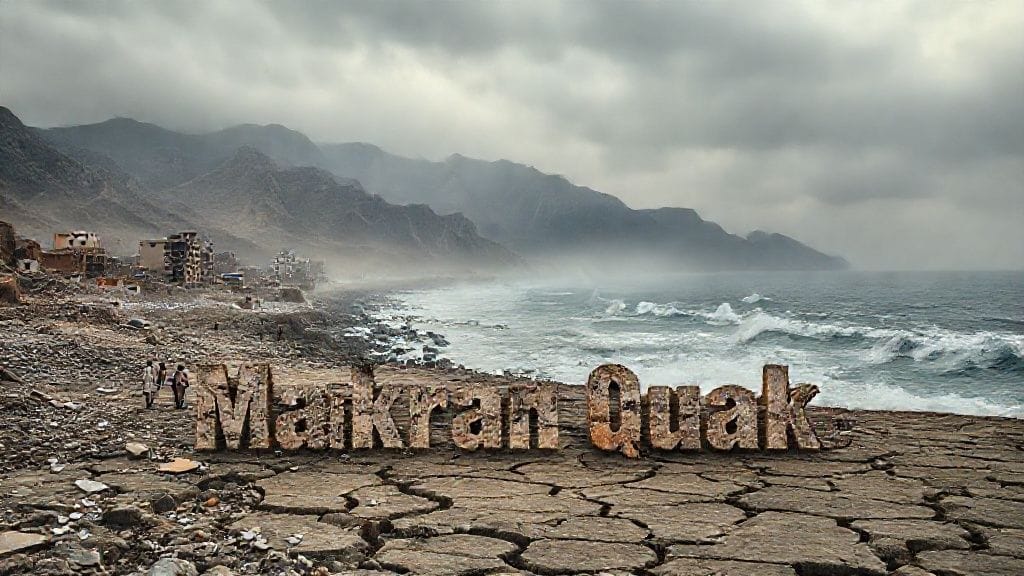
Seawater breached coastal dunes, retreating briefly before surging back with massive waves—the first signs of the tsunami that would follow. In settlements such as Gwadar, Pasni, and Jiwani, entire villages vanished. Fishermen out at sea struggled to find footing in a suddenly churning ocean.
Communication was severed almost instantly. The lack of infrastructure and the remoteness of Makran compounded the disarray as survivors tried to locate missing relatives or signal for help. The night was punctuated by aftershocks – smaller tremors but persistent reminders of the earth’s volatility.
5. Makran’s Terrible Toll: Human Lives and Devastation
Official estimates of casualties remain uncertain, cloaked in the shadows of limited record-keeping and the remoteness of affected areas. Contemporary reports speak of thousands of dead and displaced residents in the coastal zones. Some villages were obliterated entirely, their populations wiped out or forced to flee.
In total, it is believed that between 4,000 and 8,000 people tragically lost their lives. More were injured or left destitute. Disease and famine followed in the quake’s wake as infrastructure collapse impeded food supply and healthcare.
Beyond numbers, the earthquake uprooted entire communities dependent on fishing and trade. The destruction of ports and boats crippled economic lifelines. Nomadic tribes struggled as their traditional lands bore fresh scars.
6. The Tsunami That Rode the Persian Gulf
While few could have anticipated the scale of the floodwaters, the Makran earthquake generated a tsunami with waves reportedly up to 12 meters high in some coastal areas. These waves slammed into Iranian and Pakistani shores, sweeping away houses, livestock, and any chance of survival for those caught unawares.
The tsunami amplified the disaster’s lethality far beyond the shaking itself. Coastal watchfulness was virtually nonexistent, making this sudden deluge devastating in both human and infrastructural terms. Villages situated on low-lying islands and coastal plains were most vulnerable.
The ripple effects were felt hundreds of kilometers away, reminding the world of the dangers lurking in the ocean’s depths.
7. Borderlands in Crisis: Pakistan and Iran’s Shared Catastrophe
The earthquake and tsunami did not respect political boundaries. Both sides of this stretch of the Arabian Sea confronted disaster simultaneously. Although Iran’s Makran coast was less densely populated than Pakistan’s Baluchistan region, losses were significant.
At the time, Pakistan was a new country, barely two years into its independence, grappling with numerous developmental challenges. Waning colonial infrastructure struggled to mount an efficient response, as did the Iranian government, which was itself dealing with the aftermath of WWII and domestic upheaval.
Cross-border cooperation was minimal, and communication sparse. Yet, the shared trauma eventually sowed seeds for future disaster management dialogues between the two nations.
8. Local Communities and the Earth’s Fury: Personal Stories
Amidst the destruction were stories of resilience, tragedy, and human spirit. Fishermen who lost entire fleets found themselves adrift in poverty. Families buried loved ones in mass graves; others recounted feeling the earth open beneath their homes in what they described as “the day the mountains danced.”
A poignant testimony from a Jiwani resident read decades later illustrates this:
"I remember how the night sky seemed to crack open. The ground didn’t just move—it heaved, spat, and swallowed our village. We ran to the hills as the sea swallowed everything behind us. We were lucky to survive—the rest of my family was not."
Such narratives illuminate the raw emotional pulse beneath the geological event, humanizing newsprint figures and technical data.
9. The Global Scientific Response to the Makran Earthquake
Although World War II had ended only months earlier, scientific communities quickly took interest in the event. American and European geologists, keen to understand the Pacific and Indian Ocean “Ring of Fire” regions, began detailed analyses. Seismologists examined data provided by sparse but functional observatories.
The Makran earthquake helped catalyze research on subduction zone quakes outside the more notorious Pacific Rim, contributing to the early mapping of seismic risks in the Middle East and South Asia. It also spurred investigations into tsunami genesis, as the waves highlighted the ocean's role as both a medium and messenger of seismic activity.
10. Reconstructing Lives Amidst Rubble and Fear
Rebuilding after such intense destruction in a remote and logistically difficult region was a Herculean task. Pakistan and Iran faced not just physical challenges, but the emotional and economic aftermath of widespread loss.
International aid was limited and slow in arriving. Local governments marshaled whatever resources they could, prioritizing temporary shelters, medical care, and restoring trade routes. Over the next years, reconstruction efforts were painstaking and slow.
Displaced families often settled permanently elsewhere, changing the demographic composition of Makran’s fringes.
11. Historical Neglect: Why Makran’s Disaster Remains Little Known
Despite its severity, the Makran earthquake has largely remained absent from mainstream historical discourse or global awareness, overshadowed by events of post-war reconstruction and later seismic catastrophes in Asia.
Two factors contributed: the remoteness of the affected area and local socio-political marginalization. Media coverage was sparse; archival documents remain scattered and incomplete. For decades, even Pakistan and Iranian governments gave limited prominence to this tragedy.
This collective amnesia contrasts sharply with the devastation suffered and makes retrospectives like these essential.
12. Geological Insights: The Earthquake as a Window Into Plate Tectonics
The 1945 Makran event provided crucial, albeit indirect, evidence supporting the theory of plate tectonics, which at that time was still gaining scientific traction.
It demonstrated the power of subduction zones far outside the better-studied Pacific and Caribbean contexts, reinforcing the global nature of such tectonic boundaries. The tsunami generated also illustrated the coupling between seismic fault rupture and oceanic wave displacement—a fundamental concept in modern tsunami science.
Today, Makran is considered one of the few major subduction zones globally without large megathrust earthquakes since 1945, raising concerns about future seismic risk accumulation.
13. Modern Surveillance and Lessons from 1945 Makran
Contemporary seismology has improved by leaps since 1945, with satellites, ocean-bottom seismometers, and early warning systems enhancing human defensibility. Nonetheless, the Makran region remains a seismic blind spot, with sparse instrumentation giving rise to fears about incomplete hazard assessments.
Lessons—hard-earned from history—underscore the necessity of regional cooperation, public education, and scientific monitoring. Governments in Pakistan and Iran have begun collaborating on coordinated early warning protocols, informed partly by the events of 1945.
14. The Socio-Economic Impact on Coastal Settlements
The earthquake induced not only immediate destruction but long-term changes in economic patterns. Fishing communities, reliant on small boats and fragile infrastructure, faced hurdles rebuilding assets lost to shaking and waves.
Trade routes shifted as ports such as Gwadar took decades to recover fully. Environmental damage to coastal ecosystems affected fish populations, compounding hardships.
The disaster’s demographic impact is still visible today in the makeup of Makran’s towns and villages.
15. Makran Earthquake in Iranian and Pakistani Collective Memory
In local oral histories, the Makran earthquake lives under various names: “The Great Shaking,” “The Night of the Sea’s Wrath.” Yet, its narrative differs across cultures, with each country weaving the trauma into their regional identity fragments.
Remembrance ceremonies are rare but poignant in coastal villages. The disaster has influenced folklore, literature, and even religious interpretations of calamity and survival.
Yet, national educational curricula hardly mention it, underscoring the tension between memory and neglect.
16. From Tragedy to Preparedness: How History Shapes Disaster Readiness
The legacy of 1945 fueled gradual improvements in disaster preparedness. Makran today hosts workshops on earthquake awareness, tsunami evacuation drills, and improved infrastructure design.
The tragedy’s lessons inform broader discourse on South Asian disaster risk reduction strategies, focused on building community resilience in vulnerable zones.
17. The Makran Earthquake and Regional Geopolitics in Postwar South Asia
Amid emerging independence movements and global power shifts post-1945, the earthquake briefly shaped regional geopolitics by highlighting shared vulnerabilities. It exposed gaps in cross-border infrastructure and crisis communication during a time when Pakistan and Iran were both negotiating national identities.
Though not decisive politically, the event pressured governments toward more pragmatic cooperation in disaster response.
18. Unearthing Forgotten Archives and Eyewitness Testimonies
Recent decades have seen renewed efforts by historians and geologists to collect oral histories, examine colonial-era reports, and map earthquake damage distribution with modern techniques. This revived interest is peeling back decades of obscurity, giving voice to survivors and scientists alike.
Through such endeavors, the rich and tragic story of the 1945 Makran earthquake is finally emerging from historical shadows.
19. Tsunami Warning Evolution: Tracing Back to 1945 Events
The tsunami unleashed by the earthquake, though unmonitored at the time, illuminated crucial gaps in early warning systems. Makran’s waves joined a lineage of devastating tsunamis that eventually spurred the creation of regional warning systems, including the Indian Ocean Tsunami Warning System decades later.
Although not a direct catalyst, the 1945 disaster acts as an early chapter in humanity’s ongoing battle to predict and mitigate ocean-borne seismic hazards.
20. The Silent Revolution of Earth Science Post-Makran
The earthquake encouraged scientists to focus on subduction zones in the northwestern Indian Ocean, an area previously neglected in seismic risk studies.
It also influenced seismic hazard maps, disaster management policies, and global understanding of Earth’s dynamic crust. Many principles learned here find application across the world’s most vulnerable coastal communities.
21. Conclusion: Remembering the Earthquake That Shook Two Nations
The 1945 Makran Earthquake stands as a powerful reminder of nature’s unpredictable power and the fragile line between survival and devastation. Though underappreciated in popular history, its impact lives on in the memories of coastal communities, the evolving science of seismology, and the continuous efforts to prepare for future disasters.
As we recall that night—when earth trembled, seas surged, and lives were irrevocably changed—we honor both the victims and the resilience of those who endured. The lessons of Makran urge us never to forget that beneath our feet, vast forces wait silently, reminding humanity of its place within the restless planet.
FAQs: Understanding the Makran Earthquake of 1945
Q1: What caused the Makran Earthquake of 1945?
The earthquake was triggered by a rupture along the Makran Subduction Zone, where the Arabian Plate is forced beneath the Eurasian Plate, releasing accumulated tectonic stress.
Q2: How strong was the earthquake?
It had an estimated magnitude of 8.0 to 8.1, making it a major seismic event with catastrophic impacts on nearby coastal communities.
Q3: What were the main consequences of the earthquake?
Beyond widespread destruction and loss of life, the quake generated a tsunami, crippled economies reliant on fishing and trade, and altered regional demographics.
Q4: Why is the 1945 Makran Earthquake not widely known?
Its remote location, limited media coverage, and the geopolitical context of the time contributed to its relative obscurity in global and national historic memory.
Q5: How did the earthquake affect Pakistan and Iran?
Both countries suffered human and infrastructural losses, with cross-border regions enduring the brunt of damage. It exposed gaps in disaster response and later influenced regional cooperation.
Q6: What lessons did earth scientists learn from this event?
The earthquake provided important data on subduction zone behavior, tsunami genesis, and emphasized the global need to monitor seismic risks in lesser-known fault zones.
Q7: Are there ongoing risks in the Makran region today?
Yes. The Makran Subduction Zone remains active, and scientists warn that accumulated strain could produce future large earthquakes, necessitating preparedness.
Q8: How has the memory of the earthquake influenced local culture?
Locally, it is preserved through oral histories, folklore, and communal remembrance, though it remains largely absent from formal education.