Table of Contents
- A Shattering Dawn in Balochistan
- Before the Rupture: Ziarat’s Land, People, and History
- Fault Lines Beneath Quiet Valleys
- The Night Before: Ordinary Life on the Eve of Disaster
- 04:09 a.m.: The Moment the Earth Roared
- Minutes of Chaos: Families, Fragile Houses, and Falling Mountains
- A District Transformed: Landslides, Cracks, and Vanished Villages
- The First Responders: Locals, Soldiers, and the Race Against Time
- Counting the Cost: Casualties, Ruins, and Lives Interrupted
- Children of the Quake: Trauma, Orphans, and Broken Classrooms
- Politics Amid Rubble: State, Province, and the Struggle for Trust
- Shelter, Tents, and the Coming Winter
- Stories from the Epicenter: Voices of Loss and Survival
- Science After Shock: What Geologists Learned from Ziarat
- Memory, Mourning, and the Cultural Landscape of Grief
- From Emergency to Recovery: Rebuilding Homes and Futures
- Lessons in Preparedness: What Changed in Pakistan’s Disaster Policy
- The Ziarat Earthquake in Global Perspective
- Fading Headlines, Enduring Scars
- Conclusion
- FAQs
- External Resource
- Internal Link
Article Summary: On 29 October 2008, before dawn had properly broken over the mountains of northern Balochistan, the ziarat earthquake 2008 tore through a chain of remote villages and forever altered the landscape of Pakistan’s memory. This article journeys from that shuddering instant at 04:09 a.m. through the quiet centuries that preceded it, explaining how culture, politics, and geology conspired to make this disaster so devastating. It traces the heroic struggles of villagers, soldiers, doctors, and volunteers who fought rockfalls, cold, and chaos to pull survivors from rubble. It explores the human cost in broken families, traumatized children, and scattered communities, as well as the official narratives that tried—sometimes imperfectly—to impose order on a landscape of loss. Along the way, we examine how scientists pieced together the story of the hidden fault, and how policymakers tried to turn tragedy into lessons in preparedness. Above all, the article lingers on personal stories and emotional echoes, suggesting that long after the media moved on, the ziarat earthquake 2008 continued to shake lives in less visible ways. It invites readers to see this event not as a remote catastrophe, but as a profoundly human chapter in the global story of earthquakes and resilience.
A Shattering Dawn in Balochistan
In the stillness before dawn on 29 October 2008, the mountains around Ziarat—an alpine district tucked into the highlands of Balochistan, Pakistan—were wrapped in a brittle kind of silence. The air was thin and cold, the kind that slices through shawls and blankets, forcing families to huddle closer around dim lanterns or embers that had not yet completely died. In small stone and mud houses scattered across villages like Wam, Kawas, and Gogi, people slept under heavy quilts. Children dreamed of schoolyards and cricket matches; fathers and mothers dozed in a fatigue shaped by fields, flocks, and the slow grind of rural life. Nothing about that night suggested that by sunrise, their world would be almost unrecognizable.
The ziarat earthquake 2008 would enter the record books as a magnitude 6.4 event, modest compared with some of history’s titanic quakes, yet cruelly efficient in its timing, location, and style of destruction. Its epicenter lay in the rugged hills about 70 kilometers north of Quetta, capital of Balochistan, a province already etched into Pakistan’s consciousness by droughts, insurgency, and the legacy of earlier seismic disasters. But this time, it was the secluded valleys of Ziarat district—celebrated among Pakistanis for their juniper forests and cool summer retreats—that would bear the brunt.
At 04:09 a.m., the earth growled. People would later say it was as if a heavy truck had crashed directly into their houses, as if something ancient beneath the mountains had coughed, twisted, and then decided to rise. A first tremor, strong and sickening, jerked sleeping families awake. Barely forty minutes later, as some stumbled outside, the second, more powerful jolt would unleash chaos. Within minutes, entire hamlets had collapsed into jagged mounds of stone, timber, and dust. Landslides cascaded down steep slopes, tearing open hillsides and burying paths, orchards, and herds. The chilly, star-inked sky echoed with screams.
In those first bewildering hours, before news reports, before helicopters, before official statements and damage assessments, the ziarat earthquake 2008 lived only in human bodies and voices. Mothers clawed through rubble with raw hands; fathers sprinted barefoot over broken ground; children, white with dust, stared wide-eyed at the ruins that had been home. Dogs barked madly, cows lowed in panic, and in the high passes, rocks still tumbled intermittently, as if the mountains were trying to settle back into a shape that no longer fit.
But as devastating as that morning was, it did not materialize out of nowhere. To understand why the earth chose that moment to break—and why the consequences were so uneven, so deadly—we must step back into the deeper history of this land, and the fault lines, human and geological, that long predated October 2008.
Before the Rupture: Ziarat’s Land, People, and History
Long before seismologists drew their maps and instruments began to needle out the faint tremors of the earth, the people of Ziarat understood their homeland as a living, breathing landscape. Nestled at elevations between 2,000 and 3,000 meters, the district’s valleys and ridgelines form a world that feels almost detached from the hot plains of Pakistan. Stands of ancient juniper trees—some estimated to be thousands of years old—cling to the slopes, their twisted forms making them look like elders engaged in perpetual conversation with the wind.
Historically, Ziarat was a place of passage and refuge. Baloch and Pashtun tribes moved through these mountains with seasons, driving flocks of sheep and goats along narrow paths worn deep by centuries of hooves. The name “Ziarat,” meaning “shrine” or “pilgrimage” in Urdu and Persian, reflects spiritual dimensions: a place where saints were believed to be buried, where travelers offered prayers for safe passage. During British colonial rule, the area gained an additional layer of significance when it became a summer retreat for officials escaping the oppressive heat of the plains. Quaid-e-Azam Muhammad Ali Jinnah, the founding father of Pakistan, would spend his last days in a bungalow here, which later turned the town into a site of national memory.
But beneath the quaint tourist brochures and the national mythology, Ziarat remained a district of dispersed, marginal communities. Villages were small and often perched on slopes or wedged between ravines and dry riverbeds. Houses were built from what the land offered: local stone, unreinforced masonry, sun-dried mud bricks, timber beams. Floors were compacted earth; roofs were sometimes flat, sometimes gently sloped, supported by wood that had been repeatedly repurposed over generations. These homes were built more for insulation against cold and heat than for resistance against lateral shaking.
Economic opportunities were limited. Many men migrated seasonally to cities like Quetta and Karachi for work, sending remittances back to maintain their families. Those who stayed tended orchards—apples and cherries prominent among them—and grazed livestock. Women’s labor, often invisible to official statistics, sustained households through weaving, food preparation, and the ceaseless care work of raising children and looking after the elderly.
Politically, Balochistan was the periphery of the Pakistani state: vast, sparsely populated, and chronically under-served by infrastructure and social services. Roads were few and often in poor repair; health facilities were thinly spread; schools were not always staffed. A sense of neglect and grievance ran through many local narratives. It was into this world—beautiful, proud, and precarious—that the ziarat earthquake 2008 would intrude, exposing vulnerabilities that had accumulated over decades and even centuries.
Fault Lines Beneath Quiet Valleys
While villagers told stories of jinns and saints, of ancestral migrations and tribal feuds, another, slower story was unfolding deep under their feet. Pakistan sits at the collision zone between the Indian and Eurasian tectonic plates, one of the most geologically turbulent regions on Earth. Over millions of years, the inexorable northward thrust of the Indian plate has pushed up the Himalayas, Karakoram, and Hindu Kush ranges, along with the complex mountain systems of Balochistan. Every mountain ridge, every twisted fold of rock, whispers of unimaginable pressures and fires from an ancient geologic past.
Balochistan’s mountains are not young in the sense of the Himalayas, but they remain restless. The region is crisscrossed by faults: fractures in the crust along which blocks of rock can suddenly slip. These faults are often “blind,” meaning they do not break the surface, and can be invisible to the naked eye. Such hidden weaknesses can remain locked for decades, even centuries, storing strain like a wound that has scabbed over but not healed. When the friction holding them in place is finally overcome, the release is sudden, furious, and unforgiving.
Seismologists who later studied the ziarat earthquake 2008 warned that this was not an isolated incident but a reminder of a long and hazardous fault system. Using data from global seismic networks and field surveys, they concluded that the event was likely associated with a previously underappreciated fault linked to the broader Chaman fault zone—a major strike-slip system that accommodates much of the relative motion between India and Eurasia in this region. The earthquake’s hypocenter, estimated at around 10–15 kilometers deep, was shallow enough to transmit intense shaking to the surface.
To the villagers living above, none of that scientific language mattered on 28 October 2008. There were, as in many earthquake stories, subtle omens interpreted only in retrospect. A shepherd in one village later recalled how his dog had been unusually agitated the previous afternoon, barking at nothing, refusing to sleep. A woman in another hamlet remembered how the water in the clay pot had rippled without an apparent breeze. But in the absence of a culture of seismic education, these moments did not register as warnings. They blended into the ordinary tapestry of rural life, where animals were often restless and water sometimes danced to the tune of a passing truck or a gust of wind.
When the fault finally slipped in the early hours of 29 October, it released energy that had been accumulating in the rocks for an unknown span of time—decades, perhaps centuries. The violence of that release traveled as seismic waves, racing through the crust, shaking the mountains, and turning solid ground into something briefly fluid. In seconds, the theoretical diagrams in geology textbooks became crushing reality.
The Night Before: Ordinary Life on the Eve of Disaster
The day before the earthquake was, outwardly, nothing special. In the main town of Ziarat, shopkeepers closed their shutters as evening fell. Tea houses filled with men sipping steaming cups of chai, discussing politics, cricket, and the price of fodder. Some mentioned the chill that was creeping earlier into the evenings; winter, they knew, would soon press down on the district. Preparations had already begun: extra firewood stacked, blankets aired, roofs inspected for leaks.
In the villages closer to the eventual epicenter, life followed an even more intimate rhythm. After the sunset prayer, families gathered around simple dinners—dal, bread from the tandoor, occasional meat stews saved for special days. Children recited lessons by the light of dim bulbs or kerosene lamps, rehearsing lines in Urdu, Pashto, or Balochi. Stories were told, as they had been for centuries, of ancestors who had survived famines and wars, of the famous juniper forests whose trees were said to be older than empires.
One teacher in a village school near Wam spent the evening marking exercise books and sketching out a plan to explain fractions to his students the next morning. He had no idea that by dawn, his classroom would be a pile of rubble and many of those students would never again sit at a desk. A young bride, married only months earlier, folded her wedding clothes carefully into a wooden trunk, thinking of the children she hoped to have. She would wake just in time to see that trunk crushed under a collapsed wall.
Pakistan, in late 2008, was still processing the trauma of the 2005 Kashmir earthquake that had killed over 70,000 people and left millions homeless. Yet in these remote corners of Balochistan, the lessons from that catastrophe had reached only faintly. There were few public drills, almost no earthquake-resistant construction, and little sense that the mountains themselves might turn malevolent. In the absence of recent local memory of major quakes, the threat seemed abstract.
As villagers banked their fires and settled down to sleep on 28 October, a quiet, unremarkable evening drew to an end. Above them, the stars burned coldly clear. Below them, along a fault line written into the bones of the mountain, stress built to a point where something had to give.
04:09 a.m.: The Moment the Earth Roared
The first tremor struck at 04:09 a.m. It began, many survivors said, as a deep, unnatural sound—like a giant boulder grinding against another, or distant thunder trapped underground. Then the shaking arrived: a violent, horizontal shudder that sent sleeping bodies rolling, flung pots and dishes to the floor, and knocked clocks off walls. In those first seconds, confusion was total. People groped blindly in the dark, stumbling over family members and scattered possessions.
Old masonry houses behave badly in earthquakes. Their heavy roofs and brittle walls cannot flex with the motion; instead they fracture, crumble, and collapse, often in a single, devastating movement. In some hamlets, the first jolt was enough to bring down entire rows of houses. Others held, cracked and sagging but not yet broken, granting their inhabitants a narrow window of escape. Women grabbed children in the dark, not always their own; men shouted instructions no one could hear above the din of crashing masonry and terrified cries.
Then, as suddenly as it began, the shaking stopped. Dust hung in the cold air like a low, choking fog. Dogs howled. Somewhere a baby cried, a sound piercing enough to cut through the numbness. People staggered out into courtyards and open spaces, shivering—some from cold, others from shock. They looked around, disoriented, at the broken lines of their homes, the crooked doorframes, the bent iron doors. In the highlands, landslides had already carved fresh wounds into slopes, cutting off footpaths and mule tracks.
Many thought it was over. In a region where tremors were not unheard of but major earthquakes were rare, there was no ingrained instinct to expect a powerful aftershock. Some, frightened to stay indoors, clustered outside, wrapping shawls tighter against the night air. Others, especially the elderly and the very young, drifted back into the remnants of their houses, seeking warmth and wondering if perhaps the danger had passed.
But the ziarat earthquake 2008 had not yet finished its grim work. At approximately 05:10 a.m., the second, stronger tremor struck. Seismologists would later characterize the event as a doublet—two closely spaced quakes that compounded the damage. For the people of Ziarat, it felt like a betrayal: just as they had begun to regain their footing, the world was thrown back into chaos. Already-weakened walls gave way; partially collapsed roofs came down entirely. Those who had hesitated indoors were trapped. Outside, people watched helplessly as houses folded in on themselves in slow, horrifying choreography.
Across the district, the same scene replayed with minor variations. In one village, a father darted back into his leaning house to retrieve a sleeping son; he emerged moments before the second jolt, clutching the boy as the building imploded behind him. In another, a mother who had gone back to fetch blankets for her shivering children never reemerged. The earth shook, the mountains slid, and in a matter of minutes, the map of Ziarat—physical and emotional—had been irreversibly redrawn.
Minutes of Chaos: Families, Fragile Houses, and Falling Mountains
After the second major shock, time seemed to break into fragments. Survivors would later struggle to recall what happened first: the cries, the dust, the rush to dig, the eerie, intermittent silence. In many places, dawn was still a suggestion at the horizon, leaving people to navigate a landscape of ruin in semi-darkness. Without electricity in most villages, flashlights and lanterns became lifelines. Some stumbled through the debris with the light from mobile phones, their batteries already dangerously low.
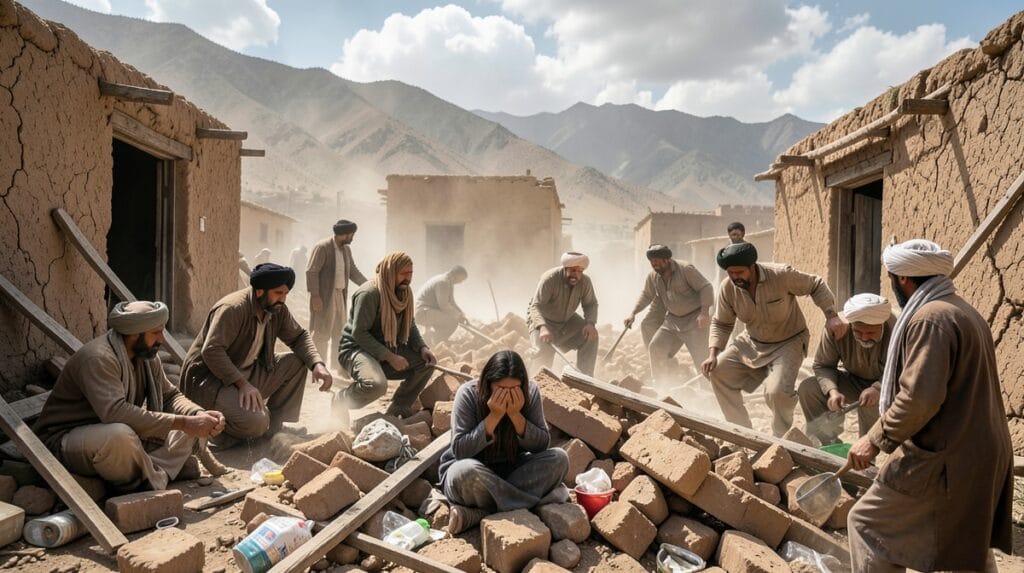
In the most severely hit areas, stone houses not only collapsed but also triggered secondary hazards. Walls toppled outward into narrow lanes, blocking exits and crushing anyone who tried to escape too late. Heavy roof beams fell like guillotines. Storage rooms filled with grain and fodder exploded into clouds of choking dust, while kitchens became lethal traps of shattered clay ovens and fallen chimneys. The chaotic architecture of many rural homes—incrementally built, often without formal plans—turned against their inhabitants.
Outside, the mountains themselves seemed unstable. Rockfalls continued sporadically for hours, thundering down gullies and slopes. One farmer recalled later how the sound of sliding earth and stones was “like a hundred trains in the sky,” accompanied by sharp cracks as boulders split apart. Paths that had been safe for generations suddenly dropped away into voids. Newly formed fissures, some meters deep, cut through fields and tracks, making the simple act of walking dangerous.
Amid this geological theater, human responses oscillated between paralysis and frantic action. Some people stood stunned, staring at the ruins of their homes, unable to process the magnitude of loss. Others immediately began to dig, using bare hands, broken planks, farm tools—anything—to reach those buried. The traditional social fabric of Baloch and Pashtun communities, with its emphasis on clan solidarity and mutual obligation, now became a survival mechanism. Cousins dug for cousins, neighbors for neighbors, sometimes literally lifting stones that would have been impossible for an individual alone.
There was no central coordination in those first hours. No sirens, no rescue teams in helmets and high-visibility jackets, no heavy machinery. Help, at that moment, was simply whoever was still standing. A teenage boy might suddenly find himself organizing a rescue line; an elderly woman might become the anchor of a group of children separated from their parents. It was raw, improvisational heroism, the kind that rarely makes it into official reports but forms the core of disaster survival.
The ziarat earthquake 2008 was not just a story of collapsing buildings; it was also a story of collapsing assumptions. People who had believed that their stone houses, solid and heavy, symbolized stability now saw that weight become a liability. Those who took the mountains’ permanence for granted watched them move, as if waking from a long sleep. The psychological tremors would linger long after the physical shaking stopped.
A District Transformed: Landslides, Cracks, and Vanished Villages
As the first rays of sunlight crept over the ridges, the full scale of the transformation began to reveal itself. What had been a patchwork of villages, orchards, and grazing lands now looked, in some places, like a battlefield. The morning light illuminated landslides that had sliced through hillsides like knife cuts, long streaks of brown and gray where vegetation and topsoil had been stripped away. In several valleys, entire slopes had slumped forward, burying houses and fields in dense, heavy blankets of rock and earth.
Roads, already rudimentary, suffered grievous damage. Asphalt cracked and buckled; in some places, stretches of road disappeared altogether under rockfalls. Bridges were damaged or buried. Communication between villages—and between Ziarat district and the outside world—was reduced to a handful of passable tracks, many of them only usable on foot or by mule. It would take hours, sometimes days, for the news of devastation in smaller settlements to reach district authorities.
Villages such as Wam and Kawas became shorthand in national media for the scale of destruction, but dozens of lesser-known hamlets also suffered intensely. In some, the majority of houses were destroyed or rendered unsafe. Many communities were effectively displaced overnight, their residents forced to camp in open fields or along comparatively safe ridges. People who had lived for generations in a particular cluster of houses now found themselves wandering unfamiliar terrain, looking for patches of level, unobstructed ground.
The quake also scarred the natural environment in quieter but no less profound ways. Springs altered their flow; some dried up, others emerged at new locations. In the famous Ziarat juniper forests, trees were toppled or destabilized, their deep but brittle root systems no match for the soil movement. Wildlife patterns shifted: frightened animals fled their territories, while livestock, disoriented, wandered off. The ecology of the area, already fragile due to overgrazing and climate pressures, received another, sudden shock.
Satellite imagery captured in the days after the earthquake gave scientists and officials a bird’s-eye view of this transformation: fresh landslides, new fractures, discolored patches where dust still hung in the air. But for the people on the ground, it was not an abstract reconfiguration. Each new crack in the earth intersected with personal geographies: the path a child took to school, the edge of a field that had provided food for the family, the spot where a grandfather used to sit under a tree. The physical and emotional maps of Ziarat had been overlaid with new, painful coordinates.
In the midst of this altered landscape, questions emerged that no one could yet answer. Were the tremors over, or would there be more? Which houses, if any, were still safe to enter? How would the district survive winter with thousands of people homeless? The ziarat earthquake 2008 had not only destroyed structures; it had also shaken confidence in the very ground beneath people’s feet, leaving them to navigate both literal and metaphorical fault lines.
The First Responders: Locals, Soldiers, and the Race Against Time
When the first reports of a “strong earthquake near Ziarat” reached Quetta in the early morning, they were fragmentary and confused. Telephone lines were jammed or down; radio transmissions crackled with partial messages. Within hours, however, the Pakistani Army and Frontier Corps began mobilizing troops, helicopters, and medical units. It was clear that something serious had happened, but nobody in the provincial or federal capitals yet grasped the depth of the catastrophe in the district’s remote corners.
On the ground, local first responders did not wait for orders. Health workers at small rural clinics, themselves shaken by the tremors, rushed to treat the wounded with whatever supplies they had. Teachers turned schoolyards into makeshift triage centers. Men with pickup trucks began to ferry injured villagers toward Ziarat town or further on to Quetta, navigating treacherous, debris-littered roads. Time quickly took on a desperate quality: every hour lost might mean another life slipping away under the rubble or from untreated injuries and exposure.
Helicopters—Pakistan Army MI-17s and smaller utility craft—soon became the most visible symbols of organized rescue. They beat the thin mountain air, weaving through valleys, searching for flat patches of land where they could set down. Relief teams dropped tents, blankets, and basic medical supplies into accessible clearings, often signaling with hand gestures to villagers below. In some cases, pilots risked landing on precarious ledges or widening narrow terraces with their rotor wash to evacuate the most seriously injured.
Yet the scale and terrain of the ziarat earthquake 2008 posed stubborn obstacles. Dozens of communities were not directly reachable by road or helicopter. In these places, young men and boys formed stretcher teams, carrying the injured on makeshift litters made from bed frames, doors, or woven charpoys. They walked for hours, sometimes days, to reach the nearest functioning clinic or aid distribution point. The physical strain was enormous; so was the emotional toll of listening to those they carried slip into unconsciousness, or worse, along the way.
International organizations, including the United Nations agencies and NGOs experienced from the 2005 Kashmir response, also moved in, but the window for saving the most critically wounded was narrow. Aid workers would later note both improvements and persistent gaps compared with earlier disasters: there was quicker mobilization of government resources and some pre-positioned relief supplies, but coordination between civilian and military responders remained uneven, and information about needs in the most remote hamlets was slow to filter through.
Still, amid the bureaucratic chaos, countless acts of unrecorded kindness unfolded. A shopkeeper in Ziarat town, for example, threw open his stock of blankets and clothing, telling survivors to take what they needed and pay only if and when they could. A group of medical students from Quetta pooled their savings, hired a truck, and brought basic medicines and bandages to outlying villages. The story of the ziarat earthquake 2008, when read closely, becomes a mosaic of such gestures—small lights in a landscape darkened by loss.
Counting the Cost: Casualties, Ruins, and Lives Interrupted
In any disaster, numbers often arrive before names. Within days, official casualty figures for the Ziarat region began to solidify: over 200 dead across Balochistan, with the highest concentration in Ziarat and the neighboring district of Pishin. More than 1,000 people were injured. Estimates of displaced people hovered around 70,000, though the precise count was complicated by seasonal migration, tribal structures, and the dispersal of households.
These statistics, however, could not fully convey the intimate scale of loss. In some villages, a quarter or more of the population had been killed or severely injured. The demographic patterns were haunting: a disproportionate number of victims were women and children, many of whom had been asleep indoors when the houses collapsed. One relief worker, describing a visit to a devastated hamlet, noted that “almost every family had lost someone; many had lost several.” The cemetery, hastily expanded, told the story in rows of freshly turned earth.
The built environment fared little better. Official assessments suggested that around 8,000 to 10,000 houses were destroyed or seriously damaged in Ziarat district alone. Schools, clinics, mosques, and small businesses also suffered. The blanket term “damaged” obscured a spectrum of ruin: homes whose walls bulged dangerously, buildings split down the middle by cracks wide enough to slip a hand through, structures that had simply turned into piles of stone and dust with only a crooked doorframe or a scrap of corrugated metal to hint at their former shape.
Economic losses, measured in monetary terms, ran into tens of millions of dollars—significant for a poor district whose GDP contribution to Pakistan’s national economy was already modest. But for individual families, the destruction of a house represented not just the loss of shelter but the disappearance of their primary asset, often accumulated incrementally across generations. Furniture, clothing, dowry chests, schoolbooks, livestock feed, and seed stores vanished in a single, violent morning.
The ziarat earthquake 2008 struck a region where insurance was virtually non-existent and access to formal banking limited. There would be no payouts from private companies, no savings accounts to draw on for many. The immediate questions were stark: where to sleep that night, how to feed children, how to tend to the injured. But behind those urgent concerns loomed longer-term anxieties: whether they would ever rebuild with the same materials, in the same way, on the same ground—and whether the state would help or abandon them.
Behind every casualty number lay a story: a teacher crushed beneath the blackboard he had used to shape young minds; a grandmother who died shielding a grandchild; a teenage girl whose legs were pinned under debris for hours before rescuers reached her, leaving her with injuries that would alter the course of her life. These narratives, shared in tents, clinics, and later in rebuilt homes, formed an oral archive of the quake—a counterpoint to the neat, impersonal tables of official reports.
Children of the Quake: Trauma, Orphans, and Broken Classrooms
Among the most enduring human images of the ziarat earthquake 2008 are those of children: small figures wrapped in oversized shawls, standing near ruined houses, eyes too old for their faces. For them, the disaster was not just a physical event but a psychological rupture that challenged their sense of safety and continuity. One day, home was a predictable world of family routines and school lessons; the next, it was rubble and absence.
Dozens of children lost one or both parents. Local customs of extended family care meant that many were absorbed into the households of uncles, aunts, and older siblings, but the emotional dislocation was profound. Humanitarian agencies reported high levels of night terrors, bed-wetting, and anxiety among children in the weeks and months following the earthquake. Some refused to sleep indoors, insisting that only the open sky felt safe. Others became unusually quiet, their play muted or entirely absent.
Schooling suffered a double blow. Many school buildings were damaged beyond use, while others were declared unsafe until structural assessments could be made. In the immediate aftermath, education was understandably not the first priority. Yet teachers soon recognized that reopening schools—even in tents or under trees—could offer children a semblance of normalcy. “If they could recite their lessons, even a little, it meant the world had not fully broken,” one teacher later reflected.
Ad hoc “tent schools” sprang up in camps and near clusters of temporary shelters. Teachers improvised blackboards from plywood or painted walls. Textbooks, where salvageable, were shared; in many cases, aid agencies provided new supplies. But the trauma shadowed these sessions. Children’s drawings often featured collapsing houses, shaking mountains, and helicopters—testimony to how deeply the disaster had colonized their imaginations.
Psychosocial support, a concept gradually taking root in Pakistan’s disaster response frameworks after 2005, was patchy but present. Trained counselors were too few for the scale of need, yet some made their way to the most affected communities, offering group activities, play therapy, and safe spaces for children to express fear and grief. In one group exercise, children were asked to tell stories about a “brave boy or girl” who survived a big shaking of the earth. The narratives they produced were thinly veiled accounts of their own experiences, reframed through the lens of resilience.
The effects of the earthquake on children’s life trajectories unfolded over years. Some, having lost homes and livelihoods, dropped out of school to contribute to family income, taking on work in fields or migrating to cities. Others, galvanised by the experience, developed a fierce interest in medicine, engineering, or humanitarian work, vowing to “help people in the next disaster.” Disasters, historians remind us, do not only destroy; they also re-route lives in unexpected directions. For the children of Ziarat, the early morning of 29 October 2008 became a reference point by which time itself would be divided: before the quake, and after.
Politics Amid Rubble: State, Province, and the Struggle for Trust
No major disaster in Pakistan unfolds outside the tangled web of politics, and the ziarat earthquake 2008 was no exception. Balochistan, long simmering with grievances over resource distribution, autonomy, and representation, watched closely to see how the federal and provincial governments would respond to the suffering of its mountain communities. Officials, in turn, were acutely aware that their actions—or inactions—would be interpreted through a political lens.
In the first days, high-level delegations visited the affected areas. The Prime Minister and other senior politicians flew into Ziarat, toured camps, and announced relief packages. Television cameras followed, broadcasting images of handshakes with survivors and solemn promises to “rebuild better than before.” Cash compensation for the families of the deceased and the injured was pledged, along with funds for house reconstruction and public infrastructure.
Yet delivering on these promises proved complicated. Balochistan’s administrative machinery was thinly stretched, and verifying claims in remote, tribal areas presented logistical and political challenges. Who counted as a “household”? How was damage to be assessed—by engineers, local officials, or community leaders? Which destroyed homes were primary residences and which were seasonal? These seemingly technical questions quickly became sources of contention.
Accusations of favoritism and corruption surfaced, as they often do in post-disaster contexts. Some families claimed they received only a fraction of the announced compensation; others said they were left out entirely. Tribal hierarchies played a role, with better-connected groups sometimes securing more aid. Government officials, for their part, pointed to the sheer difficulty of the terrain and the urgency of acting fast with incomplete data. The truth, as usual, lay in a murky middle: many worked in good faith under trying circumstances, yet systemic inequities inevitably shaped outcomes.
International observers noted that the response, though speedier than in some past crises, still exposed structural weaknesses in Pakistan’s disaster governance. The National Disaster Management Authority (NDMA), established after the 2005 Kashmir earthquake to centralize and professionalize response, was still developing its capacities. Coordination between NDMA, provincial authorities, the military, and NGOs was uneven. As one report later observed, “the Ziarat earthquake highlighted both progress since 2005 and persistent gaps, particularly in outreach to marginalized and geographically isolated communities.”
At the community level, political narratives meshed with personal ones. Some survivors expressed deep gratitude for the state’s intervention, especially for the military’s rapid deployment to rescue trapped villagers. Others, however, folded the earthquake into a longer story of neglect: damaged roads that had not been properly maintained, unsafe building practices left unregulated, and the absence of prior earthquake preparedness efforts in such a seismically active region. For them, the quake magnified longstanding questions about whose lives counted, and how much, in the national imagination.
Shelter, Tents, and the Coming Winter
The immediate humanitarian priority after the ziarat earthquake 2008 was shelter. With thousands of homes destroyed or too damaged to inhabit safely, people faced the prospect of sleeping in the open just as winter was tightening its grip on the highlands. Nights in Ziarat can be brutally cold from November onward, with temperatures dropping below freezing and snow not uncommon. Exposure, especially for children, the elderly, and the injured, could be as deadly as collapsed masonry.
Within days, tent cities began to sprout on relatively flat, accessible patches of land: school grounds, open fields, and plateaus near roads. The white and blue of UNHCR and other aid-agency tents contrasted sharply with the muted browns and greens of the landscape. Inside, families tried to recreate some semblance of domestic order: bedding in one corner, a cooking space in another, personal items hung carefully from guy ropes.
Yet tents, no matter how well designed, were a poor substitute for solid homes in that climate. Winds rattled the canvas; condensation made interiors damp; heating was rudimentary at best. Fire risk increased as families tried to warm their shelters with small stoves or open flames. Privacy was limited, particularly challenging for women and adolescent girls in a conservative cultural context. Sanitation facilities lagged behind the influx of people to concentrated camp sites, raising fears of disease outbreaks.
Not everyone chose to move into formal camps. Many families preferred to erect temporary shelters of their own—using salvaged wood, corrugated metal sheets, and plastic tarpaulins—near the ruins of their houses or in nearby fields. Being close to their land, livestock, and community networks felt safer, both emotionally and practically. Aid agencies, recognizing this preference, adopted a mixed approach: supporting centralized camps where necessary but also providing “non-food items” such as blankets, tarps, and tools to those staying in dispersed locations.
The question of “transitional shelter” loomed large in policy discussions. Should agencies focus on quick, temporary structures to bridge the gap until permanent houses could be rebuilt, or invest early in more durable, earthquake-resistant homes? In a region where resources were scarce and access difficult, the answer tended to be pragmatic: do whatever could be done, as quickly as possible, to keep people warm and dry through the winter.
As weeks passed, tents became more than emergency accommodations; they turned into complex social spaces. Children played between guy ropes; elders sat at tent entrances, greeting visitors; communal cooking areas and water points became hubs of conversation and rumor. Births and marriages took place, albeit with muted celebrations. Life, in other words, persisted—improvised, constrained, but stubbornly alive amid the canvas and cold.
Stories from the Epicenter: Voices of Loss and Survival
To truly grasp the human dimension of the ziarat earthquake 2008, one must listen to the voices that emerged from its epicenter. Many of these accounts were recorded by journalists, aid workers, and researchers in the days and months that followed; others circulated only within families and communities. Together, they form a tapestry of testimony that complicates any single narrative of heroism or victimhood.
Consider the story of Rahim, a farmer in his early fifties from a village near Kawas. He remembered being hurled from his charpoy by the first tremor, hearing his wife scream in the dark as dishes clattered and walls cracked. After the second shock, he found himself outside, covered in dust, with no clear memory of how he had gotten there. Where his house had stood was now a pile of stone and timber. His first terrified thought was for his youngest daughter, Amina, who had been sleeping near the back wall. For twenty minutes—“or maybe it was hours; I don’t know,” he later told an aid worker—he clawed at the rubble with bleeding hands, until someone thrust a shovel into them. They found Amina alive, her leg broken, wedged between beams. Rahim would later say that every time his own hands ached in the winter cold, he remembered the feel of that stone against his fingers.
Then there was Fatima, a schoolgirl whose classroom had collapsed moments after the second tremor. On the morning of 29 October, she had been getting ready for school, her satchel already packed when the shaking began. Their family home was badly damaged, but she and her siblings escaped. “I kept thinking about my friends and our teacher,” she recalled in an interview cited in a humanitarian report. “We had just learned about the mountains of Pakistan. We did not know the mountains could move like that.” Weeks later, when a tent school opened near her village, she insisted on attending from the first day, even though she still cried at night from recurring nightmares.
A local health worker, Dr. Saeed, who had been posted to a small clinic in Ziarat district before the quake, told another kind of story—that of the harried, imperfect hero. The morning of the earthquake, he and his small staff treated a flood of injuries they had never imagined confronting in such numbers: crushed limbs, head trauma, deep lacerations from falling stone and broken glass. They ran out of bandages within hours, improvised splints from sticks and cardboard, and used bedsheets as slings. “We had no time to think about anything except the next patient,” he recalled. “The tragedy was that while we were saving some, others were dying in villages we could not reach yet.”
These stories, and countless others like them, resist easy summarization. Some are streaked with guilt—survivors haunted by the question of why they lived when others did not. Others radiate quiet pride in acts of mutual aid: neighbors who shared their last food rations, strangers who helped dig for loved ones, volunteers who left relatively comfortable lives in cities to serve in the devastated highlands. Listening closely to these voices, one hears not only pain but also agency, humor, and an insistence on dignity even amid ruin.
Science After Shock: What Geologists Learned from Ziarat
Once the immediate humanitarian crisis began to stabilize, another group arrived in greater numbers: scientists. For seismologists and geologists, every major earthquake is both a tragedy and a rare data point—a window into the hidden processes that shape the earth’s crust. The ziarat earthquake 2008, occurring in a relatively under-studied part of Balochistan, offered crucial clues about the regional tectonic puzzle.
Teams from Pakistani universities, the Geological Survey of Pakistan, and international institutions traveled to the affected areas, sometimes hiking for hours over rough terrain to reach key sites. They mapped landslides, measured ground cracks, and interviewed locals about the sequence and intensity of shaking. Portable seismometers were deployed to record aftershocks, whose patterns would help delineate the geometry of the fault that had slipped.
Preliminary analyses suggested that the earthquake involved oblique reverse faulting—a combination of horizontal and vertical movement—along a segment associated with the broader Chaman fault system. The shallow depth of the rupture amplified surface shaking. Interestingly, no dramatic surface rupture line was observed in most locations, reinforcing the idea of a “blind” fault, where movement occurs entirely below ground. This complicates the task of identifying and mapping hazardous faults before they break.
Scientists also paid close attention to the patterns of landsliding triggered by the quake. The high incidence of slope failures in particular rock types and terrain configurations helped refine models of landslide susceptibility for future events. These models can inform land-use planning, indicating where building should be restricted or engineered with special care. In one published study, researchers noted that many of the worst-affected villages had been located beneath steep, unstable slopes composed of weathered sedimentary rock—a hard lesson in the cost of ignoring geomorphology when settling and expanding communities.
Seismological data from the main shocks and aftershocks fed into regional hazard assessments. By combining this information with historical records—sparse but telling—scientists could refine estimates of the likelihood and potential size of future earthquakes in Balochistan. One report cautioned that “the 2008 event should be seen as part of an ongoing tectonic process, not an isolated anomaly,” underscoring that seismic risk in the region remained significant.
The translation of such scientific insights into policy and practice, however, is never straightforward. While researchers advocated for improved building codes suited to rural masonry construction, better public education on earthquake safety, and more rigorous monitoring of active faults, they were also acutely aware of political and economic constraints. Nonetheless, the ziarat earthquake 2008 added an important chapter to the scientific literature on Pakistan’s seismicity, serving as both a warning and a guidepost for future risk reduction efforts.
Memory, Mourning, and the Cultural Landscape of Grief
In the years following the quake, Ziarat’s landscape slowly healed in visible ways: landslides were softened by new vegetation, rubble was cleared or repurposed, and new houses rose where old ones had fallen. Yet the cultural and emotional landscape of the district bore more enduring scars. Grief, in such close-knit communities, is rarely confined to individual families; it becomes a shared, almost public experience.
Funerals in the days after the earthquake were hurried but deeply painful affairs. Islamic rituals of washing and shrouding the dead had to be adapted to the realities of mass casualties, time pressure, and the ongoing risk from unstable structures. Bodies recovered from rubble were sometimes interred without full ceremonies, especially when decomposition, injury, or identification issues made traditional practices difficult. Even so, prayers were said, verses recited, and tears shed in improvised cemeteries on hillsides and in village outskirts.
As time moved on, more deliberate acts of remembrance took shape. Families visited graves on anniversaries, reciting the Fatiha and sharing stories about the deceased with younger children who were too small to remember. In some villages, small plaques or stones bearing names and dates were placed at the entrance to rebuilt homes or mosques, quiet testaments to those who had once lived and worshipped there. Stories of the earthquake entered local folklore: elders used them to teach about fate, resilience, and the unpredictability of life.
Mourning took other forms as well. Some survivors developed physical symptoms linked to psychological trauma: chronic headaches, sleep disturbances, unexplained pains. Local idioms of distress blended with clinical language as health workers tried to address what mental health professionals would label post-traumatic stress. Women’s gatherings, traditionally spaces for sharing joys and sorrows, became informal support groups where quake memories were retold, examined, and sometimes contested.
Nationally, the earthquake’s memory was more fleeting. It briefly occupied front-page headlines and television broadcasts, then gradually gave way to other crises and political dramas in a country rarely free from upheaval. Compared with the 2005 Kashmir earthquake, which had left an indelible mark on Pakistan’s collective consciousness, the ziarat earthquake 2008 remained somewhat peripheral, mentioned occasionally on anniversaries but not deeply woven into the national narrative.
Yet for the people of Ziarat, it became a temporal anchor. Events were dated “before the earthquake” or “after the earthquake.” Children born in late 2008 and 2009 grew up hearing how their arrival had coincided with or followed closely on the disaster, their lives framed by a story of survival and renewal. The earthquake also interacted with broader cultural discourses: some religious figures interpreted it as a divine test or a reminder of mortality; others emphasized human responsibility in building safely and caring for the vulnerable.
From Emergency to Recovery: Rebuilding Homes and Futures
As winter eased its grip and the initial emergency phase transitioned into a more protracted recovery, attention turned to rebuilding. The central practical question was deceptively simple: how to reconstruct homes and infrastructure in a way that was safer, yet affordable and culturally acceptable. The answer unfolded unevenly across the district, shaped by resources, knowledge, and the stubborn realities of poverty.
Government reconstruction grants, supplemented by assistance from NGOs and international donors, provided some financial backbone. However, these funds rarely covered the full cost of building a structurally improved house. Families faced difficult trade-offs: invest in more expensive, earthquake-resistant designs using reinforced concrete and improved masonry, or revert to familiar, cheaper techniques that had failed so catastrophically in 2008.
Some organizations promoted “owner-driven reconstruction” models, in which households were given technical advice and small grants but retained control over design and construction. Engineers and masons trained in “confined masonry” and other safer building methods tried to adapt these techniques to local materials and aesthetics. Simple interventions—such as adding horizontal and vertical reinforcement bands, improving wall-to-roof connections, and avoiding heavy, unanchored roofs—could significantly reduce collapse risk in future earthquakes.
Yet adoption was patchy. In conversations with researchers, some villagers expressed skepticism: “This is how our fathers and grandfathers built,” one man said, gesturing to a pile of salvaged stone. “The earthquake was Allah’s will. If He sends another, these new designs won’t stop it.” Others were more receptive but constrained by cost and availability of materials. Transporting cement, steel, and timber into remote highland villages was expensive; skilled masons were in high demand and short supply.
Livelihood recovery was just as critical as physical reconstruction. Orchards damaged by landslides or soil disturbance took time to regain productivity; some could not be salvaged at all. Livestock losses, though less publicized than human casualties, hit pastoral households hard. Aid programs that distributed seeds, tools, and small livestock sought to restore a measure of self-sufficiency. Microcredit initiatives, though controversial for their potential to deepen indebtedness, offered some families capital to restart small businesses.
In the educational sector, efforts were made to rebuild or strengthen schools, sometimes with the support of international donors keen to emphasize “building back better.” Earthquake-resistant school designs, piloted after the 2005 Kashmir disaster, were adapted to Ziarat’s context. Teachers received training not only in safer evacuation procedures but also in supporting students who had experienced trauma. In a modest way, the quake catalyzed an upgrade in educational infrastructure that might otherwise have taken decades.
Recovery is rarely linear. Setbacks—delayed funds, disputes over land, new political tensions—interrupted progress. But over time, the visible markers of disaster became harder for outsiders to spot. Houses stood where ruins had once been; roads, though still imperfect, reopened; fields were tilled again. What remained harder to see were the financial burdens of rebuilding debts, the quiet anxieties when the ground trembled even slightly, and the subtle shifts in how communities thought about risk and the future.
Lessons in Preparedness: What Changed in Pakistan’s Disaster Policy
The ziarat earthquake 2008 arrived at a moment when Pakistan was still digesting hard-won lessons from the 2005 Kashmir disaster and was in the midst of building a more coherent national disaster management system. In this sense, Ziarat functioned both as a test and as a catalyst. How well did the new institutions perform? What gaps did the quake reveal in preparedness and mitigation?
Evaluations conducted in the aftermath pointed to some notable improvements. The presence of the National Disaster Management Authority meant there was a dedicated body tasked with coordinating among federal agencies, provincial governments, and international partners. Response times for mobilizing resources were faster than in many pre-2005 disasters. Basic stocks of tents, blankets, and medical supplies, pre-positioned in certain strategic locations, enabled quicker deployment to the field.
However, the earthquake also highlighted persistent vulnerabilities. One key issue was the lack of localized early warning and public awareness about seismic risk, particularly in rural and mountainous areas. While earthquakes cannot yet be predicted with practical accuracy, education about safe behavior—such as “drop, cover, and hold on,” and the importance of evacuating unsafe buildings quickly—can save lives. In Ziarat, many people did not know how to respond optimally; some reentered damaged structures between tremors, with fatal results.
Building codes represented another thorny challenge. Pakistan had, on paper, seismic provisions for urban construction, especially after 2005, but enforcement was inconsistent even in cities and almost non-existent in rural areas. The traditional materials and methods used in Ziarat were rarely addressed explicitly in national standards. Any serious attempt at earthquake risk reduction would need to grapple with the realities of informal construction, local economies, and cultural preferences.
Policy discussions after the quake increasingly invoked the language of “community-based disaster risk management.” The idea was to involve local communities in hazard mapping, preparedness planning, and early response drills, recognizing that the first crucial hours after a disaster are almost always handled by locals before outside help arrives. Pilot projects in Balochistan and other provinces sought to train village committees, school staff, and health workers in basic preparedness and first aid.
International frameworks, such as the Hyogo Framework for Action (2005–2015), which guided global disaster risk reduction efforts during that period, also influenced Pakistan’s evolving approach. The Ziarat experience provided concrete national case material for these broader conversations. As one policy analyst wrote, “The Ziarat earthquake, though smaller in scale than 2005, underscores that seismic risk in Pakistan is diffuse, affecting not only headline-grabbing population centers but remote districts where vulnerability is compounded by remoteness and marginalization.”
In subsequent years, some of these lessons found their way into planning documents, training curricula, and donor-funded programs. Yet the implementation gap remained a stubborn reality. Disasters, as scholars often note, are not only natural events but also political tests. Ziarat was one such test—passed in some respects, failed in others, and still ongoing in the slow work of embedding preparedness into everyday life.
The Ziarat Earthquake in Global Perspective
Viewed from a global perspective, the ziarat earthquake 2008 occupies an intermediate position: not among the deadliest quakes in history, yet far from minor in its human impact. Its magnitude—6.4—was similar to many events that pass almost unnoticed in sparsely populated or well-prepared regions. What made Ziarat’s quake so destructive was not only its geology but its intersection with settlement patterns, construction practices, and socio-economic vulnerability.
Comparisons with other earthquakes can be illuminating. The 2003 Bam earthquake in Iran, for instance, was also a relatively moderate event in seismological terms (magnitude 6.6) but killed over 26,000 people, largely due to the collapse of unreinforced masonry buildings in a historic city. The 2010 Haiti earthquake (magnitude 7.0) devastated Port-au-Prince, again exposing the lethal combination of poor construction, dense population, and limited state capacity. In contrast, earthquakes of similar or greater magnitude in countries like Japan or Chile, while still dangerous, often result in far fewer casualties thanks to stringent building codes and deep-rooted cultures of preparedness.
In this light, Ziarat becomes part of a larger pattern: disasters disproportionately affecting the poor and the geographically or politically marginalized. The quake underscored that rural communities, distant from media centers and political capitals, can suffer immensely from events that barely register internationally. Even within Pakistan, attention and aid tended to flow more readily to disasters in more visible or strategically significant areas.
At the same time, Ziarat contributed to the global knowledge base on earthquakes in complex tectonic settings. Scientific papers referencing the event are now part of an international literature used by researchers modeling seismic hazard across the India–Eurasia collision zone. One study, for example, cited the ziarat earthquake 2008 as evidence of significant strain accommodation away from the main plate boundary, reminding planners that hazardous faults are not confined to well-known lines on the map.
Globally, the quake also fed into conversations about “build back better”—a phrase popularized after the 2004 Indian Ocean tsunami and increasingly applied to recovery from all manner of disasters. The experience of trying to reconstruct safer homes and schools in Ziarat’s harsh, resource-constrained environment challenged simplistic applications of this slogan. It raised hard questions about who pays for “better,” what forms of knowledge count in defining safety, and how long-term risk reduction can be reconciled with the immediate need to restore livelihoods.
In the end, the ziarat earthquake 2008 serves as both a cautionary tale and a source of nuanced insight for global disaster studies. It shows that even “medium-sized” earthquakes can be catastrophic when they strike the wrong place at the wrong time, and that the path from tragedy to resilience is seldom straightforward, especially in the world’s quieter, less-publicized corners.
Fading Headlines, Enduring Scars
As the months turned into years, media coverage of Ziarat’s tragedy waned. New crises crowded the headlines—political turmoil, floods, global economic anxieties. For those not personally connected to the district, the earthquake became a dim memory, a line item in lists of past disasters. It’s astonishing, isn’t it, how quickly collective attention can move on from events that, for some, mark a permanent before and after?
In Ziarat itself, however, the quake’s legacy remained tangible. Some rebuilt homes, despite improved designs, retained small imperfections that served as reminders: a slightly off-kilter wall made from salvaged stone, a doorway narrower than before because of space constraints on a safer site. Families told new stories to explain these quirks, weaving the memory of the earthquake into everyday domestic narratives.
Physical scars in the landscape—certain landslide scars, oddly angled trees, patches of earth where no house had yet returned—also persisted. Children growing up after 2008 learned to identify these as “where the earth moved,” incorporating geological change into their mental maps. Seasonal rituals, like moving livestock to higher pastures or harvesting apples, now carried additional associations, tying cycles of nature to the anniversary of the quake.
Some survivors, particularly those who had lost multiple family members or sustained life-altering injuries, migrated away from Ziarat, unable or unwilling to continue life in a place so saturated with painful memories. They joined relatives in Quetta, Karachi, or even abroad, part of a small but significant diaspora of quake-displaced people. For them, the earthquake became a foundational story in new surroundings, told to curious neighbors and co-workers who had never seen the juniper forests or felt the mountain cold.
Academics and policymakers, too, revisited the Ziarat experience periodically. Workshops on disaster risk reduction in Pakistan would invoke it as a case study alongside more prominent events like the 2005 Kashmir quake and the 2010 Indus floods. Papers and reports cited lessons from the response, using phrases like “Ziarat demonstrates the need for…” as they argued for reforms. In this way, the ziarat earthquake 2008 remained alive in specialized discourses even as it faded from broader public consciousness.
For the mountains themselves, the quake was just another adjustment in a timescale far beyond human comprehension. The Indian and Eurasian plates continued their slow collision, imperceptibly rearranging continents. Future earthquakes, somewhere along this vast boundary, are certain. The challenge for societies like those in Ziarat is to remember—not only the fear and loss, but also the knowledge gained, the capacities built, and the solidarity displayed. Memory, in this sense, is a form of preparedness, a way of honoring the past by acting differently in the future.
Conclusion
The story of the Ziarat (Balochistan) earthquake of 29 October 2008 is, at its core, a story about the collision between deep time and human time. For millions of years, tectonic forces shaped the mountains of Balochistan, piling rock upon rock, folding and faulting the crust in slow, relentless motion. On that cold, pre-dawn morning, a fraction of that accumulated energy was released in a matter of seconds, transforming the lives of tens of thousands of people. The ziarat earthquake 2008 exposed vulnerabilities etched into the social and political fabric of Pakistan as surely as it traced hidden lines in the earth: fragile houses, neglected rural districts, limited preparedness, and the uneven distribution of safety and risk.
Yet alongside images of collapse and loss, another set of images endures: villagers digging with bare hands to rescue neighbors; doctors improvising in overwhelmed clinics; teachers holding classes in tents under a hard blue sky; engineers scrambling over landslides to measure cracks that might one day guide safer building. These acts, small and large, reveal human capacities for resilience and solidarity that cannot be captured in casualty figures alone.
The earthquake’s long-term legacy is mixed. Some lessons in policy and practice were learned and acted upon; others remain only partially implemented or, worse, forgotten as new emergencies demanded attention. For the people of Ziarat, the quake lives on not just as a date in history but as a lived axis of memory—a reference against which births, marriages, migrations, and even minor tremors are measured. Their stories remind us that disasters are never purely “natural” events; they are shaped by choices made long before the shaking starts, and by choices yet to be made in rebuilding and preparing for the future.
In remembering the ziarat earthquake 2008, we are invited to look beyond the dramatic images of destroyed villages and helicopter rescues, toward the quieter, ongoing work of adaptation and remembrance. The mountains will continue to move, indifferent to human concerns. Our task, as observers, citizens, and policymakers, is to ensure that the next time the earth roars in some remote valley, the people living there are better prepared, their homes safer, their voices more fully heard. Only then can the suffering of 2008 be said to have yielded its fullest, most humane lessons.
FAQs
- Where and when did the Ziarat earthquake occur?
The Ziarat earthquake struck in the early hours of 29 October 2008 in northern Balochistan, Pakistan, with its epicenter near the mountainous district of Ziarat, about 70 kilometers north of Quetta. - What was the magnitude of the ziarat earthquake 2008?
The earthquake had a moment magnitude of approximately 6.4. Despite being moderate by global standards, its shallow depth and the vulnerability of local buildings made it highly destructive. - How many people were killed or injured?
Official figures indicate that more than 200 people were killed and over 1,000 injured across Balochistan, with the heaviest toll in Ziarat and neighboring districts such as Pishin. Many of the victims were women and children. - Why was the damage so severe if the magnitude was not extremely high?
The severity of damage was due to a combination of shallow earthquake depth, fragile construction (especially unreinforced masonry and stone houses), steep and unstable slopes prone to landslides, and the timing of the quake when most people were asleep indoors. - What areas were most affected?
Villages in Ziarat district, including Wam, Kawas, and surrounding hamlets, were particularly hard hit, along with parts of Pishin district. Many of these communities were remote, accessible only by rough roads or footpaths. - How did the government and international community respond?
The Pakistani Army, Frontier Corps, and civilian authorities rapidly deployed rescue teams, helicopters, and medical units. International organizations and NGOs provided tents, blankets, food, medical supplies, and technical assistance for shelter and reconstruction, though access to remote villages remained a major challenge. - What were the main long-term impacts on local communities?
Long-term impacts included displacement, economic hardship from the loss of homes, orchards, and livestock, psychological trauma—especially among children—and the burden of rebuilding in a harsh, resource-constrained environment. Some families migrated away permanently, while others rebuilt with varying degrees of improved safety. - Did the earthquake lead to changes in Pakistan’s disaster management policies?
Yes, the quake provided an additional impetus to strengthen the National Disaster Management Authority and highlighted the need for community-based preparedness, improved rural building practices, and better coordination among agencies. However, implementation of these lessons has been uneven. - Is Ziarat still at risk of future earthquakes?
Yes. Ziarat lies in a seismically active region associated with the collision between the Indian and Eurasian plates and the broader Chaman fault system. While no one can predict exactly when or where the next earthquake will strike, the underlying tectonic setting ensures ongoing seismic risk. - What can be done to reduce the impact of similar earthquakes in the future?
Key measures include promoting earthquake-resistant construction adapted to local materials, enforcing realistic building codes, educating communities about earthquake safety, improving road and communication infrastructure for faster response, and integrating local knowledge with scientific hazard assessments in planning and development.
External Resource
Internal Link
Other Resources
- Encyclopaedia Britannica – general search for the exact subject
- Google Scholar – academic search for the exact subject
- Internet Archive – digital library search for the exact subject