Table of Contents
- The Calm Before the Storm: Palu Bay on September 27, 2018
- Earthquake Unleashed: The Moment the Ground Shook
- Anatomy of a Tragedy: Understanding the Palu Earthquake
- The Hidden Killer: How the Tsunami Took Sulawesi by Surprise
- Eyewitness Accounts: Voices from the Edge of Disaster
- The First Wave Hits: Chaos and Confusion Along the Coast
- The Power of Water: The Tsunami’s Path of Destruction
- Rescue Amid Ruins: How Locals and Responders Rallied
- Infrastructure Collapsed: The Challenge of Reaching the Isolated
- The Death Toll Rises: Human Cost of the Disaster
- Government Response: Mobilizing Aid and Mobilizing Hope
- International Solidarity: Nations and NGOs Join the Effort
- Geology and Geography: Why Sulawesi is Vulnerable
- Early Warning Systems: A Failure Examined
- Rebuilding Lives: The Long Road to Recovery
- Cultural Impact: How the Tsunami Changed Sulawesi’s Identity
- Psychological Scars: Trauma and Healing After the Waves
- Lessons Learned: Improving Disaster Preparedness in Indonesia
- Stories of Survival: Miracles and Human Resilience
- The Role of Media: Telling the World About Palu
- Environmental Consequences: The Aftermath on Nature
- The Legacy of Palu Bay Tsunami: A Call for Action
- Remembrance and Memorialization: Honoring Those Lost
- Conclusion: Rising From the Depths of Disaster
- FAQs About the Palu Bay Tsunami
The sky was an unbroken canvas of stars above Palu Bay on the night of September 27, 2018. The air was thick and still, carrying only the distant hum of a city unaware that its fate was about to be snatched away in a matter of minutes. Families were tucked in their homes; fishermen’s boats bobbed quietly on the water's surface, and the calm of the Sulawesi coastline belied the horror soon to unfold.
At 6:02 pm local time, a monstrous earthquake rooted itself deep under the earth, unleashing a violent shake that echoed like thunder through the bones of every resident. But this was only the first hint of the disaster to come. Within moments, the earth’s violent movement had stirred the once-gentle waters of Palu Bay into a deadly tsunami that surged with devastating power. For many, the ground’s tremor was a prelude; the waves were a reckoning.
This catastrophic event — the Palu Bay Tsunami — ripped through Central Sulawesi with terrifying speed and force, leaving behind a trail of destruction etched into the souls of survivors, the landscape, and the collective history of Indonesia. But what triggered such a deadly surge? How did the people of Palu face this sudden calamity? And what did the tragedy reveal about the fragile dance between nature's fury and human resilience?
The Calm Before the Storm: Palu Bay on September 27, 2018
In the days leading up to disaster, Palu, a vibrant coastal city nestled along the narrow gulf of Palu Bay, was energized with the pulsing life of a regional center. Small markets buzzed with merchants’ calls, motorbikes zipped through streets framed by lush green hills. The bay itself, a natural shelter for fishing vessels, was deceptively serene — a mirror reflecting flickering lights and starry skies.
Families made their plans for the coming week. Children played in the open, unaware of the geological forces simmering beneath their feet. Scientists had long noted Sulawesi’s precarious position along the Pacific “Ring of Fire,” a volatile zone of tectonic collisions, but the city’s residents knew this truth more as folklore than immediate threat. The energy of daily life enveloped Palu, soothing anxieties.
This brief moment of earthly stillness, a quiet lull before the cataclysm, was possibly the last time the night was calm throughout the region.
Earthquake Unleashed: The Moment the Ground Shook
At precisely 6:02 pm, the seething tension of colliding tectonic plates released in a violent rupture beneath the Minahasa Peninsula, triggering a 7.5 magnitude earthquake. The quake’s epicenter was located about 77 kilometers north of Donggala, Q miles under the earth’s crust — a depth that amplified its seismic force across the region.
For 20 to 30 seconds, the ground heaved and buckled as buildings swayed with wild unpredictability; roads cracked, and power flickered out. But this was only the first act of nature’s drama.
Scientific instruments recorded sharp horizontal—strike-slip—motion along the Palu-Koro fault line. This fault, slicing through the length of the bay, had been studied but never fully understood in terms of its potential to generate such a massive tsunami. Curiously, the style of faulting was unusual for tsunami generation—a factor that contributed to the tragic unpreparedness.
Anatomy of a Tragedy: Understanding the Palu Earthquake
This earthquake was remarkable not only for its strength but also for the way it interacted with Palu Bay’s distinctive geography. Unlike subduction-zone quakes, which more predictably cause tsunamis by vertical displacement of the seabed, the Palu event involved a lateral fault slip combined with a complex underwater landslide, a deadly cocktail that would prove calamitous.
In this region, a deep, narrow bay acted like a funnel, focusing the tsunami’s energy inward towards the coast with lethal efficiency. Scientists later confirmed that multiple underwater landslides triggered by the shaking rapidly displaced large volumes of water. This mechanism transformed an already terrifying quake into a surging tidal wave up to 6 meters (nearly 20 feet) high in some places.
Yet, above the geological evidence, there were human dimensions: the lack of a robust tsunami early warning system in Palu and limited public education on tsunami response contributed to the overwhelming human disaster.
The Hidden Killer: How the Tsunami Took Sulawesi by Surprise
Most residents and even emergency services were blindsided by the tsunami’s speed and timing. The earthquake had lasted barely half a minute. As the shaking ceased, many felt an eerie calm and assumed the worst was over. No immediate warnings rang out — a fact tragically fatal.
Unlike coastal communities along other parts of Indonesia, Palu’s tsunami-alert mechanism was underdeveloped, and the existing system failed to detect the tsunami’s formation. In some locations, the tsunami arrived within just 5-10 minutes after the quake struck — leaving almost no time to escape.
This terrifying surprise wave was not a single sweep of water but multiple waves crashing into each other, reeling back, then surging again, washing over shorelines with repeated destruction. The bay’s narrow contours amplified the force, channeling water into crowded streets and homes at a speed that stunned all those present.
Eyewitness Accounts: Voices from the Edge of Disaster
Survivors recount harrowing tales of the night. Murni, a small shop owner, described the quake as “the earth tearing itself apart.” After the shaking stopped, she heard “a strange roar, like a train getting closer.” She saw the water rushing toward her shop in waves that swept away vehicles and people alike.
Another witness, a fisherman named Agus, recalls frantic calls warning neighbors — but there was no organized alert system. “We ran uphill, looking back at the bay swallowing everything. The ocean became a monster.”
These voices, scattered yet united in horror, reveal a raw human dimension: the panic, confusion, and desperate will to survive amid relentless natural forces.
The First Wave Hits: Chaos and Confusion Along the Coast
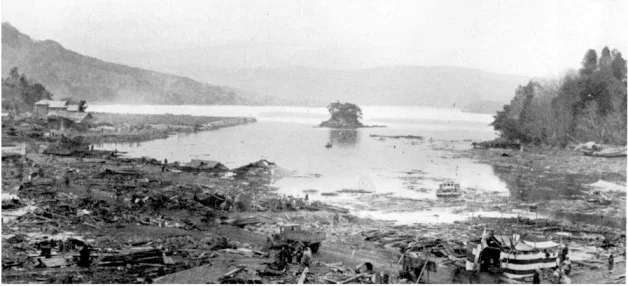
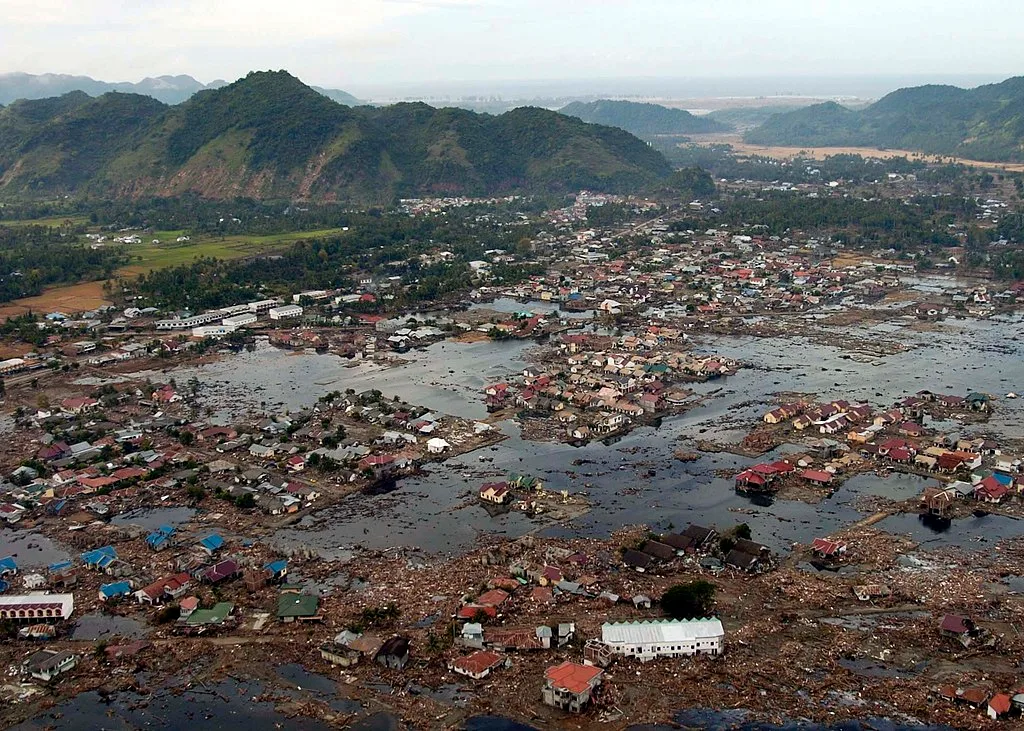
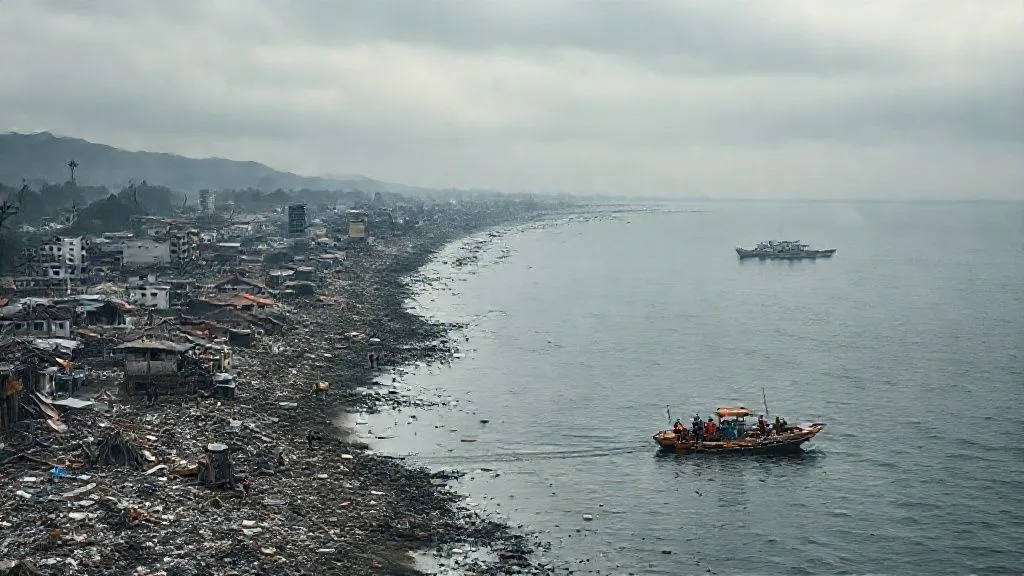
As the tsunami crashed into Palu’s waterfront, it erased entire neighborhoods in moments. The shoreline was swallowed by churning waters rampant with debris: snapped trees, wrecked homes, shattered steel. Boats were thrown inland, some ending up atop buildings. Streets became rivers thick with mud and silt.
Infrastructure crumbled, and communication lines faltered. Emergency services struggled to respond even as the second and third waves hit, drowning promising escape routes and spreading chaos.
Community emergency shelters were flooded; hospitals were overwhelmed by the surge of injured and displaced persons. Confusion reigned as people sought safety amid the rapidly changing landscape.
The Power of Water: The Tsunami’s Path of Destruction
One cannot overstate the physical violence of the tsunami’s assault. Hydrodynamic models later demonstrated that water surges exceeded 6 meters, with localized peak heights even greater. The tsunami raced at speeds over 50 km/h into the tight confines of Palu Bay, picking up destructive momentum.
Entire districts vanished; the once bustling city was reduced to wreckage strewn along the bay’s shores. Transportation networks were rendered unusable, cutting off access for rescue teams and supplies—a logistical nightmare.
This chapter in Palu’s story forever etched tsunami risks in public consciousness—risks previously underestimated.
Rescue Amid Ruins: How Locals and Responders Rallied
Despite overwhelming odds, stories of courage and solidarity emerged as neighbors helped neighbors. First responders, even as buildings trembled and aftershocks rattled, launched search-and-rescue missions. Community volunteers waded through debris, mapped missing persons, and organized aid distribution.
However, the scale of destruction made coordination difficult. Many areas were inaccessible for days due to landslides and damaged roads. Makeshift shelters blossomed in safer zones, offering refuge to thousands left homeless.
The clogged international airport and damaged ports limited inbound aid but could not impede the determination to save lives that united locals and responders alike.
Infrastructure Collapsed: The Challenge of Reaching the Isolated
Palu faced a critical infrastructure breakdown. Roads cracked by the earthquake, bridges collapsed, and the main airport was damaged. Telecommunications were interrupted, complicating efforts to assess damage and communicate needs.
Rural communities in Donggala and Sigi regencies were isolated—vulnerable and forgotten for crucial hours. The lack of reliable infrastructure underscored the limits of preparedness in disaster-prone zones.
These conditions slowed rescue operations, leaving many trapped and desperate. The struggle to reconnect a shattered landscape became a race against time.
The Death Toll Rises: Human Cost of the Disaster
By early October, official death tolls surpassed 2,000. Many more were injured or missing. Entire families perished or were scattered in the catastrophe’s wake.
Countless homes and cultural sites were lost. Schools, places of worship, and businesses were wiped out, casting long shadows over community life. The impact extended beyond numbers—grief, trauma, and displacement challenged the region’s social fabric.
Indonesian leaders acknowledged the heavy toll and the urgent need to address vulnerabilities exposed by the twin disasters of earthquake and tsunami.
Government Response: Mobilizing Aid and Mobilizing Hope
The Indonesian government swiftly declared a state of emergency and launched Operation Palu Rescue. Military, police, and civil servants focused on search-and-rescue, medical assistance, and restoring critical infrastructure.
President Joko Widodo visited the region, pledging billions of rupiahs for recovery and urging national unity. Despite criticism over initial delays in communication and aid delivery, efforts accelerated as coordination improved.
Special task forces were created to address homelessness, rebuild schools and hospitals, and invest in disaster preparedness for the future.
International Solidarity: Nations and NGOs Join the Effort
The world watched Palu’s tragedy unfold, responding with an outpouring of aid. Japan, Australia, the United States, and other nations dispatched personnel and relief materials. UN agencies coordinated with local organizations to provide food, water, and medical support.
Non-Governmental Organizations played crucial roles, bridging gaps where state resources were stretched thin. The global humanitarian response highlighted shared vulnerability and the spirit of international cooperation.
Geology and Geography: Why Sulawesi is Vulnerable
Sulawesi’s location at the crossroads of four tectonic plates makes it a seismic tinderbox. The complex fault system, including the Palu-Koro fault, frequently generates earthquakes of various types. The bay’s fjord-like contours serve as natural amplifiers for tsunami energy.
However, the interaction between geological features and human settlement patterns revealed dangerous exposures. Urban expansion along the shoreline increased populations at risk, while infrastructure was often ill-equipped to withstand dual seismic and hydrodynamic events.
Early Warning Systems: A Failure Examined
One of the deadliest aspects of the Palu Bay disaster was the absence of an effective tsunami warning despite the earthquake. This failure arose from technical limitations and systemic shortcomings—a lack of real-time monitoring and unclear evacuation protocols.
This tragic oversight prompted nationwide calls for upgrading Indonesia’s early-warning networks, with focus on community education and swift communication channels essential to saving lives.
Rebuilding Lives: The Long Road to Recovery
Recovery in Palu was slow and complex. Thousands of residents faced homelessness and loss of employment. Rebuilding infrastructure, restoring public services, and reviving the economy required massive financial and human investment.
Efforts included not only physical reconstruction but also psychological support programs to help survivors cope with trauma. Partnerships between government, civil society, and international donors shaped multifaceted approaches to healing a wounded city.
Cultural Impact: How the Tsunami Changed Sulawesi’s Identity
The disaster left an indelible mark on Sulawesi’s sense of self. Traditional community bonds and cultural practices underwent testing amid loss and relocation. Some communities saw disaster as a cruel rupture; others found renewed strength by honoring ancestors and rebuilding traditions.
The event shaped stories, songs, and commemorations—embedding the tsunami into the collective memory of the region and Indonesia at large.
Psychological Scars: Trauma and Healing After the Waves
Beyond physical scars, survivors struggled with persistent post-traumatic stress. The suddenness of loss, displacement, and the constant threat of aftershocks undermined mental health.
NGOs and medical professionals emphasized counseling and community support to foster healing. These interventions acknowledged that recovery demanded attention beyond rebuilding buildings—it demanded restoring hope and human dignity.
Lessons Learned: Improving Disaster Preparedness in Indonesia
Palu Bay’s tragedy became a stark lesson in natural disaster management. Among the most urgent were the need to:
- Enhance early-warning systems down to local levels;
- Improve public education on earthquake and tsunami response;
- Strengthen infrastructure to withstand seismic shocks;
- Incorporate community-based disaster risk management strategies.
These lessons aimed at shifting Indonesia from reactive to proactive resilience — a challenge given the archipelago's vulnerability.
Stories of Survival: Miracles and Human Resilience
Amid the carnage were tales of extraordinary survival. A young boy trapped beneath rubble for hours; a family fleeing to high ground just in time; neighbors risking their lives to save strangers.
These stories showcase the enduring power of human courage and compassion — testaments to survival even in nature's darkest hours.
The Role of Media: Telling the World About Palu
Media coverage shaped international awareness and response. Social media played a crucial role in sharing real-time updates and connecting survivors with aid.
Journalists grappled with portraying tragedy ethically while respecting victims' privacy, balancing urgency with empathy. Their work helped galvanize support and sustained the world’s attention beyond the initial shock.
Environmental Consequences: The Aftermath on Nature
The tsunami altered Palu’s coastal marine ecosystems—damaging coral reefs, shifting sediment patterns, and contaminating water sources. The quake also destabilized hills, resulting in landslides and affecting forests.
Recovery efforts had to weigh ecological restoration alongside human needs—a reminder of the intertwined fates of natural systems and human communities.
The Legacy of Palu Bay Tsunami: A Call for Action
Though indelibly marked by loss, Palu’s experience galvanized Indonesia to boost disaster resiliency. It became a symbol — a somber reminder of nature’s unpredictability and humanity’s urgent need to prepare, adapt, and respect the earth’s dynamic forces.
The legacy inspires ongoing research, policy reform, and community mobilization aimed at ensuring that future generations can face natural threats with knowledge, courage, and solidarity.
Remembrance and Memorialization: Honoring Those Lost
Across Sulawesi, memorials, commemorations, and cultural rituals honor the thousands who perished. These acts provide spaces for collective mourning and reflection — crucial to community healing.
Anniversary ceremonies invite renewal of commitment to disaster preparedness, embedding memory as a foundation for resilience.
Conclusion
The Palu Bay Tsunami of September 2018 remains one of the most devastating reminders of nature’s dual power — the earth’s quaking fury and the sea’s wave-born wrath. For the people of Sulawesi, it was a night when time stopped, homes were swept away like sandcastles, and lives were irrevocably altered. Yet, within the devastation, stories of hope, bravery, and unyielding human spirit emerged.
This tragedy exposed the invisible threads connecting earth science, human settlement, and governance — threads we must strengthen to protect future generations. Palu’s ordeal is a solemn lesson and a collective call: to listen to the earth’s quiet warnings before the storm, to build resilient communities, and above all, to cherish life in a world where nature’s beauty and brutality entwine.
FAQs About the Palu Bay Tsunami
Q1: What caused the Palu Bay tsunami?
A: The tsunami was triggered primarily by a 7.5 magnitude strike-slip earthquake along the Palu-Koro fault and subsequent underwater landslides within the bay, which displaced massive volumes of water and generated the deadly waves.
Q2: Why was the tsunami warning system ineffective?
A: Indonesia’s tsunami warning system failed to detect the tsunami due to limitations in monitoring strike-slip earthquakes and the rapid arrival of waves, leaving residents with virtually no warning time.
Q3: How many people died in the disaster?
A: Official death toll estimates vary but exceed 2,000, with thousands more injured or displaced by the earthquake and tsunami combined.
Q4: What role did geography play in the tsunami’s impact?
A: Palu Bay’s narrow, fjord-like shape funneled and amplified the tsunami’s energy, making the waves higher and more destructive than they might have been in open water.
Q5: How did the Indonesian government respond?
A: The government declared a state of emergency, mobilized military and civil emergency teams, coordinated with international aid, and launched long-term reconstruction and disaster preparedness programs.
Q6: What lessons were learned for future disasters?
A: The tragedy highlighted the need for improved early-warning systems, better public awareness and education, more resilient infrastructure, and community-based disaster risk management.
Q7: Are there ongoing efforts to memorialize the victims?
A: Yes, communities hold annual commemorations and have established memorials to honor the deceased and support collective healing.
Q8: How did survivors cope psychologically?
A: Post-disaster trauma prompted mental health initiatives, including counseling and community support programs, to help survivors process grief and rebuild their lives.