Table of Contents
- The Silent Roar Beneath The Waves: The Prelude to Disaster
- A Hidden Fault Line: Geological Origins of the Mentawai Tsunami
- The Morning of October 25, 2010: An Island Awakening to Catastrophe
- The Magnitude 7.7 Earthquake: Nature’s Unseen Fury
- The Tsunami’s Arrival: Walls of Water Unleashed on the Coast
- Communities Upended: Personal Stories from the Ravaged Shore
- The Role of Warning Systems: Failure and Lessons Learned
- Rescue and Relief: A Nation’s Immediate Response
- International Aid and Collaboration: A Global Humanitarian Effort
- The Psychological Aftermath: Survivors Speak Out
- Economic Devastation and Environmental Impact on the Mentawai Islands
- Cultural Heritage at Risk: Preserving a Way of Life Amidst Ruins
- Science and Technology: Improving Tsunami Detection Post-2010
- The Politics of Disaster: Government Accountability and Policy Changes
- Long-Term Recovery: Rebuilding Homes and Hope
- Memorialization and Remembrance: Honoring the Victims
- The Mentawai Tsunami in Global Perspective: Comparing 2010’s Tragedy
- Lessons Etched in the Sand: Community Resilience and Preparedness
- The Changing Face of Disaster Management in Indonesia
- Reflections on Nature’s Power and Human Vulnerability
The Silent Roar Beneath The Waves: The Prelude to Disaster
On the morning of October 25, 2010, the serene beauty of the Mentawai Islands belied the fury that was about to strike. The waves lapped gently at the shores, fishermen prepared their boats, and life hummed in the rhythm of tradition and simplicity. Yet, beneath the calm surface of the Indian Ocean, colossal tectonic forces were shifting in silence—forces that would soon unleash devastation beyond the imagination of these islanders.
This was no ordinary day. It was a day when earth and sea conspired to tear apart lives and landscapes. The Mentawai tsunami of 2010 reminds us of the volatile balance between human existence and the restless planet beneath our feet.
A Hidden Fault Line: Geological Origins of the Mentawai Tsunami
The Indonesian archipelago is a restless belly of geological activity. Sitting at the convergence of several tectonic plates—most notably the Indo-Australian plate subducting beneath the Eurasian plate—Indonesia is famously volatile. The Mentawai Islands lie close to the Sunda megathrust, one of the longest and most seismically active fault lines on Earth.
This fault is a giant ramp where the oceanic plate dives under the continental plate, accumulating strain over centuries. When this pent-up energy releases, it generates powerful earthquakes, frequently triggering devastating tsunamis.
While Indonesia knew its geography bred danger, the plates’ hidden shifts were unpredictable. On that fateful day, it was a brutal reminder of nature’s concealed earthquakes and their catastrophic cousins: tsunamis.
The Morning of October 25, 2010: An Island Awakening to Catastrophe
Most villagers on the Mentawai archipelago woke to an ordinary morning, unaware of the ominous tremors gathering strength offshore. At approximately 10:42 local time, the earth below the ocean floor ruptured violently.
The initial quake, registered at magnitude 7.7, struck about 250 kilometers southwest of Sumatra’s coast. It was powerful yet shallow, directly beneath the adjacent ocean.
Witnesses on the islands felt a sudden jolt—a deep, rolling shake like a giant’s hand shaking the earth. Some fled to higher ground, spurred by instinct rather than warning systems which, frustratingly, were absent or ineffective.
By the time the shockwaves faded, the sea already betrayed its sinister intent. The horizon darkened, and soon gigantic waves began cresting toward the coast.
The Magnitude 7.7 Earthquake: Nature’s Unseen Fury
The sheer force of the earthquake was enough to cause fatalities and destruction. But the real peril lied in what it triggered. The undersea rupture displaced billions of tons of water, sending the ocean surging towards the islands.
With a roar muffled by distance but deadly in its approach, the tsunami rolled in, shifting the narrative from natural quivering to unfolding disaster.
Scientists later described the earthquake as a 'thrust' type, where one plate is shoved over another vertically, maximizing vertical displacement and tsunami risk. The quake’s shallow depth—only about 25 kilometers beneath the seabed—meant the seismic energy was transmitted with great surface impact.
But it was not just the quake. In the following minutes, a series of aftershocks continued to rattle nerves and complicate rescue efforts.
The Tsunami’s Arrival: Walls of Water Unleashed on the Coast
The first wave approached the Mentawai shores within just 15 to 30 minutes after the quake. Unlike the gentle waves that lapped the island beaches, this was a towering wall of water. Some eyewitnesses described it as an enormous, gray force, devouring everything in its path.
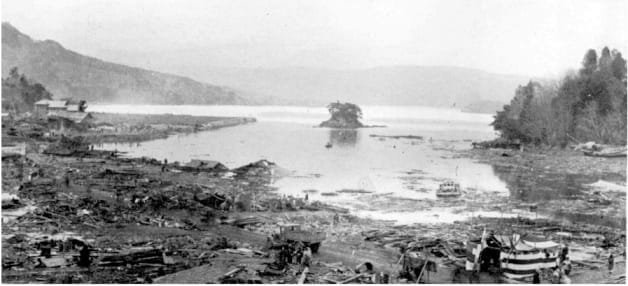
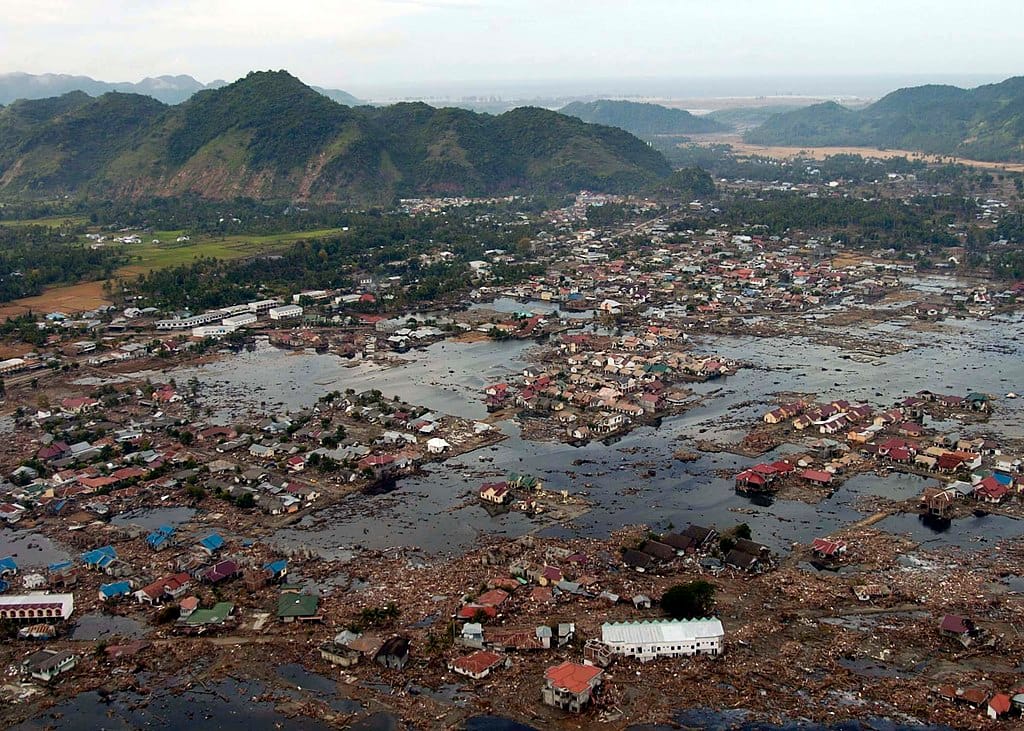
Villages such as Sikakap, South Pagai, and North Pagai were inundated within moments. Wooden homes, which had been built close to the coast for generations, were swept entirely away. Coconut groves, fishing boats, and sacred communal spaces were drowned in sudden chaos.
The tsunami didn’t merely flood the land; it reshaped it, erasing chunks of shoreline and carving new water channels. Survivors recall moments of desperate scrambling to higher ground, many clinging to trees, others pulled under by the merciless currents.
The death toll was grim—estimates suggest over 400 people perished, with hundreds more injured and thousands left homeless.
Communities Upended: Personal Stories from the Ravaged Shore
Among those who survived was Ade Yuli, a fisherman whose story captured the collective grief and resilience of the Mentawai. Ade recounted how the water came “like a monster,” swallowing his village in seconds as he struggled to save his wife and children.
Others told of miraculous escapes—children swept away only to be caught by neighbors downstream, elders guiding groups upriver to safety, and strangers pulling drowning victims from the surf.
The tsunami was indiscriminate in its cruelty but also in the seeds of humanity it sowed. Neighbors shared scant rations; distant relatives provided shelter; prayers echoed through makeshift shelters as the community reckoned with their losses.
The Role of Warning Systems: Failure and Lessons Learned
Indonesia, tragically familiar with tsunamis after the 2004 Indian Ocean disaster, had made attempts to develop early warning systems. By 2010, however, these systems were incomplete and unevenly distributed.
In the case of the Mentawai tsunami, the warning network failed. The isolated islands lacked sirens, and the communication infrastructure was vulnerable and sparse. The first signs—shaking and abnormal sea recession—were the only alerts many had.
Experts later criticized the lack of preparedness, especially given Indonesia’s tectonic profile. This failure became a rallying cry for urgent investment in seismic monitoring and early warning dissemination.
Rescue and Relief: A Nation’s Immediate Response
In the aftermath, Indonesian authorities scrambled to mount a rescue operation. The remoteness of the Mentawai Islands made logistics difficult—roads were destroyed, and many survivors were cut off from emergency services.
The Indonesian military and local organizations mobilized boats and helicopters, delivering food, medicine, and aid materials. Emergency healthcare centers were established on higher ground, attempting to curb outbreaks of disease in the tropical humid climate.
Yet resources were stretched thin. Survivors waited anxiously for family members still missing, and the slow pace of aid sowed despair as well as hope.
International Aid and Collaboration: A Global Humanitarian Effort
Once reports of the disaster reached international media, the world responded. Countries and NGOs from Japan, Australia, the United States, and beyond sent financial support, medical teams, and specialist rescue equipment.
The United Nations Office for the Coordination of Humanitarian Affairs (OCHA) coordinated relief efforts, enhancing logistics and resource allocation.
But the operation was complex: cultural sensitivities, geographical challenges, and infrastructural weaknesses stymied large-scale distribution.
Despite these hurdles, the international relief was critical in stabilizing the region and preventing further loss of life through disease and hardship.
The Psychological Aftermath: Survivors Speak Out
Beyond physical destruction, the tsunami inflicted psychological wounds. Trauma from sudden loss, displacement, and the overwhelming force of nature haunted survivors.
Mental health professionals who entered the area observed widespread symptoms of post-traumatic stress disorder (PTSD)—nightmares, anxiety, survivor’s guilt.
Community leaders emphasized traditional healing rituals alongside formal counseling, blending ancient cultural wisdom with modern therapy.
The tsunami became not just a natural, but a deeply human disaster, highlighting the fragile intersection of mind and matter.
Economic Devastation and Environmental Impact on the Mentawai Islands
The Mentawai economy, reliant mostly on subsistence fishing, small-scale agriculture, and burgeoning eco-tourism, suffered severe disruption.
Fishing boats and gear—essential for daily livelihoods—were destroyed, crops were ruined by saltwater inundation, and coastal infrastructure crumbled.
Environmental damage was profound: coral reefs, mangrove forests, and wildlife habitats bore the brunt of the tsunami, affecting biodiversity.
The islands faced the daunting challenge of ecological and economic recovery tied intimately to their natural environment.
Cultural Heritage at Risk: Preserving a Way of Life Amidst Ruins
The Mentawai are an indigenous group with unique customs, rituals, and social structures linked deeply to their land and sea.
The tsunami threatened this cultural fabric. Ancestral homes—often crafted with intricate woodwork and symbolism—and sacred sites were lost.
Elders feared that the forced displacement and influx of outside aid could erode their distinct identity.
Post-disaster projects sought to integrate cultural preservation into rebuilding efforts, reaffirming the community’s voice in their own future.
Science and Technology: Improving Tsunami Detection Post-2010
The catastrophe prompted scientists to push for enhanced tsunami monitoring. Indonesian authorities collaborated with international agencies to deploy more seismic sensors and deep-ocean buoys.
Technology advances enabled faster detection of undersea quakes and real-time wave modeling.
Mobile phone networks and internet penetration were also leveraged to propagate alerts more efficiently.
In this way, the tsunami underscored not just natural hazard but the power of science to mitigate future tragedies.
The Politics of Disaster: Government Accountability and Policy Changes
The Mentawai tsunami reignited debates on governmental responsibility in disaster preparedness.
Critics argued that budget constraints and bureaucratic inefficiency left remote regions vulnerable.
This event accelerated legislative reforms mandating comprehensive disaster risk reduction frameworks, improved early warning communication, and community education.
Yet challenges remain—balancing rapid development with environmental safeguards and social equity is an ongoing political endeavor.
Long-Term Recovery: Rebuilding Homes and Hope
Years after the waves receded, the rebuilding process continued. International donors funded housing projects designed to be more resilient against natural hazards.
Schools, health clinics, and public facilities were reconstructed with community participation.
Importantly, recovery was not just about physical structures but restoring social networks and cultural life.
Mentawai Islanders demonstrated remarkable resilience, determined to transform tragedy into renewal.
Memorialization and Remembrance: Honoring the Victims
Memorial monuments and annual ceremonies now mark October 25 in the Mentawai community calendar.
These moments of remembrance weave the collective memory of loss with gratitude for survival.
Educational programs include the tsunami story, ensuring future generations understand the risks and the value of preparedness.
Through remembrance, the past lends strength for the future.
The Mentawai Tsunami in Global Perspective: Comparing 2010’s Tragedy
While overshadowed by the 2004 Indian Ocean tsunami, the 2010 Mentawai event remains a critical study in regional disaster risk.
It exemplifies recurrent seismic hazards in Indonesia and the ongoing need for vigilance amid complacency.
Comparisons show improvements in warning and response but also highlight persisting gaps, especially in remote contexts.
The tragedy is a painful but vital chapter in humanity’s evolving relationship with natural disasters.
Lessons Etched in the Sand: Community Resilience and Preparedness
One of the most profound outcomes is how the event galvanized community-led resilience.
Villagers developed local early warning protocols, reforested coastal areas to buffer waves, and organized evacuation drills.
These grassroots initiatives reflect an intimate knowledge of their environment melded with new awareness.
The Mentawai tsunami thus serves not only as a cautionary tale but a testament to human courage and adaptability.
The Changing Face of Disaster Management in Indonesia
Indonesia’s disaster management policies have transformed since 2010, emphasizing decentralization and integration.
The establishment of BNPB (National Disaster Management Authority) has centralized efforts but allows regional agencies autonomy.
Technological investments and community involvement are pillars of this strategy.
This shift aims to create a responsive, flexible system capable of confronting Indonesia’s complex hazard landscape.
Reflections on Nature’s Power and Human Vulnerability
The Mentawai tsunami reminds us that beneath everyday calm lies a latent power capable of upheaving life in moments.
It challenges humans to respect, understand, and prepare for the forces beyond our control.
Yet amidst destruction, the endurance of communities carries a profound message—that humanity, though vulnerable, is unyielding.
This balance between fragility and strength continues to shape Indonesia’s path forward, a fragile dance with earth and sea.
Conclusion
The 2010 Mentawai tsunami remains etched in memory as both a tragedy and a catalyst. It exposed stark vulnerabilities—the brittle infrastructure, the inadequate warning systems, and the precarious lives tethered to nature’s rhythms. Yet, it also revealed resilience, compassion, and the power of transformation through collective action.
From the quiet ripple beneath the ocean floor to the towering walls of destruction on the shore, this event teaches us about the deep interconnection between environment and humanity. It calls upon us to listen—to the earth’s silent warnings, to communities’ lived experiences, and to the urgent demands of preparedness.
The Mentawai tsunami is more than an historical event; it is a timeless lesson in humility, vigilance, and hope. It is a story where nature’s fury meets human endurance, and where from devastation emerges the possibility of renewal.
FAQs
Q1: What caused the Mentawai tsunami in 2010?
The tsunami was caused by a magnitude 7.7 earthquake along the Sunda megathrust fault. The vertical displacement of the ocean floor triggered the tsunami waves that struck the Mentawai Islands.
Q2: How many people were affected by the tsunami?
Over 400 people lost their lives, with many more injured and thousands displaced. The disaster also caused extensive damage to homes, infrastructure, and local economies.
Q3: Why was the tsunami warning system ineffective?
The warning system in the Mentawai area was incomplete and lacked coverage. Many coastal communities had no sirens or communication tools to alert them in time.
Q4: How did international aid contribute to the recovery?
Global organizations and countries provided emergency relief supplies, medical teams, and logistical support, helping to stabilize affected communities and start reconstruction efforts.
Q5: What are key lessons learned from the 2010 event?
Improving early warning systems, community preparedness, infrastructure resilience, and integrating cultural preservation in recovery were fundamental takeaways.
Q6: How has Indonesia’s disaster management evolved since the tsunami?
Indonesia has centralized disaster agencies, invested in better monitoring technology, and emphasized local engagement to promptly respond to future hazards.
Q7: What cultural impacts did the tsunami have on the Mentawai people?
The disaster threatened traditional housing and sacred sites, prompting efforts to preserve indigenous culture while rebuilding.
Q8: Are the Mentawai Islands better prepared now for tsunamis?
Progress has been made with improved technology and community training, but challenges remain due to geographic remoteness and resource limitations.