Table of Contents
- A Turbulent Empire on the Brink of Collapse
- From Bold Youth to Rising Tiger: The Making of Sun Jian
- The Road to Office: How a Warrior Won a Magistracy
- Changsha in 186: A Fractured Commandery at the Empire’s Edge
- Sun Jian Magistrate of Changsha: The Day the Tiger Took Office
- Bandits, Warlords, and the Law: Restoring Order with Iron and Compassion
- Governance in Motion: Courts, Taxes, and Everyday Life under Sun Jian
- Politics in the Shadows: Court Intrigue Reaches the South
- Families, Loyalties, and Oaths: The Human World of Changsha
- The Tiger’s Reputation Spreads: Reports from the Southern Frontier
- Storm Clouds Gathering: The Empire’s Descent into Wider Chaos
- From Magistrate to Warlord: How Changsha Forged a Future Leader
- Memory, Myth, and Legend: How Historians See Sun Jian Today
- Society under Strain: Ordinary People in Extraordinary Times
- Echoes of Changsha: Lessons from a Magistrate’s Brief Rule
- Conclusion
- FAQs
- External Resource
- Internal Link
Article Summary: In 186 CE, as the Han dynasty staggered under corruption, rebellions, and a failing court, the appointment of Sun Jian magistrate of Changsha marked a turning point not only for a single commandery, but for the future map of China. This article follows Sun Jian from his rough beginnings on the Yangtze to his pivotal tenure in Changsha, where he learned to balance the sword and the seal in a world of bandits, warlords, and desperate peasants. Through vivid narrative and careful historical analysis, we explore what it meant for a warrior to become an administrator, and how his governance foreshadowed the rise of powerful regional strongmen. We examine daily life in Changsha, the political undercurrents shaping his decisions, and the human stories behind edicts and campaigns. Along the way, we trace how the legend of the Tiger of Jiangdong began to crystallize around his time as sun jian magistrate of changsha. The article situates his magistracy within the final unravelling of the Han dynasty, revealing its long-term impact on the formation of the Three Kingdoms era. Ultimately, it argues that the brief period of Sun Jian’s rule in Changsha was a crucible in which military instinct met the burdens of civil governance, leaving echoes that historians still debate today.
A Turbulent Empire on the Brink of Collapse
The year 186 CE belonged to a world leaning silently toward catastrophe. The Later Han dynasty had once stretched like a great, disciplined dragon across East Asia, its bureaucracy admired, its rituals ancient and precise. Yet by the time the appointment papers named Sun Jian magistrate of Changsha, that dragon’s scales were cracked and its breath shallow. At the capital Luoyang, eunuch cliques whispered in gilded corridors, courtiers traded bribes behind embroidered screens, and the young emperor’s authority existed more in ceremony than in command.
Only a few years earlier, the realm had exploded in the Yellow Turban Rebellion, a vast, millenarian uprising led by Zhang Jue and his brothers. Peasants, stretched to breaking by taxes, droughts, and official corruption, had donned yellow headscarves and rallied under the promise of a “Great Peace” that the dynasty could no longer provide. Official histories recall that hundreds of thousands took up arms; even if we discount the exaggerations typical of such sources, the scale was enormous. The imperial court responded with frantic decrees, conscripting men from every province, dragging provincial strongmen into service, and arming those who would later become the first generation of warlords.
The rebellion was suppressed, but its ashes glowed red beneath the surface. The empire’s outer skin was restored—roads were cleared, memorials submitted, ceremonies resumed—but the internal organs of state were failing. Local officials often ruled as petty kings; some were too weak to control their districts, others too rapacious to care. In the south, where the commandery of Changsha lay, the imperial gaze was thin and often distracted. There, among river valleys and forested hills, banditry flourished and local powerbrokers carved out spheres of influence by force.
It is within this decaying yet still formidable structure that we must place the story of sun jian magistrate of changsha. His appointment was not a quiet bureaucratic formality; it was a symptom of a desperate government turning to men of action, sometimes outside conventional elite networks, to hold the frontiers together. War had made him known. Instability had made him necessary. The dynasty needed magistrates who could fight as well as judge, tax as well as pacify, and intimidate as well as inspire.
Politically, factions at court saw the frontier posts as both opportunity and exile. To send a rising, energetic officer to a commandery like Changsha could mean strengthening imperial control in a troubled region. But it could also be a way to keep ambitious men distant from the capital’s intrigues. The imperial center, hollowed by eunuch dominance and noble rivalries, both feared and relied on such provincial figures. It is astonishing, isn’t it, that a distant appointment sealed in ink could contribute, in the longer sweep of time, to the dismemberment of the very state that authorized it?
From Bold Youth to Rising Tiger: The Making of Sun Jian
To understand why the figure of Sun Jian magistrate of Changsha mattered, we must first meet him as a young, unproven man. Born in Fuchun, in the commandery of Wu (modern Zhejiang), Sun Jian did not emerge from the highest rungs of aristocracy. He was part of the local gentry, close enough to power to see its workings, far enough from it to know the vulnerability of ordinary families. The region around the lower Yangtze was a place of waterways, trade, and shifting loyalties, and it bred men accustomed to both danger and opportunity.
Later chronicles, particularly the Records of the Three Kingdoms by Chen Shou, embroidered Sun Jian’s youth with the sheen of legend. One well-known story describes him at seventeen, encountering pirates who had taken to raiding along the river. According to the tale, the local magistrate’s forces hesitated, wary of the bandits’ strength and cunning. Young Sun Jian, unafraid, stepped forward and rallied the troops. He struck first, boldly advancing onto the bandit ship, his courage igniting those around him. The pirates scattered, and his name began to circulate along the riverbanks.
Whether the details are precise or polished in retrospect, the narrative essence rings true. Here we see the embryo of the leader who would later sit in judgment halls in Changsha: audacious, personal in his risk-taking, and profoundly aware that order, once lost, had to be violently reasserted before it could be gently administered. In a world where pedigree still mattered deeply, courage in the field could open doors that birth alone could not.
Sun Jian’s rise continued as he joined various suppression campaigns, gaining practical experience against rebels and bandits. His record was that of a man who preferred action to empty rhetoric, and in a late Han bureaucracy increasingly clogged by formalists and sycophants, such a reputation stood out. He was noticed by higher commanders, then recommended upward, riding on a wave of small but significant victories.
This was also a time when the old barriers of the Han elite were beginning to crack. Talented men from less exalted backgrounds could, under the pressure of crisis, find themselves in positions that might once have been closed to them. The state needed commanders more than it needed etiquette experts. Sun Jian learned not just how to lead troops, but how officialdom worked: the memorials to be drafted, the statistics to be kept, the small rituals that turned a warrior into a recognized servant of the state.
These early experiences tempered him, forging a dual identity that would define his later role as sun jian magistrate of changsha: a commander with a sword on his hip and a bureaucrat’s seal in his hand. That duality, and the tension within it, is at the heart of this story.
The Road to Office: How a Warrior Won a Magistracy
Appointments in the late Han were never purely about merit. They were the product of recommendations, factional alignments, regional power balances, and sheer chance. Yet the path that led to Sun Jian’s appointment as magistrate—more precisely, as Administrator—of Changsha in 186 was paved by his reputation for boldness and effectiveness in the field.
In the wake of the Yellow Turban Rebellion, the imperial court scrambled to fill key provincial posts with men it believed could restore a semblance of order. Commanderies such as Changsha sat along crucial corridors: controlling river routes, feeding grain to other regions, and acting as buffers against both internal unrest and external tribes. The existing administrators had often either failed or been swept away by the turmoil. A new generation, hardened by campaigns, awaited call-up.
Sun Jian had served under various higher-ranking officials, gaining both patrons and jealous rivals. Some recognized in him a rare blend of decisiveness and loyalty; others saw an upstart whose popularity among soldiers might one day threaten their own positions. It is unlikely that a single patron alone elevated him. Rather, a chain of favorable reports, coupled with the relative neglect of the far south compared to the northern heartlands, opened a window of opportunity.
We can imagine the memorials that crossed the imperial desks, written in neat brushstrokes on bamboo or paper: “Sun Jian of Wu, courageous in battle, just in dealing with the people, capable of reducing banditry and restoring the king’s law…” It was probably an over-simplification of a complex man, but it was the kind of portrait that ministers and eunuchs wanted to see when they scanned the list of proposed appointees. Here, they thought, was someone who could keep Changsha quiet without constant supervision.
At the same time, the assignment was a test and a barrier. Sending a martial figure like Sun Jian to a frontier commandery kept him distant from Luoyang, limiting his involvement in court intrigue. Yet if he failed, few in the capital would mourn him. The decision thus balanced risk and utility, pragmatism and suspicion—typical of a state that no longer trusted its own strength.
When the official appointment arrived—sealed and bearing the authority of the Han—the transformation was profound. A man who had spent much of his life on campaign fields, tents, and river boats was now to sit in a city hall, hear lawsuits, supervise tax grain, and correspond formally with other officials. The road to office was not only geographic, taking him southwest toward Changsha, but psychological as well. For the first time, Sun Jian would be responsible not merely for defeating enemies, but for making a city livable.
Changsha in 186: A Fractured Commandery at the Empire’s Edge
Before we picture Sun Jian taking his seat as magistrate of Changsha, we must understand the place he was sent to govern. Changsha Commandery lay in what is now Hunan province, straddling sections of the Xiang River and nestled amid rolling hills, forests, and fertile valleys. It was far from the imperial capital both in distance and in sensibility, yet it was by no means a cultural backwater. Settlers, merchants, and local elites had long integrated Han institutions with older regional traditions.
Yet by 186, Changsha was a land of tension. The Yellow Turban upheavals had not spared the south entirely; bands of displaced men, former rebels, and opportunists roamed the countryside, sometimes styling themselves “righteous armies,” sometimes simply preying on villages. Local magistrates had often lacked the troops to deal with them, or else had been complicit in extortion themselves. Peasants knew that the tax collector would come in good years and bad, but help from the state seemed far less reliable.
At the commandery seat, the old administrative complex likely bore scars from these years: partially repaired walls, hastily rebuilt gates, maybe even charred beams from earlier attacks. Within, the offices where scribes worked and cases were heard had fallen into a kind of weary routine. Petitions piled up; local headmen argued that they could not meet grain quotas; merchants complained of unsafe roads cutting into their profits. The rhetoric of Han order and civilization still echoed in the official proclamations, but the reality was uneven and fragile.
Changsha’s geography complicated matters. Its rivers were both arteries of trade and highways for bandits. Dense forests could shelter rebel camps; mountain passes could be held by anyone with a few dozen determined fighters. For an administrator, the commandery was a map of vulnerabilities: each village a potential pocket of unrest, each local strongman a possible ally or rival. To govern Changsha would mean understanding these layers in a way that purely capital-bred officials often failed to do.
Into this landscape rode the new administrator, Sun Jian. To some, he must have seemed yet another distant appointee who would try, fail, and be replaced. To others, especially those who had heard stories of the “Tiger of Jiangdong,” his arrival sparked cautious hope or nervous alarm. A commander with real fighting experience might bring security—or he might bring war.
For the Han state, Changsha was a test case: could a commandery on the troubled periphery be stabilized through the appointment of someone like sun jian magistrate of changsha, a man forged more in battle than in scholarly debate? The answer would shape not only local life, but also the evolving model of power in a crumbling empire.
Sun Jian Magistrate of Changsha: The Day the Tiger Took Office
On the day Sun Jian assumed his office in Changsha, ceremony and tension intertwined. We can imagine the scene: banners bearing the Han emblem fluttered above the gate; officials and clerks lined the entry hall in their formal robes; village headmen and local gentry representatives waited in the courtyard, measuring the new administrator with careful eyes. The air inside the yamen, the government compound, was thick with incense and curiosity.
When he arrived, Sun Jian would not have been dressed like a scholar-official. A seasoned commander, he likely wore more practical robes, with traces of armor beneath or at least the martial bearing of someone used to commanding troops. His entourage included both aides versed in administration and officers loyal to him personally. That combination instantly signaled what his rule would be: a magistracy backed by steel.
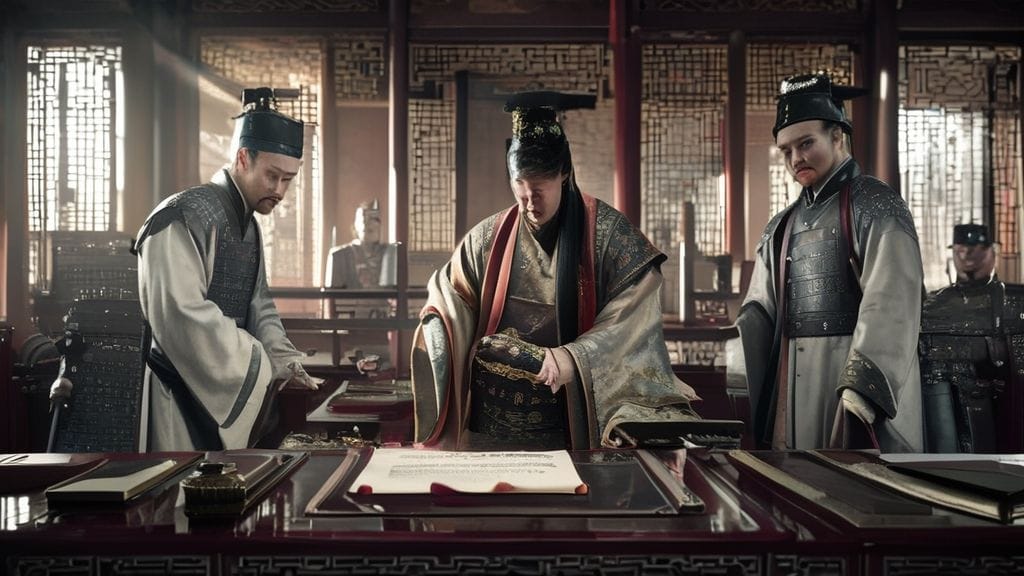
The formalities followed tradition. An edict or appointment notice was read aloud, confirming his authority over the commandery. Seals and registers changed hands—those unassuming objects that carried the weight of law, taxation, and life-and-death decisions. Sun Jian, now sun jian magistrate of changsha in official fact, bowed in the direction of the capital to acknowledge the emperor’s nominal supremacy, even though both he and everyone present knew how weak that supremacy had become.
Yet behind the recitation of titles lay a quiet recalibration of power. The gentry families of Changsha, who had long wielded influence through land, lineage, and sponsorship of local offices, studied their new administrator carefully. Would he respect their prerogatives, or challenge them in the name of imperial law? Military officers under his command wondered how far his campaigns would reach. Ordinary onlookers, traders, and servants probably noticed something more visceral: the hard, assessing gaze of a man who had survived real battle, and for whom disorder was not a theoretical problem but a familiar enemy.
In his first proclamations, Sun Jian likely addressed the twin themes of security and justice. He would have promised to suppress bandits, protect honest people, punish corruption, and restore the dignity of Han authority. Such language was formulaic, yet when voiced by someone with his background, it carried a different weight. According to later tradition, Sun Jian was not known for flowery speech; his words tended to be direct, his judgments swift. Changsha’s people might not have heard elaborate Confucian quotations, but they would have heard a man who sounded as though he intended to act.
The appointment of sun jian magistrate of changsha was thus not a quiet bureaucratic shuffle; it felt like the arrival of a storm-front promising both cleansing rain and the risk of lightning. For Changsha, the next months and years would reveal just how far this new magistrate was willing to go to make good on his oaths.
Bandits, Warlords, and the Law: Restoring Order with Iron and Compassion
Sun Jian’s first and most urgent challenge was restoring physical security. Banditry in Changsha was not a mere nuisance; it was a way of life for many displaced men, a symptom of systemic failure. If peasants believed that the state could not protect them, they either turned to local toughs for defense or joined the outlaws themselves. To break this spiral, sun jian magistrate of changsha knew he had to demonstrate that the commandery now possessed both the will and the means to impose order.
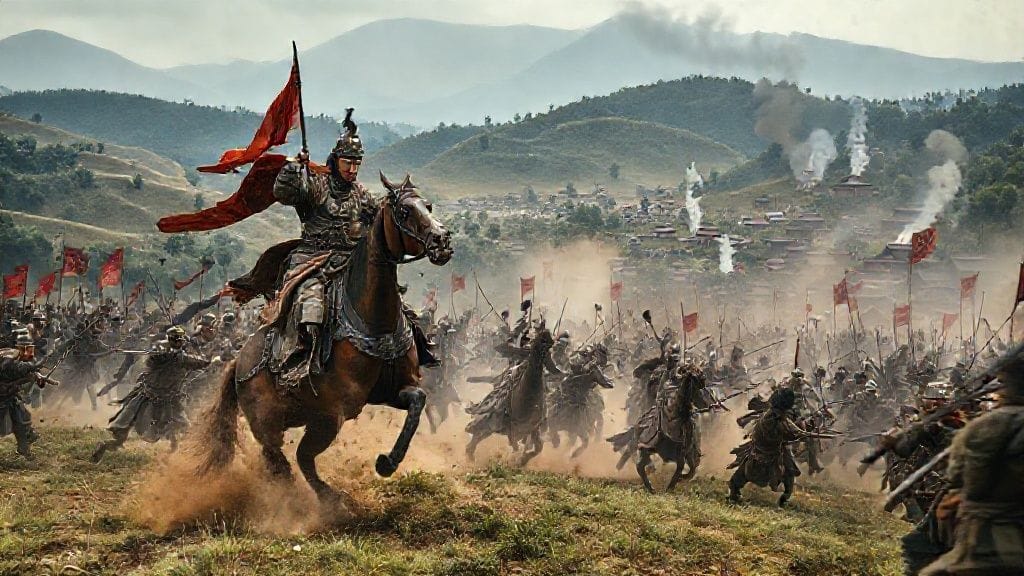
He began by reorganizing the local military forces. Instead of relying solely on old garrison troops—often underpaid, undertrained, and entangled with local interests—he likely brought in cadres of soldiers loyal to him from earlier campaigns, blending them with local recruits. Patrol routes were redrawn, with particular attention to river crossings, crucial market roads, and forest paths notorious for ambushes. Sun Jian’s experience in mobile warfare gave him an edge: he understood how small, fast-moving units could outmaneuver bandit bands who depended on knowledge of the terrain.
Yet sheer force was not enough. Capturing or killing a few leaders might scatter a gang, but unless the social and economic roots of banditry were addressed, another group would form. Here the magistrate’s civil responsibilities intersected with his military instincts. He issued proclamations granting amnesty to bandits who surrendered within a set time and proved they had not committed the most heinous crimes. Those who laid down arms could be resettled, conscripted into labor projects, or even, in some cases, absorbed into the ranks of his own troops.
This mix of severity and clemency was not unique to Sun Jian—other capable officials had used similar strategies—but in Changsha it carried his personal stamp. Chronicles would later describe him as firm but fair, someone who did not indulge in cruelty for its own sake. When he executed bandit leaders, it was done publicly, as both punishment and warning. When he spared minor followers, he often coupled mercy with obligation, demanding service to the community in return.
One anecdote, preserved in later retellings though difficult to verify, speaks of a small mountain village that had been repeatedly raided. On hearing the villagers’ pleas, Sun Jian is said to have gone personally, taking a detachment of picked men. Instead of encamping in safety, he spent a night in a vulnerable farmhouse to signal his willingness to share the risks of the people. Whether literally true or symbolically elaborated, the story captures an essential element of his rule: the magistrate was not a distant figure cloistered in his yamen, but a visible presence on the roads and in the fields.
Through these campaigns and gestures, the balance of fear in Changsha shifted. Bandits began to fear the magistrate more than the magistrate feared them. Peasants slowly dared to send their children to market again. Word spread up the chain of command: the appointment of sun jian magistrate of changsha had been a rare success. But this was only the beginning of his task.
Governance in Motion: Courts, Taxes, and Everyday Life under Sun Jian
Once immediate security improved, the subtler dimensions of governance came to the fore. A Han magistrate sat not only as commander, but as judge, tax supervisor, registrar, and sometimes ad hoc mediator of everything from irrigation disputes to marriage conflicts. For a man like Sun Jian, whose fame rested on his bravery, the test would now be patience, fairness, and administrative discipline.
In the court halls of Changsha, petitioners gathered with their bamboo slips and oral complaints. Land boundaries had been blurred by years of unrest; records were missing or manipulated; powerful families tried to encroach on the holdings of weaker neighbors. The Confucian ideal of the magistrate as a moral exemplar demanded that he listen carefully and rule according to justice, not mere expediency. Sun Jian, though not a classical scholar in the mold of some officials, seems to have appreciated the gravity of these duties.
He relied heavily on skilled clerks and legal experts already serving in the commandery, yet he did not simply rubber-stamp their recommendations. Stories from his later career suggest a habit of direct inquiry, cross-examining witnesses, and comparing testimony with local reputation. When dealing with tax matters, he faced the thorny problem of balancing imperial demands with local capacities. The court in Luoyang expected its quotas of grain and revenue; Changsha’s fields, however, had been under-cultivated due to insecurity and flight.
To avoid both rebellion and censure, Sun Jian took a pragmatic approach. He reduced or deferred taxes in the most devastated districts, arguing in his reports that short-term leniency would yield greater long-term stability. At the same time, he cracked down on evasion by wealthier landholders, who had grown used to manipulating the chaos to underreport their holdings. This inevitably brought him into tension with some segments of the local gentry, who preferred administrators they could easily influence.
Yet not all gentry opposed him. Some recognized that a functioning order, even if stricter, benefitted their estates and commercial interests. They collaborated in rebuilding irrigation works, lending grain to poor peasants under magistrate-sanctioned contracts, and sponsoring local schools to restore a semblance of cultural normalcy. In bringing these groups into alignment with his policies, Sun Jian showed the political skill necessary to move beyond mere coercion.
For ordinary people, the difference between an ineffectual magistrate and a committed one like sun jian magistrate of changsha was palpable. Market days became safer. Disputes, though never entirely free of favoritism, had a greater chance of being heard on their merits. Village elders once again had a stable authority to appeal to, rather than improvising justice through feuds and secret arrangements. Children growing up during these years would remember them as a period when the world, after long uncertainty, started to make some sense again.
Politics in the Shadows: Court Intrigue Reaches the South
Even in distant Changsha, Sun Jian could not escape the long shadows cast by Luoyang’s palace intrigues. Each courier from the capital carried not only official instructions, but hints of who currently held power, which faction was ascendant, and which policies were to be emphasized or quietly ignored. To survive and prosper as a magistrate, he had to read these signals scrupulously.
The late 180s CE saw the continued dominance of powerful eunuchs at court, alongside aristocratic ministers and regional generals whose influence sometimes surpassed that of the emperor himself. Edicts might be issued in one spirit, then reinterpreted or reversed when a different clique gained the upper hand. An administrator like Sun Jian learned that it was dangerous to bind himself too tightly to any single patron in the capital.
Changsha’s position in the empire meant that it was both buffered and exposed. On one hand, the sheer distance made it harder for court factions to micromanage its affairs; on the other hand, it was a tempting prize for ambitious generals seeking to build southern power bases. Rumors trickled down of regional commanders in other provinces acting more and more independently, raising large armies, and treating imperial orders as suggestions rather than commands.
Sun Jian had to walk a fine line. He needed enough autonomy to respond quickly to local conditions, yet he had to show outward deference to imperial authority. His reports were therefore likely carefully phrased: emphasizing loyalty, framing his independent initiatives as dutiful extensions of imperial policy, and occasionally flattering those at court whose favor he needed to retain his post. Behind the scenes, he may also have begun to cultivate relationships with other rising figures—men like Yuan Shu—who would later loom large in his life.
Local politics compounded these tensions. Some Changsha gentry aligned themselves with particular court factions, pinning their fortunes on the rise of specific ministers. Others sought to play both sides, feeding information up and down the chain. In this atmosphere, the magistrate had to be more than a soldier and judge; he had to be a reader of men, able to distinguish sincere allies from those who would betray him when the political tide turned.
The appointment of sun jian magistrate of changsha was not, therefore, a simple story of a heroic warrior imposing order on chaos. It was also the story of a mid-level official learning to navigate an empire in which loyalty was fragmented and the very idea of a single, unified Han authority was beginning to crumble. The skills he honed in this political minefield would later shape his actions when the empire finally descended into open civil war.
Families, Loyalties, and Oaths: The Human World of Changsha
Behind the banners and edicts, life in Changsha under Sun Jian’s magistracy was carried by families, friendships, and networks of obligation. The magistrate himself was embedded in such ties. By this time, he was married to Lady Wu, whose intelligence and resolve would later become famous in her own right as the matriarch of the Sun family. Their children, including the young Sun Ce and the infant Sun Quan, were either already born or soon to be. For them, Changsha was not just a posting; it was part of their formative world.
In the magistrate’s residence, evenings may have seen a rare softness. After long days of hearings and military briefings, Sun Jian might sit with his family, sharing simple meals, listening to reports of the children’s small triumphs. Lady Wu, shrewdly observant, would have discussed not only domestic matters but also the political currents she perceived through the guests who came and went. In such intimate conversations, decisions about alliances, risks, and future plans were no doubt shaped.
Beyond the inner quarters, bonds of loyalty formed among Sun Jian’s subordinates. Officers who had followed him from earlier campaigns now found themselves holding key positions in the Changsha administration. They were tied to him not by the impersonal link of office, but by shared dangers and rescued comrades. For clerks and junior officials native to Changsha, serving under a magistrate known for his courage—and increasingly for his fairness—could be a source of pride and career advancement.
Then there were the bonds with local society. Gentry families often courted the magistrate through banquets, gifts, and offers of marriage alliances for distant relatives. Sun Jian could not accept such overtures too freely without compromising his impartiality; yet outright rejection might alienate potent allies. Navigating these social overtures required the same tactical acumen he brought to the battlefield.
At the village level, headmen and elders saw in the magistrate a final arbiter when their own resources were stretched. Some made pilgrimages to the commandery seat, carrying petitions wrapped carefully against the weather, hoping to secure favorable judgments or relief from burdens. Their journeys, anxious and exhausting, were part of the invisible web binding the commandery together. Sun Jian’s responses to such appeals—merciful or stern—echoed for years in the stories people told around winter hearths.
In this human world, the figure of sun jian magistrate of changsha was not a distant abstraction but a presence intersecting with births, marriages, feuds, and hopes. His tenure was woven into the private histories of thousands who would never see their names recorded in chronicles, yet whose lives bore the imprint of his decisions.
The Tiger’s Reputation Spreads: Reports from the Southern Frontier
As stability grew in Changsha, so did Sun Jian’s reputation. Couriers carried not only official tax tallies and legal summaries, but also informal letters from colleagues, military officers, and visiting scholars. In these, the image of the “Tiger of Jiangdong” widened beyond his earlier bandit-fighting exploits along the Yangtze and took on a new dimension: that of an effective regional governor.
Reports reached neighboring commanderies that under sun jian magistrate of changsha, bandit attacks had sharply declined, markets had revived, and major irrigation canals were under repair. Rival administrators, some mired in corruption or paralyzed by indecision, found themselves compared unfavorably. To some, this bred admiration; to others, resentment. The late Han world was increasingly one where regional strongmen measured themselves against one another as much as against the abstract ideal of imperial virtue.
At the same time, Sun Jian’s growing renown did not go unnoticed by potential future allies and enemies. Men like Yuan Shu, scion of a powerful clan, were always scanning the empire for capable commanders who might be drawn into their orbit. In one surviving source cited by modern historians—incorporating the assessments of Pei Songzhi’s fifth-century commentary—we find hints that Sun Jian’s performance in the south played a role in later invitations to join northern coalitions.
It is here that the paradox of his success becomes apparent. The better he governed Changsha, the more indispensable he became not just to the Han state, but to those who were quietly preparing for a post-Han world. In proving that a frontier commandery could be firmly managed by a martial administrator, he unwittingly helped legitimize the broader trend of power devolving from the center to the provinces.
Within Changsha itself, reputation worked on a smaller scale as well. Stories circulated of the magistrate who rode out personally against bandits, who refused extravagant bribes, who punished rapacious tax collectors, and who, on at least one occasion, is said to have lightened the sentence of a thief who stole to feed his starving family. Whether each detail is accurate is less important than the composite image they created: a man of strength, not cruelty; discipline, not rigidity.
By the later 180s, when the empire’s political temperature rose even higher, Sun Jian’s name was no longer just that of a promising regional official. It had become a signal—whispered in council rooms and military camps—that a new kind of leader was emerging from the crucible of places like Changsha.
Storm Clouds Gathering: The Empire’s Descent into Wider Chaos
While Changsha experienced a tentative restoration under Sun Jian, the broader empire edged ever closer to rupture. The death of Emperor Ling in 189 would soon plunge Luoyang into outright catastrophe, but even in 186–188, the signs were unmistakable. Factional purges at court, the empowerment of military strongmen to “protect” the throne, and ongoing unrest in various provinces all heralded the breakdown of central authority.
From Changsha’s vantage point, these developments manifested as increasingly erratic orders from the capital and a growing sense that the Han government could no longer guarantee stability across its vast territory. Edicts calling for new levies of troops or supplies arrived even as local conditions were only just recovering. Sun Jian faced the dilemma common to conscientious regional officials: how to meet imperial demands without undermining the fragile recovery of his own people.
At the same time, rumors of more localized uprisings and power grabs filtered south. In the north, coalitions of officers and aristocrats began to form, each claiming to act in the name of the emperor while effectively carving out personal dominions. To the west and northeast, non-Han tribes watched hungrily as the dragon writhed. Everyone seemed to sense that the Han’s final act was beginning.
For sun jian magistrate of changsha, the question must have arisen: How long could he play the role of loyal servant to a center that was unravelling? His oath to the Han dynasty was not easy to discard, yet his obligations to the people under his care and to his own family’s future were just as real. The skills he had honed in Changsha—commanding troops, building local support, mediating between central decrees and regional realities—positioned him to become more than a magistrate when the time came.
In many ways, Changsha was a rehearsal stage for the theaters of war that would soon open across the empire. The patterns established there—using local resources to build semi-independent strength while maintaining a veneer of imperial loyalty—would be replicated on a larger, bloodier scale by dozens of warlords. That Sun Jian later joined the coalition against Dong Zhuo, and that his sons would go on to found the state of Eastern Wu, are historically better-known outcomes. Yet the seeds of those events were planted here, during years when the storm clouds were visible but had not yet burst.
From Magistrate to Warlord: How Changsha Forged a Future Leader
In popular memory, Sun Jian is often remembered foremost as a warlord and as the father of the Sun dynasty of Eastern Wu. His dramatic death in 191 and the exploits of his son Sun Ce loom large in narratives of the Three Kingdoms. But to view him only through the lens of war is to miss how crucial the experience of being sun jian magistrate of changsha was in shaping his later role.
Changsha taught him that power required more than battlefield brilliance. It demanded food supplies, reliable tax flows, loyal administrators, and a degree of legitimacy in the eyes of local elites and commoners. Commanding troops to attack a rival general was one thing; maintaining civil order in a mixed, often fractious population was another. The years in Changsha gave him practice in balancing immediate military needs with the long-term health of a region.
They also strengthened his network. Officers and officials who served under him there became part of his core following when he later moved north to join wider struggles. These men knew firsthand how he governed and fought; their trust was rooted in shared experience, not mere rhetoric. In an age when armies often melted away or betrayed their leaders at critical moments, such bonds were invaluable.
Moreover, Changsha exposed Sun Jian to the complex interplay between local gentry and military authority. He learned that simply ignoring powerful families was impossible; co-opting them, checking them, and occasionally confronting them was the real art of regional dominance. When he later operated in more contested areas, this understanding of social undercurrents proved as important as his sword.
Even his sense of identity evolved. No longer just the Tiger of Jiangdong, he had been the magistrate of a major southern commandery, a man who had worn the state’s seal as well as a commander’s helmet. This dual legitimacy—imperial officeholder and de facto regional strongman—would characterize many of the early warlords. In that sense, the figure of sun jian magistrate of changsha stands at the hinge between two political worlds: the old bureaucratic Han order and the emerging landscape of personal military regimes.
When he eventually left Changsha, summoned by larger conflicts, he did not step out of a vacuum. He departed a commandery that had felt his influence in every court ruling and campaign, taking with him both the lessons of governance and the aura of a capable ruler. The warlord who would die at Xiangyang was in large part shaped by the magistrate who had once walked the streets of Changsha.
Memory, Myth, and Legend: How Historians See Sun Jian Today
The image of Sun Jian that has come down to us is filtered through both sober historiography and the romanticizing lens of later literature. The chief historical source, Chen Shou’s Records of the Three Kingdoms (Sanguozhi), offers a relatively concise, sometimes austere portrait. It highlights his bravery, his key military campaigns, and briefly notes his official appointments, including his role in the south. Later, Pei Songzhi’s fifth-century annotations add anecdotes and commentaries, some drawn from now-lost texts, some clearly colored by legend.
By the time of the fourteenth-century novel Romance of the Three Kingdoms (Sanguo Yanyi), Sun Jian had become a full-fledged romantic hero: tiger-striped armor, fearless in battle, a man whose death is portrayed with tragic grandeur. His tenure as magistrate—sun jian magistrate of changsha—is overshadowed by more dramatic battlefield scenes in the novel, but the underlying historical reality remains that he was, at a key moment, an instrument of imperial governance rather than a rebel against it.
Modern historians have tried to peel back these layers of embellishment. Some stress the structural forces at work: the late Han’s dependence on militarized officials, the economic strains pushing men like Sun Jian toward autonomous power bases, the unintended consequences of imperial appointments in the provinces. Others, taking a more biographical approach, emphasize his personal virtues and flaws: courage bordering on recklessness, a strong sense of honor, and an ability to inspire fierce loyalty.
There is debate over how transformative his Changsha magistracy truly was. Some scholars see it as a brief, somewhat routine posting in a larger military career. Others argue that it was a crucial apprenticeship in state-building, the moment when he first ruled a defined territory rather than simply commanding troops. Citing the scattered but telling references in the Sanguozhi and in local gazetteer traditions, proponents of this latter view construct a picture of a magistrate whose blend of severity and benevolence left a lasting impression on the region.
Regardless of interpretive nuances, most agree that Sun Jian exemplifies a broader pattern: the transformation of Han officials into warlords, and the transformation of empire-wide structures into patchworks of regional regimes. His story, including his time in Changsha, helps historians trace how the administrative skeleton of the Han did not vanish overnight, but was cannibalized and repurposed by those who would soon openly contest the throne.
Society under Strain: Ordinary People in Extraordinary Times
Most histories of the late Han focus on emperors, generals, and major battles. Yet the appointment of sun jian magistrate of changsha mattered most immediately to people whose names we will never know. For them, the difference between one magistrate and another could be the difference between hunger and enough to eat, between fear on every road and the possibility of sleeping through the night.
In the villages along the Xiang River, farmers rose before dawn to tend rice paddies, repair dikes, and coax harvests from soil exhausted by overuse and neglect. Years of instability had left many without draft animals; some pulled plows themselves. The arrival of a firm magistrate brought both relief and new burdens: security improved, but tax collection also became more consistent. The question was whether Sun Jian’s administration struck a sustainable balance.
Evidence suggests that in at least some districts, he managed to protect peasants from the worst excesses of greedy local subordinates. When tax collectors overreached, village elders could appeal to the commandery seat, and Sun Jian’s reputation for punishing corruption made such appeals less hopeless than they might have been. Nonetheless, life remained hard. Droughts did not disappear; sickness still stalked fragile bodies; social mobility remained limited for most.
Artisans and merchants in Changsha’s towns felt the effects differently. As roads became safer, trade recovered. Blacksmiths, potters, and weavers found more buyers for their goods; market stalls once again bustled with chatter. River boatmen, who had often been forced to pay “protection fees” to bandits or semi-legal militias, found those payments less frequent when Sun Jian’s patrols took control of key stretches of waterway. Yet they now owed clear tolls and taxes instead, reinforcing the sense that the state had returned.
Women’s experiences, though rarely recorded, would have been deeply shaped by this shift from chaos to stricter order. Under bandit rule, they faced constant risk of abduction and assault; under a firmer magistracy, such crimes were at least officially condemned and punishable. At the same time, the reassertion of Confucian norms under a stable administration reinforced patriarchal constraints, limiting some of the rough freedoms that chaos occasionally provided. For many, the trade-off was worth it; safety outweighed other concerns.
Religious life in Changsha also reflected the era’s strains. Shrines to local deities saw increased offerings as people sought protection; Daoist and popular healing movements, some related to currents that had inspired the Yellow Turbans, persisted quietly in the countryside. Sun Jian, pragmatic and focused on order, seems not to have launched any sweeping campaigns against local cults so long as they did not threaten public stability. In this, he showed a tolerance that helped avoid driving spiritual discontent into open rebellion.
Thus, while the chronicles highlight the feats of sun jian magistrate of changsha, it is important to hear the quieter echoes: the relieved sighs of parents when their sons returned safely from market, the anxious gossip of villagers awaiting tax assessments, the cautious optimism of merchants opening long-shuttered shops. Their lives were the canvas upon which his policies were painted, stroke by stroke.
Echoes of Changsha: Lessons from a Magistrate’s Brief Rule
Sun Jian did not remain in Changsha indefinitely. The mounting crises of the late 180s called him northwards, toward the more famous episodes of his career. Yet the echoes of his magistracy lingered in the commandery and in the patterns of Chinese history that followed. His tenure offers several enduring lessons about power, legitimacy, and the fragile art of governance in times of disintegration.
First, it shows that effective rule at the local level can coexist with imperial decay at the center. Even as Luoyang rotted from within, Changsha under Sun Jian demonstrated that a determined and reasonably just magistrate could restore order, encourage economic recovery, and win genuine loyalty. The Han collapse was not simply a story of universal failure; it was uneven, marked by pockets of surprisingly strong governance amid general breakdown.
Second, his experience illustrates the double-edged nature of militarized administration. By appointing warriors like sun jian magistrate of changsha to civil positions, the court temporarily strengthened its grip on trouble spots. But it also armed and legitimized men who would later transform their regional bases into autonomous power centers. Sun Jian’s later career as a warlord cannot be separated from the authority, networks, and experience he gained in posts like Changsha.
Third, the Changsha episode reminds us that the line between official and rebel was often thin. Had the court turned against him, or had he chosen to defy its orders earlier, the same skills that made him an exemplary magistrate could have been deployed against the state. In an era when the emperor’s writ no longer automatically commanded obedience, legitimacy increasingly flowed from performance and protection rather than formal titles alone.
Finally, on a more human level, his magistracy highlights the enduring importance of personal character in leadership. Sources stress Sun Jian’s courage and straightforwardness; while these traits could edge into rashness, they also anchored his reputation as someone people could trust in a world of shifting loyalties. For the residents of Changsha, trust in their magistrate translated into willingness to pay taxes, serve in militias, and rebuild their lives after trauma.
In that sense, the story of sun jian magistrate of changsha is not only a chapter in the prelude to the Three Kingdoms, but a case study in how, even at the edge of collapse, governance mattered—how one man’s blend of iron and compassion could briefly hold together a corner of a falling empire.
Conclusion
The appointment of Sun Jian as magistrate of Changsha in 186 was far more than a footnote in a warrior’s biography. It was a moment when the dying Han dynasty reached into its own ranks and drew forth a man of the sword to wear the robe of an administrator, hoping that his ferocity could become the backbone of local order. In Changsha, we see Sun Jian not only as the Tiger of Jiangdong, but as a judge, a tax overseer, a negotiator with gentry families, and a guardian of crowded markets and quiet villages.
His success there, partial and temporary though it was, illuminates the paradox of the late Han: the center weakens while some of its peripheries are held together by men who are, at once, its servants and its future rivals. As sun jian magistrate of changsha, he demonstrated that martial vigor could be harnessed to administrative responsibility, that bandit-ridden landscapes could be tamed without descending into sheer terror, and that a measure of justice could still be found amid the ruins of imperial credibility.
When Sun Jian later took up arms in the great struggles that shattered the old order, he did so with the memory of Changsha behind him—a memory of what it meant to rule, not just to conquer. The networks he built, the lessons he learned, and the aura he cultivated there helped propel him onto the larger stage of history, and ultimately into the lineage of rulers who would shape the state of Eastern Wu. For historians, the Changsha magistracy stands as a crucial bridge between the age of centralized empire and the era of divided realms.
In tracing this story, we find that the true significance of 186 lies not only in the formal act of appointment, but in the lived reality that followed: the campaigns against bandits, the judgments in crowded courts, the whispered calculations of gentry houses, and the cautious hopes of ordinary people. Through them, the figure of sun jian magistrate of changsha steps out of the shadow of legend and into the bright, complicated light of history.
FAQs
- Who was Sun Jian before he became magistrate of Changsha?
Sun Jian was a rising military figure from the lower Yangtze region, known for his early exploits against pirates and bandits. Coming from a modest gentry background in Fuchun (in the commandery of Wu), he had built a reputation for courage and effectiveness in various suppression campaigns before being appointed to civil office in Changsha. - What exactly was Sun Jian’s role as magistrate of Changsha?
As magistrate (or administrator) of Changsha, Sun Jian served as the highest civil and military authority in the commandery. He was responsible for maintaining order, leading troops against bandits, overseeing taxation and public works, adjudicating legal disputes, and managing relations with local gentry families and neighboring commanderies. - Why was Changsha important in the late Han dynasty?
Changsha was a significant southern commandery, controlling key stretches of the Xiang River and important agricultural lands. It functioned as part of the empire’s southern defensive and economic network. In the turbulent late Han period, stabilizing regions like Changsha was crucial for securing grain supplies, trade routes, and a buffer against both internal uprisings and external threats. - How did Sun Jian govern Changsha differently from other officials?
Sun Jian combined military decisiveness with pragmatic administration. He reorganized local forces to suppress banditry, offered limited amnesties to minor outlaws, punished corrupt tax collectors, and adjusted tax demands to reflect the commandery’s post-rebellion hardships. This blend of severity and measured leniency distinguished him from purely bureaucratic or purely ruthless governors. - Did Sun Jian’s time in Changsha influence his later career as a warlord?
Yes. His experience as sun jian magistrate of changsha taught him how to manage territory, people, and resources, not just troops in the field. He built networks of loyal officers and administrators, learned to negotiate with local elites, and gained practical knowledge of regional governance. These skills and connections proved vital when he later joined larger coalitions and operated as a warlord in the north. - How do historians know about Sun Jian’s magistracy in Changsha?
Information comes mainly from classical Chinese historiography, especially Chen Shou’s Records of the Three Kingdoms and Pei Songzhi’s later annotations, which cite now-lost sources. While details are sparse and sometimes colored by later legend, they provide a consistent picture of Sun Jian’s appointment and effectiveness in the region, supplemented by modern scholarly analysis of local and dynastic contexts. - What was life like for ordinary people under Sun Jian in Changsha?
For peasants, artisans, and merchants, life remained difficult but became more predictable. Bandit attacks diminished, roads and markets grew safer, and avenues for legal redress against abuse reopened. Taxes were more strictly collected, but some of the most egregious corruption was curbed. Overall, many likely experienced a shift from chaotic danger to a stricter but more stable order. - How does Sun Jian’s governance compare with other late Han regional leaders?
Sun Jian exemplifies a type of late Han leader who merged military prowess with administrative competence. While some contemporaries relied primarily on brute force or on intricate court patronage, his record in Changsha shows a more balanced approach. Compared with more predatory warlords, he appears, in the sources, as relatively disciplined and concerned with public order. - Is Sun Jian’s role in Changsha emphasized in Romance of the Three Kingdoms?
No, the novel focuses more on his martial exploits and his involvement in the coalition against Dong Zhuo, as well as his dramatic death. His civil role as magistrate of Changsha is mentioned only in passing, if at all, and does not receive the narrative attention it does in modern historical analysis. - What broader lessons does Sun Jian’s Changsha magistracy offer about the fall of the Han?
His tenure illustrates how the Han state tried to shore up its crumbling authority by empowering militarized officials in the provinces. In the short term, this restored order in key regions; in the long term, it contributed to the rise of regional power bases that would fuel the empire’s fragmentation. Sun Jian’s story thus highlights both the ingenuity and the unintended consequences of the late Han’s survival strategies.
External Resource
Internal Link
Other Resources
- Encyclopaedia Britannica – general search for the exact subject
- Google Scholar – academic search for the exact subject
- Internet Archive – digital library search for the exact subject