Table of Contents
- The Year 234: An Empire on Edge along the Danube
- From Thracian Peasant to Emperor: The Making of Maximinus Thrax
- The Danube Frontier before the Storm
- Who Were the Carpi and the Sarmatians?
- Summoning the Legions: Rome’s March to the North
- Winter on the River: Camps, Hardship, and Muted Rebellion
- First Clashes: Skirmishes in the Fog of the Danube
- Into Barbarian Lands: The Invasion beyond the Frontier
- Cavalry against Horse-Archers: Tactics on the Sarmatian Steppe
- Breaking the Carpi: Forest Fortresses and Fierce Resistance
- Propaganda and Panic in Rome: How Victories Were Sold
- The Human Cost: Soldiers, Settlers, and Captives
- How the Campaigns Reshaped the Danube Limes
- Seeds of Revolt: Maximinus Thrax and the Senate’s Hatred
- From the Danube to Civil War: The Road to His Fall
- Assessing the Legacy of Maximinus Thrax’s Northern Wars
- Conclusion
- FAQs
- External Resource
- Internal Link
Article Summary: In the wintry year 234 CE, amid political fragility and looming external threats, Emperor Maximinus Thrax turned the full power of Rome’s northern armies against the Carpi and Sarmatian peoples along the Danube frontier. This article plunges into the world of the maximinus thrax campaigns, tracing how a Thracian peasant-soldier rose to the purple and tried to secure his legitimacy with blood and steel on the empire’s edge. Through narrative-driven history, it follows the legions across frozen rivers, through mist-shrouded forests, and out onto the flat, dangerous steppe where Sarmatian horse-archers ruled. It explores the social and human costs of these wars: the soldiers’ misery, the terror of provincial villagers, and the fate of barbarian captives dragged into Roman lands. At the same time, it examines how these campaigns fed propaganda in Rome, while also sowing resentment among senators who despised their rough, soldier-emperor. The Danube fortifications, the settlements behind them, and the balance of power in the region were all reshaped, albeit temporarily, by these brutal expeditions. Yet behind the claims of victory lay economic strain, political alienation, and a trajectory that would lead from border warfare to full-blown civil war. By the end, the article evaluates how the maximinus thrax campaigns fit into the wider Crisis of the Third Century and what they reveal about the limits of military power in holding together a fragile empire.
The Year 234: An Empire on Edge along the Danube
In 234 CE, the Roman Empire seemed, at first glance, immense and unshakable. Marble cities glittered from Spain to Syria, and the legions, hardened by centuries of conquest, guarded frontiers that stretched over thousands of kilometers. Yet along the cold, mist-laden banks of the Danube, the illusion of invincibility was beginning to crack. There, in the shadow of thick forests and snow-covered hills, Emperor Maximinus Thrax prepared to launch the campaigns that would define his short, turbulent reign. These were not mere punitive expeditions, but full-scale operations meant to quell the Carpi and Sarmatian tribes who probed and battered at Rome’s defenses. The maximinus thrax campaigns along this frontier were born from fear as much as ambition: fear of incursions, fear of internal revolt, and fear that the emperor’s power, gained through the army, could only be maintained by keeping that army marching and victorious.
Rome had entered what historians would later call the Crisis of the Third Century. Emperors were made and unmade by the soldiers who stood around them, and Maximinus Thrax was the purest embodiment of this new reality. When he looked north, he did not simply see hostile tribes; he saw a stage on which to prove his worth to suspicious Romans who mocked his origins and size, and to stern legionaries who demanded constant action and pay. That is why, as snows fell on the Danube frontier in early 234, supply wagons creaked toward legionary camps, blacksmiths hammered armor late into the night, and scouts vanished into the wilderness ahead. The empire’s fate, and Maximinus’s own, were being bound to the harsh theater of war along this restless river.
From Thracian Peasant to Emperor: The Making of Maximinus Thrax
Maximinus Thrax was an emperor unlike the refined figures whose busts adorned the villas of Rome’s elite. Born in Thrace, likely of humble peasant stock, he emerged from the rough borderlands that had long furnished the Roman army with tough, resourceful recruits. Ancient sources dwell almost obsessively on his physical size: he was said to stand over eight feet tall, with hands large enough to wear his wife’s bracelet as a ring. The exact numbers are almost certainly exaggerated, but the image remains powerful—a giant from the frontier, a man of monstrous strength, who rose through the ranks by sheer force of will and battlefield prowess.
His career unfolded in a period when the army had become the central path to power. Serving under Severan emperors, Maximinus honed his skills as a centurion and later as a higher-ranking officer, earning the respect—perhaps the fear—of his men. He was not the polished, Greek-speaking aristocrat admired in senatorial circles, but a commander who slept in the trenches and drilled his troops to exhaustion. In 235, he would be elevated to the purple by those same troops, but in 234, when the story of the Danube offensive begins, he was already a towering figure in the military sphere. It’s astonishing, isn’t it, that an empire so proud of its tradition of law and citizenship would be guided, in its hour of danger, by someone many senators considered hardly more than a barbarian himself.
This background mattered profoundly for the maximinus thrax campaigns. To his soldiers, he was one of them—stern, unyielding, and constantly present in the field. To the border tribes, his Thracian roots and brutal energy made him a terrifying adversary. Yet to the Roman elite in Italy and the Eastern provinces, he seemed an upstart, a living sign that the center of gravity in the empire was shifting from marble halls to muddy encampments. These perceptions would follow him to the Danube and back, shaping how his wars were waged, remembered, and, in some circles, resented.
The Danube Frontier before the Storm
Long before Maximinus Thrax assumed command, the Danube frontier had been both shield and scar of the empire. The river itself—broad, swift, and unpredictable—served as a natural barrier between Roman provinces and the patchwork of tribal confederations beyond. On its southern bank rose a chain of fortresses, watchtowers, and fortified towns known as the limes. Here, legionary bases like Viminacium, Novae, and Oescus marked Rome’s presence with orderly streets, stone walls, and the constant rattle of arms drills. Civilian settlements clustered around these forts, relying on the soldiers for trade and protection.
Yet protection was never absolute. The Carpi, Dacian-speaking tribes originally settled in the regions east of the Carpathians, had long watched the Roman frontier with a mix of envy and hostility. The Sarmatians—nomadic or semi-nomadic horsemen of Iranian origin—ranged over the plains north of the lower Danube, their mobility making them elusive opponents. Raids were common: small bands might slip across the river in the dead of night, attacking villas or village storehouses before fading back into the forests or steppe. In some years, the damage was limited; in others, whole districts could be thrown into panic. The imperial government, stretched thin across multiple frontiers, often responded with temporary measures: subsidies to certain tribes, the relocation of units, occasional punitive expeditions that destroyed villages but failed to break the will of the peoples behind them.
By 234, this uneasy balance had shifted. Pressures further north and east were pushing groups like the Carpi and Sarmatians closer to Roman lands. Climatic variations, population movements, and rival tribal confederations all played their part. To the farmers of Moesia and Pannonia, it meant fields burned, livestock stolen, and children vanished into northern darkness. For the central administration, it meant alarmed petitions, disrupted tax revenues, and a growing sense that the Danube was becoming more porous. It was into this simmering crisis that Maximinus thrust himself, resolving to crush the threat in a display of overwhelming force.
Who Were the Carpi and the Sarmatians?
To understand the nature of the conflict in 234, one must look closely at the enemies Rome faced. The Carpi were not a single, unified kingdom, but a loose collection of tribes inhabiting the regions between the Carpathian Mountains and the lower Danube, roughly in what is now Romania and Moldova. They were heirs to the cultural legacy of the Dacians—whom Trajan had defeated more than a century earlier—yet they retained their own identity and political structures. Archaeological finds suggest fortified hilltop settlements, simple but functional pottery, and a mixture of subsistence farming with opportunistic raiding. For the Carpi, Roman wealth just across the river was an irresistible lure: metals, textiles, coinage, and captives all beckoned.
The Sarmatians presented a different challenge. Herodotus and later writers described Sarmatian tribes as superb riders and archers, roaming a wide territory that could stretch from the Black Sea steppes to the Tisza and Danube regions. By the third century, some Sarmatian groups had settled more permanently, but their reputation as fast-moving, hard-hitting cavalry remained. They fought with long lances and composite bows, armored in scale or lamellar protection, and used their horses not just as transport but as integral weapons systems. On the open plains north of the Danube, where forests gave way to rolling grassland, Sarmatian war-bands could appear and vanish like ghosts.
For Roman commanders trained in traditional infantry tactics, these enemies required adaptation. Advance too far into the Carpi’s forested strongholds, and you risked ambushes and supply breakdowns. Lure the Sarmatians into close battle without adequate cavalry, and they could simply melt away, showering your troops with arrows as they retreated. Both peoples knew the terrain intimately; both had decades of experience in testing Roman responses; both were bound by complex networks of alliance, rivalry, and kinship that could quickly change the political map. It is within this web of shifting loyalties and deep-rooted cultures that the maximinus thrax campaigns unfolded.
Summoning the Legions: Rome’s March to the North
The decision to launch a full-scale offensive in 234 did not come lightly. Rome’s armies were already stretched across the Rhine, the eastern frontiers facing the new Sasanian Empire, and the restive internal provinces. Yet Maximinus, still consolidating his position among the troops, understood that a dramatic show of strength could cement his reputation as a soldier-emperor. Ancient historian Herodian, who lived through these events, hints at the dual purpose of the campaign: to “repel the barbarians and confirm his rule among the legions” (Herodian, History of the Empire after Marcus).
Orders went out from imperial headquarters to the Danubian provinces. Auxiliary cohorts were recalled from secondary outposts; cavalry units were reinforced with fresh mounts; grain shipments from the Balkan interior were redirected toward military depots along the river. The logistics were staggering. An army of perhaps tens of thousands—though precise numbers elude us—had to be fed, armed, and supplied through winter conditions that turned roads into mud and rivers into treacherous ice. Artisans worked incessantly forging spearheads, repairing shields, and shaping horseshoes, while clerks calculated rations of wheat, wine, and oil.
As the legions assembled, Maximinus himself appeared in the camps, towering above his officers. He was no distant ruler. Stories circulated of him walking among the soldiers’ tents, inspecting their kit, sharing their meager food, berating any sign of softness. To some, this was inspiring: the emperor as comrade-in-arms. To others, it felt like relentless pressure from a man whose appetite for discipline and action knew no bounds. But this was only the beginning. Once the preparations were complete and scouts reported increased movements of Carpi and Sarmatian war-bands north of the river, Maximinus ordered the march that would carry his forces to the very edge of the known world.
Winter on the River: Camps, Hardship, and Muted Rebellion
Winter on the Danube was a cold that seemed to bite through wool and leather, to settle not only in the bones but in the minds of men. The legions established their main camps on the south bank—vast, ordered rectangles of earth, ditch, and timber. Inside, lines of leather tents or wooden barracks housed troops organized by cohort and century, while granaries and workshops filled the central spaces. Fires smoked in braziers as soldiers huddled in cloaks, playing dice, cleaning weapons, or listening to rumors whispered over cups of sour wine.
The hardships were considerable. Supply disruptions, disease, and poor-quality rations could corrode morale. Some units complained that they had not received their full donatives promised when Maximinus had risen to power. Pay was late; letters from families in distant provinces were infrequent. In such conditions, even small grievances could grow into sullen resentment. The emperor, aware that his power depended entirely on military loyalty, responded with a mixture of fear and favor—crushing dissent harshly while publicizing any victories, however minor, against the northern tribes.
Across the icy river, Carpi and Sarmatian scouts watched the glowing lines of Roman campfires with their own blend of awe and hatred. They knew that such concentrated forces meant an offensive was coming. Small raids tested the edges of the Roman positions, probing for weak points, ambushing foraging parties, or attempting to burn supply dumps. In response, Maximinus tightened the perimeter and sent out counter-raiding patrols, ordering his men to bring back prisoners for interrogation. The river thus became not just a geographic barrier, but a psychological one—one side waiting for the moment to cross, the other preparing to withstand the inevitable onslaught.
First Clashes: Skirmishes in the Fog of the Danube
When the first large-scale clashes occurred, they were not the pitched battles of marble reliefs, but confused, bitter skirmishes fought in fog and sleet. In early 234, as the ice began to crack and thaw, Roman engineers selected points where the Danube narrowed or slowed. There, under cover of darkness and with scouting support, they constructed makeshift bridges of boats and planks, or tested the ice with timber laid across its surface. Crossing such unstable routes required discipline. Legionaries advanced in tight files, shields slung on their backs, ears strained for the cracking of ice or the whistle of unseen arrows.
The Carpi and Sarmatians did not simply wait. At some crossings, war-bands attacked from the northern bank, hurling javelins and shooting arrows into the crowded columns. Roman archers and artillery responded in kind, launching bolts from scorpions and onagers dragged close to the shore. Sometimes the fighting swirled back and forth across the water, with desperate men slipping, drowning, or being cut down on the slippery banks. Victories and setbacks alternated in rapid succession, and reports reaching Rome were inevitably shaped by political needs: minor successes became “great victories,” while reverses were described as strategic withdrawals.
For the individual soldier, these first engagements were formative. The enemy no longer existed as shadowy figures beyond the frontier, but as faces glimpsed in the haze—painted, grimacing, shouting in unfamiliar tongues. The maximinus thrax campaigns were, at ground level, a series of such brutal, intimate encounters. A spear thrust at close range; a comrade dragged away, screaming; the sudden silence after the rout of a war-band. Maximinus himself, if we trust later accounts, rode near the front lines, urging on the troops, pointing out targets, exposing himself to danger as a deliberate display of courage. This was war not as distant policy, but as immediate survival.
Into Barbarian Lands: The Invasion beyond the Frontier
Once secure bridgeheads had been established, Maximinus unleashed the full weight of his army into Carpi and Sarmatian territories. This was the moment Roman strategy shifted from passive defense to aggressive penetration. The legions advanced along multiple axes northwards, columns of infantry supported by auxilia and cavalry screens, their standards fluttering in the cold wind. Behind the marching troops came wagons laden with supplies, craftsmen capable of repairing weapons on the move, and sometimes even merchants eager to trade with the army or plunder abandoned villages.
Advancing into hostile territory meant constant uncertainty. Roads were few; landmarks could be deceptive under winter skies. Roman commanders relied on scouts and compelled local guides—often taken prisoner from nearby settlements—to lead them through forests and river valleys. Yet treachery was a constant fear. A wrong turn could lead into a bog, a narrow defile, or a circle of hills perfect for ambush. Maximinus, schooled in such dangers from his own upbringing in the borderlands, emphasized reconnaissance and swift punitive action. Any captured guide suspected of misdirection might find himself crucified at the roadside as a warning.
Villages that opposed the Romans were burned, their inhabitants killed or enslaved. Those that surrendered, offering hostages and promises of tribute, were sometimes spared, sometimes not—such was the ambivalence of imperial policy at the sharp end. The aim was not merely to kill enemy warriors, but to break the economic and social foundations of resistance. Grain stores, herds, and craft centers were prime targets. In these scorched-earth tactics, the maximinus thrax campaigns resembled other Roman offensives on the frontiers, but the scale and intensity, driven by the emperor’s need for demonstrable results, made them particularly devastating.
Even so, resistance did not collapse overnight. Carpi warriors retreated into hill-forts and forest refuges; Sarmatian bands withdrew onto open steppe, harassing the Roman flanks and supply lines. For months, the legions trudged forward, skirmishing almost daily, never entirely certain where the next major confrontation would erupt. Each triumph carved on imperial inscriptions was bought with very real exhaustion and blood.
Cavalry against Horse-Archers: Tactics on the Sarmatian Steppe
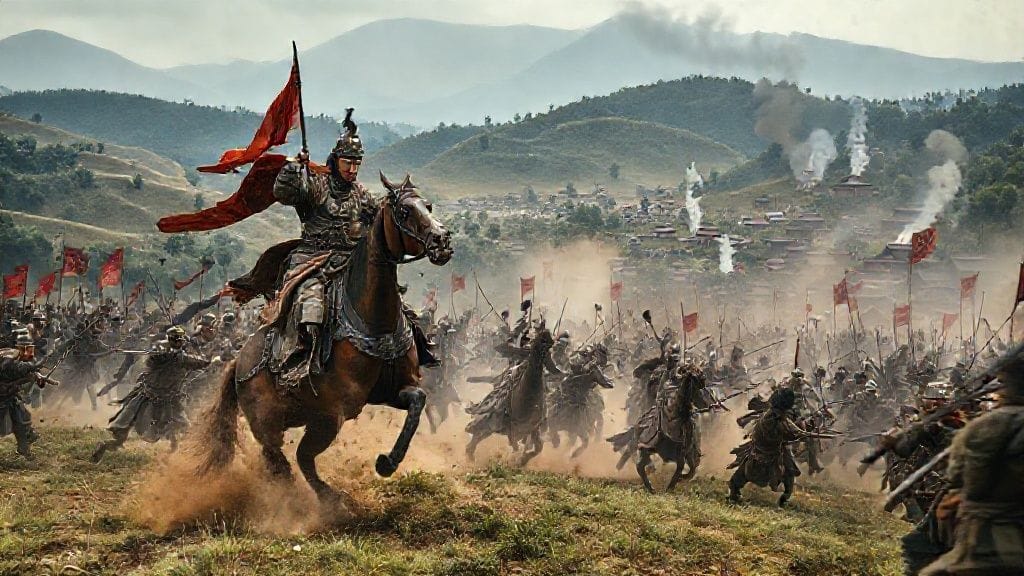
The most dangerous encounters came on the plains where the Sarmatians could deploy their full cavalry strength. These warriors, often clad in scale armor, riding agile horses, combined shock charges with missile fire in a manner that challenged Rome’s traditional infantry supremacy. When they massed on the horizon, their banners streaming, their armor glinting, they presented a terrifying sight to any foot soldier tethered to the earth.
Roman generals had learned, however, from previous centuries of conflict with steppe peoples. The army that Maximinus led north was not solely an infantry machine. Sarmatian-style cavalry had been incorporated into the Roman forces themselves; Cataphractarii—heavily armored horsemen—rode under Roman standards, while lighter auxiliary cavalry equipped with bows and javelins provided mobile screening. In some engagements, Roman commanders used infantry to anchor the center while cavalry wings maneuvered to outflank the Sarmatian horse-archers, cutting off their retreat and forcing them into close combat where Roman discipline could prevail.
The clash of these forces must have been overwhelming—thundering hooves, clouds of dust, the hiss of arrows, the shattering of lances on shields and armor. Yet behind the spectacle lay careful calculation. Maximinus needed not just to repel Sarmatian raids but to deliver decisive blows that could be reported as clear victories. A series of such engagements, according to later imperial inscriptions, did indeed result in captured Sarmatian nobles, seized banners, and “pacified” territories. One surviving inscription, though fragmentary, boasts that under Maximinus, “the Danube was cleansed of foes, and the barbarian horse was broken beneath the eagles.” Whether this was strictly accurate is open to debate, but it captures the intended image: empire as tamer of the steppe.
Still, such successes were fragile. Sarmatian power was not concentrated in a single capital or dynasty; it was diffuse, spread across many clans and chieftains. Crushing one war-band did not neutralize the whole confederation. Even as reports of victories traveled south, other groups regrouped on distant plains, biding their time. The maximinus thrax campaigns bought time and prestige, but not a permanent end to the Sarmatian threat.
Breaking the Carpi: Forest Fortresses and Fierce Resistance
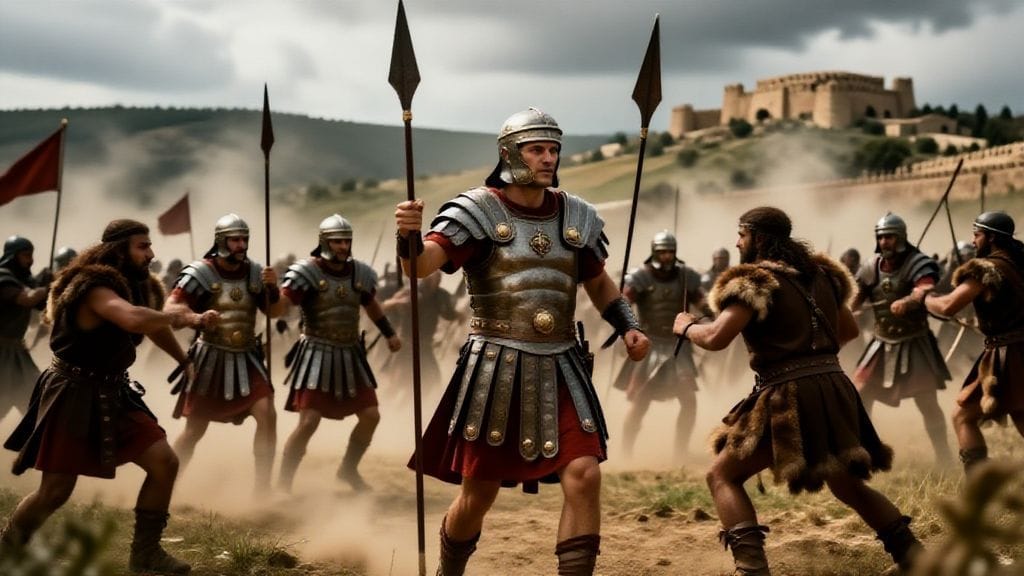
If the open steppe belonged to the Sarmatians, the wooded hills and valleys belonged to the Carpi. Their strongholds, often perched on heights or nestled within dense forests, were designed to offset Rome’s advantages in numbers and equipment. Approaching such sites required slow, methodical movement. Wooden palisades, earthen ramparts, and cunningly placed ditches protected the entrances, while narrow paths forced attackers into confined spaces where defenders could hurl missiles from above.
Roman siegecraft, however, was among the finest in the ancient world. Engineers accompanied the columns, carrying knowledge as valuable as any sword. Against Carpi fortresses, they built rams, siege towers, and ladders, sometimes even earthen ramps that allowed troops to reach the height of enemy walls. Artillery pieces—ballistae and onagers—were assembled on-site, hurling stones that shattered wooden defenses and sowed panic among defenders. Slowly, brutally, each stronghold was ground down.
The battles around these hill-forts were savage. Carpi warriors, fighting for their families and homelands, resisted with desperation. Women and older men likely took part in defense, hauling stones, pouring boiling liquids, or setting traps along potential approaches. When walls finally fell, there was often no orderly surrender. Instead, the fighting spilled into narrow streets as Romans went house to house. For those Carpi who survived, the end might be exile, enslavement, or forced relocation as laeti—semi-free communities resettled within Roman territory to provide labor and military recruits.
Maximinus’s propaganda would later present these operations as definitive victories. In Rome, coins and inscriptions proclaimed him “Germanicus Maximus” and “Dacicus Maximus,” titles evoking triumphs over northern peoples. Yet behind the triumphal language were shattered lives and devastated landscapes. The maximinus thrax campaigns against the Carpi may have temporarily reduced their capacity to raid, but they also deepened a cycle of hatred along the frontier, ensuring that the Danube region would remain a zone of anxiety and violence for decades to come.
Propaganda and Panic in Rome: How Victories Were Sold
As the emperor battled in the north, another kind of war unfolded in the south: the struggle to shape perception. Maximinus Thrax, absent from the traditional centers of power, needed the people of Rome and the provincial elites to believe in his competence and success. To that end, news from the front was carefully curated. Victories—real, exaggerated, or strategically framed—were swiftly conveyed to the capital. Messengers arrived carrying dispatches describing Carpi strongholds taken, Sarmatian chieftains killed, and prisoners paraded before the army.
The imperial mint got to work, issuing coins that bore legends such as “VICTORIA GERMANICA” or “VICTORIA DACICA,” even though the campaigns were concentrated against Carpi and Sarmatians near the lower Danube. On these coins, the emperor might be shown as a noble, armored figure, foot resting on a prostrate barbarian, or receiving a Victory goddess on a globe. These images reassured those who handled them that Rome’s far frontiers were secure under this formidable soldier-emperor.
Yet behind the celebrations, there was fear. Senators, gathered in their marble halls, read the same reports with mixed emotions. On one hand, a strong emperor beating back barbarians was good for the empire’s security; on the other, a powerful general adored by the army and contemptuous of aristocratic sensibilities could be a direct threat to their own influence. Rumors circulated that Maximinus despised the senate, that he taxed Italy heavily from his remote war headquarters, and that he had little intention of returning to Rome to submit himself to their gaze. Herodian depicts the senatorial class seething under his rule, forced to publicly praise his achievements while privately plotting how to curb his power.
Ordinary Romans, too, may have been anxious. They heard enough of border troubles to know the empire was under pressure. Refugees from the Danube provinces, merchants whose trade routes were disrupted, and veterans returning with scars and stories all fed a sense of unease. In this climate, the maximinus thrax campaigns became a symbol of both stability and danger: stability because the emperor was doing something; danger because the problems seemed to demand ever more resources, ever more blood, and ever more concessions to the army that stood between civilization and chaos.
The Human Cost: Soldiers, Settlers, and Captives
Statistics rarely survive from ancient wars, but the human cost of Maximinus’s Danube campaigns can be glimpsed in the scattered evidence that remains. Legionaries and auxiliaries died not only in battle but from exposure, disease, and accidents. Graves near frontier forts contain skeletons showing healed wounds and brutal trauma, silent witnesses to the hazards of life on the limes. In letters and papyri from other frontiers, we hear the voices of soldiers complaining about pay, longing for home, or describing battles in terse, matter-of-fact language. It is reasonable to guess that the men on the Danube felt much the same.
For provincial settlers in Moesia and Pannonia, the campaigns were a mixed blessing. On one hand, a strong military response to raids could bring relief after years of fear. On the other, the presence of large armies meant requisitions, billeting, and the risk of collateral damage. Fields might be trampled by marching columns; draught animals seized for army use; prices driven up by increased demand. Villages on the wrong side of a rumor or accusation—suspected of trading with or harboring “barbarians”—could find themselves harshly punished. In such a world, loyalty to Rome was both survival strategy and daily burden.
Perhaps the most poignant figures are the captives taken during these wars. Carpi and Sarmatian prisoners, including women and children, were marched south in chain-gangs, sold on slave markets, or settled as dependent communities under Roman oversight. Some would eventually assimilate, taking Roman names, serving in auxiliary units, or marrying into local families. Others would nurse memories of lost homelands and destroyed kin, passing stories down generations. The maximinus thrax campaigns generated more than imperial titles; they created human trajectories that would ripple quietly through the social fabric of the Balkans and beyond.
Even among the victors, psychological scars lingered. Veterans of harsh frontier wars often carried memories of comrades left on distant battlefields, of horrors witnessed that no triumphal inscription ever mentioned. For them, the emperor’s boasts and the senate’s official decrees could feel very remote from the mud, fear, and blood of actual combat.
How the Campaigns Reshaped the Danube Limes
Military campaigns leave lasting marks on landscapes, and Maximinus’s offensive was no exception. In the wake of the major operations of 234, Roman engineers and administrators set about consolidating their gains. Along sections of the Danube where crossings had been contested, fortifications were strengthened: ditches deepened, ramparts heightened, wooden structures replaced with stone where resources allowed. Watchtowers were positioned to maximize visibility across the river and into interior routes that raiders might use.
Within the provinces, some communities were relocated. Groups of Carpi or Sarmatian captives may have been settled as buffer communities, serving as a first line of defense against their former allies and providing a pool of recruits for auxiliary units. New roads were cut through forest and marsh to allow faster troop movement between key forts. Supply depots were expanded, including granaries and armories capable of sustaining high-intensity operations for longer periods. In policy terms, the Danube frontier became not just a line, but a whole militarized zone, its economy and society increasingly oriented toward war readiness.
This reshaping had wider consequences. As more resources flowed toward the Danube, other frontiers and provinces might feel neglected. Taxation in Italy and the richer eastern provinces increased to support the demands of the northern armies. The fiscal strain contributed to rising prices and occasional shortages, signs of the broader economic turbulence that would characterize the third century. Meanwhile, the presence of strong, veteran armies along the Danube made the region a power base in its own right—fertile ground for future usurpers and rival claimants to the throne.
Thus the maximinus thrax campaigns did not merely repel Carpi and Sarmatians for a season; they accelerated a structural transformation of the frontier itself, deepening militarization and tying imperial stability ever more tightly to the loyalty of troops stationed along this restless border.
Seeds of Revolt: Maximinus Thrax and the Senate’s Hatred
While Maximinus focused on the northern wars, his relationship with the Roman senate deteriorated almost beyond repair. The emperor’s continual absence from Rome, ruling instead from military headquarters near the front, fueled the perception that he was not just a soldier-emperor, but an enemy of the old aristocratic order. Heavy taxation, requisitions of temple treasures, and the curbing of senatorial privileges all combined to make him deeply unpopular among the elite. One ancient source, the Historia Augusta—though notoriously unreliable—captures the venom of later opinion when it describes Maximinus as “hated by all, for his savagery and contempt of noblemen.”
From the senate’s viewpoint, the maximinus thrax campaigns were a double-edged sword. They could not openly oppose a war that ostensibly protected Roman provinces. Yet every victory made the emperor more indispensable to the army, and every triumphal proclamation highlighted their own marginalization. Hidden in the corridors of Rome’s great houses, conversations turned from murmured complaints to outright conspiracies. Senators began to dream of an alternative: an emperor who would be more pliable, more traditional, and more willing to share the stage with them.
In Africa and elsewhere, local grievances and rivalries intersected with this senatorial discontent. Provincial leaders saw an opportunity to challenge a distant emperor preoccupied with northern campaigns. The story that would soon unfold—of Gordian revolts, senatorial endorsements of rival emperors, and ultimately open civil war—had its roots in the sense that Maximinus’s power base on the Danube, strengthened by his campaigns against Carpi and Sarmatians, threatened the very balance of the imperial system.
It is one of the great ironies of his reign: the very efforts he made to secure the borders and prove his legitimacy as a ruler contributed to the political forces that would destroy him. Victories in the north did not translate into love in the south; if anything, they sharpened the sense of estrangement between emperor and senate.
From the Danube to Civil War: The Road to His Fall
In the years following the 234 campaigns, Maximinus remained focused on the northern frontiers. Additional expeditions, reorganizations, and defensive measures consumed his time and energy. The legions along the Danube remained his core support; they had seen him lead from the front, share their hardships, and deliver them spoils and glory. But events elsewhere in the empire were moving beyond his control.
In 238, a revolt in the province of Africa Proconsularis produced a rival emperor, Gordian I, supported by his son Gordian II and quickly endorsed by the senate. Overnight, Maximinus’s legitimacy was challenged not just by distant rebels but by Rome’s own governing class. The senate declared him a public enemy, annulled his acts, and rallied provinces, cities, and armies to the Gordian cause. Although the first Gordian revolt collapsed amid military setbacks, the senatorial defiance could not be recalled. New emperors—Pupienus and Balbinus—were chosen, with young Gordian III as figurehead, and a coalition formed to oppose Maximinus.
The emperor, still on the Danube with his loyal troops, chose the path that had always defined him: war. He marched south from the frontier, crossing the Alps into Italy with the intention of crushing the senatorial regime. But the logistical and political circumstances had changed. Supplies were difficult to secure; Italian towns, loyal to the senate, resisted provisioning his force. At Aquileia, a fortified city in northern Italy, local defenders held out stubbornly, denying Maximinus a quick victory.
As the siege dragged on, morale in his own army began to erode. Hunger, disease, and the realization that they were now pitted not against external enemies but against their own empire took their toll. Stories of senatorial decrees, promises of amnesty, and perhaps even secret negotiations circulated among the troops. Finally, in a dramatic reversal, elements of his own guard turned against him. Maximinus Thrax and his son were murdered in their tent, their heads sent to Rome as proof that the usurper was dead. The man who had once towered over battlefields, whose campaigns against the Carpi and Sarmatians had seemed to confirm the primacy of military power, fell not in heroic combat, but by the blades of disillusioned soldiers.
Assessing the Legacy of Maximinus Thrax’s Northern Wars
How, then, should we judge the maximinus thrax campaigns along the Danube frontier in 234 and the years around it? Militarily, they appear to have achieved their immediate goals. The intensity of Carpi and Sarmatian raids decreased for a time; Roman control over key stretches of the frontier was reaffirmed; and the Danube limes was strengthened with new fortifications and settlements. Later emperors would benefit from this temporarily stabilized northern line, at least in the short term.
Politically and structurally, however, the picture is more ambiguous. These campaigns deepened the empire’s reliance on the army as the primary source of authority. They demonstrated that an emperor could rule effectively from the frontier, backed by the direct loyalty of his troops, rather than through the intermediary structures of the senate and traditional civic institutions. This precedent would echo throughout the third century, as later “soldier-emperors” rose and fell in quick succession, each leaning heavily on one or another frontier army for support.
The wars also contributed to the ongoing militarization and economic strain of the empire. Maintaining large forces in the field, repairing and expanding fortifications, and resettling captured populations required vast resources. These burdens were borne unevenly, often falling hardest on rural populations and provincial cities that had little say in imperial policy. In this sense, the frontier victories came at a long-term cost to the empire’s social and economic cohesion.
On a human level, the campaigns remind us that Roman power was not just law and roads and aqueducts, but also fire and steel. For Carpi and Sarmatian communities, the name of Maximinus Thrax must have become synonymous with devastation. For Roman soldiers, it evoked brutal marches, perilous crossings, and nights spent awake listening for the whistle of arrows in the dark. Between triumphal inscriptions and ruined villages, between imperial titles and forgotten graves, his legacy is written in contradictions.
Conclusion
The story of Emperor Maximinus Thrax and his campaigns against the Carpi and Sarmatians along the Danube frontier in 234 is, at its core, a story about the limits and costs of power. Rising from obscure Thracian origins to command the legions, Maximinus embodied the raw, martial energy that the Roman Empire increasingly relied on to manage its sprawling borders. On the Danube, he threw that energy against determined enemies, carving out victories that temporarily secured the frontier and won him the adulation of his troops.
Yet those same campaigns reveal the deeper tensions tearing at Rome in the third century. Every success on the northern riverbanks widened the gap between emperor and senate, between frontier soldier and urban aristocrat, between short-term security and long-term stability. The maximinus thrax campaigns show an emperor desperately trying to hold the empire together by force of arms alone, only to be undone by the very system of military power that had elevated him. His wars did not prevent the Crisis of the Third Century; they became one of its most striking episodes.
Today, when we peer back through the haze of fragmentary texts and scattered archaeological traces, we see not just the outline of a brutal ruler, but a man shaped by his times—caught between the demands of anxious frontiers and the expectations of a political class that never fully accepted him. The Danube flows on, its banks now lined with modern states and cities, but beneath its waters lies the memory of frozen crossings, burning villages, and clashing cavalry that once marked the struggle between Rome and the peoples of the north. In that remembered landscape, Maximinus Thrax still rides, towering and grim, a symbol of both the reach and the fragility of imperial power.
FAQs
- Who was Maximinus Thrax?
Maximinus Thrax was a third-century Roman emperor of Thracian origin, famed for his enormous stature and military career. Elevated by the army around 235 CE, he ruled primarily from the frontiers, especially the Danube, and relied heavily on the loyalty of his soldiers rather than on senatorial support. His reign was short and turbulent, ending in 238 when he was assassinated by his own troops during a civil conflict. - Why did Maximinus campaign against the Carpi and Sarmatians in 234?
The campaigns of 234 were driven by increasing raids and pressure from the Carpi and Sarmatian tribes along the Danube frontier. These incursions threatened Roman provinces in the Balkans, disrupting trade, agriculture, and tax revenues. Maximinus also needed military victories to strengthen his political position as a newly elevated soldier-emperor, so a forceful response on the Danube served both strategic and personal purposes. - Where did these campaigns take place geographically?
The campaigns unfolded primarily along the lower and middle Danube, in what are now parts of Serbia, Bulgaria, and Romania. Roman forces crossed from fortified bases on the south bank into territories north of the river, pushing into Carpi homelands near the Carpathian region and confronting Sarmatian groups on the surrounding plains and steppe. - Were the campaigns against the Carpi and Sarmatians successful?
In the short term, the campaigns were largely successful. Roman forces inflicted significant defeats on both Carpi and Sarmatian groups, destroyed fortresses and settlements, and captured prisoners and hostages. Raids decreased for a time, and Maximinus was able to present himself as a victorious defender of the empire. However, the underlying pressures on the frontier remained, and similar threats would resurface later under other emperors. - How did these campaigns affect the Roman Empire internally?
Internally, the campaigns reinforced the central role of the army in imperial politics and further marginalized the senate. Heavy taxation and requisitions to sustain the frontier wars increased resentment among elites and provincial populations. The emperor’s prolonged absence from Rome and his reliance on Danubian legions contributed directly to senatorial opposition and, ultimately, to the revolts and civil wars that brought about his downfall. - What impact did the campaigns have on the Carpi and Sarmatian peoples?
The Carpi and Sarmatians suffered heavy losses in warriors, settlements, and resources. Some groups were killed or dispersed; others were captured and resettled within Roman territory as dependent communities. Although these campaigns weakened certain tribal confederations and reduced raids for a time, they did not eliminate the presence or identity of these peoples, who continued to play a significant role along the Danube frontier in subsequent decades. - How do historians know about the maximinus thrax campaigns?
Historians rely on a combination of ancient literary sources, inscriptions, coins, and archaeological evidence. Writers like Herodian provide narrative accounts, though often with biases, particularly against Maximinus. Inscriptions and coin legends record imperial titles and claims of victory, while excavations along the Danube reveal fortifications, military installations, and destruction layers that align with periods of conflict in the early third century. - Did these campaigns contribute to the Crisis of the Third Century?
Yes, they formed part of the broader pattern that historians call the Crisis of the Third Century. While they temporarily secured the Danube frontier, they also intensified the empire’s dependence on frontier armies, strained finances, and deepened the divide between emperor, senate, and provinces. The political fallout from Maximinus’s rule and his violent end illustrated how fragile imperial authority had become.
External Resource
Internal Link
Other Resources
- Encyclopaedia Britannica – general search for the exact subject
- Google Scholar – academic search for the exact subject
- Internet Archive – digital library search for the exact subject