Table of Contents
- A Winter in Rome: The Year Gnaeus Papirius Aelianus Was Chosen
- From Obscurity to Prominence: The Early Career of Aelianus
- Dacia Before Aelianus: A Frontier Forged in Blood
- The Shadow of Trajan and Hadrian over the Carpathian Frontier
- Appointment in 142: How an Empire Chooses a Governor
- Crossing the Danube: A Governor’s Journey to Dacia Superior
- Alba Iulia and Apulum: Heart of a Harsh Province
- Soldiers, Settlers, and Subjects: The People Aelianus Ruled
- Law, Tax, and Order: The Daily Burdens of Governorship
- Watchtowers and Warning Fires: Securing the Dacian Limes
- Gold, Roads, and Grain: The Economic Pulse of Dacia Superior
- Between Rome and the Barbarians: Diplomacy at the Edge of the World
- Letters to the Emperor: Aelianus and the Court of Antoninus Pius
- Tension under Tranquility: Unrest along the Carpathian Line
- The Governor as Judge: Lives Decided in a Single Afternoon
- Legacy in Stone: Inscriptions, Forts, and the Memory of Aelianus
- From Dacia to the Consulate: The Rise of a Frontier Governor
- Dacia after Aelianus: Decades on the Brink
- Echoes in the Ruins: Reconstructing a Lost Career
- Conclusion
- FAQs
- External Resource
- Internal Link
Article Summary: In the year 142, during the seemingly tranquil reign of Antoninus Pius, the Roman Empire quietly reshaped its northern frontier by appointing gnaeus papirius aelianus as governor of Dacia Superior. This article follows his story from the corridors of power in Rome to the windswept forts of the Carpathians, where Roman law, gold, and blood collided. We explore how Aelianus navigated military defense, tax collection, and local diplomacy in a province that was rich, restive, and crucial to imperial security. The narrative reconstructs his world through inscriptions, archaeology, and later references, revealing how a man like gnaeus papirius aelianus could both enforce and embody Rome’s authority. Yet behind the administrative titles and marble inscriptions, we glimpse the human stakes: soldiers on the walls, miners underground, villagers fearing raids beyond the limes. By tracing the consequences of his appointment, we see Dacia not as a static possession, but as a living frontier constantly negotiated. In the end, the governorship of gnaeus papirius aelianus becomes a lens onto the wider strategies, anxieties, and ambitions of a far‑flung empire.
A Winter in Rome: The Year Gnaeus Papirius Aelianus Was Chosen
The winter of 142 in Rome did not announce itself with omens. No comet lit up the sky, no mysterious prodigy was recorded in the annals. Yet in the quiet offices of the imperial bureaucracy, a decision was made that would ripple out across the cold Danube plains and into the mountains of the Carpathians: gnaeus papirius aelianus was chosen to become governor of Dacia Superior. In a city more accustomed to thinking in marble and ceremony, this was a paper decision, a name inked onto tablets, a seal pressed into wax. But far from the forums and temples, men and women would live or die by what this appointment meant.
Rome in 142 was at the height of the age that later historians would call the rule of the “Five Good Emperors.” Antoninus Pius, mild in demeanor but firm in policy, ruled from the Palatine Hill. The Empire’s frontiers, from Britain to Syria, were studded with forts and watchtowers like iron nails hammered into the edges of the known world. Yet for all the rhetoric of peace—Pax Romana, the Roman Peace—every peace had to be guarded. Dacia, conquered by Trajan only a generation earlier, was one of the Empire’s most precarious gains.
Somewhere in the curia, among the marble statues and echoing halls, the career of gnaeus papirius aelianus was evaluated by men who might never see a frontier. They looked at his record—commands held, cases judged, loyalty demonstrated—and weighed him against the needs of a province that was both treasure chest and tinderbox. It is astonishing, isn’t it, how the fate of an entire province could be steered by the quiet turning of a wax tablet, by the steady hand of a scribe who would never know the faces of the people his writing doomed or protected.
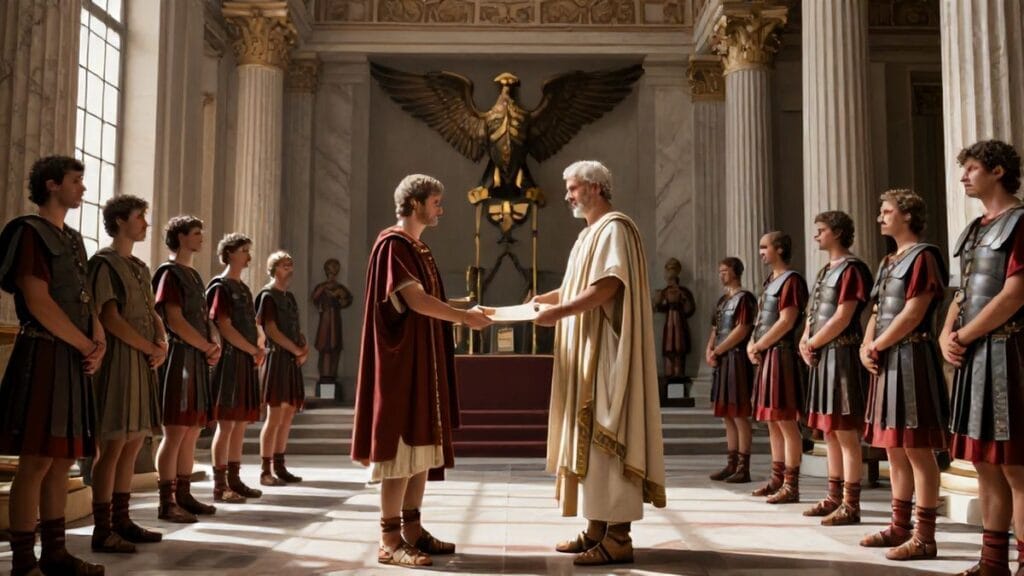
For Aelianus himself, the news must have arrived in a burst of ceremony: formally proclaimed, perhaps in the presence of the emperor or one of his most trusted advisers. He was now not merely an administrator; he was the living presence of Rome in Dacia Superior. His name would be carved in stone at the head of decrees, placed at the end of letters to the emperor, and whispered in fear or hope by soldiers, traders, and local chieftains north of the Danube. The appointment of gnaeus papirius aelianus was an instrument of imperial policy, but it was also the next step in a man’s life, tied to ambition, duty, and the ever‑present possibility of failure.
From Obscurity to Prominence: The Early Career of Aelianus
The Roman aristocracy was a machine designed to produce governors. Gnaeus Papirius Aelianus—his name itself a careful arrangement of family lineage and adoption, Papirius suggesting an old plebeian gens, Aelianus perhaps hinting at marital or adoptive ties—was a product of that machine. Like most senators of his era, he likely began his public life as a young man serving as a military tribune, learning how to command legions and listen to older centurions who understood the unglamorous details of supply lines, pay registers, and winter quarters.
His path would have followed the cursus honorum, the ladder of offices that drew ambitious Romans upward. A quaestorship, perhaps, assigned to a province or to the treasury; an aedileship or tribunate, exposing him to urban politics; then a praetorship, a gateway to more serious commands. Each step was both an honor and an examination. Lose a battle, mismanage an account, or back the wrong political faction, and a career could end in quiet disgrace, fading into the indistinct mass of forgettable names.
We do not possess the full biography of gnaeus papirius aelianus, but certain clues show through the gaps. Inscriptions, those stubborn survivors of stone, later attest to his consulship and his governorships. Historians have reconstructed his trajectory from these fragments, and we see in outline what must have been a steady, unspectacular rise marked by competence rather than flamboyance. Rome had room for conquerors, but in the mid‑second century, it valued safe hands most of all.
At some point before 142, Aelianus likely held a legionary command on another frontier, perhaps along the Rhine or Danube. There he would have learned the rhythms of frontier life: the boredom of long winters, the sudden panic of raids, the delicate game of negotiating with tribes across the river. That experience would matter in Dacia, a province that was not simply a line to be defended but a pocket of Roman presence surrounded by peoples whose loyalties were uncertain at best.
By the time his name came up for Dacia Superior, Aelianus was seasoned. Friends and rivals alike would have understood that this was no minor assignment. The gold mines of Dacia fed Rome’s economy, and the legions stationed there guarded a frontier that, if breached, could open the interior of the Balkans to devastating incursions. To be entrusted with such a province was both recognition and test. If he succeeded, further honors awaited. If he failed, the Empire would remember not his careful judgments, but his disasters.
Dacia Before Aelianus: A Frontier Forged in Blood
To understand what awaited gnaeus papirius aelianus in 142, one has to look back to the smoke and iron of Trajan’s wars. Dacia—roughly corresponding to modern‑day Romania and parts of the surrounding region—had been a powerful kingdom under King Decebalus. Twice, under Emperor Domitian, Rome had tasted humiliation at Dacian hands. It was Trajan, the soldier‑emperor, who resolved to settle the matter once and for all.
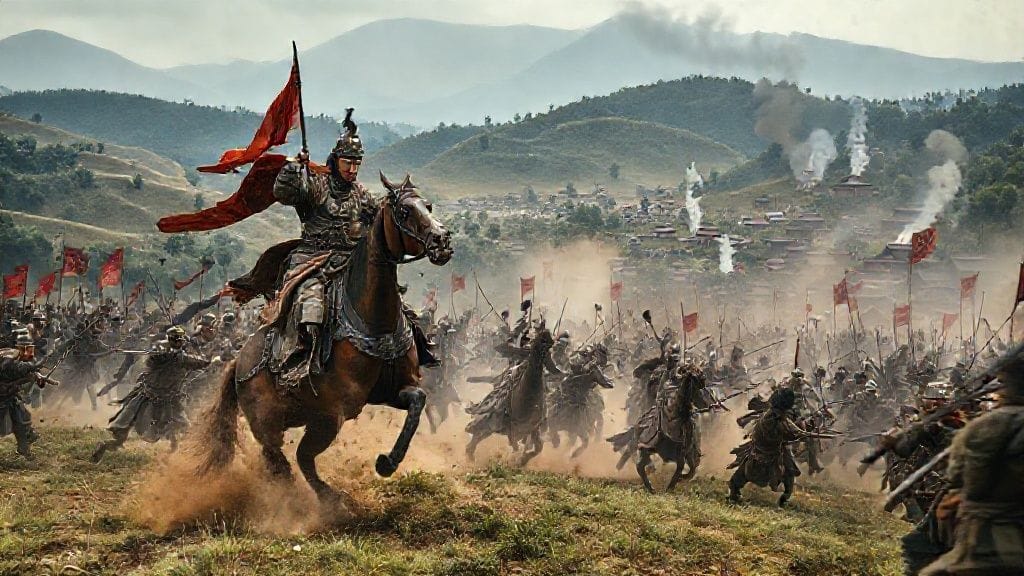
Between 101–102 and 105–106, two great Dacian Wars shook the region. Legions marched across the Danube on massive stone‑and‑wood bridges, their advance commemorated forever on Trajan’s Column in Rome. The reliefs show legionaries building forts, crossing rivers, storming hillforts; Dacian warriors leaping to their deaths rather than be captured; the final suicide of Decebalus, dagger in hand, surrounded by Roman pursuers. The conquest was brutal and thorough, a deliberate shattering of Dacian power.
Yet conquest did not mean instant peace. Rome carved out provinces—Dacia Superior and Dacia Inferior, and later Dacia Porolissensis—overlaying Roman administrative lines on a landscape still deeply marked by older identities. Colonists from across the Empire were settled there; soldiers were granted land; new cities laid out in the Roman grid. But for local inhabitants, the new order meant taxes, land surveys, conscription, and an alien legal system. Some adapted, some collaborated, others simmered in resentment.
As decades passed, the sharp pain of conquest dulled, but the frontier remained unstable. Beyond the provincial borders, Sarmatians, Roxolani, and other tribes watched, probed, raided. Alliances shifted, and what had been a conquered kingdom became, in effect, a Roman enclave surrounded by peoples who recognized opportunity when they saw a weak governor or over‑stretched legions. Dacia’s wealth—its mines and its rich agricultural basin—was both blessing and curse, inviting both investment and attack.
By the time gnaeus papirius aelianus was appointed, two generations had lived under Roman rule in Dacia. There were young men in 142 whose grandfathers had fought under Decebalus, and others whose fathers had marched there as Trajanic legionaries and decided to stay. Cultures, languages, and loyalties overlapped uneasily. The province was no longer raw conquest, but neither was it a peacefully assimilated part of the Empire. It was, in every sense, a frontier forged in blood and still cooling.
The Shadow of Trajan and Hadrian over the Carpathian Frontier
The decisions of dead emperors hung over the living responsibilities of gnaeus papirius aelianus. Trajan’s drive for expansion had pushed Rome past the Danube, establishing Dacia as a glittering proof of Roman might. But his successor, Hadrian, with a soldier’s pragmatism, had asked the harder question: could Rome afford to keep it?
Hadrian’s reign (117–138) had been marked by consolidation and, in some regions, deliberate withdrawal. He had pulled Roman forces back from certain over‑extended positions, preferring defensible frontiers to glorious overreach. Dacia, however, remained. Despite periodic speculation that it might be abandoned, the province stayed under Roman control, ringed with forts and watchtowers, its roads busy with traffic. The very fact that it was retained, when other distant territories were quietly relinquished, tells us how vital its resources and strategic position were considered.
By 142, under Antoninus Pius, the imperial ideology emphasized stability and continuity. The Empire presented itself as timeless, its frontiers fixed, its rule benevolent. But the reality on the ground was more brittle. Dacia was expensive: garrisons had to be maintained, roads repaired, mines supervised, local unrest suppressed. Every year, the emperor and his advisers calculated the cost of legions versus the profits of gold and the geopolitical advantage of holding the Carpathian basin.
Aelianus stepped into a province that bore the imprint of these earlier choices. Hadrian had reorganized Dacia’s administrative structure, clarified the boundaries of Dacia Superior, and invested in the limes system of defense. Yet any strategy, however sound on papyrus, depended on the men tasked with carrying it out. As governor, gnaeus papirius aelianus was the hinge between grand policy and stubborn reality. He would be judged in light of the imperial ideal, yet forced to make compromises amid snow, mud, and human fear.
In the minds of local elites and military officers, the memory of Trajan’s heroism and Hadrian’s caution coexisted. Should Dacia be the spearhead of Roman authority beyond the Danube, or a fortified island, guarded and self‑contained? Aelianus, navigating these legacies, had to answer that question in practice, not in speeches. He did so with the limited tools of any governor: men, money, and the thin authority of the imperial name.
Appointment in 142: How an Empire Chooses a Governor
The appointment of a provincial governor was not a simple tap on the shoulder; it was the outcome of a complex, often opaque process of recommendation, precedent, and political balancing. In the case of gnaeus papirius aelianus, the year 142 placed his selection firmly within the settled routine of Antoninus Pius’s administration. Yet even a “routine” appointment carried high stakes.
Governors of imperial provinces like Dacia Superior were typically ex‑consuls or ex‑praetors, men who had already proven themselves in Rome’s highest offices. The Senate might be consulted, but the emperor’s will was decisive. Candidates were weighed not only for competence, but for loyalty and the absence of dangerous ambition. A governor who grew too popular among his legions could, in theory, become a threat. Thus, emperors preferred figures like Aelianus: experienced, reliable, ambitious—but not flamboyant enough to inspire visions of usurpation.
Somewhere in the imperial archives, a file on Aelianus would have been opened. His earlier commands, especially any service on the Danube, would have worked in his favor. Letters from former superiors might have praised his discipline, his fairness in dispensing military justice, his ability to keep supply lines functioning through winter storms. The emperor’s advisers, perhaps even the powerful imperial secretary (ab epistulis), would mark him as suited to a difficult border province.
When the final decision was made, it came with both honor and obligation. The formal diploma of appointment, ratified by the emperor, granted gnaeus papirius aelianus authority over soldiers and civilians in Dacia Superior. He would bear the title legatus Augusti pro praetore, the emperor’s legate, wielding imperium in the emperor’s name. In theory, he could order executions, requisition supplies, negotiate with foreign leaders, and even launch limited campaigns, so long as he stayed within the broad guidelines set by imperial policy.
News of his appointment would travel outward along the arteries of the Empire. Messengers carrying the official announcements would ride toward the Danube, stopping at legionary headquarters and city councils. In Dacia Superior, officers would wonder what kind of man the new governor was, merchants would speculate about how strictly he would enforce customs duties, and local elites would anticipate how best to approach him with petitions. One man’s career move was, for thousands, the horizon of their next few years.
Crossing the Danube: A Governor’s Journey to Dacia Superior
The journey from Rome to Dacia Superior was itself a lesson in geography and power. Gnaeus Papirius Aelianus would have left behind the marbled hills, traversed the Apennines, and crossed the Adriatic, perhaps landing at Aquileia, gateway to the Danube world. From there, roads stretched north and east, built by generations of Roman engineers and maintained by provincial labor.
Traveling with him was not just a small retinue; it was the traveling core of a government. Secretaries, legal advisers, freedmen skilled in accounts, bodyguards from the imperial cohort, perhaps even his family. Chests of documents carried precedents, imperial rescripts, and blank tablets ready to be filled with new decrees. Aelianus was not moving as a private citizen now; he was the walking embodiment of Roman administration.
As the party neared the Danube, the landscape changed. The tidy mosaics and villas of Italy gave way to rougher farmsteads, larger stretches of forest, and the looming line of the river itself, wide and often snow‑rimmed in winter. Along its banks, Roman forts faced outward, their watchtowers scanning the opposite shore. Crossing the Danube at a major bridgehead—possibly at Drobeta or another established point—Aelianus would have felt the subtle psychological boundary: from the secure heartland into a zone that might look Roman but never let you forget that danger lay close.
From the Danube to Apulum, the capital of Dacia Superior, the road climbed into the Carpathian region. Here, the marks of Rome and the memory of Dacia intertwined. Latin inscriptions on milestones stood beside hills that still hid the ruins of Dacian fortresses. Native shrines, sometimes re‑sanctified under Roman gods, dotted the countryside. It was along this road that Aelianus began to see the people he would rule: legionaries drilling in frozen courtyards, auxiliary troops of mixed origin, traders from the eastern provinces speaking Greek and Aramaic, local peasants leading ox‑carts filled with grain or ore.
By the time he rode through the gates of Apulum, the province’s command center, he would have been greeted with formal ceremony: salutes from the garrison, delegations from local city councils, petitions already prepared and waiting. Beyond the staged welcome, though, hung the unspoken expectation: here is the man sent by Rome to keep us safe, to keep us paid, to keep some semblance of justice alive at the end of the world.
Alba Iulia and Apulum: Heart of a Harsh Province
Apulum, near modern Alba Iulia, was more than just a city; it was a nexus of power in Dacia Superior. Strategically placed near the gold‑bearing Apuseni Mountains and at crossroads linking the Danube to the interior, it hosted not only the provincial capital but one of the Empire’s most important legionary bases in the region. For gnaeus papirius aelianus, Apulum was both workplace and stage.
Archaeology paints a vivid picture. The legionary fortress, with its thick stone walls, barracks, granaries, and principia (headquarters), dominated the landscape. Adjacent to it sprawled the canabae, the civilian settlement that grew inevitably around any large military installation—full of taverns, workshops, merchants, unofficial families of soldiers who were, in theory, forbidden to marry. Further out lay the formal colonia, settled with Roman citizens and granted a measure of self‑governance. Inscriptions attest to local magistrates, guilds, and benefactors sponsoring baths and temples.
Into this layered environment stepped Aelianus. His residence, likely attached to or near the headquarters complex, doubled as official audience chamber and private home. Here he held morning receptions, where petitioners lined up: a veteran disputing his land grant; a local landowner protesting a tax assessment; a city envoy requesting funds to repair a bridge washed out by spring floods. Each case, however mundane, was a thread in the broader fabric of imperial order.
The climate tested everyone. Winters could be harsh in the Carpathian basin, with heavy snows and biting winds. Roads became dangerous, supply convoys slowed, and border patrols grew more miserable and more vital. In such a setting, the polished virtues celebrated in Rome—clemency, moderation, justice—had to be translated into decisions about how much grain to requisition, whether to extend a patrol route, how harshly to punish a rebellious village.
Yet behind the severity, Apulum also represented Rome’s promise: baths with heated floors, amphitheaters for games, altars inscribed with hopes for prosperity and the favor of the gods. Aelianus presided over both worlds: the comforting illusion of Roman permanence and the constant awareness that, beyond the next ridge, that permanence could be shattered in a night raid.
Soldiers, Settlers, and Subjects: The People Aelianus Ruled
To speak of a “province” is to risk abstraction. What gnaeus papirius aelianus actually ruled was a mosaic of people whose lives intersected under Roman authority. Foremost among them were the soldiers: legionaries of Legio XIII Gemina at Apulum, auxiliaries recruited from all corners of the Empire—Batavians from the Rhine, Thracians from the Balkans, Syrians from the Levant—serving twenty‑five years far from home. They were the hard edge of Roman power, but they were also consumers, neighbors, fathers of unofficial families, donors to local shrines.
Then there were the settlers. After Trajan’s conquest, colonists had been encouraged to move into Dacia. Veterans received land parcels, merchants set up shop, artisans followed the legions. Some were Italians, others from Iberia, Gaul, or the Greek East. Latin became the language of law and administration, but local dialects persisted in homes and marketplaces. Over time, intermarriage blurred lines, creating a creole society where Roman names might sit atop Dacian ancestry and vice versa.
Most numerous, and most silent in the sources, were the native inhabitants. Former Dacian communities, now reclassified under Roman cadastral surveys, paid taxes and provided labor. Some local elites—those who had cooperated early or adapted quickly—gained Roman citizenship, seats on city councils, and even modest influence in provincial politics. Others remained on the margins, their resentment occasionally flaring into banditry or support for raiding parties from beyond the frontier.
Aelianus had to read this human landscape with care. Over‑favoring Roman settlers risked alienating local producers; tolerating too much local autonomy might signal weakness to the army. A grain shortage could spark anger in both garrison and countryside. A broken promise to a tribal leader beyond the frontier could turn a quiet winter into a season of burning farmsteads.
Amid these tensions, there were also quieter stories: a local boy learning Latin to serve as a scribe; a veteran opening a small tavern near the fort; a Dacian shrine subtly transformed into a temple of Silvanus. The governor’s edicts and policies trickled down into such lives in ways he likely never saw. But his name—gnaeus papirius aelianus—appeared at the top of documents that shaped them. For many, he was as close as they would ever come to the distant, abstract power called “Rome.”
Law, Tax, and Order: The Daily Burdens of Governorship
Popular imagination pictures Roman governors as generals on horseback, forever marching along the frontier. The reality for gnaeus papirius aelianus was, in many ways, more prosaic—and no less consequential. Much of his time was spent in the role of judge and chief administrator, presiding over what Romans loosely called iurisdictio, the application of law. In Dacia Superior, where Roman and local customs overlapped, this was a delicate art.
Roman citizens in the province came under Roman civil law; peregrini, or non‑citizens, might be judged under a mix of local custom and imperial edicts. Aelianus oversaw these matters, often delegating routine cases to subordinate officials but stepping in for appeals, serious crimes, and politically sensitive disputes. In the governor’s hall, litigants would stand anxiously as interpreters translated their words into the formal Latin of the record, while scribes scratched away on wax tablets.
Then there was taxation. Dacia’s wealth, particularly its gold mines, required tight control. Teams of imperial procurators managed the financial side, but all ultimate authority flowed to the governor. He approved survey results, signed off on extraordinary levies in time of military need, and heard complaints against corrupt tax‑collectors. A misstep could inflame a district or deprive the legions of pay—both dangerous outcomes.
Order was maintained through a combination of fear and routine. Patrols along the roads deterred banditry; local leaders were made responsible, under threat of punishment, for disturbances in their territories. In case of serious unrest, Aelianus could authorize military intervention, but every such deployment risked leaving some other area less guarded. Balancing the limited manpower of Rome across a vast, sometimes hostile landscape was a constant mental exercise.
In one inscription, a governor’s dedication to a restored road or bridge might look like self‑advertisement. Yet those lines of stone also mark his entanglement with the everyday: how goods moved, how quickly a messenger could reach him with news of a border skirmish, whether an entire valley would starve if a river crossing collapsed. For gnaeus papirius aelianus, law, tax, and order were not abstract categories; they were the levers he could pull to keep the province from sliding into chaos.
Watchtowers and Warning Fires: Securing the Dacian Limes
A map of Dacia Superior in the time of gnaeus papirius aelianus would show more than cities and roads; it would be ringed with the small, stubborn symbols of Roman vigilance: forts, signal towers, and fortified passes. This system, known collectively as the limes, was both a physical barrier and an information network. Its success depended less on stone than on discipline and speed.
Along the northern and western edges, smaller forts housed auxiliary units tasked with daily patrols. Watchtowers on hilltops could, by day, send smoke signals and, by night, beacon fires, conveying messages from one station to the next. A sudden flare could carry news of a raid dozens of miles in a matter of hours, rippling inward toward Apulum where Aelianus’s officers kept careful watch.
The governor’s role in this system was strategic. He could order reinforcement of a vulnerable sector, authorize the building of a new fort, or decide to pull back from an untenable position in hard winters. Yet every such decision was constrained by resources: there were only so many soldiers, only so much timber and stone, only so much patience among the men ordered to spend yet another freezing night staring into the dark.
From time to time, a report would arrive: a group of raiders from across the frontier had stolen cattle and disappeared; a patrol had gone missing; a small outpost had been found burned, its garrison slaughtered. These were not full‑scale invasions, but they tore at the promise of Roman security. Aelianus had to decide when to shrug off such events as the inevitable friction of frontier life and when to respond with punishing expeditions across the line.
Even in moments of quiet, the limes demanded attention. Forts aged, ditches silted up, towers needed repair. An inscription from another frontier, praising a governor who “restored the boundary works ruined by age and negligence,” suggests the constant temptation to let standards slip. In Dacia Superior, where a gap in the line might invite disaster, gnaeus papirius aelianus could not afford neglect. His name may not survive on every repaired wall, but the survival of those walls in his time was, quite literally, a matter of life and death.
Gold, Roads, and Grain: The Economic Pulse of Dacia Superior
Behind the military façade of Dacia lay its economic heart, beating to the rhythm of pickaxes and wagon wheels. The province’s gold mines were legendary, their output one of the key reasons Trajan had fought so hard to conquer the region. By 142, those mines were integrated into the imperial economy, their operation overseen by specialized officials—but the governor, gnaeus papirius aelianus, stood at the apex of authority.
The mining districts drew labor from across the region: free workers, slaves, and perhaps debtors working off obligations. Conditions were harsh, with galleries descending into the earth, ventilation poor, accidents frequent. The state took its share of the output, funneled through official channels to be minted into coins that bore the emperor’s serene profile, masking the sweat and risk embedded in every aureus. Aelianus had to ensure that production targets were met, security maintained, and disputes between contractors and workers kept under control.
Roads were the arteries that made such extraction meaningful. The famed Roman road network in Dacia connected mining centers to military bases and river ports, allowing ore, grain, and manufactured goods to flow. Maintenance was a constant challenge in a landscape prone to erosion, winter freeze‑thaw cycles, and sudden floods. When Aelianus commissioned repairs or new stretches, he was not just improving transport; he was binding the province’s disparate parts more tightly together.
Grain, less glamorous than gold, was no less vital. The legions needed regular supplies; local populations depended on stable harvests. In good years, surpluses could be stored or exported; in bad years, the governor might face the ugly choice of diverting grain from civilians to the military or vice versa. Famine was a specter that haunted every ancient administrator. A well‑timed shipment from another province could save lives—and careers.
Economic life also had its more visible, optimistic faces: markets in towns where potters sold glossy red Samian ware, smiths offered tools and weapons, and traders from as far as the Black Sea hawked luxuries. Taxation touched all of this, sometimes lightly, sometimes heavily. Aelianus’s policies, attitudes toward tax farmers, and willingness to grant remissions in hardship years would all shape how his name was remembered—or cursed—in the streets and farmsteads of Dacia Superior.
Between Rome and the Barbarians: Diplomacy at the Edge of the World
It is tempting to imagine a clear line between Rome and “the barbarians,” but frontier life was a tangle of relationships rather than a simple divide. Beyond the formal border of Dacia Superior lay a patchwork of tribes—Sarmatians, Roxolani, Iazyges, and others—whose leaders calculated their interests with cold pragmatism. For gnaeus papirius aelianus, dealing with these neighbors meant practicing diplomacy backed by the implicit threat of force.
Envoys would come to Apulum, escorted under flag of truce, to negotiate matters of passage, trade, and alliance. They might seek subsidies—regular payments in gold or goods—in exchange for guarding a section of border, refraining from raids, or providing auxiliary troops in times of Roman campaigns elsewhere. Such arrangements, while sometimes disparaged by later writers as bribery, were integral to frontier management.
At other times, Aelianus would send his own emissaries, bearing gifts, letters, and occasionally veiled warnings. These letters, though not preserved, likely resembled those found from other provinces: formal in tone, invoking the emperor’s name, offering friendship while hinting at the consequences of betrayal. A single misunderstanding—a gift seen as insultingly small, a slight at a banquet—could sour relations.
Intermarriage and hostage exchanges added another layer. Sons of tribal leaders might be sent to live for a time in Roman territory, educated in Latin, exposed to Roman luxuries, and bound by invisible threads of obligation. Such young men could later serve as pro‑Roman leaders in their own communities—or as bitter enemies who knew Rome all too well.
Diplomacy on the Dacian frontier, then, was a dance on a narrow ridge between arrogance and appeasement. Aelianus had to oversee this dance without the benefit of modern communications or detailed intelligence. News came on horseback, filtered through the fears and ambitions of those who brought it. A rumor of alliance between two external tribes might be true—or the invention of a local chieftain seeking to extract greater subsidies. In this fog of uncertainty, the governor’s instincts mattered. A misjudged treaty or a broken promise could erupt years later in a crisis that would be remembered, if at all, as “the trouble that began under Aelianus.”
Letters to the Emperor: Aelianus and the Court of Antoninus Pius
Physical distance from Rome did not mean political isolation. Gnaeus Papirius Aelianus remained tethered to the imperial center by a flow of letters, reports, and petitions. Couriers traveled along a relay of stations, carrying sealed dispatches between Apulum and the Palatine, stitching provincial reality to imperial perception.
We can imagine Aelianus at his desk in the late hours, dictating to a trusted secretary. He would report on troop morale, border incidents, mining output, and notable legal cases. Where guidance was needed, he might request imperial rescripts—authoritative answers that would carry the emperor’s judgment back to Dacia, to be quoted in future disputes as precedent. Such rescripts survive in other contexts, revealing a tone that was often pragmatic, occasionally surprisingly humane.
The relationship between emperor and governor was formal yet personal. Aelianus’s successes could be magnified at court by allies who praised his management, while any missteps might be seized upon by rivals. The appointment to Dacia Superior may have been part of a longer arc: perform well here, and new honors would follow. Indeed, sources suggest that later, gnaeus papirius aelianus reached the consulate, the pinnacle of a senatorial career. Scholars citing the Prosopographia Imperii Romani have reconstructed his cursus from scattered epigraphic traces, illustrating how frontier service fed back into Rome’s political orbit.
Letters also brought Aelianus the will of the emperor. Directives on broader policy—such as how aggressively to pursue campaigns across the border, or whether to prioritize road building over new fortifications—would shape his options. Yet even within those lines, he retained considerable discretion. The emperor could decree that peace be maintained; it was up to the governor to decide whether that meant paying a potentially treacherous ally, risking a punitive expedition, or accepting a level of low‑grade raiding.
The paper trail between Rome and Dacia has largely vanished, lost to time and decay. But its echoes remain in stone. In one inscription, a governor proudly records having “acted in accordance with the commands of the most sacred emperor.” Behind that formula lies hours of writing, debate, and waiting—an ancient bureaucracy wrestling, line by line, with the unruly facts of life on the frontier.
Tension under Tranquility: Unrest along the Carpathian Line
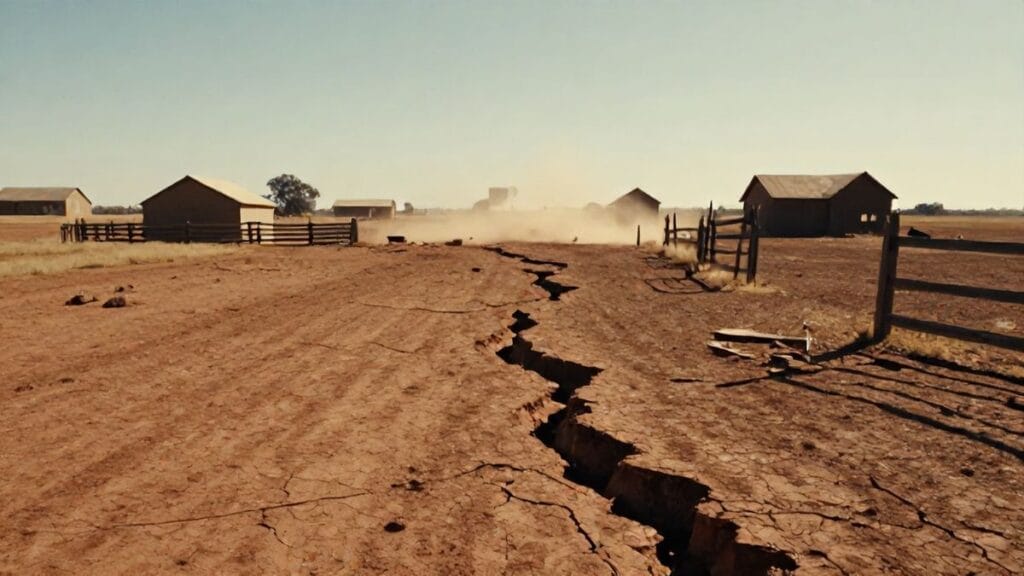
Historians often describe the reign of Antoninus Pius as a time of peace, a golden plateau between more turbulent eras. Yet this serenity looks different when viewed from the embattled valleys of Dacia Superior. There, “peace” meant simply the absence of full‑scale war; the ground still shook regularly with minor tremors of unrest.
During the governorship of gnaeus papirius aelianus, we have no record of massive rebellions or invasions. But silence in the literary sources does not equal silence in reality. Frontier provinces experienced constant skirmishing: cattle raids by small bands crossing the border at night; ambushes of supply trains; the occasional mutiny in an under‑paid auxiliary unit. The governor’s job was to keep such incidents localized, preventing them from coalescing into something larger.
One can picture, in a winter much like that of his appointment, a village near the edge of the province waking to find tracks in the snow and missing livestock. A messenger rides hard to the nearest fort; an officer dispatches a small detachment in pursuit. Perhaps they catch the raiders, perhaps not. If they fail too often, confidence in Rome’s protection erodes. Local farmers start hiding their grain, avoiding tax collectors, muttering about the times before Trajan’s conquest when they took care of their own defense.
Inside the garrison, tension could rise for different reasons. Long periods without action frayed discipline; rumors of corruption in the distribution of pay or rations could boil over into violence. Aelianus had to rely on his senior officers to detect and defuse such problems—but ultimately, responsibility rested with him. When punishments were necessary, he had to ensure they were harsh enough to deter, but not so brutal as to spark sympathy for the condemned.
Thus, the apparent tranquility of the 140s in Dacia Superior was, in fact, a balancing act. Success lay in crises that never grew large enough to be recorded by distant chroniclers. The very anonymity of gnaeus papirius aelianus in the narrative histories may be, paradoxically, a quiet tribute: in his time, Dacia did not burn brightly enough in disaster to catch the eye of Rome’s historians.
The Governor as Judge: Lives Decided in a Single Afternoon
On a given afternoon in Apulum, the courtyard of the governor’s residence might fill with people waiting for judgment. Soldiers leaning on their spears, local farmers in rough tunics, city officials in more refined dress, a merchant from the east with earrings and a carefully trimmed beard—they all shared the same anxious glances at the doorway through which gnaeus papirius aelianus would emerge.
When he appeared, flanked by lictors bearing the fasces, the atmosphere hardened. Here was the living manifestation of Roman law. Cases were called, interpreters stepped forward where languages diverged, and the messy web of human conflict was squeezed into the formal frame of legal argument. A boundary dispute over a strip of farmland could hinge on the reading of a decades‑old survey document; an accusation of banditry might rest on the testimony of a single frightened witness.
For capital crimes, the stakes were stark. A soldier accused of desertion, a local man charged with murdering a tax official, a band of captured raiders—each faced outcomes that could not be reversed. Aelianus, listening to advocates and examining evidence, had to weigh not only guilt but example. Too much leniency could invite imitation; too much severity could breed hatred. Yet he had limited time, limited information, and the limitations of human judgment.
Occasionally, his decisions would be appealed, in theory, to the emperor. But the distances involved meant that in practice, the governor’s word was often final. A sentence declared in that courtyard could echo for decades in family lore: the uncle executed “because of Aelianus,” the land lost in a decision that favored a Roman veteran over Dacian villagers. Conversely, a case in which he overruled an abusive tax farmer or protected a community from collective punishment might win him local gratitude, remembered in later generations as the time “the governor listened.”
This judicial role bound governor and governed in an intimate, sometimes painful way. It was not abstract politics but direct power, exercised over bodies and livelihoods. Through it, gnaeus papirius aelianus inscribed Rome’s authority into the memories of those who stood before him, their lives turning on an afternoon they would never forget.
Legacy in Stone: Inscriptions, Forts, and the Memory of Aelianus
If we walk today among the ruins of Dacia—at Apulum, at the scattered remains of forts along the limes—we find the faint fingerprints of gnaeus papirius aelianus not in narrative accounts, but in fragments of stone. Inscriptions were the Empire’s way of talking to itself across time, and governors made sure their names were carved whenever they built, restored, or dedicated.
Scholars have identified references to Aelianus in such epigraphic remains, usually phrased in the formal style of the day: “Under the governorship of Gnaeus Papirius Aelianus, legate of the emperor with praetorian power, this fortification was restored…” or similar formulas. Each line tells a small story: a wall that had crumbled and been rebuilt, a bridge taken out by flood and replaced, a temple completed after years of work. To the people of his time, these achievements were tangible improvements; to us, they are clues that help fill in a life largely lost.
Archaeological layers from the mid‑second century in Dacia Superior often show a phase of consolidation: repair rather than frantic rebuilding, expansion in some settlements, the flourishing of local crafts. It is perilous to attribute all of this directly to one governor, yet it unfolded during the years when Aelianus and men like him held command. Their administrative choices shaped where resources flowed, which sites were prioritized, and how strictly regulations were enforced.
Beyond stone, his legacy lives in the bureaucratic record later summarized in prosopographical works. The fact that gnaeus papirius aelianus went on to hold the consulship suggests that his performance in Dacia was judged favorably by the imperial court. Frontier service, especially in a province as demanding as Dacia Superior, was a proving ground. A failed governor could sink into obscurity or be recalled in disgrace. A successful one earned the trust needed for greater roles.
Yet perhaps the most profound legacy is the one we can only infer: the generations after him who lived in a Dacia that was still Roman. Every child born in a Romanized town, every trader who considered the roads and forts a given part of the landscape, owed something to the string of governors who, like Aelianus, held the line. Their names might fade from popular memory, but their work endured in the very assumption that Rome would always be there.
From Dacia to the Consulate: The Rise of a Frontier Governor
The trajectory of gnaeus papirius aelianus did not stop at the gates of Apulum. Epigraphic evidence indicates that after his time as governor of Dacia Superior, he continued his climb up the Roman hierarchy, eventually attaining the consulship—a pinnacle few senators reached. The path from a cold frontier to the heat of political life in Rome runs through the quiet corridors of imperial favor.
Service in Dacia offered Aelianus more than hardship; it offered an opportunity to demonstrate precisely the virtues prized by Antoninus Pius: steadiness, loyalty, and the ability to maintain order without costly, destabilizing wars. His dispatches to Rome, if well‑written and well‑timed, would have showcased stable revenues, controlled borders, and respectful treatment of imperial directives. Each uneventful year in Dacia, from the perspective of the capital, was a success story.
Upon his return, he would bring not only a record of achievement but also a network of personal loyalties. Officers who had served under him, procurators who had cooperated smoothly, local elites now visiting Rome with petitions or business—all could speak to his abilities. In the Senate, where reputation mattered, a man who had governed Dacia Superior competently could position himself as an expert on frontier matters, a valuable asset in debates over defense and expenditure.
When at last he was named consul, likely in the mid‑second century, it was both a personal triumph and an imperial endorsement of his career. The consulship, though no longer holding the raw republican power it once had, remained the highest honor, conferring prestige that outlived its single‑year term. The name gnaeus papirius aelianus would be inscribed on official lists of consuls, anchoring him in the collective memory of Roman political history.
This ascent from provincial governorship to consulship underscores a broader truth: the empire was held together not only by emperors and legions, but by a cadre of administrators who moved between center and periphery, carrying experience from the edges into the heart of decision‑making. Aelianus’s years in Dacia, then, were not a detour from the main stage; they were the crucible in which his later prominence was forged.
Dacia after Aelianus: Decades on the Brink
Long after gnaeus papirius aelianus left Dacia Superior, the province remained balanced uneasily between prosperity and peril. The later second and third centuries would see increasing pressure on the Danube frontiers, culminating in crises that made earlier tensions seem, in retrospect, almost gentle.
Under Marcus Aurelius, the Marcomannic Wars of the 160s and 170s brought large‑scale conflict to the Danube region. Dacia became both staging ground and shield, its forts tested by larger and more coordinated barbarian incursions. The relatively stable world of Antoninus Pius’s reign looked, from this later vantage point, like the calm before a storm. Governors in the time after Aelianus had to cope not only with raids but with larger migratory movements and coalitions of tribes driven by pressures farther north and east.
Economic patterns shifted as well. Mines that had once seemed inexhaustible began to show signs of strain; easy veins were exhausted, and costs rose. At the same time, wider imperial inflation and currency debasement eroded the neat balance of revenues and expenditures that governors like Aelianus had tried to maintain. The delicate equation that had once justified Rome’s hold on Dacia—military cost offset by strategic benefit and mineral wealth—grew increasingly fragile.
By the late third century, under Emperor Aurelian, the question that Hadrian had once pondered returned with brutal urgency: could Dacia be held at all? Surging Gothic and Carpic incursions, combined with internal political turmoil, convinced Aurelian that the answer was no. Around 271–275, he ordered the evacuation of the province, withdrawing Roman administration south of the Danube and creating a new “Dacia” in what is now Serbia.
When the legions marched away and the last governors departed, the physical remains of centuries of Roman effort—the forts, roads, towns, and inscriptions—were left to weather, repurpose, or ruin. Among them, somewhere, lay stones once commissioned under gnaeus papirius aelianus. His tenure now appeared as one episode in a longer story of expansion, consolidation, and ultimate retreat. Yet, for the decades after him, Dacia remained Roman, its society shaped by the institutions he had helped to sustain. The fact that later emperors fought so hard to keep it only underscores how valuable a frontier he had once been entrusted to guard.
Echoes in the Ruins: Reconstructing a Lost Career
Standing today in the shadow of a reconstructed Roman fort in Romania, tourists can look out over fields that once trembled under legionary boots. The guide may mention names like Trajan or Decebalus, perhaps Hadrian. Rarely does gnaeus papirius aelianus enter such narratives. Yet for those who read the fragmented inscriptions and scholarly articles, his figure emerges—a governor half‑seen, glimpsed through the keyhole of evidence.
Modern historians have become adept detectives, piecing together careers like his from prosopographical compilations, epigraphic catalogs, and numismatic evidence. A. R. Birley and others, in studies of the imperial frontier, have highlighted how such men formed a “frontier aristocracy,” shuttling between dangerous provinces and the safety of Rome, bearing the knowledge of mud and blood into marble halls. Aelianus, named in these works, stands alongside other governors whose fame never reached the literary historians of their age but whose signatures shaped real lives.
The challenge of reconstructing his story is emblematic of Roman provincial history as a whole. We rely heavily on what survives: stones more durable than papyrus, texts preserved by chance and preference, ruins that archaeologists happened to excavate. Each new discovery—a dedicatory inscription unearthed in a field, a stamped tile found in a collapsed wall—can refine or upend earlier assumptions. In this sense, the biography of gnaeus papirius aelianus is still being written in trenches and labs, as much as in libraries.
And yet, even with these gaps, certain contours are clear. He was trusted with one of the Empire’s most precarious provinces; he evidently discharged his duties well enough to be rewarded with the consulship; his name endured in local stone long enough to be recovered centuries later. Beyond that, imagination must fill in what the evidence leaves out: the tone of his voice when addressing frightened villagers, the cares that kept him awake in winter, the blend of pride and anxiety he felt upon receiving his appointment in 142.
In listening to these echoes, we are reminded that history is not only the story of emperors and cataclysmic battles, but of administrators whose work prevented disasters rather than created spectacles. Gnaeus papirius aelianus, governor of Dacia Superior, belongs to this quieter pantheon—men whose impact lives on, not in triumphal arches, but in the enduring pattern of life they helped sustain, for a time, at the furthest edges of Roman power.
Conclusion
The appointment of gnaeus papirius aelianus as governor of Dacia Superior in 142 encapsulates a crucial truth about the Roman Empire: that its vastness depended not solely on imperial will or legionary courage, but on the steady labor of men who governed frontiers where peace was always provisional. Through his eyes, we glimpse a Dacia both Roman and restless—its cities organized by Latin law, its roads pulsing with trade, its mines feeding distant mints, and its borders bristling with forts that never slept.
Aelianus’s story, as far as we can recover it, is one of competent stewardship rather than spectacular conquest. Yet that very ordinariness was extraordinary in its impact. By holding Dacia together in the mid‑second century—balancing soldiers and settlers, taxes and justice, diplomacy and deterrence—he contributed to an era remembered as the Empire’s high noon. His later rise to the consulship confirms that Rome recognized the value of such frontier service, even if later narratives largely forgot the names behind it.
When we walk today among the ruins of Apulum or trace the faint lines of the Dacian limes on modern maps, we are seeing not just the work of emperors but the accumulated decisions of governors like Aelianus. Their signatures on decrees, their seals on letters, their judgments in provincial courts all helped to embed Rome in distant soils. That Dacia would one day be abandoned does not negate the decades in which it was held; rather, it sharpens our appreciation for how precarious, and how carefully managed, that hold had to be.
In reconstructing the life and times of gnaeus papirius aelianus, we engage in an act of historical empathy across millennia, listening for a voice we can no longer hear, but whose consequences still echo faintly in stone and scholarship. His governorship stands as a testament to the invisible scaffolding of empire: the administrators at the edge who turned imperial policy into lived reality, and whose quiet successes made possible the illusion of an eternal Rome.
FAQs
- Who was Gnaeus Papirius Aelianus?
Gnaeus Papirius Aelianus was a Roman senator and provincial governor of the mid‑second century CE, best known for serving as governor of Dacia Superior around the year 142 during the reign of Emperor Antoninus Pius. He later attained the consulship, indicating that his imperial superiors regarded his frontier service as successful. - Why was his appointment as governor of Dacia Superior important?
Dacia Superior was a strategically vital and economically rich frontier province, home to major gold mines and a crucial segment of the Danube–Carpathian defensive line. Appointing gnaeus papirius aelianus to govern it meant entrusting him with the security of a vulnerable border and the management of resources that supported the wider Roman economy. - What challenges did Aelianus face in Dacia Superior?
He had to maintain military security against frequent small‑scale raids, oversee mining operations and tax collection, adjudicate legal disputes among a mixed population of soldiers, settlers, and local inhabitants, and manage diplomatic relations with tribes beyond the provincial frontier. Balancing these demands with limited manpower and resources was a constant challenge. - How do we know about his career if ancient historians rarely mention him?
Most information about gnaeus papirius aelianus comes from inscriptions—stones recording building projects, dedications, and official titles—as well as from prosopographical works that compile such evidence. Modern scholars use these fragments to reconstruct the outline of his career, including his governorship and subsequent consulship. - What was daily life like in Dacia Superior during his governorship?
Daily life combined Roman military routine and administration with local traditions. Soldiers drilled, patrolled, and manned forts; miners worked in harsh conditions; farmers cultivated land under Roman tax obligations; and towns like Apulum offered baths, markets, and temples. Throughout, the presence of the governor and his officials shaped how law was applied and resources distributed. - Did his governorship have lasting effects on the province?
While it is difficult to attribute specific long‑term changes to one governor, Aelianus’s tenure contributed to the consolidation of Roman rule in Dacia during a relatively stable period. Infrastructure repairs, administrative decisions, and maintained security under his watch helped entrench Roman institutions that would endure for over a century after his departure. - What eventually happened to Roman Dacia?
In the later third century, escalating external pressure and internal instability led Emperor Aurelian to abandon the province, withdrawing Roman administration and troops south of the Danube. Despite this, the Roman presence in Dacia during the second century, including under governors like gnaeus papirius aelianus, left lasting cultural and archaeological imprints on the region.
External Resource
Internal Link
Other Resources
- Encyclopaedia Britannica – general search for the exact subject
- Google Scholar – academic search for the exact subject
- Internet Archive – digital library search for the exact subject