Table of Contents
- A City at the Edge of Two Worlds: Tangier before 706
- From Damascus to the Maghrib: The Umayyad Drive toward the Atlantic
- Berber Kingdoms, Roman Ghosts: The Fragmented North African Landscape
- The Rise of Musa ibn Nusayr and the Umayyad Western Strategy
- Tariq ibn Ziyad, Berber Commanders, and the Frontier Army
- The Road to Tangier: Campaigns along the Atlantic Coast
- Inside the Walls: Tangier’s Society, Faiths, and Markets on the Eve of Conquest
- Storm over the Strait: The Siege and umayyad capture of tangier in 706
- Surrender, Negotiation, and the Terms of a New Order
- Life under the Crescent: Administration, Taxation, and Everyday Change
- Conversion, Compulsion, and Choice among the Berbers of Tangier
- Women, Families, and the Human Cost of Conquest
- Tangier as a Launchpad: From Atlantic Outpost to Gateway of al‑Andalus
- Resistance, Rebellions, and the Limits of Umayyad Control
- Echoes across the Sea: How 706 Reshaped Iberia and the Mediterranean
- Memory and Myth: How Chroniclers Reimagined the Conquest of Tangier
- Conclusion
- FAQs
- External Resource
- Internal Link
Article Summary: In the early eighth century, when Umayyad armies reached the far western edge of North Africa, the umayyad capture of tangier in 706 became a turning point not only for the city itself but for the entire Mediterranean world. This article traces the long background of Roman, Byzantine, Berber, and Visigothic influences that shaped Tangier before the Umayyad advance. It then moves through the personalities and politics behind the campaign, from Musa ibn Nusayr to Tariq ibn Ziyad, and follows the siege, surrender, and occupation of the city in rich, narrative detail. Yet behind the clash of banners and armies, it focuses on people: merchants, soldiers, women, and families who lived through the umayyad capture of tangier and its aftermath. The article explores how taxation, conversion, and new legal structures reshaped daily life, while also examining resistance and revolts that showed the limits of imperial power. It connects the conquest of Tangier directly to the later Muslim landing in Iberia, arguing that the umayyad capture of tangier made possible the creation of al‑Andalus. Drawing on both medieval Muslim and Christian chronicles, it also shows how memory and myth distorted these events over time. By the end, the reader sees the umayyad capture of tangier not as an isolated episode, but as a hinge in world history where Africa, Europe, and the Islamic world became permanently entangled.
A City at the Edge of Two Worlds: Tangier before 706
Tangier in the early eighth century was a city of horizons. To stand on its headlands was to see two worlds at once: to the north, beyond the narrow, windy strait, lay Iberia; to the south and east stretched the great and often mysterious interior of the Maghrib. Waves rolled in from the Atlantic and slid past the rocky coast toward the Mediterranean, just as different empires, merchants, and armies had rolled through the city across the centuries. Long before the umayyad capture of tangier, this promontory had been a coveted prize—Phoenician trading post, Roman municipium, Vandal foothold, and Byzantine stronghold.
By 706, the city bore the architectural echoes of these earlier rulers. Fragments of Roman masonry still buttressed walls and gates. In the markets, Latin words lingered in the speech of older residents, braided with Berber dialects and the descendant tongues of Punic traders. Christian basilicas stood near modest synagogues, while shrines on surrounding hills honored local saints and spirits that predated any written faith. It was a frontier in every sense: geographical, cultural, and spiritual. Travelers arriving from the desert caravan routes found fishmongers hawking their catch from boats that had plied both the Atlantic and the Mediterranean. Sailors from Visigothic ports recognized certain coins and measurements, yet strained to understand the local tongues.
The city’s importance lay as much in its symbolism as in its stone. Tangier marked the meeting of land and sea, of Africa and Europe. Whoever controlled it could look across the strait and imagine further conquests—or, conversely, peer southward and scheme about how to secure the Maghrib’s fractious tribes. When the early Islamic conquests exploded outward from Arabia in the seventh century, Tangier was for a time simply a distant name on a far‑western horizon. But as Muslim forces swallowed Syria, Egypt, and then Ifriqiya (roughly modern Tunisia and eastern Algeria), that name grew larger. In time, Tangier would cease to be a far frontier and would instead become the lock on a new doorway, a city whose capture might open still another continent.
From Damascus to the Maghrib: The Umayyad Drive toward the Atlantic
To understand why the Umayyad caliphate cared about this battered city on the Strait of Gibraltar, we must step back to Damascus, capital of one of the most expansive empires the world had yet seen. By the beginning of the eighth century, the Umayyads ruled from the Indus River valley to the shores of the Atlantic, their authority resting on a web of governors, Arab tribal elites, and converted local notables. Their rapid emergence from the Arabian Peninsula had stunned older powers. In less than a century, the Sasanian Empire was gone, the Byzantine presence in much of the eastern Mediterranean had been rolled back, and the map of power was almost unrecognizable.
Yet this was not a conquest of smooth, continuous lines. It was more like a nebula, full of pockets of resistance, half‑pacified regions, and negotiated loyalties. North Africa, especially west of Carthage, fell into this category. Armies sent from Egypt and then from the newly conquered Ifriqiya clashed repeatedly with Berber confederations, who alternated between alliances with Arab commanders and fierce rebellions against them. Each generation of Umayyad officials in the region faced the same problem: how to turn transient military victories into enduring authority over a mosaic of fiercely independent peoples and deeply rooted local traditions.
For the caliphs in Damascus, the question was not just one of pride but also of strategy. Imperial prestige demanded that the line of conquest reach the ocean, that Islam’s banners should fly not only over the old imperial heartlands but also at the farthest western edge of the known world. This was the ideological pull that drew Umayyad attention to the Atlantic coast. There were also practical concerns. Berber raids, local revolts, and the uncertain loyalty of frontier allies made it dangerous to leave any strongholds, especially coastal ones like Tangier, outside firm control. An independent or hostile Tangier could become a staging ground for Visigothic Iberia to influence or support resistance in the Maghrib. Conversely, in Umayyad hands, it could serve as a springboard for projecting power into Spain.
Thus, by the late seventh century, the “western question” dominated the agenda of Umayyad governors in Ifriqiya. They fought not only for territory but also for the caliphate’s image as a divinely favored power whose conquests were part of a cosmic story. Each new city taken at the empire’s margins seemed to confirm that destiny. Within this narrative, the umayyad capture of tangier would come to symbolize the completion of Islamic expansion across the southern Mediterranean, even as it opened an entirely new chapter across the strait.
Berber Kingdoms, Roman Ghosts: The Fragmented North African Landscape
West of Carthage, the land fractured into plains, mountains, and political mosaics. Berber (Amazigh) tribes had long been the true masters of the inland Maghrib, even when foreign empires claimed the coasts. Under the Romans, and later the Byzantines, some chiefs became federated allies, receiving titles, gifts, and ceremonial status in exchange for guarding borders and maintaining road security. But when Rome’s legions withdrew and Constantinople’s grip weakened, their arrangements unraveled. Local warlords, tribal confederations like the Zenata and Masmuda, and small Christianized kingdoms jostled for dominance.
Tangier existed in this world as a hybrid space—part coastal city, part gateway to the Berber highlands. In the decades before 706, authority in the region was fluid. Byzantine garrisons had long since dwindled. Some local leaders accepted nominal overlordship from distant rulers; others did not bother. Religious identity was likewise complicated. Christianity had sunk roots deep into certain Berber communities, inspiring monks, bishops, and rural shrines. Elsewhere, ancient cults persisted under a Christian veneer. Judaism flourished through merchant networks, linking Tangier and nearby towns to broader Mediterranean diasporas. With this patchwork as their backdrop, Umayyad commanders saw both opportunities and dangers: allies ready to be cultivated, and enemies ready to rally around any banner of resistance.
Early Muslim incursions into the western Maghrib sometimes ended in disaster. Arab armies unfamiliar with local terrain and tribal politics found themselves stretched thin, their supply lines vulnerable. Stories of these reversals traveled eastward, cautioning against overconfidence. At the same time, there were examples of rapid success, where negotiated settlements and alliances allowed Muslim forces to annex large areas with relatively little bloodshed. Tangier, though not yet taken, was already part of this mental map, a node whose loyalty would tilt the balance of power. In a land where ghosts of Rome still haunted stonework and liturgies, new claimants to authority had to prove themselves not only on the battlefield but also through shrewd diplomacy.
The Rise of Musa ibn Nusayr and the Umayyad Western Strategy
The figure most closely associated with the consolidation of Umayyad rule in the western Maghrib is Musa ibn Nusayr. Appointed governor of Ifriqiya around 698 by the powerful viceroy al‑Hajjaj ibn Yusuf and confirmed by Caliph al‑Walid I, Musa inherited a province still trembling from past revolts. His task was formidable: secure the coastal cities, tame or win over the Berber tribes, stabilize revenue, and push the frontier westward. Musa was not a careless conqueror. Chroniclers describe him as disciplined, calculating, and acutely aware that harsh treatment of the local population could ignite cyclical rebellions.
Under Musa’s leadership, the Umayyad approach in North Africa slowly shifted from sheer devastation to a more calibrated blend of military pressure and integration. Some tribes were offered favorable terms—light taxation, local autonomy, and honored places in military units—in exchange for conversion to Islam and loyalty to the caliphate. Others were targeted with uncompromising force when they threatened strategic roads or cities. Musa knew that any attempt to seize Tangier without a secure hinterland would be reckless. He needed pathways for supply and retreat, allies in the surrounding countryside, and a region too exhausted or too invested in the new order to rise easily against him.
To achieve this, Musa relied on a cadre of subordinate commanders, among them the charismatic and capable Tariq ibn Ziyad. Though later legend would envelop Tariq in romantic tales—some sources calling him a freed Berber client of Musa—his historical contours remain somewhat blurred. What is clear is that he rose to prominence within the frontier army and that he embodied the increasingly multiethnic character of Muslim forces in the Maghrib: Arabs from different tribes, mawali (non‑Arab converts), and Berber warriors drawn by opportunity and pressure alike. These men would form the spearhead of the campaigns that brought the western coastal strip, including Tangier, under Umayyad control.
Tariq ibn Ziyad, Berber Commanders, and the Frontier Army
Across dusty encampments and newly fortified towns, the frontier army of the Maghrib was forging its own culture. Commanders like Tariq ibn Ziyad understood the needs and expectations of Berber fighters better than many Arab nobles far away in Damascus. They spoke their languages or at least recognized their customs. In their ranks, promises of spoils and social elevation mingled with the call to spread a new faith. For some, Islam offered a unifying banner that reached beyond tribal divisions; for others, it was more pragmatic—a means to secure favorable status in a new hierarchy.
Tariq, stationed in the far west under Musa’s authority, came to embody this fusion. Later Islamic chroniclers, such as Ibn al‑Qutiyya and al‑Baladhuri, would highlight his role in the subsequent crossing into Iberia, but his preparations began on the African shore. Before any ships sailed toward Spain, Tariq’s forces helped complete the gradual tightening of Umayyad control around Tangier. The city could not remain an independent or loosely held outpost if it were to serve as a launchpad for future endeavors. It needed to be fully integrated, its garrison reliable, its harbor safe.
The army that approached Tangier by the first years of the eighth century was thus not a monolithic Arab host descending upon a foreign land. It was a composite force, reflecting the mixing that conquests themselves produced. Converted Berbers rode alongside Arabs from the Hijaz and Syria; administrators from Kairouan coordinated supply with local allies and merchants. In their campfires at night, stories from Mecca and Medina mingled with tales of Atlas mountain passes and ancestral Berber heroes. The umayyad capture of tangier in 706 would be as much a Berber story as an Arab one, even if later narratives often obscured this fact.
The Road to Tangier: Campaigns along the Atlantic Coast
The approach to Tangier was not a single dramatic march but rather the culmination of years of campaigning and negotiation. Musa’s agents worked to peel away potential allies from the city’s orbit. Coastal settlements to the south were approached with offers and threats: security for trade in exchange for allegiance to the caliph, or the risk of siege and heavy taxation if they resisted. Inland tribes who had long viewed Tangier as a necessary market—where grain might be exchanged for salt, or leather for imported fabrics—found their own calculations changing as Umayyad power grew nearer.
Some of these campaigns were bloody. There are hints in the sources of pitched battles in valleys and mountain passes, where Berber fighters ambushed columns, driving them back with losses. Musa’s response was often to combine punitive raids with diplomatic outreach to rival tribes. If one confederation refused to submit, another might be offered more generous terms in exchange for cooperation—or at least neutrality. Slowly, a ring of agreement and fear tightened around Tangier. The city’s leaders watched this process with growing anxiety. Their independence had always rested on a delicate balance between inland allies and the distant powers across the sea. Now that balance was tipping toward a single, looming force from the east.
Climate and geography played silent roles. Drought years strained the ability of rural communities to endure protracted conflict. Merchants in Tangier’s markets noticed supply fluctuations—less grain arriving, more uncertainty in the prices of oil and wine. War disrupted caravan routes; caravans disrupted war, carrying rumors faster than any official messenger. Some tales exaggerated Umayyad ruthlessness, others their magnanimity, but all pointed to an uncomfortable truth: the eastern empire would not stop at the gates of Kairouan or the plains of central Maghrib. It was moving relentlessly toward the Atlantic, and Tangier lay directly in its path.
Inside the Walls: Tangier’s Society, Faiths, and Markets on the Eve of Conquest
On the eve of the 706 campaign, Tangier’s streets must have pulsed with a mix of anxious energy and stubborn normalcy. Fishermen still rose before dawn to cast their nets; bakers still stoked their ovens, filling narrow alleys with the smell of bread. In shaded courtyards, women drew water from wells, children played games that had changed little in generations. But beneath this veneer of routine, conversations sharpened. Should the city negotiate with the rising Umayyad power? Could it trust any promises offered from Kairouan or Damascus? What of ties to Iberia, where Visigothic kings reigned in distant Toledo and local lords along the southern coast maintained sporadic connections with Tangier’s elites?
Religious life mirrored the city’s diversity. A small but influential Christian community maintained churches and clergy. Their liturgy, echoing older Roman patterns, linked them spiritually to a wider Mediterranean world, yet they also drew heavily on local Berber traditions. Jewish residents, many with ancestors who had settled during or after the Roman period, sustained synagogues and study circles that connected them, too, to far‑flung cores of learning. Among the Berbers who frequented the city—some partly urbanized, others seasonal visitors—older religious practices persisted under changing guises. Sacred groves and hilltop shrines still commanded reverence.
These overlapping communities did not live in perfect harmony, but neither were they perpetually at each other’s throats. They shared concerns about taxation, about the reliability of the city’s defenses, and above all about the unknowns represented by the advancing Umayyad armies. Rumors that some Berber elites had already accepted Islam added to the uncertainty. Would conversion be demanded of all? Would property be confiscated? Stories of other conquered cities offered conflicting images: in some, churches remained open and local leaders retained influence; in others, resistance had led to slaughter or enslavement. The people of Tangier could not know precisely what awaited them, but they could sense that the old world around them was narrowing, closing like a vice.
Storm over the Strait: The Siege and umayyad capture of tangier in 706
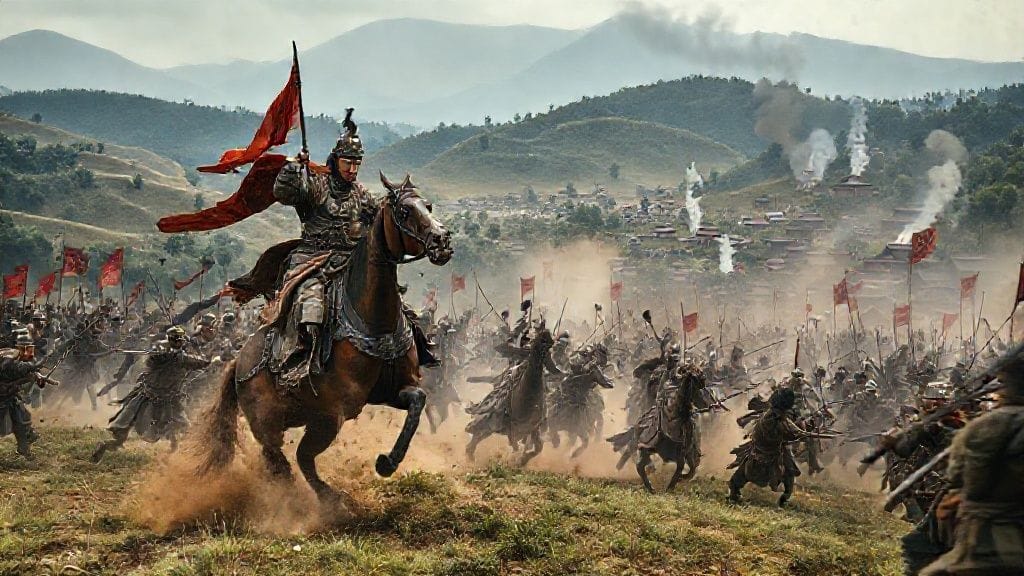
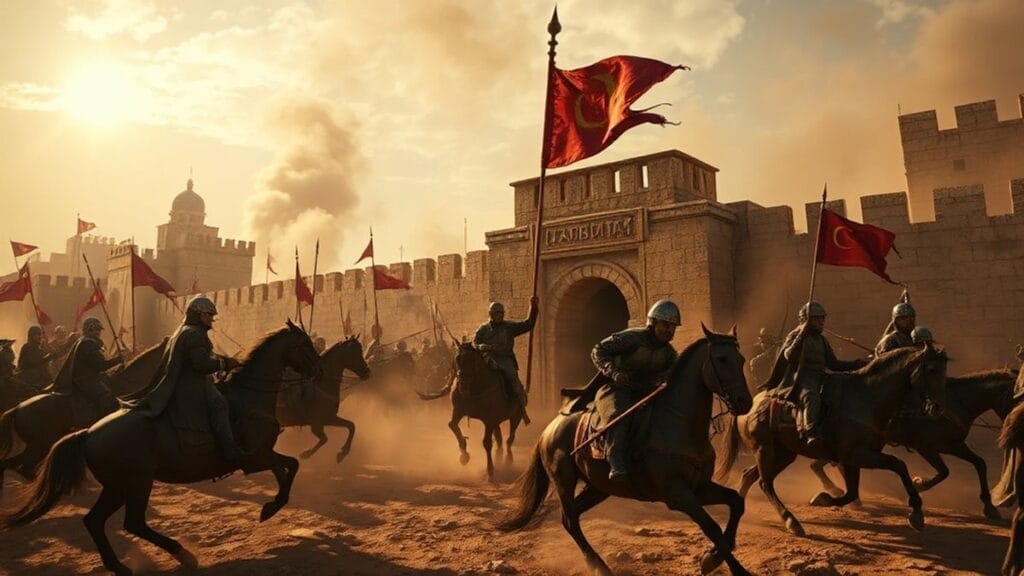
When the Umayyad forces finally moved decisively against Tangier around 706, the campaign carried an air of inevitability. Yet for those inside the city, nothing felt preordained. According to later Muslim chroniclers, Musa ibn Nusayr and his subordinates coordinated the operation carefully, mindful of the need to avoid a prolonged siege that could drain men and resources. One can imagine the first sight of the approaching troops: banners catching the Atlantic wind, dust clouds rising from the marching columns, outriders probing the nearby hills and roads.
The initial encirclement likely focused on cutting Tangier off from its hinterland. Watchtowers that once signaled peacefully to distant allies now saw dark movements on the horizon. As supply lines closed, prices inside the city spiked. Grain and oil grew scarce. Fearful residents began hoarding; others debated whether to flee by sea, though not all had the means. The harbor, always Tangier’s lifeline, became a contested space of rumor. Were Visigothic ships coming to aid them? Would the Umayyads attempt a naval blockade, or rely solely on land‑based pressure?
Direct battle may have been sporadic but intense along the walls. Archers on both sides tested each other’s ranges; small detachments probed for weaknesses at gates or less‑guarded stretches of fortification. Chroniclers are frustratingly sparse on tactical detail, focusing more on the symbolic weight of the umayyad capture of tangier than on the hour‑by‑hour unfolding of the siege. Yet we can infer the psychological toll. Children cried at night as the boom of siege engines, however primitive, echoed against stone. Fires flared and died as both sides tested incendiaries. Inside, religious leaders called for prayer and repentance, while city councilors (whatever their exact title) weighed the changing odds.
At some point—perhaps when food dwindled to a critical point, or when an outer line of defense fell—the decision to negotiate must have taken shape. Envoys would have crossed between camp and city under flags of truce, their garments dust‑streaked, their faces etched with fatigue. They carried not only the pleas of Tangier’s notables but also their threats: If pressed too hard, would the city choose a desperate last stand? Would it destroy its own harbor facilities rather than see them fall intact into Umayyad hands? The delicate dance between defiance and surrender had reached its decisive moment.
Ultimately, the siege did not end in the wholesale slaughter sometimes associated with urban storms in late antiquity. Instead, Tangier capitulated. The umayyad capture of tangier was achieved through a negotiated surrender whose exact terms are lost but whose contours we can glimpse through analogy with other North African settlements: payment of an initial indemnity, agreement to ongoing taxation (often in the form of the jizya on non‑Muslim adult males and kharaj land tax), and acceptance of a garrison stationed within or just outside the city. In return, lives and properties were largely spared, sanctuaries were allowed to continue (though under new restrictions), and local elites were woven, however uneasily, into the fabric of the Umayyad order.
Surrender, Negotiation, and the Terms of a New Order
The scenes following the agreement would have been tense and surreal. City gates that had long symbolized Tangier’s autonomy now opened to foreign troops bearing the green and white banners of Islam. Yet it is vital to remember that not all of those soldiers were outsiders: among them were Berber units who, in previous years, had accepted Islam and allied with the Umayyads. For some residents, the most jarring sight may not have been Arabs from far‑off Hijaz but local faces now marching in the conqueror’s ranks.
Negotiating surrender meant translating abstract formulas into lived reality. If the jizya was to be imposed, who would assess it? Were widows and the poor exempted? Would Christian and Jewish communities retain authority over their internal religious affairs? Historical parallels suggest that qadis (Islamic judges) were soon appointed, working alongside existing civic officials. A new fiscal apparatus took shape: scribes trained in Arabic handled registers and receipts, while some local notables adapted by learning enough of the new bureaucratic language to advocate for their communities.
The umayyad capture of tangier also altered rules about landholding and military obligation. Certain estates may have been confiscated, especially if their owners had led resistance. Others were confirmed in the hands of their former lords, but now as taxpayers acknowledging the supremacy of the caliph. Public rituals changed as well. The Friday sermon (khutba) in newly established mosques would invoke the name of the Umayyad caliph, signaling symbolic submission. For non‑Muslims, the sound of the call to prayer rising over the city must have been both startling and gradually, in time, familiar—a sonic marker of a new rhythm of public life.
Life under the Crescent: Administration, Taxation, and Everyday Change
Conquest is often remembered for its victories and defeats, but its deepest imprint lies in daily routines. In the years after 706, Tangier’s inhabitants had to navigate a world that had, in some respects, changed overnight and, in others, hardly changed at all. Markets reopened under Umayyad protection. Trade routes, now aligned with a broader Islamic commercial sphere stretching from the Atlantic to the Persian Gulf, gradually revived. Muslim merchants, sometimes Arabic‑speaking, sometimes Berber, brought textiles, tools, and dates from the east, while local goods—fish, salt, hides, and eventually slaves—flowed outward.
Administration under the Umayyads was often pragmatic. Rather than uproot existing systems wholesale, they layered new institutions on top. Many city functions remained in local hands, provided that taxes were collected and order maintained. But the language of power shifted to Arabic. Over a generation, this would reshape culture: legal documents, contracts, and petitions began to appear in Arabic script, sometimes alongside older Latin or Berber notations. Children born after the umayyad capture of tangier grew up hearing Arabic not just as the language of their rulers but increasingly as a medium of religious teaching and commercial negotiation.
Taxation remained a constant concern. A bad harvest could make jizya payments painful, and complaints about overzealous officials were common across the caliphate. Some chroniclers accuse certain governors in North Africa of exploiting Berber converts by continuing to tax them as non‑Muslims, despite Islamic law’s clear distinction. Whether or not Tangier’s administration engaged in such abuses, the fear of them surely haunted its people. In times of relative prosperity, however, the stability brought by imperial protection had its benefits. Caravans could travel with fewer arbitrary tolls; piracy, while never eliminated, faced stronger opposition from coastal patrols.
Conversion, Compulsion, and Choice among the Berbers of Tangier
The question of conversion looms large over any discussion of Islamic expansion. In Tangier and its hinterland, the process was gradual, uneven, and deeply human. It did not resemble a single wave washing over the population but rather countless small decisions, negotiations, and experiences accumulating over time. Some Berber warriors who had allied with the Umayyads had already embraced Islam, drawn by its promise of equality among believers and its powerful rhetoric of justice before God. Others adopted the new faith more cautiously, mixing Islamic practices with older customs.
For urban residents—especially non‑Muslim artisans, traders, and landowners—conversion could be both a spiritual and a strategic act. Becoming Muslim meant exemption from the jizya and access to new opportunities within the imperial system. But it might also entail social rupture: leaving behind a Christian parish or a Jewish community that had given meaning and support for generations. There were inevitably instances of pressure, whether overt or subtle. A governor might favor Muslim litigants; a tax official might make life harder for holdouts. Yet overt mass forced conversions, while not entirely absent from the Islamic world, were far less common than popular imagination sometimes suggests.
One can picture a Jewish merchant family debating the step around a lamplit table, weighing religious loyalties against the prospects of their sons within the new army or bureaucracy. Or a Christian artisan listening to Quranic recitation for the first time in a corner of the market, struck by its cadence yet wary of what embracing it would mean. The umayyad capture of tangier thus opened a long era of shifting identities. Within a few generations, substantial numbers of Berbers in and around the city were Muslim, yet they remained proudly aware of their own heritage, contributing distinctive interpretations to the evolving Islamic civilization.
Women, Families, and the Human Cost of Conquest
Official chronicles rarely dwell on the intimate costs of events like the conquest of Tangier, but they are no less real for that. Every negotiation of surrender, every change of regime, reverberated through households. Widows of fallen defenders had to remake their lives under a government that viewed their husbands as enemies or, at best, misguided subjects. Conversely, women related to men who had allied with the Umayyads might see their status rise, yet also confront accusations of betrayal from neighbors.
Marriage patterns shifted in subtle ways. Arab soldiers and officials, even if initially housed in separate garrison quarters, sometimes took local wives or concubines. Children of these unions embodied the new synthesis of cultures, sometimes fluent in multiple languages, moving more easily between administrative elites and local families. For women converted to Islam, new legal structures provided some protections in marriage and inheritance that differed from older Roman or customary laws. Yet the patriarchal assumptions of all these systems meant that such benefits were often constrained in practice.
Enslavement must be acknowledged as part of the story. In many early Islamic conquests, prisoners of war could be sold into slavery, especially if they were captured resisting rather than accepting terms. Although the negotiated surrender of Tangier likely limited large‑scale enslavement within the city itself, surrounding skirmishes and punitive raids in the lead‑up almost certainly produced captives. Some would end up laboring in distant estates or serving in elite households across the Umayyad world. Their names are lost to us, but their absence haunted the communities they left behind—empty seats at family gatherings, stories ending abruptly.
Tangier as a Launchpad: From Atlantic Outpost to Gateway of al‑Andalus
With the city now under Umayyad control, its strategic meaning changed overnight. No longer a troublesome outpost at the empire’s fringe, Tangier became an asset—an anchoring point for bolder ambitions. The most momentous of these was the crossing into Iberia, the campaign that would create al‑Andalus and permanently transform the history of Europe. While the famous landing of 711, led by Tariq ibn Ziyad, took place at the rocky promontory later known as Jabal Tariq (Gibraltar), the logistical and political preparation for that expedition relied heavily on the secure base at Tangier.
Ships had to be outfitted, crews assembled, supplies stockpiled, and intelligence gathered. Muslim chroniclers like al‑Tabari and later historians in al‑Andalus describe how Count Julian (often identified with a Christian governor in Ceuta or the surrounding region) played a key intermediary role, providing ships and guidance in exchange for support against his rivals in the Visigothic kingdom. However embellished these stories may be, it is clear that the umayyad capture of tangier made such alliances and preparations feasible. Without control of the southern shore, any crossing would have rested on perilously insecure foundations.
For Tangier’s residents, this new role brought both opportunity and risk. The city’s port bustled as troops embarked and returned, as spoils—gold, goods, and captives—from early raids in Iberia passed through its warehouses. Some local merchants grew rich facilitating these movements; others worried that entanglement in distant wars would invite retaliation from across the strait. Yet for a time, fortune seemed to smile. As al‑Andalus took shape as a new province, Tangier stood at the hinge between two Muslim‑ruled shores, a city that could now look northward not at a hostile frontier but at a sister territory within the same imperial framework.
Resistance, Rebellions, and the Limits of Umayyad Control
And yet, behind the celebrations of conquest and expansion, tension simmered. The Umayyad regime in North Africa never enjoyed totally secure authority. Berber resentment at unequal treatment, especially the perception that Arab tribes monopolized power and spoils, grew over time. Some of that discontent would eventually erupt in the massive Berber Revolt of the 740s, which shook Umayyad rule in the Maghrib to its core. Tangier—by then long integrated into the Muslim world—did not escape these tremors.
In the decades after 706, smaller uprisings and acts of resistance likely broke out in the surrounding countryside. A tax collector ambushed on a remote road; a tribal leader publicly renouncing his oath to the caliph; a community refusing to send recruits to the army. Each episode tested the balance between coercion and conciliation. Governors had to decide when to crack down brutally and when to offer amnesties or revised terms. Attempts to Arabize the administration—importing officials from Syria or Arabia—sometimes backfired, reinforcing the sense among Berbers that they were second‑class participants in the very empire their arms had helped build.
Religious dissent also emerged. Certain Berber groups were drawn to egalitarian interpretations of Islam associated with Kharijite thought, which condemned the Umayyads as corrupt usurpers. These ideas could spread quietly through itinerant preachers, then flare into open defiance. Tangier, as a port city, was particularly exposed to currents of dissent: sailors and traders brought not only goods but also doctrines and rumors from other troubled regions. The umayyad capture of tangier had stitched the city firmly into the imperial fabric, but that very integration meant it was now vulnerable to the same ideological and political strains that plagued the wider caliphate.
Echoes across the Sea: How 706 Reshaped Iberia and the Mediterranean
The conquest of Tangier might have remained a regional episode were it not for the extraordinary consequences that followed across the Strait of Gibraltar. By enabling Tariq ibn Ziyad’s crossing in 711 and the swift collapse of the Visigothic kingdom, the umayyad capture of tangier altered the trajectory of European history. Within a few years, much of Iberia lay under Muslim rule, creating al‑Andalus—a realm that would become a beacon of learning, agriculture, and cultural blending for centuries.
From the perspective of Mediterranean geopolitics, 706 stands as a hinge date. Before the fall of Tangier, the sea was anchored by a Christian north and a patchwork south. Afterward, the southern littoral, from the Levant to the Atlantic, increasingly fell under Islamic authority. Christian powers—Byzantine, Frankish, and later others—had to reckon with a unified, or at least coordinated, southern front. Trade continued, but the nature of diplomatic and military rivalries changed. For Iberian Christians, the shock of losing so much territory to armies that had passed through Tangier was profound. Later chroniclers like Isidore of Beja, writing from a Christian perspective, cast the Muslim advance as a divine punishment for the sins and divisions of the Visigothic elite.
It’s astonishing, isn’t it, how a city that once seemed merely a remote Atlantic port became central to debates about civilization, faith, and power? From monasteries in northern Spain to the caliphal court in Damascus, Tangier’s name entered a new vocabulary of strategy. Control of the strait—the narrow throat binding Atlantic and Mediterranean—was now a Muslim affair. While naval battles and coastal raids would continue for generations, the fundamental fact remained: by seizing Tangier, the Umayyads had turned the western Mediterranean into a more interconnected, if also more contested, arena.
Memory and Myth: How Chroniclers Reimagined the Conquest of Tangier
As generations passed, the raw immediacy of the 706 events faded, replaced by stories told and retold in courts, mosques, monasteries, and markets. Muslim chroniclers, writing in Arabic from Kairouan, Cordoba, or Baghdad, often treated the umayyad capture of tangier as a stepping stone to the more spectacular conquest of Iberia. They lavished detail on the deeds of Musa ibn Nusayr and Tariq ibn Ziyad, sometimes at the expense of remembering the ordinary people of Tangier or the nuances of surrender. In some narratives, the city’s capitulation is compressed into a single noble gesture; in others, it is passed over in a sentence or two, overshadowed by the drama of later battles in Spain.
Christian and Jewish traditions preserved different memories. For some Iberian Christian writers, Tangier was mentioned primarily as a staging ground for the armies that would later overrun Toledo and other cities. They framed its fall as part of a broader tragedy, a chain of events allowed—or willed—by God to chastise a sinful people. Jewish sources are more fragmentary but hint at both trauma and adaptation, as communities adjusted to life under a new set of rulers who, despite being followers of another monotheistic faith, could at moments be more tolerant than certain previous Christian regimes.
Modern historians face the task of peeling back these layers of memory and myth. Works like Hugh Kennedy’s studies of early Islamic expansion or Marius Canard’s research on the Maghrib and al‑Andalus sift through Arabic chronicles such as those of Ibn Abd al‑Hakim and al‑Baladhuri, comparing them with archaeological evidence and the sparse Latin sources. This critical effort reveals the gaps and biases in our records. Victors tend to minimize their own brutality; losers often exaggerate it. Yet out of these contested narratives emerges a coherent picture: the umayyad capture of tangier was neither a bloodless administrative adjustment nor a purely apocalyptic catastrophe. It was a complex, negotiated, and deeply transformative event, lived differently by each community it touched.
In local memories, too, the conquest took on symbolic power. For some families, ancestors who had converted early and sided with the Umayyads became sources of pride; for others, tales of staunch resistance, even in defeat, sustained a sense of dignity. Shrines, mosques, and quarters of the city acquired new names, echoing heroes and martyrs of 706 whose real contours we can no longer fully reconstruct. History, in other words, did not end with the raising of a new banner over Tangier’s walls; it began to be rewritten almost immediately, shaped to the needs and hopes of those who inherited its consequences.
Conclusion
Seen from a distance of more than thirteen centuries, the capture of a coastal city in 706 might appear as just one more episode in the long and turbulent story of empire. Yet when we draw closer, the umayyad capture of tangier reveals itself as a pivotal moment at the crossing point of continents, cultures, and faiths. It sealed the Umayyad advance across the southern Mediterranean, giving the caliphate a foothold on the Atlantic and a launchpad for the conquest of Iberia. It transformed Tangier from a contested frontier outpost into a vital node in an emerging Islamic world that stretched from the shores of the Atlantic to the valleys of the Indus.
At the same time, the story of 706 is also the story of ordinary lives bent, broken, and remade by imperial ambition. Traders recalculated their routes; priests and rabbis negotiated space for their communities; Berber warriors weighed loyalty against rebellion. Some found opportunity in the new order, rising as commanders, scholars, or landowners; others faded into the anonymity of the conquered, their grief and resilience unrecorded in formal chronicles. The city itself became a palimpsest, its Roman and Byzantine past overwritten, but not entirely erased, by Arabic inscriptions and the sound of the muezzin.
Politically, Tangier’s fall helped redraw maps of power around the Mediterranean, forcing Christian and Muslim states alike to rethink strategy and identity. Socially and culturally, it contributed to the slow, uneven Islamization and Arabization of the western Maghrib, processes that would, in turn, shape the character of al‑Andalus. And in memory, the conquest has served as a canvas for storytellers, apologists, and critics, each projecting their values onto the figures of Musa, Tariq, and the unnamed defenders of the city.
Perhaps the most enduring lesson of the umayyad capture of tangier is its demonstration that frontiers are never just lines on a map. They are lived spaces where languages mingle, loyalties compete, and the future remains uncertain. In 706, on the windswept headlands above the strait, that uncertainty crystallized into a new order whose echoes still reverberate—from the mosques and churches of modern Tangier to the enduring debates about how Islam, Europe, and Africa came to be so tightly and, at times, painfully intertwined.
FAQs
- What was Tangier like before the Umayyad conquest?
Before 706, Tangier was a multicultural port city shaped by centuries of Phoenician, Roman, Vandal, and Byzantine influence. Its population included Berbers from the surrounding hinterland, Christian and Jewish communities, and merchants linked to Iberia and the wider Mediterranean, all living under shifting local powers rather than a strong imperial state. - Why did the Umayyads want to capture Tangier?
The Umayyads saw Tangier as strategically vital because it controlled the southern side of the Strait of Gibraltar and the western end of the Mediterranean. Capturing it completed their expansion along the North African coast, secured trade and military routes, and provided a crucial base for the later Muslim conquest of Iberia. - How was the umayyad capture of tangier achieved?
The city was taken after a period of surrounding campaigns that weakened its allies and cut its supply lines. Umayyad forces, under the broader command of Musa ibn Nusayr and with frontier commanders such as Tariq ibn Ziyad, besieged Tangier and ultimately secured its surrender through negotiated terms rather than outright destruction, imposing taxes and a garrison while sparing most inhabitants. - Did the conquest of Tangier lead directly to the conquest of Spain?
Not immediately, but it was a key prerequisite. With Tangier secured, the Umayyads had a stable western base and control of the southern shore of the strait, making it possible to plan and launch the crossing in 711. Without the earlier conquest of Tangier, the logistics and political arrangements needed for the Iberian campaign would have been far more difficult. - How did life change for Tangier’s inhabitants after 706?
Daily life changed gradually rather than overnight. Arabic became the language of administration, Islamic law and taxation were introduced, and a Muslim garrison was installed. Non‑Muslim communities were generally allowed to continue their religious practices in exchange for taxes, while over time more Berbers and city dwellers converted to Islam, reshaping Tangier’s social and cultural landscape. - Were the Berbers victims or participants in the conquest?
They were both. Some Berber groups resisted Umayyad expansion fiercely and suffered defeat, loss of autonomy, and sometimes enslavement. Others allied with the Umayyads, converted to Islam, and became essential components of the conquering armies, including the forces that took Tangier and later crossed into Iberia. - What sources tell us about the conquest of Tangier?
Most of what we know comes from later Arabic chronicles such as those of al‑Baladhuri and Ibn Abd al‑Hakim, complemented by archaeological evidence and a handful of Latin and Christian texts from North Africa and Iberia. These sources are fragmentary and biased, so modern historians compare them critically to reconstruct the events of 706.
External Resource
Internal Link
Other Resources
- Encyclopaedia Britannica – general search for the exact subject
- Google Scholar – academic search for the exact subject
- Internet Archive – digital library search for the exact subject