Table of Contents
- The Roar from the Andes: Setting the Scene of the Cotopaxi Eruption
- Cotopaxi’s Fiery Legacy: Understanding the Volcano’s Nature
- Ecuador in the 19th Century: A Nation on the Edge
- The Prelude: Signs of a Sleeping Giant Stirring
- October 1877: The Day the Mountain Awoke
- The Tremors Before the Fury: Early Warnings Ignored
- Lava and Ash: The Nature of the 1877 Eruption
- The Night When Day Turned to Darkness
- The People of Cotopaxi: Faces Amidst Fire and Destruction
- The Immediate Aftermath: Chaos and Desolation
- Government Response in a Time of Crisis
- Scientific Exploration: Early Volcanology and Cotopaxi
- Stories of Survival: Heroism and Tragedy Around the Volcano
- The Impact on Agriculture and Economy in Ecuador
- Cultural Reverberations: How the Eruption Shaped Ecuadorian Identity
- Comparing the 1877 Eruption to Previous and Later Eruptions
- Environmental Consequences: Long-Term Effects on Landscape and Climate
- Lessons Learned: Changes in Disaster Preparedness and Awareness
- Cotopaxi Today: Memory and Monitoring of a Restless Giant
- The Enduring Symbolism of Cotopaxi in Ecuadorian Culture
- The Global Context: 19th Century Volcanic Disasters Worldwide
- Reflection: Nature’s Power and Human Fragility
- Conclusion: From Ashes to Resilience
- FAQs about the Cotopaxi Eruption of 1877
- External Resource
- Internal Link
The Roar from the Andes: Setting the Scene of the Cotopaxi Eruption
The morning of October 26, 1877, dawned like any other in the highlands of Ecuador—crisp mountain air, the distant silhouette of snow-capped peaks framing the horizon. Yet beneath this serene beauty lurked an ominous restlessness: Cotopaxi, an ancient and majestic volcano, had begun to stir. Its deep rumblings, barely audible at first, soon escalated into a terrifying roar that rippled through the valleys, waking local villagers with a primal fear that something monumental was unfolding.
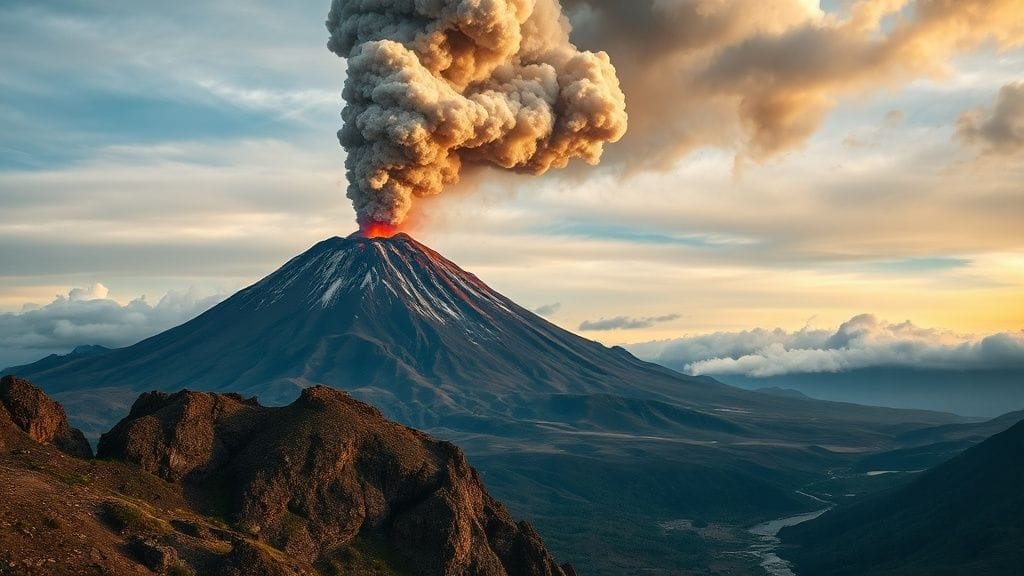
Smoke curled upward in thick, choking plumes, blotting out the azure sky. The heavens darkened as ash spread like a shroud, turning day to an eerie twilight. Below, the earth trembled. The air grew so hot, it seemed to burn the lungs of those who ventured too close. In that terrifying moment, Cotopaxi unleashed a fury that was both awe-inspiring and devastating—an eruption that would leave an indelible mark on Ecuador’s history and the lives of thousands.
Cotopaxi’s Fiery Legacy: Understanding the Volcano’s Nature
Cotopaxi, towering at 5,897 meters (19,347 feet), is one of the highest active volcanoes in the world, and one of Ecuador’s most revered natural landmarks. Its nearly perfect conical shape, capped with permanent snow, conceals a volatile force beneath. Known to indigenous peoples for centuries as a sacred mountain, Cotopaxi’s eruptions have punctuated history with periodic explosions of fire, ash, and lava.
As a stratovolcano, Cotopaxi's eruptions are characterized by explosive activity, driven by high-viscosity magma that traps gas until it bursts violently free. Its cycle of dormancy and fury has created both fertile soils and devastating disasters — a paradox that has defined the lives of those living in its shadow.
Ecuador in the 19th Century: A Nation on the Edge
By 1877, Ecuador was a young republic grappling with political instability, economic flux, and social divisions. The Andean highlands, home to agrarian communities, epitomized resilience amid hardship. The nation’s capital, Quito, sat not far from Cotopaxi, connected by rugged mountain roads and trails where the local economy depended heavily on farming and livestock — activities intimately tied to the rhythms of the land.
Yet amidst this fragile equilibrium, nature roared its warning. The impending eruption would not only shake the earth but also test the resolve of a nation still forging its identity amid the shadows of colonialism and nascent modernization.
The Prelude: Signs of a Sleeping Giant Stirring
Reports from local farmers and indigenous communities spoke of strange occurrences weeks before the eruption. Unusual smoke rising from the crater, small tremors felt beneath the feet, and eerie incandescent glows at night suggested that Cotopaxi was waking. Volcanic gases thickened the air, tinged with sulfur’s acrid bite.
Despite these warnings, skepticism and superstition mingled among the populace. Many viewed these signs as omens rather than real threats. Officials, burdened by other crises and lacking scientific apparatus, underestimated the looming calamity. Thus, preparedness remained minimal—a tragic oversight.
October 1877: The Day the Mountain Awoke
On October 26, the volcano’s fury exploded without mercy. The eruption began with a series of violent explosions—rock and incandescent bomb fragments hurled skyward, reverberating like thunder across the Andes. Ash clouds billowed upward, climbing kilometers into the atmosphere, blotting out the sun and sending animals into panicked flight.
Lava fountains streamed from the summit, cascading down slopes in glowing rivers of molten rock. Pyroclastic flows – deadly avalanches of superheated gas and volcanic debris – swept down at terrifying speed, obliterating everything in their path. The scale and ferocity stunned all who witnessed it, reshaping the landscape overnight.
The Tremors Before the Fury: Early Warnings Ignored
In retrospect, the preliminary tremors and gas emissions were undeniable harbingers. But the communication systems of the time were rudimentary; news traveled slowly, and panic often led to misinformation. The rural population had limited means to escape or resist nature’s wrath effectively. Moreover, local leaders lacked experience managing such disasters, and the government was slow to mobilize.
This combination of naivety and the mountain’s unpredictability compounded the scale of tragedy. Had these signs been heeded with urgency and coordinated action, many lives could have been spared.
Lava and Ash: The Nature of the 1877 Eruption
The eruption’s dual character—violent explosive activity and destructive lava flows—was emblematic of Cotopaxi’s power. The ashfall blanketed towns for miles, contaminating water supplies and suffocating crops. The darkness descended rapidly as ash clouds choked sunlight.
Lava rivers, though slower than pyroclastic flows, ignited fires and reshaped the earth beneath ancient farmlands. The mountain’s glaciers, melted by intense heat, sent torrents of mud and debris racing downhill in dangerous lahars—one of the most lethal volcanic phenomena.
The Night When Day Turned to Darkness
Eyewitness accounts from local settlers describe the surreal horror as bright daylight was swallowed by a choking twilight of ash and smoke. Visibility dropped to a few meters. The roaring of the volcano was punctuated by the collapse of the summit crater. Those caught outside reported ash stinging eyes and lungs, and a pervasive, almost apocalyptic silence punctuated only by the hiss of burning forests and the crackle of falling debris.
Families huddled in homes, fireplaces useless against the ashfall intrusion. The ground shook continuously, unsettling the living and the dead alike.
The People of Cotopaxi: Faces Amidst Fire and Destruction
The eruption’s most tragic toll was human. Indigenous communities, farmers, and townspeople were thrust into a crucible of survival. Many villages were swallowed entirely; homes and churches reduced to rubble. Yet the strength and solidarity of these people were remarkable.
Eyewitness records mention spontaneous rescue efforts, families shielding one another, and neighbors sharing limited resources amid chaos. This communal spirit became a testament to human resilience against nature’s cruelty.
The Immediate Aftermath: Chaos and Desolation
In the eruption’s wake, the highlands were transformed into a wasteland. Ash deposits reached several meters thick in some areas; fields that once bloomed with potatoes and maize lay barren. Water sources froze or turned acidic. The scale of destruction complicated immediate relief efforts.
Health crises emerged as respiratory illnesses surged due to inhaled ash. The displacement of thousands created an urgent humanitarian challenge, exposing the inadequacies of local infrastructure and government response.
Government Response in a Time of Crisis
Despite initial delays, the Ecuadorian government dispatched aid and experts to assess damages in the weeks following the eruption. Relief in food, medical supplies, and temporary shelter was mobilized, but logistical hurdles hindered the scale and speed of distribution.
The eruption also stirred political debate about resource allocation, disaster preparedness, and the economic impact of volcanic hazards on national development. It became clear that future eruptions required systematic monitoring and national coordination.
Scientific Exploration: Early Volcanology and Cotopaxi
The 1877 eruption piqued the interest of scientists both within Ecuador and abroad. Naturalists and geologists studied the event with growing curiosity, marking a phase when volcanology emerged as a distinct scientific discipline.
Surveys documented the morphological changes of Cotopaxi’s summit and slopes, while early instruments attempted to record seismic activity. These studies laid groundwork for understanding volcanic behavior in the Andes, even influencing global perspectives on the dynamics of stratovolcanoes.
Stories of Survival: Heroism and Tragedy Around the Volcano
Amidst catastrophe, individual stories illuminate human courage and sorrow. For instance, one renowned tale recounts a young indigenous woman guiding her family through blinding ashstorms to safety, using ancient knowledge of mountain trails.
Conversely, accounts of lost villages where entire communities were wiped out serve as grim reminders of the eruption’s merciless reach. These personal narratives humanize the event beyond statistics and geological data.
The Impact on Agriculture and Economy in Ecuador
The fertile volcanic soils, once a blessing, lay buried under ash, stalling agricultural production for years. Food shortages emerged, threatening food security in the highlands.
The destruction of farmlands and livestock disrupted local economies, sending ripples through markets as prices soared. Recovery demanded years of labor-intensive soil restoration, highlighting the fragile balance between human livelihood and nature’s whims.
Cultural Reverberations: How the Eruption Shaped Ecuadorian Identity
Cotopaxi’s eruption left a profound imprint on Ecuadorian culture. Folklore captured the mountain’s duality—as creator and destroyer, protector and punisher. The volcano became a symbol of national endurance, featuring in literature, oral traditions, and art.
Religious interpretations mixed indigenous beliefs with Catholicism, framing the eruption as divine judgment or spiritual awakening. This fusion reflected deeper tensions and harmonies shaping Ecuador’s collective identity.
Comparing the 1877 Eruption to Previous and Later Eruptions
Cotopaxi had erupted episodically over centuries, each event bearing its signature of destruction and renewal. The 1877 eruption ranks among the most violent in recorded history but was later eclipsed by the 1904 and 1942 events.
Each eruption contributed unique insights into volcanic cycles, patterns, and hazards, enabling better risk assessment over time. Yet, as history shows, the mountain’s temper remains unpredictable.
Environmental Consequences: Long-Term Effects on Landscape and Climate
Beyond immediate devastation, the eruption influenced regional ecology. Ash layers altered soil chemistry, affecting plant succession and biodiversity. Glacial retreat accelerated due to heat and ash deposition.
On a broader scale, the vast injection of ash and gases into the atmosphere likely caused brief climatic disturbances, slightly cooling temperatures in the region—a phenomenon recorded in other large volcanic eruptions worldwide.
Lessons Learned: Changes in Disaster Preparedness and Awareness
The tragedy underscored the necessity for improved monitoring and early warning systems. Ecuador began developing rudimentary networks to detect seismic signals and gas emissions.
Community education efforts slowly emerged, teaching populations about evacuation routes and volcanic hazards. Though primitive by today’s standards, these changes set a foundation for modern disaster risk reduction in volcanic zones.
Cotopaxi Today: Memory and Monitoring of a Restless Giant
Modern Ecuador continues to live with Cotopaxi’s presence—now equipped with sophisticated seismic stations, satellite monitoring, and emergency protocols. The 1877 eruption remains a somber reference point for preparedness drills and scientific study.
Cotopaxi is both a natural marvel attracting climbers and tourists, and a constant reminder of nature’s potent unpredictability.
The Enduring Symbolism of Cotopaxi in Ecuadorian Culture
The mountain’s image pervades Ecuadorian iconography—stamped on banknotes, invoked in poetry, and celebrated in festivals. Its eruption narratives form a mythic thread weaving together history, identity, and landscape.
Cotopaxi embodies the paradox of destruction and rebirth, mirroring Ecuador’s own historical trajectory through adversity.
The Global Context: 19th Century Volcanic Disasters Worldwide
The Cotopaxi eruption occurred amid a broader 19th-century pattern of volcanic activity, witnessed also in eruptions like Krakatoa (1883) and Vesuvius (1872). These events collectively spurred advances in earth sciences and heightened global awareness of volcanic hazards.
They revealed the interconnectedness of human societies to geological forces—a lesson resonating strongly as industrial era urbanization increased vulnerability to natural disasters.
Reflection: Nature’s Power and Human Fragility
The 1877 Cotopaxi eruption invites reflection on the relationship between human ambition and the planet’s primal forces. It reminds us that despite technological progress, we remain vulnerable to the earth’s rhythms.
Yet the stories of survival, adaptation, and scientific inquiry born from such calamities testify to humanity’s enduring spirit and capacity for resilience.
Conclusion
The Cotopaxi eruption of 1877 stands as a monumental episode in Ecuador’s dramatic history, a powerful demonstration of nature’s volatile grandeur and human perseverance. What began as a trembling beneath tranquil snows transformed rapidly into a fiery spectacle of destruction, shrouding the Andes in ash and fear. Yet from this catastrophe arose lessons and legacies—scientific, cultural, and political—that shape Ecuador to this day.
Amid the darkness, the resilience of communities, the birth of modern volcanology, and the forging of national identity shine as beacons of hope. Cotopaxi’s story is thus not merely about disaster but about the eternal dance between earth and humanity—a story of loss, learning, and renewal, forever engraved in the volcanic heart of Ecuador.
FAQs about the Cotopaxi Eruption of 1877
Q1: What caused the 1877 eruption of Cotopaxi?
The eruption was triggered by a buildup of pressure from magma and volcanic gases beneath Cotopaxi, leading to explosive ejection of ash, lava, and pyroclastic flows typical of stratovolcanoes.
Q2: How many people were affected or killed by the eruption?
Exact casualty figures remain uncertain, but thousands were displaced with significant loss of life in affected villages. The remote location and 19th-century record-keeping limit precision.
Q3: What were the main challenges in responding to the eruption?
Limited infrastructure, slow communication, lack of scientific knowledge, and difficult mountainous terrain hampered effective response and relief operations.
Q4: How did the eruption affect Ecuador’s economy?
The destruction of agricultural lands and livestock caused food shortages and economic disruption, particularly in rural highlands reliant on subsistence farming.
Q5: How has the eruption influenced scientific understanding?
The event contributed to early volcanology studies, helping scientists better understand eruption mechanics, hazards, and monitoring needs in the Andes and globally.
Q6: What cultural meanings does Cotopaxi hold after the eruption?
Cotopaxi symbolizes both destruction and resilience, deeply embedded in Ecuadorian folklore, religion, and national identity as a powerful, living element of the land.
Q7: Are there still risks of future eruptions?
Yes, Cotopaxi remains an active, closely monitored volcano with potential for future eruptions, prompting ongoing vigilance and preparedness.
Q8: What lessons can modern societies learn from this eruption?
Preparedness, early warning systems, community education, and respecting natural forces are critical to reducing disaster impacts—a message as relevant today as in 1877.

