Table of Contents
- The Dawn of April 18, 1906: A City on the Brink
- San Francisco in the Early 20th Century: Growth, Ambition, and Vulnerability
- Fault Lines and Forgotten Warnings: The Geology Beneath the City
- 5:12 a.m. — The Earth Trembles: The First Shakes and Shrieks
- A City Shattered: The Unfolding Destruction Across Districts
- The Great Firestorm: When Flames Joined the Ruin
- Human Stories of Horror and Heroism: Voices from the Rubble
- Emergency Response in Chaos: Firefighters, Soldiers, and Citizens United
- Political Turmoil and Leadership Amid Disaster
- National and Global Reactions: Aid, Sympathy, and Media Sensation
- The Death Toll and the Puzzle of Missing Numbers
- Housing Crisis and Displacement: The Birth of Tent Cities
- Economic Devastation: The Collapse of a Financial Hub
- The Reconstruction Vision: Rebuilding a City From Ashes
- New Technologies and Building Codes: Lessons Etched in Stone
- Cultural Trauma: How the Earthquake Changed San Francisco’s Identity
- Scientific Breakthroughs Sparked by the Disaster
- The Earthquake in Popular Memory: Myths, Art, and Literature
- The Role of Race and Class in Survival and Recovery
- The 1906 Earthquake’s Influence on Earthquake Engineering Worldwide
- Commemorations and Monuments: Remembering April 18
- Modern San Francisco: Echoes of 1906 in Today’s Cityscape
- The San Andreas Fault: A Continual Reminder of Nature’s Power
1. The Dawn of April 18, 1906: A City on the Brink
Before dawn broke over San Francisco on April 18, 1906, the city was still wrapped in sleepy shadows, unaware of the fate about to shatter its streets and souls. It was a crisp spring morning: birds chattered faintly, street lights flickered out as daylight surged, and a gentle fog drifted over the bay. Yet beneath the calm lay a tension invisible to human eyes—a colossal force slipping silently along a subterranean fracture. Then, at exactly 5:12 a.m., that sudden, monstrous roar echoed from the earth itself: the San Francisco earthquake had arrived.
For many who lived through it, the moment was like waking within a nightmare. Streets heaved like waves, buildings groaned, and pavements cracked open like brittle eggshells. A cacophony of screams, crashing glass, gushing water from ruptured mains, and the roar of collapsing infrastructure launched a horror unmatched in American history. Yet amongst the devastation, a fierce human spirit burned—people risked their lives, hearts pounded with fear and courage, and a city poised on the brink of obliteration began an extraordinary story of survival and rebirth.
2. San Francisco in the Early 20th Century: Growth, Ambition, and Vulnerability
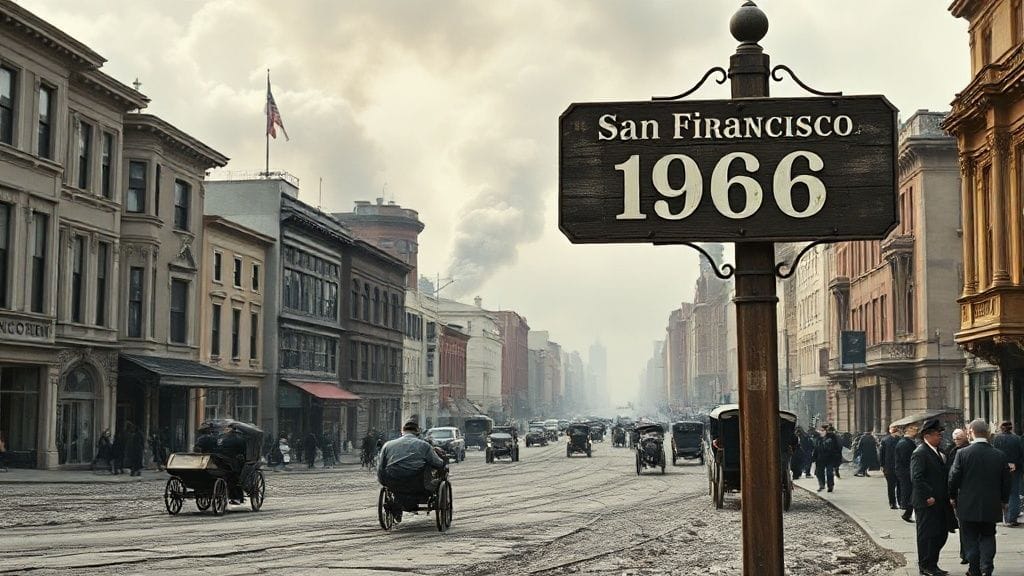
At the turn of the century, San Francisco was the jewel of the American West—a bustling port city thriving on commerce, innovation, and dreams. Its population had swelled to over 400,000, a melting pot of immigrants, entrepreneurs, and artists. The city’s skyline was punctuated by Victorian homes, rugged wooden structures, and modern steel-framed buildings rising in its downtown core.
Yet beneath the City by the Bay’s confident stride was a fragile equilibrium. Rapid urbanization had led to haphazard construction, especially in poorer neighborhoods crowded with wooden buildings and narrow streets. Much of San Francisco sat atop bay fill and unstable soils, increasing vulnerability to tremors. Moreover, few residents understood the geological realities beneath their feet: the San Andreas Fault, one of the world’s most dangerous fault lines, lurked just miles away, poised like a sleeping giant.
Political optimism and economic excess concealed a crucial fact: nature’s latent power remained unchecked. The city’s ambitions of grandeur blinded it to the real costs of ignoring the geological signs, the seismic warnings quietly accumulating for decades.
3. Fault Lines and Forgotten Warnings: The Geology Beneath the City
The San Andreas Fault is a tectonic boundary stretching over 800 miles through California, marking the divide between the Pacific and North American plates. Over millennia, these plates have shifted, storing immense tension along the fault line. When released, the energy causes one of the world’s most powerful earthquakes.
By 1906, geologists had begun to suspect that San Francisco sat precariously above this fault, but the science was still young and the warnings insufficiently heeded. Reports from earlier small trembles in the region—foreshocks in January and March—went largely unheeded by both authorities and the public.
This complacency would prove fatally costly.
4. 5:12 a.m. — The Earth Trembles: The First Shakes and Shrieks
At 5:12 a.m., the earth ruptured with a force estimated at 7.9 on the Richter scale—a seismic shock so powerful it rocked the city violently for nearly a full minute. The violently shaking ground tore apart streets, sent cable cars tipping and crashing, and tore gas and water lines from their moorings.
Eyewitness Frank Norris poetically described it later: “It was as if the planet had come alive and embraced the city in its furious grasp, shaking everything to its very soul.” People were hurled from beds; some escaped into the street, their eyes wide with panic as the city around them transformed into a fragmented labyrinth.
Yet this initial earthquake was merely the prelude—fire was soon to become the unrelenting antagonist.
5. A City Shattered: The Unfolding Destruction Across Districts
The earthquake’s devastation was uneven but widespread. Nob Hill—the heart of the elite—found its mansions gutted and its steep streets littered with rubble. The Mission District, a vibrant working-class neighborhood, was reduced to cracked foundations and splintered homes. The Financial District, the beating economic heart, was one massive ruin.
Block after block collapsed, chimneys toppled, and shops were crushed under their own weight. In some neighborhoods, the earth opened deep fissures, swallowing streets and upheaving sidewalks.
The quake didn’t just destroy buildings—it shredded lifelines. Communication networks failed, water mains exploded, and gas lines ruptured, setting the stage for a conflagration that would swallow much of what remained standing.
6. The Great Firestorm: When Flames Joined the Ruin
If the earthquake was a monstrous hand, fire was its cruel companion. Broken gas lines ignited infernos that quickly spiraled out of control amidst the chaotic debris. Over the following days, raging fires consumed nearly 500 city blocks. Firefighters struggled against the blaze without water—fire hydrants were crippled by ruptured pipes, and improvised efforts proved insufficient.
The fire created hellish scenes of destruction: towering flames lit the night sky; citizens battled blazes with buckets while fleeing loved ones. The city’s iconic cable cars were pressed into service, ferrying refugees and supplies.
This fire would ultimately cause more damage than the earthquake itself, consuming entire neighborhoods and forcing tens of thousands into makeshift camps.
7. Human Stories of Horror and Heroism: Voices from the Rubble
In the shadow of destruction rose extraordinary human stories. Families clung to each other amid ruin; strangers opened doors and hearts to the displaced. One tale recounts Nurse Rebecca’s tireless efforts to treat the injured under makeshift tents, improvising surgical tools from spoons and steel.
Others like firefighter James O’Connor refused to abandon their posts despite flames engulfing their stations. Businessman Leland Stanford Jr., though a child, became a symbol of hope as his family’s foundation helped finance relief efforts.
Yet tragedy was as common as courage. Reports poured in of people buried beneath collapsed buildings, firefighters lost in infernos, and refugees whose futures vanished in smoke.
8. Emergency Response in Chaos: Firefighters, Soldiers, and Citizens United
With the city’s infrastructure ruptured, order teetered on the edge. Local authorities called in the California National Guard to restore order and assist firefighting efforts. Military leaders adopted martial law, leading to controversial episodes—but also preventing looting and further chaos.
Citizens banded together, forming volunteer brigades, setting up temporary shelters, and distributing food and water. The Red Cross mobilized swiftly, although the magnitude of the disaster overwhelmed even seasoned aid workers.
The collaboration between government, military, and civilians offered a blueprint for disaster response, even as early relief was hamstrung by communication breakdowns.
9. Political Turmoil and Leadership Amid Disaster
San Francisco’s political leaders faced overwhelming criticism for their preparedness failure, yet Mayor Eugene Schmitz and city officials showed resolve. New Mayor James Rolph would soon rise from the crisis, championing reconstruction and restoring civic pride.
President Theodore Roosevelt offered federal support, underscoring the nation’s recognition that San Francisco’s ordeal transcended local tragedy—it was a test of American resilience.
The tension between swift action and bureaucratic inertia defined the early days of response, shaping policies on urban planning and disaster governance for decades.
10. National and Global Reactions: Aid, Sympathy, and Media Sensation
News of the earthquake rippled worldwide almost instantly through telegraph lines. International sympathy poured in. Donations flooded from across the U.S., while newspapers sensationalized the disaster with vivid, sometimes exaggerated headlines.
The event became the first major American disaster covered extensively by the burgeoning media industry—newspapers, photographs, and even early films documented the devastation. This coverage shaped public memory and intensified national resolve to rebuild.
11. The Death Toll and the Puzzle of Missing Numbers
Estimating casualties proved difficult. Official figures listed around 3,000 dead, but many historians believe the number could be higher, with undocumented immigrant communities particularly underreported.
This ambiguity highlights the challenge of accounting for disaster victims and the social inequalities exposed by tragedy.
12. Housing Crisis and Displacement: The Birth of Tent Cities
With over 25,000 homes destroyed or damaged, tens of thousands were left homeless. Makeshift tent cities sprang up in parks and empty lots, fostering both solidarity and tension. San Francisco’s displaced populations grappled with insecurity, poverty, and social disruption.
This crisis galvanized efforts for affordable housing and urban planning reform, weaving the earthquake into the city’s social fabric.
13. Economic Devastation: The Collapse of a Financial Hub
San Francisco’s economy ground to a halt. Major businesses lay in ruins; the stock exchange closed; banks faced insolvency. Yet the city’s strategic location and unyielding spirit fueled a revival. Investors eventually poured funds into rebuilding, and infrastructure work created thousands of jobs.
14. The Reconstruction Vision: Rebuilding a City From Ashes
From the ruins, an ambitious plan emerged. Architects, engineers, and city planners collaborated on a vision of a modern San Francisco, with wider streets, fireproof buildings, and improved utilities.
This reconstruction was a monumental undertaking—years in the making—and would set architectural and engineering precedents for future urban resilience.
15. New Technologies and Building Codes: Lessons Etched in Stone
The 1906 earthquake spurred revolutionary changes in building codes. Steel-frame construction replaced fragile wooden homes; reinforced concrete became a standard. Seismic engineering advanced as scientists, inspired by catastrophe, sought to understand how to protect cities.
16. Cultural Trauma: How the Earthquake Changed San Francisco’s Identity
The earthquake altered not just the city’s skyline, but its collective psyche. Survivors carried the trauma forward in art, literature, and community memory. San Francisco developed a narrative of rebirth, resilience, and defiant hope, expressed in countless cultural works.
17. Scientific Breakthroughs Sparked by the Disaster
The disaster catalyzed advances in seismology. The observation of fault ruptures led to new theories on plate tectonics, largely shaping modern earthquake science.
Institutions like the U.S. Geological Survey gained prominence, and San Francisco became a focal point for ongoing seismic research.
18. The Earthquake in Popular Memory: Myths, Art, and Literature
From Jack London’s vivid reportage to surrealist paintings capturing the city’s agony, the 1906 earthquake entered American lore. Myths about its cause, heroism, and divine punishment intertwined with facts, shaping how generations remembered and told the story.
19. The Role of Race and Class in Survival and Recovery
Disparities emerged starkly: wealthier neighborhoods rebuilt quickly, while immigrant and working-class communities endured hardship longer. Racial prejudices influenced aid distribution, policing, and reconstruction efforts, revealing deeper societal fissures beneath the surface shock.
20. The 1906 Earthquake’s Influence on Earthquake Engineering Worldwide
San Francisco’s catastrophe became a template for global urban preparedness. Engineers worldwide studied the city’s failure and resilience, incorporating lessons into safer buildings, urban planning, and emergency protocols.
21. Commemorations and Monuments: Remembering April 18
Memorials, including plaques, museums, and annual ceremonies, preserve the memory of the quake. These commemorations emphasize both loss and courage, keeping the event alive in public consciousness.
22. Modern San Francisco: Echoes of 1906 in Today’s Cityscape
Contemporary San Francisco bears imprints of 1906—earthquake retrofits, occasional tremors, and urban design inspired by past lessons. The city’s identity remains entwined with the history of survival amid seismic threat.
23. The San Andreas Fault: A Continual Reminder of Nature’s Power
The San Andreas Fault remains a looming threat, a symbol of nature’s unpredictability and power. The 1906 earthquake stands as a haunting reminder for residents and scientists alike that the earth still moves beneath their feet, quietly awaiting its next roar.
Conclusion
The San Francisco Earthquake of April 18, 1906, was more than a natural disaster: it was a crucible that tested the limits of human endurance, engineering, governance, and compassion. The city was torn apart physically and socially, yet it rose anew—its scars etched into the urban fabric, its stories whispered across generations.
The quake revealed the fragility of human ambition when faced with nature’s might, but even more, it unveiled an unyielding spirit to rebuild and reinvent. From the rubble emerged a blueprint of resilience, an eternal lesson that life—no matter how violently interrupted—can be shaped again with hope and determination.
Today, as San Francisco continues to grow and evolve, the memory of 1906 anchors it firmly in a history of both tragedy and triumph, reminding us all that beneath the surface, the earth remembers—and so must we.
FAQs
Q1: What caused the 1906 San Francisco earthquake?
A1: The earthquake was caused by a sudden rupture along the San Andreas Fault, where the Pacific and North American tectonic plates grind past each other, releasing immense seismic energy.
Q2: How many people died in the earthquake and subsequent fires?
A2: Official estimates list around 3,000 deaths, but actual numbers may be higher due to underreporting, especially among immigrant communities.
Q3: How did the city respond to the disaster immediately after the earthquake?
A3: Emergency response involved firefighters, the National Guard imposing martial law, volunteer groups, and humanitarian organizations like the Red Cross working to restore order and provide aid amid chaotic conditions.
Q4: What were the long-term effects on San Francisco’s urban development?
A4: The earthquake led to stricter building codes, technological advancements in construction, comprehensive urban planning, and the creation of fire-resistant infrastructure, shaping modern San Francisco’s cityscape.
Q5: How did the disaster affect marginalized communities?
A5: Marginalized groups often faced greater hardships, slower recovery, and discriminatory treatment during relief and rebuilding efforts, exposing social inequalities that persisted afterward.
Q6: Did the 1906 earthquake influence earthquake science?
A6: Absolutely. It prompted significant advances in seismology, including better understanding of fault mechanics, earthquake prediction efforts, and the development of more resilient architectural designs worldwide.
Q7: How is the 1906 earthquake remembered today?
A7: Through memorials, museums, annual commemorations, and cultural works, the earthquake remains a powerful symbol of trauma, survival, and resilience in San Francisco and beyond.
Q8: Can a similar earthquake happen again?
A8: Yes, the San Andreas Fault is still active, and experts warn that a similar or even more powerful earthquake could occur, making preparedness essential for California’s population.