Table of Contents
- The Night Deception Island Roared: An Antarctic Awakening
- A Frozen Prison: Deception Island’s Enigmatic Past
- Geology and Mystery: Understanding the Volcano Beneath the Ice
- Early Signs: The Calm Before the 1969 Eruption
- Scientists on the Brink: The Triumphs and Uncertainties of Antarctic Research
- January 1969: The First Explosive Tremors
- The Eruption Unfolds: Ash, Steam, and a Landscape Transformed
- Human Stories Amidst the Chaos: Researchers and Survivors
- Communications in the Cold: How News Reached the World
- Environmental Impact: Antarctica’s Fragile Ecosystem Tested
- A Volcanic Island Shapes Global Science: Lessons Learned
- The Role of Deception Island in Antarctic Exploration
- Geopolitical Underpinnings: Science, Sovereignty, and Strategy
- Subsequent Activity: Echoes of the 1969 Eruption
- The Legacy of the 1969 Event on Volcanology and Polar Science
- Deception Island Today: From Hazard to Hub of Discovery
- Conservation and Tourism: Balancing Interest and Protection
- How the 1969 Eruption Changed Scientific Monitoring in Antarctica
- Volcanoes and Ice: The Dynamic Forces Sculpting Our Planet
- Reflections: Antarctica’s Volcanic Secret Revealed
- Conclusion: Nature’s Fury and Human Resilience in the Antarctic Wilderness
- FAQs About Deception Island Eruption 1969
- External Resource
- Internal Link
The Night Deception Island Roared: An Antarctic Awakening
It was a night unlike any other on Deception Island—an eerie, ghostly silence shattered suddenly by the roar of the earth itself. In January 1969, beneath the long shadow of the Antarctic summer, an isolated volcanic island in the South Shetlands awoke with unprecedented fury. Glowing fissures rent open the frozen darkness; ash and steam surged into the sky, lighting up the polar night like a fleeting, deadly aurora. For the scientists stationed there—the intrepid explorers of one of the planet’s harshest frontiers—this eruption was both a terrifying danger and a breathtaking revelation. The icy continent, often perceived as static and unchanging, had shown its temper, reminding humanity of the raw power lurking beneath its frozen reserve.
A Frozen Prison: Deception Island’s Enigmatic Past
Deception Island, nestled in the South Shetland archipelago, is a paradox — an active volcanic caldera whose central harbor encapsulates a nearly circular bay formed by a cataclysmic collapse thousands of years ago. Its name, evocative of treachery and mystery, was coined by early 19th-century sealers who were confounded by its deceptive entry—navigating its narrow passage into a seemingly sheltered harbor that was anything but safe.
For decades, the island was a haven for whalers, seals, and explorers, but it remained a land of extremes—where violent volcanic history and the harsh Antarctic climate conspired in equal measure. That history was etched into the rocks and ice, yet for many, the island was a silent sentinel until 1969 when it unveiled its hidden, simmering heart.
Geology and Mystery: Understanding the Volcano Beneath the Ice
Deception Island is remarkable not just for its stark beauty but because it is among the most active volcanoes in Antarctica, a land otherwise known for its quiet ice sheets. Its U-shaped caldera—a flooded volcanic crater—created a natural harbor that attracted scientific parties and vessels alike.
The geology is complex: numerous eruptions over millennia have crafted layers of ash, lava flows, and geothermal activity beneath the ice cover. Geologists and volcanologists were only beginning to piece together the extent of the volcano’s restiveness by the 1960s, aided by seismic monitoring that revealed subtle rumblings and earth tremors. Yet the island’s isolation and extreme conditions made thorough study a formidable challenge.
Early Signs: The Calm Before the 1969 Eruption
Throughout the 1960s, subtle signals hinted at the volcano’s waking fury. Minor seismic activity increased, gases bubbled from hidden vents, and warm fumaroles hissed faint warnings in a frigid landscape. Scientists stationed at the British Antarctic Survey (BAS) and Chilean and Argentine bases observed these changes with growing apprehension.
There was an ominous sense that the volcanic system’s restless simmer might soon break through into full eruption—but when, and with what intensity, remained the open question. For those living and working on Deception Island, balancing scientific curiosity and personal safety was an ever-present dilemma.
Scientists on the Brink: The Triumphs and Uncertainties of Antarctic Research
The 1960s was an era of expanding scientific exploration in Antarctica, fueled by the International Geophysical Year of 1957-1958 and the heightened geopolitical interest in the continent. Deception Island’s unique volcanic activity made it a magnet for researchers specializing in geology, seismology, and polar biology. The island became a natural laboratory where fundamental scientific questions about volcanism in polar environments could be explored.
Yet the isolation presented daunting obstacles—equipment failures, extreme weather, and the psychological strain of living in one of the most remote regions on Earth all tested the resolve and ingenuity of these scientists.
January 1969: The First Explosive Tremors
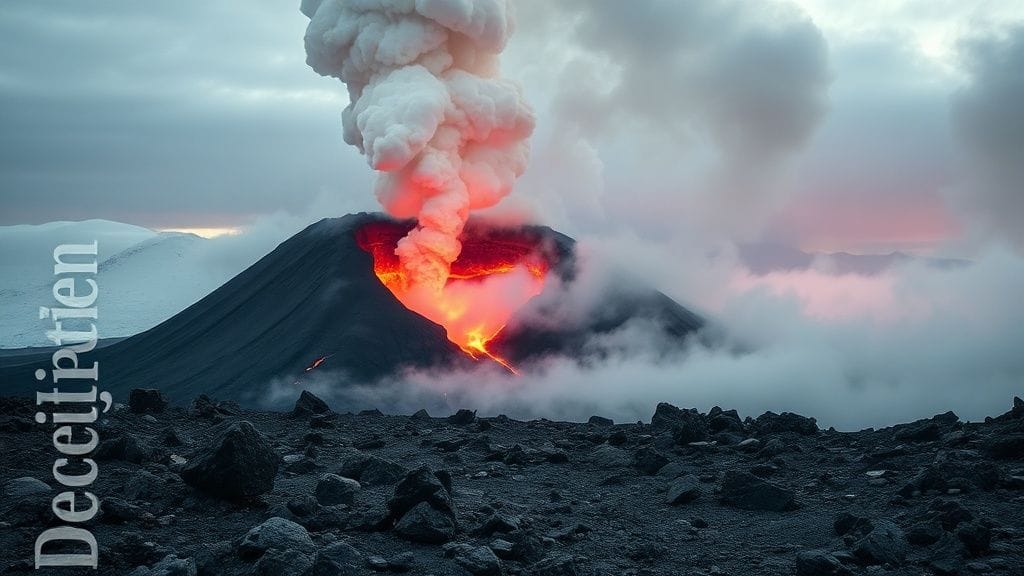
In the early days of January 1969, seismic stations began registering a marked increase in activity. Then, on January 4th, the ground literally shattered. A series of explosive eruptions burst forth from vents along the island’s central caldera floor, sending plumes of ash and steam miles into the Antarctic sky.
The eruption was sudden and intense, punctuated by powerful blasts that resembled artillery fire reverberating across the polar seas. Volcanic bombs were hurled skyward, and ash began settling rapidly, covering nearby research stations and harbors in a choking blanket of grey.
The Eruption Unfolds: Ash, Steam, and a Landscape Transformed
Over the subsequent days and weeks, Deception Island was transformed. The volcanic activity fluctuated—periods of violent eruption interspersed with quieter, smoldering intervals. The island’s topography itself shifted ominously; new fissures opened and old vents widened, showcasing the dynamic, destructive creativity of geologic forces.
Ashfall affected the surrounding sea, altering water chemistry and marine life, while steam vents melted patches of ice rapidly, creating dangerous conditions for anyone on the island.
Human Stories Amidst the Chaos: Researchers and Survivors
Amidst the cataclysm, the human element emerges: scientists who had journeyed thousands of miles to study the mysterious island were now faced with survival decisions. Evacuations were hastily arranged, with ships braving treacherous waters to rescue personnel.
Yet many persisted, documenting the event in real-time, understanding that this eruption offered a once-in-a-lifetime opportunity to observe volcanic processes in situ. Personal diaries from the period reveal a mixture of fear, awe, and exhilaration, capturing the emotional rollercoaster experienced by those living on the edge of nature’s wrath.
Communications in the Cold: How News Reached the World
Given Antarctica’s isolation, news of the eruption traveled slowly. Yet by early February, satellite communications and coordination through national Antarctic programs ensured that the global community was informed of the event.
Scientific journals soon published preliminary reports, emphasizing the eruption’s significance, while governments updated their Antarctic strategies to consider the implications of an active volcano within territorial claims and research zones.
Environmental Impact: Antarctica’s Fragile Ecosystem Tested
Volcanic eruptions are disruptive anywhere, but on the fragile Antarctic ecosystem, the effects were especially pronounced. Ash fallout contaminated the surrounding ocean and drastically altered the nutrient cycles supporting marine and bird life.
Yet, paradoxically, volcanic activity also introduced new substrates and nutrients, fostering pockets of rapid biological adaptation. Scientists studied these changes closely, noting how life found ways to persist and even thrive amid upheaval.
A Volcanic Island Shapes Global Science: Lessons Learned
The 1969 eruption was a watershed moment in polar volcanology. It underscored how dynamic and interconnected earth systems are, even in the planet’s most remote corners. The data collected revolutionized understanding of volcanic activity beneath ice sheets, influencing not only Antarctic research but also broader models of volcanic hazard assessment in cold regions worldwide.
The Role of Deception Island in Antarctic Exploration
Deception Island remained a crucial outpost, facilitating research on geology, biology, and climate science. Its sheltered harbor—created by the volcano’s caldera—was one of the few natural harbors in the Antarctic Peninsula region, making it strategically and scientifically invaluable.
The eruption thus reaffirmed its place in the history of exploration and science as a testament to Antarctica’s wild nature.
Geopolitical Underpinnings: Science, Sovereignty, and Strategy
The Cold War context infused Antarctic activities with layers of geopolitical complexity. The eruption happened as British, Chilean, and Argentine bases operated in close proximity, each asserting claims and scientific presence.
The eruption’s chaos momentarily overshadowed these tensions, yet in its aftermath, it influenced policies about safety, collaboration, and territorial management—highlighting how natural events can redirect human affairs.
Subsequent Activity: Echoes of the 1969 Eruption
Deception Island did not rest quietly after January 1969. Smaller eruptions and geothermal events continued intermittently, reminding the world that this geological giant remained volatile.
Continuous monitoring was established, leading to improved predictive capabilities and emergency protocols that persist to this day.
The Legacy of the 1969 Event on Volcanology and Polar Science
The eruption catalyzed advances in multidisciplinary study—melding geology, climatology, biology, and even psychology under extreme environmental conditions. It offered lessons in resilience, adaptability, and the necessity of integrating local knowledge with cutting-edge scientific technology.
Deception Island Today: From Hazard to Hub of Discovery
Today, Deception Island is both a natural hazard zone and a hub for scientific study. Modern research stations now incorporate advanced monitoring systems to detect volcanic unrest, while international teams study climate change effects, leveraging the island’s unique conditions.
At the same time, the island draws tourists, captivated by its dramatic history and surreal landscape—a potent reminder of nature’s unpredictable power.
Conservation and Tourism: Balancing Interest and Protection
The influx of visitors has spurred discussions on how to safeguard Antarctica’s pristine environment. Rules limit human impact, enforce strict quarantine measures, and protect vulnerable habitats while allowing controlled scientific and educational access.
This delicate equilibrium reflects broader themes of stewardship and respect for one of Earth’s last frontiers.
How the 1969 Eruption Changed Scientific Monitoring in Antarctica
Before 1969, volcanic monitoring was rudimentary; afterward, it became systematic and technologically sophisticated. Seismographs, satellite imagery, gas sampling, and remote sensing have since created a global network that elevates anticipation and preparedness for volcanic and seismic hazards.
The eruption underscored the importance of investing in polar science infrastructures.
Volcanoes and Ice: The Dynamic Forces Sculpting Our Planet
Deception Island’s eruption is emblematic of the interplay between fire and ice—a dynamic shaping much of Earth’s surface. Antarctica, often envisioned as frozen and static, is instead a landscape where fiery undercurrents and icy mantles continuously interact.
Understanding these processes enriches our comprehension of climate change, geologic hazards, and planetary evolution.
Reflections: Antarctica’s Volcanic Secret Revealed
The 1969 eruption was a poetic revelation—a reminder that even in the coldest, most desolate places, Earth’s primal forces pulse with life and promise. It challenges humanity’s perceptions and invites awe, respect, and humility toward the planet’s natural rhythms.
Conclusion
The 1969 eruption of Deception Island remains one of the defining natural events in Antarctic history. It illuminated the volatile heartbeat of a continent often misunderstood as silent and eternal, bringing forth a spectacle of power, destruction, and renewal. For the scientists who witnessed it, the eruption was both a crisis and a catalyst—driving advances in polar science, international cooperation, and environmental awareness.
It also presented a profound human story of resilience, discovery, and respect amid the planet’s most extreme environments. Today, as climate change alters the polar landscapes, the lessons from that fiery January continue to resonate, reminding us of nature’s awe-inspiring capacity to surprise and transform.
Deception Island stands as a monument to the delicate balance between hazard and opportunity, a living laboratory where past eruptions inform the future of science and stewardship in the frozen south.
FAQs About Deception Island Eruption 1969
Q1: What caused the Deception Island eruption in 1969?
A1: The eruption was triggered by magma rising beneath the island’s caldera, increasing pressure until volcanic vents ruptured. This activity was part of the island’s long-term volcanism associated with tectonic and mantle processes in the South Shetland archipelago.
Q2: How dangerous was the eruption for the people living and working on the island?
A2: The eruption posed immediate risk through explosive blasts, ash fall, and environmental hazards. Fortunately, timely evacuations prevented loss of human life, but the event forced rapid response and underscored dangers of Antarctic volcanism.
Q3: What scientific insights came from studying the 1969 eruption?
A3: Scientists gained invaluable data on volcanic behavior under polar conditions, interactions between ice and lava, and impacts on ecosystems. The event helped develop eruption forecasting and improved volcanic monitoring technology.
Q4: How did the eruption affect Antarctic environmental policies?
A4: The eruption highlighted the need for coordinated monitoring and emergency preparedness, influencing Antarctic Treaty System protocols and environmental management strategies.
Q5: Has Deception Island erupted since 1969?
A5: Yes, the island has experienced intermittent minor eruptions and geothermal activity, but none as major as the 1969 event. Monitoring continues to prevent surprises.
Q6: Why is Deception Island significant for scientific research today?
A6: It remains a rare natural site combining active volcanism and polar conditions, offering unique opportunities to study geophysical processes, climate change effects, and biosphere adaptations.
Q7: Can tourists visit Deception Island safely?
A7: Yes, though strict regulations govern visits to minimize environmental impact. Tourists are guided and restricted to established paths to protect sensitive areas.
Q8: What role did geopolitical dynamics play during and after the eruption?
A8: The eruption occurred during a period of territorial claims and scientific competition in Antarctica, temporarily uniting efforts for safety and research, but also influencing subsequent sovereignty discussions.

