Table of Contents
- A Sleeping Mountain in the Great Rift Valley
- The Sacred Name of a Volcano: “Mountain of God”
- A History Written in Ash and Myth
- Whispers Before the Storm: Signs of Unrest in Early 2007
- July 2007: When the Mountain of God Awoke
- The Night Skies Turn Strange: Ash Columns and Lightning
- An Alien Lava: The Science of Ol Doinyo Lengai’s Natrocarbonatite
- Fear on the Escarpment: Maasai Communities Confront the Eruption
- Shockwaves in the Earth: Earthquakes, Cracks, and Collapsing Craters
- Tourists, Guides, and Risk Takers on the Slopes of Lengai
- Airborne Ash and Global Eyes: Satellites Track the Plume
- The Long Season of Fire: 2007–2008 in Slow-Motion Catastrophe
- Politics, Protection, and the Shadow of Natron
- Livelihoods on the Edge: Pastoralists, Crops, and Changing Seasons
- Faith, Ritual, and the Meaning of an Angry Mountain
- Scientists on the Crater Rim: Measuring the Unmeasurable
- From Crisis to Memory: How Communities Remember 2007–2008
- Lessons for a Heating Planet: Risk, Resilience, and the Rift Valley
- Conclusion
- FAQs
- External Resource
- Internal Link
Article Summary: In northern Tanzania, where the East African Rift tears the continent apart, the ol doinyo lengai eruption of 2007–2008 transformed a revered mountain into a stage of fire, ash, and human emotion. This article follows the slow awakening of the “Mountain of God,” from subtle tremors to explosive columns of ash visible for hundreds of kilometers. It traces the deep history and mythology around the volcano, and the unique science of its bizarre, cold-flowing natrocarbonatite lava. Through the voices of Maasai herders, mountain guides, and scientists, it explores how faith, livelihood, and risk collided when the mountain erupted. The narrative also reveals the wider political and environmental stakes, including threats to nearby Lake Natron and the delicate balance between conservation and development. By weaving chronology with analysis, it shows how a regional event rippled into global scientific understanding and local social change. Above all, it portrays how communities living in the shadow of Lengai remember and reinterpret the ol doinyo lengai eruption today, in an era of growing climatic and geological uncertainty.
A Sleeping Mountain in the Great Rift Valley
The story of the 2007–2008 Ol Doinyo Lengai eruption begins long before ash darkened the skies over northern Tanzania. It begins with a mountain that looms, slender and sharply pyramidal, above the arid plains and shimmering mirages of the East African Rift. To approach Ol Doinyo Lengai from the south, driving out of Arusha on dusty roads that wind past acacia trees and herds of cattle, is to feel the slow unveiling of a presence. At first, it is only a distant silhouette on the horizon—another peak along the fractured landscape of the Rift. As the kilometers pass, that silhouette hardens into a sharply defined cone, its steep, pale-gray flanks rising almost surgically from the valley floor.
For decades before 2007, this “Mountain of God” was a paradoxical neighbor to the Maasai communities and scattered tourists who lived and traveled at its feet. It was legendary, feared, revered—but also oddly quiet. Travelers climbed its slopes at night under clear skies, following local guides who knew every fold of the terrain. They trudged up loose ash and brittle crust to reach a crater rim that opened onto an alien world of chimneys and bubbling lava, sometimes thin and black, sometimes the color of drying cement. They would sit, exhausted, on the edge, watching the first orange light of dawn touch the nearby Lake Natron, as the volcano breathed out only wisps of gas and modest spurts of lava.
Beneath that apparent calm lay a far older and more tumultuous story. The East African Rift is one of Earth’s great tectonic seams, a place where the African continent is slowly being torn in two. Over millions of years, as plates shifted and tore, magma rose from deep within the mantle, feeding a chain of volcanoes stretching from Ethiopia to northern Tanzania. Ol Doinyo Lengai, perched on the eastern flank of the Rift near Lake Natron, is one of the youngest and most distinctive of these volcanoes. Its steep sides and unstable summit are the sculpted product of countless minor eruptions that built its cone and crater, eroded and rebuilt it again, and then left it apparently dormant to anyone looking only at the span of a few human lives.
By the first years of the twenty-first century, Lengai’s reputation among scientists and adventurers was almost comforting. It was strange, yes—belching a uniquely fluid and unusually cool lava—but it was also seen as manageable, even hospitable, in geological terms. It did not have the scale of Kilimanjaro, nor the widespread reputation for danger that clung to more explosive volcanoes around the world. Climbers could ascend during the night, stand only meters from small lava flows, and descend by mid-morning, tired and exhilarated, with photographs and stories to tell.
Yet the apparent serenity of this sleeping mountain was deceptive. Deep under its conical silhouette, subtle changes were building. The crust was flexing; magma was moving; fluids were coursing through hidden fractures. When the first signs of trouble came in early 2007, they seemed to some like nothing more than a change in mood—a mountain beginning to murmur in its sleep. But this was only the beginning of a transformation that would reveal both the raw power of the Earth and the delicate vulnerability of those who live in partnership with its restive features.
The Sacred Name of a Volcano: “Mountain of God”
To understand the emotional weight of the 2007–2008 Ol Doinyo Lengai eruption, one must enter the realm of language and belief. In Maa, the language of the Maasai, “Ol Doinyo Lengai” translates literally as “Mountain of God.” This is not a poetic nickname bestowed by outsiders, but a living religious and cultural reality. For the Maasai, who have long ranged with their cattle across the sweeping grasslands and volcanic soils of northern Tanzania and southern Kenya, Lengai is a spiritual axis—a place where the earthly and the divine meet, where Imana, the high god, may be closer than anywhere else on the plains.
For generations, elders told stories of how the mountain’s strange, smoking summit marked it as special. They spoke of periods when it had glowed red at night or sent ash drifting onto the pastures, and of times when it had been quiet, a distant but watchful presence. In some accounts, the volcano was described as a vessel through which divine anger or warning might be communicated: an eruption could be interpreted as a sign that certain taboos had been broken, that social harmony had frayed, or that a wider calamity was approaching. These stories were not static myths; they were part of a living conversation between people and place.
Younger Maasai herders, moving with their cattle on the lower slopes, grew up with the mountain as a constant backdrop. They saw its narrow summit and pale ridges every day as they scanned the horizon for lost goats or watched over their herds. For them, the mountain was less an abstract god and more a familiar, if unpredictable, neighbor. When tourists began to arrive in greater numbers in the 1990s and early 2000s—many asking to be guided up the mountain for night climbs—local guides, often Maasai themselves, learned to translate not just language but cosmology. They would tell foreigners the name, “Mountain of God,” and explain that this was a place treated with a mixture of respect and fear.
This reverence informed how local people interpreted the mountain’s moods. Small eruptions or persistent degassing, those faint plumes that drifted from the crater, were not merely geological processes. They were signs in a broader system of meaning. As one elder later recalled in an interview with a Tanzanian journalist, “When Lengai coughs, we listen.” That habitual listening would become crucial in 2007, when the mountain began to speak loud enough for the whole region to hear.
A History Written in Ash and Myth
Ol Doinyo Lengai did not begin its eruptive life in the twenty-first century. Its history as an active volcano stretches back far beyond written records, but fragments of its past have been captured in oral traditions, scattered colonial-era reports, and the geological archive etched into rocks and ash layers across the Rift Valley. Geologists trace its birth to perhaps several hundred thousand years ago, a relatively youthful age in volcanic terms. Its distinctive cone, razor-edged in places and deeply incised by gullies, is the result of alternating phases of constructive eruptions and destructive erosion.
In the late nineteenth and early twentieth centuries, European explorers, missionaries, and colonial officers began to record occasional observations of unusual volcanic activity north of the larger, more famous peaks like Kilimanjaro and Meru. There were sporadic mentions of a smoking mountain near Lake Natron, and a few sketchy drawings of a steep cone with a truncated top. These early accounts hinted at eruptions—ash fall, rumbling sounds, even glowing at night—but they were more curiosities than systematically documented scientific events.
By the mid-twentieth century, with the rise of volcanology as a discipline and the decolonization of East Africa, Ol Doinyo Lengai started to attract serious attention. Researchers visiting in the 1950s and 1960s were startled by the oddity of its lava. Unlike the glowing, orange-red streams familiar from better-known volcanoes, Lengai’s lava appeared dark, even black, as it emerged, and it flowed with a disturbing, almost watery fluidity. Its temperature, too, was surprising—hundreds of degrees cooler than typical basaltic lava. Subsequent analysis revealed that this magma was extraordinarily rich in sodium and carbonate, a composition so unusual that it placed Lengai in a category of one: the world’s only known active natrocarbonatite volcano.
Lengai’s behavior in the decades leading up to 2007 alternated between periods of mild, mostly effusive activity and more intense phases. An eruption in 1966–1967 dramatically reshaped the summit, building hornitos and spattering the crater floor with fresh lava. Another significant episode in the 1980s reinforced its reputation as a persistent but manageable volcano. Mountaineers and scientists often found it in a state of low-level activity, with lava ponds and small fountains decorating its inner crater—a hellish but controlled spectacle.
Local accounts, however, remembered a longer timeline of disruption. Elders spoke of times when ash had killed grasses, when cattle had fallen ill after grazing on contaminated pasture, when rivers had run thicker and darker. These memories did not always map neatly onto the scientific chronology of known eruptions, yet together they formed an intertwined record: myth and geology braided into a shared history. By 2007, the mountain had already demonstrated its willingness to alter the landscape and disrupt lives, even if the global community barely noticed. The stage was set for an eruption that would bridge local memory and international scrutiny in a new way.
Whispers Before the Storm: Signs of Unrest in Early 2007
In the early months of 2007, there were no dramatic, cinematic signs that the ol doinyo lengai eruption was imminent. The mountain did not explode without warning; it shifted incrementally, sending subtle messages through the ground and the sky. Scientists working in the region, some attached to universities and others collaborating with Tanzania’s geological services, began to record small but persistent earthquakes under the area surrounding Lake Natron and Ol Doinyo Lengai. Seismographs registered tremors that locals sometimes felt as a faint shudder underfoot, the kind of shake that makes a metal cup rattle briefly on a table and then fall silent again.
For Maasai herders, the signs were not read from digital graphs but from the behavior of animals and the sound of the earth. In one village east of Lengai, elders later recalled how, in early 2007, the cattle grew restless at night, lowing more often, shuffling and pushing against their enclosures as if something in the ground were disturbing them. Dogs barked toward the mountain, and on certain evenings people said they could hear a distant, low rumble that was not thunder, not trucks, but something deeper, a subterranean growl.
At the same time, climbers who attempted the nighttime ascent to the crater noticed that the summit seemed increasingly unstable. Gas emissions became stronger; fresh lava, though still confined to the crater, spread more vigorously across the floor. Guides reported small collapses in the inner walls and new cracks appearing near the top. Photographs taken by visitors during this period show a crater bristling with hornitos, the small spatter cones characteristic of Lengai, and laced with thin, silver-black flows that cooled almost as soon as they emerged into the cool night air.
Scientists interpreted these signals as a shift in the internal plumbing of the volcano. Magma was moving, pressurizing, and altering the stress regime of the surrounding crust. Yet predicting the exact timing and style of an eruption remained extremely difficult. Volcanic systems are notoriously complex; many times, similar patterns of unrest quieten down without producing major eruptions. Volcanologists watched, documented, and waited, while local communities continued their daily routines under increasingly uneasy skies.
That spring, Lake Natron’s shimmering waters mirrored a sky streaked occasionally with faint columns of gas from the mountain. Flamingos, in their thousands, continued to flock to the lake’s caustic shallows to breed, seemingly indifferent to the deepening rumblings a short distance away. The Rift Valley, from a distance, appeared timeless—a vast, dry cathedral of rock and sky. Yet within its depths, internal gears were turning, building toward the moment in July when the “Mountain of God” would roar.
July 2007: When the Mountain of God Awoke
In mid-July 2007, the period of whispering unrest gave way to sudden clarity. The ol doinyo lengai eruption announced itself not with a single apocalyptic blast, but with a series of increasingly violent ash explosions that stunned observers on the ground and grabbed the attention of monitoring agencies around the world. On 14 July, reports began to filter in from pastoralists, from rangers in nearby conservation areas, and from pilots flying over the northern Tanzanian skies: Ol Doinyo Lengai was sending up a dark pillar into the blue.
The first substantial eruption columns rose thousands of meters above the crater, composed of ash and volcanic gases hurled from the volcano’s throat. The ash plume darkened as it ascended, billowing like smoke from a vast furnace. From the villages scattered along the valley floor, people stared upward, shading their eyes against the harsh sun, trying to understand what they were seeing. For many, it was their first time witnessing the mountain in such a state. Stories became urgent; phone calls crackled; radios hummed with partial, sometimes contradictory information.
Tourists staying at camps near Lake Natron, who had come to witness flamingos and wide horizons, suddenly found themselves on the edge of a geological drama. Some rushed to vantage points with cameras, capturing images of the detached, mushrooming cloud; others retreated in fear, concerned that ash might fall on their camps or that evacuation might become necessary. Guides, many of whom had spent years taking foreigners safely up and down the mountain, now hesitated to approach its slopes, uncertain how violent the activity might become.
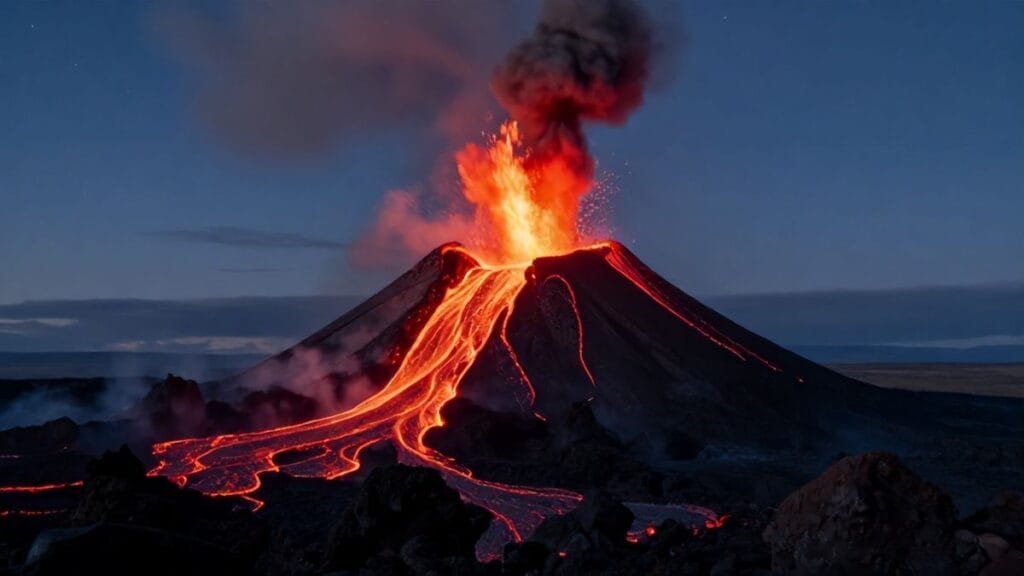
From the crater itself, which very few people saw directly in those early explosive days, a transformation was underway. The years of comparatively gentle lava effusion gave way to a more explosive phase driven by gas-rich magma. The inner walls of the crater fractured and collapsed, feeding pyroclastic material—fragments of rock and ash—into the eruption column. The shape and stability of the summit, already precarious, began to change almost daily. A mountain that had once felt almost familiar to those who climbed it regularly now seemed alien, unpredictable, and decidedly dangerous.
In Arusha and Dar es Salaam, officials from Tanzania’s geological survey and disaster management units monitored the situation closely, drawing on satellite imagery and ground reports. International observatories, including those coordinated by agencies such as the United States Geological Survey and the Smithsonian Institution’s Global Volcanism Program, noted the renewed activity and began issuing updates. The ol doinyo lengai eruption was no longer just a local event; it was data, a case study, a phenomenon to be cataloged among other notable eruptions of the early twenty-first century.
Yet behind the emerging scientific narrative, another story was unfolding in real time—the story of how people living in the mountain’s shadow began to reinterpret their relationship with the “Mountain of God.” For some, the eruption was a frightening reminder of vulnerability, for others, a sign pregnant with spiritual meaning. The ash cloud that rose in July 2007 was not just a physical object; it was a screen onto which many different fears, hopes, and beliefs were projected.
The Night Skies Turn Strange: Ash Columns and Lightning
As the eruption intensified in late July and August 2007, the skies over northern Tanzania took on a strange, often menacing character. The towering ash columns that rose from Ol Doinyo Lengai during the day sometimes persisted into the night, their outlines faintly visible against the stars. At times, volcanic lightning flickered within the plume—brief, jagged flashes generated by the friction of ash particles colliding at high speed. For observers on the ground, these displays were both terrifying and mesmerizing, a reminder that the familiar laws of everyday weather did not apply here.
Ash began to fall in communities downwind of the volcano. Fine, gray particles settled on roofs, coated the leaves of sparse trees, and gathered in animal troughs. The taste of the air changed, carrying a dry, metallic tang. People quickly learned to cover water containers and to shake the ash out of their clothes and hair each evening. Some experienced irritated eyes and throats, especially children and the elderly. School attendance dipped in certain areas as families kept children home on days when the air seemed particularly thick.
Farmers and pastoralists measured the eruption’s progress not through seismograms but through grass and water. Ash fall, even light, can weaken or kill pasture grasses, and there were fears that, if it continued or intensified, grazing lands would suffer. Cattle, goats, and sheep continued to feed, but herders watched carefully for any sign of illness. As one Maasai herder reportedly told a visiting researcher, “If the mountain takes the grass, it takes our life.” In such a finely balanced pastoral economy, even a modest decline in forage can cascade into hunger, debt, and social tensions.
At night, when winds sometimes shifted and the air cleared, the mountain offered a different spectacle. Glows from within the crater—incandescent patches of lava thrown onto the walls or exposed in fractures—gave the summit a faint, eerie illumination. To some, it resembled a watchful eye; to others, a wound. The combination of ash, lightning, and glow turned the entire northern horizon into a living painting, changing from hour to hour, demanding constant attention.
Air traffic, though limited in this remote part of Tanzania, was not immune. Pilots of small aircraft ferrying tourists or supplies had to adjust routes to avoid the denser parts of the ash plume, which can pose a serious hazard to jet engines and visibility. Regional aviation authorities issued advisories, and some flights were canceled or rerouted. The ol doinyo lengai eruption thus rippled outward into the intricate web of modern transportation, reminding regional planners that even a relatively small volcano in a sparsely populated area can have far-reaching effects.
The psychological impact of those strange nights is difficult to quantify, but many who were there recall them vividly. One guide later described how he and his family would sit outside their small house, watching the volcano glow and listening to distant rumbles roll across the plains. “We could not sleep,” he said. “We listened to the mountain like you listen to a sick animal—afraid it will die, but afraid also of what it will do before that.” It’s astonishing, isn’t it, how quickly a familiar landscape can become uncanny when the heavens themselves seem to be in turmoil?
An Alien Lava: The Science of Ol Doinyo Lengai’s Natrocarbonatite
Behind the dramatic visuals of ash columns and lightning lay a more subtle but equally fascinating dimension of the ol doinyo lengai eruption: its chemistry. Ol Doinyo Lengai is famous among volcanologists for its natrocarbonatite lava, a type of magma rich in sodium and carbonate minerals rather than the silica-dominated compositions common in most volcanic systems. This unusual chemistry produces a lava that is strikingly fluid and cool by volcanic standards—emerging at temperatures sometimes below 600°C, as opposed to the 1000–1200°C typical for basaltic flows.
During quieter periods, such as the years preceding 2007, this natrocarbonatite lava would ooze and splatter gently within the crater, forming bizarre, rapidly solidifying flows that turned from black to pale gray or white as they reacted with the humid air and rainwater. These transformations could happen within hours, giving the summit a constantly shifting patchwork appearance. Scientists were fascinated by this process because natrocarbonatite lava, once it cools and weathers, can contribute to the formation of highly fertile soils—soils that, over longer timescales, help sustain the grasses and acacia trees that pastoral livelihoods depend upon.
However, during the explosive phases of 2007–2008, the behavior of the magma system became more complex. There is evidence that hotter, more silica-rich magmas interacted with the shallower natrocarbonatite reservoir, contributing to the more violent ash-driven eruptions. This interaction may have increased internal pressure, driven gas exsolution, and destabilized the crater walls. Satellite-based instruments and ground-based measurements recorded significant degassing of carbon dioxide and sulfur dioxide, adding another layer of complexity to the local atmosphere.
For geoscientists, the eruption offered a rare window into the plumbing of a natrocarbonatite volcano in full unrest. Teams from Tanzanian institutions, often collaborating with international researchers, scrambled to install temporary seismometers, collect ash samples, and, when conditions allowed, analyze fresh lava at the summit margins. Their work contributed to a growing body of literature on Lengai’s unique place in the spectrum of global volcanism. As one study later summarized, Ol Doinyo Lengai “provides a natural laboratory for investigating mantle-derived carbonatite magmas and their role in Earth’s carbon cycle” (a paraphrase of sentiments expressed in several volcanological papers from this period).
The eruption also highlighted how deeply entangled scientific and local perspectives can be. While researchers were interested in gas fluxes and magma mixing, local communities were concerned about the more immediate chemistry of their world: the safety of their drinking water, the health of their animals, the condition of the vegetation. Ash with high soluble salt content can damage crops and alter soil chemistry in the short term, even as longer-term weathering might eventually replenish certain nutrients. Thus, a single eruption could embody both threat and potential, destruction and future fertility.
The strangeness of natrocarbonatite also lent an almost extraterrestrial flavor to journalists’ coverage. Reports described “black, oil-like lava” and “cold, flowing rock,” emphasizing how different Lengai’s behavior was from the fiery rivers of more familiar volcanoes. This narrative, while sometimes sensationalized, did capture a kernel of truth: the ol doinyo lengai eruption was not simply another volcanic episode; it was a reminder of the Earth’s capacity for diversity, even in the ways it expresses its internal heat.
Fear on the Escarpment: Maasai Communities Confront the Eruption
If the 2007–2008 eruption of Ol Doinyo Lengai expanded scientific frontiers, it also tightened the emotional boundaries of everyday life for the Maasai communities along the Rift escarpment. Fear, reverence, and pragmatism intermingled in ways that are difficult to disentangle. Families living in bomas—traditional homestead enclosures made of thorn fences, mud, and dung—woke to mornings when ash coated their livestock and the distant mountain wore a smoky crown. They had always lived with the knowledge that Lengai was sacred and potentially dangerous, but now that danger was immediate and tangible.
Stories began to circulate rapidly: tales of previous eruptions revived by elders; rumors of cattle dying mysteriously; speculation that the mountain’s anger had been provoked by modern intrusions—tourist traffic, foreign scientists, or the encroaching influence of government policies and conservation areas. Children listened intently to such tales at night, the glow of the mountain occasionally flickering in the distance like punctuation to the narrative.
Local leaders faced a difficult task. On one hand, they needed to reassure their communities and maintain social order. On the other, they had to respond to genuine risks. Meetings were held under acacia trees and in village clearings, where elders and younger men discussed whether to temporarily move herds away from the mountain’s most exposed slopes. Some did exactly that, leading cattle and goats to what they hoped were safer grazing grounds farther from the ash plume’s main path.
There were also moments of quiet heroism. Health workers and local officials went from house to house distributing information about the potential effects of ash on respiratory health and advising families to store water in covered containers. Some brought simple cloth masks or scarves, instructing people to wrap them over mouths and noses on the worst days. Mobile clinics attempted to track increases in eye and lung irritation, though their resources were limited. The eruption, in effect, became an informal stress test for local service infrastructures that were already stretched thin.
For many, the eruption sharpened a sense of marginalization. Remote rural communities often felt, and sometimes still feel, far from the centers of political power and decision-making in Dar es Salaam. When the mountain erupted, some residents wondered whether national authorities truly understood their vulnerability. Promises of monitoring and possible evacuation were reassuring, but in practice, moving entire pastoral communities—with their livestock, possessions, and social networks—is a monumental undertaking that few believed would actually be managed efficiently if the worst happened.
And yet, life went on. Women continued to fetch water; men and older boys tended herds; children played under skies veiled with thin ash. Weddings, funerals, and markets continued, albeit with the mountain’s behavior now a frequent subject of conversation. The eruption underscored a deeper reality: for those who live close to powerful natural systems, resilience is not a buzzword but a daily practice, woven into the rhythms of herding, building, storytelling, and prayer.
Shockwaves in the Earth: Earthquakes, Cracks, and Collapsing Craters
As the eruption progressed through late 2007 and into 2008, the drama was not limited to the spectacle of ash and lightning. The very ground beneath the region shifted and cracked in response to the stresses unleashed by the volcano and the broader tectonic forces of the East African Rift. A notable sequence of earthquakes shook the area around Lake Natron, some strong enough to crack walls, dislodge stones from poorly built structures, and send people fleeing from their homes in panic.
These earthquakes, often in the magnitude 5 range, were felt across a broad swath of northern Tanzania and southern Kenya. For many residents, they blurred into the sonic backdrop of the eruption—distant rumbles, sudden jolts, and the eerie sensation of solid earth momentarily liquefying. In one village, a teacher described how the blackboard rattled on its hooks and dust fell from the rafters as children ducked under their desks, hearts pounding, unsure whether to fear the sky or the ground more.
At the summit of Ol Doinyo Lengai, repeated seismic shaking and internal pressurization led to significant structural changes. Sections of the crater rim collapsed inward, creating fresh scarps and exposing previously concealed layers of volcanic deposits. What had once been a complex but relatively stable summit landscape of hornitos and lava ponds became a chaotic, constantly rearranged terrain. Later aerial surveys and photographs revealed deep scars and gullies where material had slumped or been blasted away.
These collapses not only altered the mountain’s topography but also presented new hazards for any potential summit visitors. Rockfalls and sudden landslides became a real risk, discouraging all but the most determined or foolhardy would-be climbers. Authorities and local tour operators strongly discouraged ascent during the most active phases, recognizing that the combination of ash, bombs, and collapsing walls could easily prove fatal.
From a scientific perspective, the combination of earthquakes and eruptive activity underscored the close link between tectonics and volcanism in rift settings. The East African Rift is a zone of crustal extension, where the land is being pulled apart at a geologically slow but inexorable pace. As it stretches and thins, magma can exploit fractures to rise toward the surface, while the injection of magma itself can further deform and fracture the surrounding rock. The 2007–2008 events near Ol Doinyo Lengai provided a living example of this feedback loop, visible not just in instruments but in cracked walls and shaken villages.
For local people, however, these theoretical linkages mattered less than the immediate, visceral experience: the sound of plates and cups clinking together spontaneously, the sudden barking of alarmed dogs, the rush of people into open spaces when the floor itself seemed unreliable. These moments imprinted themselves on community memory as surely as the sight of ash-darkened skies.
Tourists, Guides, and Risk Takers on the Slopes of Lengai
Long before the 2007–2008 eruption, Ol Doinyo Lengai had cultivated a reputation among adventure travelers as a challenging but deeply memorable climb. Unlike Kilimanjaro, with its well-established routes and extensive infrastructure, Lengai offered a harsher, more intimate experience. Climbers began their ascents in the dark, often around midnight, guided by local men who knew the faint paths zigzagging up the steep, crumbly slopes. They climbed under brilliant starlight, sometimes pausing to rest and look back at the flickering lights of distant settlements on the valley floor.
At the summit, those climbers who arrived before dawn found a bizarre, lunar landscape of craters and crusted lava. In the years just before the eruption, it was not uncommon for small lava fountains to be visible within the inner crater, spattering black, syrupy magma onto nearby surfaces. Some tour companies advertised this as a chance to see “safe lava”—a dangerous oversimplification, but one that spoke to the mountain’s allure. Photographs from those years show people standing comparatively close to active lava, their faces lit by headlamps and the faint glow of molten rock.
When the ol doinyo lengai eruption escalated in mid-2007, this pattern of tourism was abruptly disrupted. Local guides, many of whom were Maasai who had come to rely on climbing fees as an important supplement to pastoral income, faced a painful calculation. Continuing to guide tourists up the mountain could bring much-needed cash, but it would also expose both them and their clients to heightened risk. Falling ash, ballistic fragments, toxic gases, and summit collapses transformed the climb from a challenging adventure into a potentially lethal gamble.
Most responsible operators and guides chose caution. As explosive activity intensified, official advisories and informal networks converged on the same message: stay away from the summit. Camps and lodges near Lake Natron shifted their offerings toward alternative attractions—walking safaris, cultural visits, birdwatching—while hoping that the mountain’s eventual return to a calmer state would bring climbers back. For many guides, the sudden loss of regular climbing work underscored their financial vulnerability. The eruption, which outsiders might see mainly as a geological spectacle, was, for them, also an economic shock.
Of course, not everyone stayed away. A small number of risk-tolerant or perhaps reckless individuals sought to get as close as possible to the erupting volcano, drawn by the chance to witness and document raw natural power. Some were professional photographers or filmmakers; others were seasoned mountaineers and volcanophiles. Under tightly controlled conditions and following extensive assessment of the current activity, a few managed to approach the flanks or lower slopes to capture video and images that would soon circulate in documentaries and online platforms, shaping global perceptions of the eruption.
These contrasting responses—caution from local communities and authorities, curiosity and thrill-seeking from some visitors—highlighted broader dynamics of risk. For those who live near Lengai, the volcano’s moods are inescapable; their exposure is continuous. For outsiders, the mountain can be an episodic experience, an item on a bucket list, a dramatic photograph on a social media feed. The 2007–2008 eruption forced a confrontation between these different temporalities and stakes, raising enduring questions about how tourism intersects with natural hazards in some of the world’s most geologically active regions.
Airborne Ash and Global Eyes: Satellites Track the Plume
While villagers watched the eruption from their homesteads and tourists from distant viewpoints, another set of observers monitored Ol Doinyo Lengai from orbit. Earth-observing satellites, equipped with instruments capable of detecting ash, gas emissions, and thermal anomalies, played a crucial role in documenting the ol doinyo lengai eruption. Agencies such as NASA and the European Space Agency, along with regional and international partners, used data from platforms like MODIS (Moderate Resolution Imaging Spectroradiometer) and other sensors to track the spread and evolution of the ash plume.
From space, the eruption presented itself as a dark, often elongated smear across the bright backdrop of clouds and the pale, reflective surface of Lake Natron. Time-lapse satellite sequences showed the plume pulsing with each major eruptive burst, fanning out in directions determined by shifting high-altitude winds. Volcanic ash advisories, crucial for aviation safety, were issued based in part on these observations, even though Ol Doinyo Lengai lay far from major international air corridors.
Thermal anomaly data also provided insight into the intensity and location of eruptive activity. Hotspots corresponding to active vents and lava flows stood out starkly against the relatively cooler surroundings. By comparing imagery over days and weeks, volcanologists could infer where new lava was emerging, where crater collapses were occurring, and how the summit morphology was evolving. Such analyses were later used to reconstruct a more detailed timeline of the eruption, supplementing ground-based reports that were necessarily patchy due to access difficulties.
Satellite-based remote sensing thus transformed a remote, sparsely monitored volcano into a globally visible phenomenon. Academic papers emerging in the years after 2008 drew on these data to discuss broader themes: the dynamics of plume dispersal in tropical atmospheres, the spectral signatures of natrocarbonatite lava, and the implications of volcanic gas emissions for regional air quality. One scientific article noted that the eruption offered “a rare opportunity to study carbonatite volcanism using contemporary spaceborne sensors,” a phrase that, beneath its technical surface, hinted at the uniqueness of the event.
From a political standpoint, the presence of these remote watchers reinforced both confidence and unease. On the one hand, Tanzanian authorities could draw on international expertise and information flows that might not have been available decades earlier. On the other hand, some community members wondered whether the data and understanding generated from their local ordeal would primarily benefit scientists and policymakers far away. Whose volcano was this, really—theirs, or the world’s? The answer, of course, was both, but the tension between local ownership and global interest lingered.
The Long Season of Fire: 2007–2008 in Slow-Motion Catastrophe
Eruptions are often imagined as brief, cataclysmic events—a sudden explosion, a flood of lava, a day or two of chaos. The ol doinyo lengai eruption refused to fit neatly into that template. Instead, it unfolded as a long season of fire and ash, stretching from mid-2007 well into 2008, with phases of intensification and relative calm. This drawn-out character made it, in some ways, more insidious. Rather than a single shock, communities and ecosystems endured a series of blows and pauses, an on-again, off-again crisis that tested endurance as much as immediate coping capacity.
After the initial explosive bursts of July and August 2007, the volcano’s activity waxed and waned. Some weeks, ash emissions decreased, and people dared to hope that the worst had passed. Then, without much warning, new pulses of activity would send columns of material skyward once again. These cycles could be exhausting. Each lull brought a mixture of relief and apprehension—was this the end, or merely a prelude to something larger?
By early 2008, eruptive activity had led to significant changes in the volcano’s summit crater and surrounding flanks. Fresh deposits of ash and tephra blanketed parts of the upper slopes, reshaping gullies and altering drainage patterns. Rainfall, when it came, mixed with loose volcanic material to create muddy flows that carved new channels down the mountain’s sides. These lahars were smaller than those associated with some of the world’s most notorious volcanoes, but they nonetheless posed localized hazards to trails, seasonal streams, and, potentially, to any settlements in their path.
Meanwhile, the social and psychological toll accumulated. Prolonged disruption can wear down the resilience of even the most resourceful communities. Household savings were drawn down to cope with temporary livestock relocations, medical expenses, or the loss of tourism-related income. Young people, who in other years might have spent more time in school or in urban centers seeking work, sometimes stayed closer to home, feeling a responsibility to help safeguard family herds during an uncertain period.
The eruption also intersected with broader regional stresses. Climate variability in East Africa means that droughts and erratic rainfall are recurring realities. In years when pastures were already under pressure from low precipitation, ash contamination and eruptive disruptions compounded the strain. The Mountain of God did not erupt in a vacuum; it did so in a landscape already shaped by the crosscurrents of climate, policy, and economic change.
By late 2008, activity had diminished sufficiently that the eruption could be described, in formal terms, as having ended or moved into a lower-energy phase. The ash columns shrank, the seismicity eased, and, gradually, the mountain’s silhouette once again became a mostly silent guardian over the valley. Yet “ending” is a relative concept in volcanology. Magma continued to reside beneath the peak; degassing persisted at low levels; the potential for future activity remained. For those who had lived through the long season of fire, the cessation of obvious surface activity did not erase the memory of what the mountain could do.
Politics, Protection, and the Shadow of Natron
The ol doinyo lengai eruption unfolded against a backdrop of political debates and conservation struggles centered on Lake Natron and the broader Rift Valley ecosystem. Lake Natron, just northeast of the volcano, is one of the world’s most important breeding sites for lesser flamingos, hosting hundreds of thousands of these birds in good years. Its caustic, soda-rich waters and mudflats create a relatively predator-free environment where flamingos can nest on isolated salt islands. The spectacle of pink birds against a mirrored, alkaline lake has long drawn photographers and nature enthusiasts, turning the area into a focal point for both conservation and tourism.
In the mid-2000s, plans surfaced for large-scale industrial development in the region, including proposals for soda ash extraction from Lake Natron. Environmentalists and local communities raised concerns that such projects could devastate the flamingo breeding grounds and fundamentally alter the hydrology and chemistry of the lake. The eruption of Ol Doinyo Lengai, while not directly connected to these industrial schemes, sharpened the sense that this was a fragile, heavily contested landscape. If natural forces could so dramatically reshape life around the lake, what additional pressures might large-scale human interventions bring?
Government ministries, conservation NGOs, and local leaders found themselves engaged in a complex balancing act. On one hand, Tanzania, like many nations in the Global South, sought to harness its natural resources for economic development, to fund infrastructure, education, and health services. On the other, the unique volcanic and ecological character of the Natron–Lengai area made it a prime candidate for protective measures, potentially including World Heritage status or other forms of international recognition and support.
The eruption, covered intermittently by international media, reminded policymakers and activists alike that Ol Doinyo Lengai was not just a scenic backdrop but an active geological force. Some conservation advocates argued that the event underscored the need for a cautious, ecosystem-based approach to development in the Rift Valley, one that took seriously both the unpredictability of the land and the knowledge of those who had lived with it for generations. Others, more skeptical of externally driven conservation agendas, worried that volcanic risk might be used rhetorically to justify restrictions on local land use without delivering real benefits to communities.
In this sense, the ol doinyo lengai eruption became part of a larger political story about who gets to define risk and value in a changing landscape. Is the primary asset the soda-rich waters of Lake Natron, ripe for industrial extraction? The vast vistas and charismatic species that fuel eco-tourism? The sacred and everyday uses of land by Maasai pastoralists? Or the scientific data streams that flow from monitoring a rare carbonatite volcano? Different actors emphasized different answers, and the negotiations among them have continued, in various forms, long after the ash settled from the 2007–2008 events.
Livelihoods on the Edge: Pastoralists, Crops, and Changing Seasons
For many outside observers, images of the ol doinyo lengai eruption focused on fire and ash. For those living nearby, the most pressing questions often centered on something more prosaic: livelihoods. How would the eruption affect cattle, goats, sheep, and the modest patches of cultivated land carved into the valley floor or along seasonal streams? In a region where subsistence often rests on a knife-edge, any disturbance to grazing patterns, water sources, or market access could reverberate through households and communities.
Ash fall is a double-edged sword in agrarian and pastoral systems. In the short term, a coating of ash on grass can reduce palatability, clog animals’ noses and mouths, and, in higher concentrations, even poison or physically abrade plant surfaces. Water sources can be contaminated, requiring filtration or simply time for the heaviest material to settle. Some herders reported minor illnesses among their livestock during the height of the eruption—coughing, eye irritation, and, in rare cases, more serious respiratory distress. Veterinary services, where available, attempted to monitor and respond, but the area’s remoteness ensured that many incidents went undocumented.
In the longer term, however, volcanic deposits can contribute to soil fertility, as weathering unlocks mineral nutrients and improves structure. Farmers along other volcanic arcs—from Java to the slopes of Vesuvius—have long benefited from this paradox, living with periodic devastation in exchange for rich harvests. Around Ol Doinyo Lengai and Lake Natron, where rainfall is limited and agricultural potential more constrained, the balance looks different. Volcanic inputs may still enhance certain soils, but the benefits are more muted, and the immediate disruptions can loom larger in local calculations.
Market integration added another layer of complexity. In years when eruptive activity discouraged tourism, local people lost not only direct climbing-related income but also indirect benefits from selling crafts, livestock, or produce to visiting outsiders. At the same time, access to distant markets for livestock or grain could be affected if road conditions worsened due to ash, rainfall, or earthquake-related damage. The eruption thus interacted with broader economic trends: fluctuating prices for cattle, changing demand for cultural tourism, and evolving government policies on grazing and land rights.
Climate signals were also in the air. Many Maasai elders remarked during and after the eruption that “the rains are not like before,” a phrase that captured both observational reality and a sense of disorientation. Shifting patterns of drought and downpour, influenced by global climate variability, complicated decisions about when and where to move herds. Against this backdrop, the mountain’s violent reminder of its power felt like yet another variable in an increasingly unstable equation. The ol doinyo lengai eruption, in other words, did not create vulnerability from nothing; it illuminated and exacerbated vulnerabilities already present.
Faith, Ritual, and the Meaning of an Angry Mountain
In a landscape where the sacred and the material are deeply intertwined, the eruption of a mountain named “Mountain of God” could not help but trigger a wave of religious and ritual responses. For many Maasai, the events of 2007–2008 were more than a series of physical phenomena; they were communications whose meanings had to be interpreted through prayer, ceremony, and counsel with elders. The ash-filled skies became not only a meteorological condition but a spiritual text.
Accounts from the period speak of prayer gatherings held in villages within sight of the mountain. Elders, wrapped in their red shúkà cloths, would stand together and lead invocations to God, asking for protection for the people and the livestock, for the return of balance, for the cooling of the mountain’s anger. These gatherings were not necessarily dramatic public spectacles; often they were quiet, dignified affairs, embedded in the everyday fabric of community life.
Ritual specialists, sometimes referred to as laibons, were consulted for their insight into why the eruption had occurred and what, if anything, could be done ritually to appease the forces at work. Were certain taboos being broken more frequently—regarding land use, social behavior, or respect for elders? Was the encroachment of modern practices and outsiders into sacred spaces disturbing the delicate relational order that had previously kept the mountain calm? Such questions did not always produce consensus answers, but they framed the eruption as part of a moral as well as physical landscape.
Christian and Islamic interpretations also circulated, reflecting the religious diversity that now characterizes many Maasai communities. Pastors and imams wove the eruption into sermons as a reminder of human frailty and the ultimate sovereignty of God. For some, the ash cloud symbolized judgment; for others, it was a call to humility and mutual care. These faith-based narratives coexisted, sometimes uneasily, with scientific explanations. A young man schooled in Arusha might explain to his grandparents that magma pressure and tectonic rifting caused the eruption, while still joining them in prayer for divine protection.
This multifaceted interpretive landscape challenges simplistic distinctions between “traditional belief” and “modern science.” In practice, many people in the region navigated across these domains fluidly, drawing on whichever explanatory resources felt most salient or comforting at a given moment. The ol doinyo lengai eruption thus became not just a geological event but a crucible for negotiating meaning, identity, and authority in a rapidly changing cultural environment.
Scientists on the Crater Rim: Measuring the Unmeasurable
While faith leaders and elders sought meaning in ritual, scientists sought it in measurement. During the less explosive phases of the 2007–2008 eruption, and especially in its aftermath, volcanologists and geophysicists made several expeditions to Ol Doinyo Lengai’s flanks and, when safe enough, to its summit. Their goal was to capture as much information as possible about a rare and complex eruption, understanding full well that the window of opportunity could close with little warning.
Field teams carried seismometers, GPS units, gas analyzers, thermal cameras, and sample-collection gear up treacherous slopes. The journey was physically demanding: loose ash underfoot, thin air near the 2,962-meter summit, and the constant need to judge whether a new vent might open or a section of wall might collapse. Local guides, whose intimate knowledge of the terrain was indispensable, worked in tandem with researchers, navigating not only the physical landscape but also the social one, interpreting between scientific jargon and community concerns.
At or near the crater rim, scientists documented a summit that had been dramatically reshaped. Photographs and sketches captured fresh scarps, deep pits, and layers of ash and tephra draped over older structures. Gas measurements revealed elevated levels of carbon dioxide and sulfur dioxide, sometimes rising in visible fumaroles that hissed or steamed in the cool morning air. Lava samples, when obtainable, were collected with long metal tools and quenched quickly to preserve their textures and compositions for later analysis in faraway laboratories.
The data gathered helped refine models of natrocarbonatite magma generation and evolution, shedding light on how such unusual magmas form deep in the mantle and rise through the crust. They also contributed to improved hazard assessments. By correlating observed summit changes with seismic and satellite data, researchers could better anticipate what kinds of signals might precede future eruptive shifts. This knowledge, in turn, fed into Tanzania’s capacity to issue warnings and develop long-term monitoring strategies.
Yet, for all their sophistication, the instruments and techniques deployed at Ol Doinyo Lengai also underscored the limits of prediction. Volcanic systems are inherently nonlinear; small changes can have disproportionate consequences, and many processes unfold beyond the resolution of any current technology. As one volcanologist later reflected, “Standing on the rim of Lengai, you realize how much we still don’t know. Our graphs and models are, at best, sketches of a reality that is boiling and cracking beneath our feet.” That humility, expressed in technical reports and at scientific conferences, echoed in a different register the humility found in local prayers.
From Crisis to Memory: How Communities Remember 2007–2008
As the ash settled and the mountain’s fury ebbed, the ol doinyo lengai eruption gradually migrated from lived experience to collective memory. In villages around Lake Natron and along the Rift escarpment, people began to tell stories of “the year the mountain spoke loudly” or “the time when Lengai’s head was in the clouds.” These narratives crystallized certain details—the strangest nights of lightning, the heaviest days of ash fall, the most frightening earthquakes—while smoothing over others. Memory is selective, shaped by emotion, social context, and the passage of time.
Children who had been very young during the eruption grew up hearing about it as a defining event in local history, much as earlier generations spoke of severe droughts, cattle raids, or colonial encounters. They learned to recognize Ol Doinyo Lengai not only as a sacred presence and geographic landmark but as an agent capable of sudden, disruptive action. This awareness, passed on through stories, songs, and everyday references, became part of how risk was understood and managed in the community.
In some households, faded newspaper clippings or photographs served as tangible anchors for these memories. A family might have a picture taken during the eruption, with a dark plume rising over their homestead, or a newspaper in Swahili describing the event in terms that connected local experiences to national concerns. For guides and tourism workers, souvenirs from pre-eruption climbs—a guestbook entry, an old summit photo with satisfied clients—took on a different meaning after the mountain’s behavior changed so dramatically. Those mementos became evidence of a “before” that might not return in exactly the same form.
Scholars conducting fieldwork in subsequent years found that the eruption had also become a touchstone in discussions about broader social change. People compared it to shifts in land use policy, to the arrival of new conservation regulations, to the spread of mobile phones and the internet. In conversations, the mountain’s eruption might be mentioned in the same breath as national elections or regional droughts—another marker in a sequence of destabilizing or transformative events.
Memory, of course, is not merely backward-looking. How people remember an event shapes how they prepare for the future. In this sense, the stories of 2007–2008 influenced how communities evaluated new signs of volcanic unrest in subsequent years. When, for example, minor activity resumed at Ol Doinyo Lengai after 2010, even if at much lower intensity, those who had lived through the previous eruption were quicker to notice and interpret the signs. They knew, viscerally, what a quiet mountain was capable of when it chose to wake.
Lessons for a Heating Planet: Risk, Resilience, and the Rift Valley
The ol doinyo lengai eruption might seem, at first glance, like a localized incident—a dramatic but ultimately contained episode in a sparsely populated corner of East Africa. Yet its implications extend far beyond the immediate radius of ash fall and seismic shaking. In an era of accelerating climate change and environmental transformation, the eruption offers a case study in how communities, ecosystems, and institutions respond to overlapping hazards.
Climate models suggest that parts of East Africa will face increasing variability in rainfall, with potential implications for drought frequency and intensity. Pastoralist systems like those of the Maasai are already finely tuned to environmental unpredictability, but there are limits to how much variability and how many concurrent shocks they can absorb. A major volcanic eruption adds another layer of stress—altering pastures, affecting water quality, disrupting markets—at precisely the moment when households may be grappling with failing rains or shifting disease patterns among livestock.
From a governance perspective, the eruption highlighted both strengths and weaknesses in hazard management. On the positive side, Tanzania and its partners were able to leverage satellite monitoring, scientific expertise, and regional networks to track the evolution of the eruption and issue timely advisories. On the more challenging side, the event exposed gaps in local communication infrastructure, resource constraints in health and veterinary services, and the difficulty of translating technical risk assessments into actionable plans for mobile, pastoral communities.
Globally, the eruption fed into a growing recognition that so-called “small” or moderate-scale disasters can be just as socially significant as rarer, catastrophic ones. For every widely reported mega-eruption, there are dozens of Ol Doinyo Lengais—events that disrupt livelihoods, reshape landscapes, and leave lasting psychological imprints, even if they never make front-page headlines worldwide. In the language of disaster studies, the ol doinyo lengai eruption is a reminder that vulnerability is constructed as much by politics, economics, and culture as by the raw power of magma or ash.
Finally, the Mountain of God speaks to questions of coexistence. How should humanity relate to landscapes that are both nurturing and dangerous, both sacred and scientifically compelling? There are no simple answers, but the experiences of the Maasai and other residents around Ol Doinyo Lengai suggest that deep, place-based knowledge—attentiveness to subtle signs, memory of past events, and shared practices of adaptation—is indispensable. As one elder succinctly told a researcher years after 2008, “The mountain was here before us and will be here after us. We must learn to live with its ways.”
That ethic of living with, rather than attempting to dominate or ignore, powerful natural systems resonates far beyond the Tanzanian Rift. In coastal cities facing rising seas, in forests confronting unprecedented fires, in river basins navigating new cycles of flood and drought, communities are wrestling with similarly profound questions. The ol doinyo lengai eruption, in all its specific, localized detail, is part of that larger story—a chapter in the unfolding human encounter with a restless planet.
Conclusion
From a quiet, smoke-wreathed summit known chiefly to local herders and a handful of adventurous climbers, Ol Doinyo Lengai transformed in 2007–2008 into a volcano of global interest and local upheaval. The ol doinyo lengai eruption revealed the extraordinary diversity of Earth’s volcanic behavior, showcasing the world’s only active natrocarbonatite volcano in a phase of heightened unrest. It sent ash towering into the sky, shook the ground with earthquakes, and etched new scars on the mountain’s flanks. More importantly, it reshaped the lives and imaginations of those who dwell in its shadow, confronting them with both immediate hazards and deeper questions about meaning, resilience, and belonging.
The eruption’s legacy is layered. For scientists, it remains a touchstone event, cited in studies of mantle processes, carbon cycling, and remote sensing of volcanic activity. For policymakers and conservationists, it stands as a vivid reminder that the Natron–Lengai landscape is not merely a scenic canvas on which to project development plans, but a dynamic, sometimes volatile system. For Maasai communities, it has become part of the oral and lived archive—a story told to explain why certain grazing routes changed, why certain years are remembered as harder than others, why the Mountain of God commands both reverence and caution.
In tracing the arc of the eruption—from the first whispers of seismic unrest to the long season of ash, and finally to the slow return of relative calm—we glimpse the interplay of geology and culture, of local knowledge and global observation. The ol doinyo lengai eruption is not simply a spectacle of nature; it is a mirror reflecting the vulnerabilities and strengths of a society living at the edge of the Great Rift. As the world faces a century of intensifying environmental pressures, the lessons from this remote Tanzanian volcano—about listening carefully, preparing collectively, and remembering wisely—are unlikely to lose their relevance.
FAQs
- Where is Ol Doinyo Lengai located?
Ol Doinyo Lengai is situated in northern Tanzania, on the eastern side of the East African Rift Valley, just south of the Kenya–Tanzania border and near the shores of Lake Natron. - What makes the ol doinyo lengai eruption of 2007–2008 unique?
The 2007–2008 eruption is notable because it involved the world’s only active natrocarbonatite volcano, combining unusual, cooler lava with phases of explosive ash emission, significant summit collapse, and a prolonged period of regional impact. - What is natrocarbonatite lava?
Natrocarbonatite lava is a rare type of magma rich in sodium and carbonate minerals. It is cooler and far more fluid than typical silica-rich lavas, and it weathers quickly into pale, often highly reactive material that can influence soil chemistry. - Did the eruption threaten nearby communities?
Yes. Although no large-scale evacuations were ultimately required, ash fall, earthquakes, and localized lahars affected Maasai pastoralist communities, posing risks to health, livestock, and livelihoods, and causing widespread anxiety during the most active phases. - How did scientists monitor the eruption?
Scientists used a combination of field observations, temporary seismic networks, gas measurements, GPS surveys, and satellite imagery to track ash plumes, thermal anomalies, summit changes, and seismic activity throughout the eruption. - Is Ol Doinyo Lengai still active today?
Yes. Although the intense activity of 2007–2008 has subsided, Ol Doinyo Lengai remains an active volcano, with intermittent low-level eruptions and degassing that are closely monitored by Tanzanian and international agencies. - Can tourists still climb Ol Doinyo Lengai?
Climbing is periodically allowed when the volcano is in a relatively quiet state, but access depends on current activity levels and official safety assessments. Prospective climbers must rely on up-to-date local guidance and accept that conditions can change rapidly. - How did the eruption affect Lake Natron and flamingos?
The eruption deposited ash over parts of the Lake Natron area, but the primary flamingo breeding habitat was not catastrophically damaged. However, the event underscored the ecological sensitivity of the region and added urgency to debates over industrial development at the lake. - What lessons does the eruption offer for disaster risk reduction?
The ol doinyo lengai eruption highlights the importance of integrating local knowledge with scientific monitoring, improving communication infrastructure in remote regions, and acknowledging how chronic vulnerabilities—economic, social, and climatic—shape the impact of so-called “natural” disasters. - Is there a chance of another major eruption?
Yes. As an active volcano in a rift setting, Ol Doinyo Lengai is expected to erupt again in the future, though the timing, style, and magnitude cannot be predicted precisely. Continuous monitoring and preparedness are therefore essential for nearby communities and authorities.
External Resource
Internal Link
Other Resources
- Encyclopaedia Britannica – general search for the exact subject
- Google Scholar – academic search for the exact subject
- Internet Archive – digital library search for the exact subject