Table of Contents
- North Africa at the Edge of Empire
- From Auxiliary to Rebel: The Making of Tacfarinas
- Rome’s First Responses: Camillus and Apronius
- Blaesus’s Campaigns and a Fragile Lull
- Dolabella Arrives: New Strategy for an Old War
- Landscapes of War: Steppe, Oases, and Aures Mountains
- Pressure Points: Raids, Sieges, and Negotiation Gambits
- Night and Dust: The Assault near Auzea
- After the Leader Falls: Punitive Sweeps and Surrenders
- Politics of Praise: Tiberius, Sejanus, and the Proconsuls
- Building the African Limes: Forts, Roads, and Legio III Augusta
- Grain and Pasture: Economy Behind the Campaigns
- Remembering Tacfarinas: From Bandit to Antihero
- Mauretania and Beyond: Ripples Across the Western Mediterranean
- Conclusion
- FAQs
- External Resource
- Internal Link
Article Summary: In AD 24, a long and punishing insurgency in Rome’s African province ended with the death of the Numidian leader Tacfarinas. This article reconstructs how a deserter forged a mobile army, why proconsuls struggled against him, and how Dolabella finally cornered him near Auzea. It explains the geography that shaped the conflict, the politics that framed the victory, and the economic stakes behind the campaigns. Drawing on Tacitus and epigraphic hints, it highlights both certainty and debate. It places the moment when tacfarinas revolt ends within a wider North African story that continued to evolve long after.
Why keep reading: A frontier war ended, but not the dilemmas it revealed. Follow the pursuit across dunes and mountains, the politics in Rome, and the ordinary people who paid for imperial strategy, to see how one “ending” redrew maps, methods, and memories in North Africa.
At a glance:
- Event: The final defeat and death of Tacfarinas, ending a protracted insurgency in Roman North Africa
- Date: AD 24 (traditional date; exact day unknown)
- Place: Near Auzea, likely in modern northern Algeria; related actions across Byzacena, Numidia, and the Aures
- Main figures: Tacfarinas; Roman proconsuls Lucius Apronius, Q. Junius Blaesus, and Publius Cornelius Dolabella; King Ptolemy of Mauretania; Emperor Tiberius
- Why it mattered: Secured a grain-rich province, refined Rome’s frontier tactics, and exposed tensions between nomadic lifeways and imperial settlement
01 – North Africa at the Edge of Empire
By the early first century AD, Rome’s African province fed the capital with grain while its interior swayed between client kings, tribal confederations, and uneasy peace. Forts and roads pulsed with patrols where the savanna met highlands. By AD 24, tacfarinas revolt ends—or so the Roman narrative claims—but the frontier it exposed remained unsettled and deeply human.
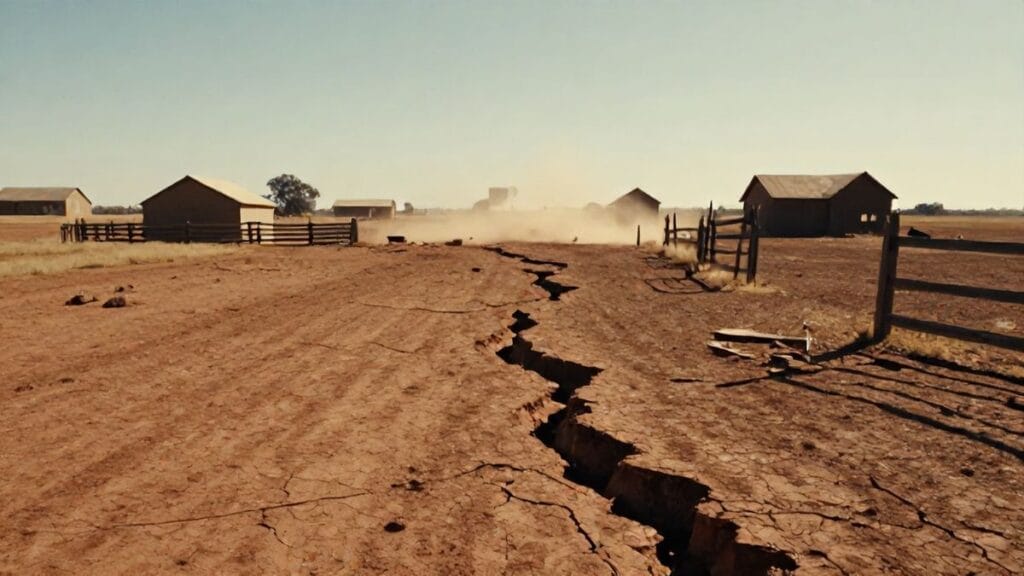
North Africa’s landscape shaped Roman power and its limits. Roman colonies thrived in the coastal plains and the rich Byzacena, but inland zones belonged to mobile herders and warriors. A long line of outposts stitched land and authority together, yet the stitches frayed where pastures, water, and movement defined politics more than decrees and stone.
The people Rome called Musulamii navigated these seams. Some served in auxiliary cohorts, others grazed flocks seasonally, and many did both across a lifetime. Empire tolerated flexibility until tax registers and farm plots hardened into grids. At those edges of control, a deserter named Tacfarinas discovered both his cause and Rome’s vulnerabilities.
02 – From Auxiliary to Rebel: The Making of Tacfarinas
Tacfarinas emerged from Rome’s own machine: an auxiliary soldier turned deserter who learned drills, discipline, and the patient art of logistics. Contemporary observers thought him more organizer than noble pretender. He built a coalition of Musulamii and discontented neighbors, marrying desert mobility to familiar Roman order.
He was no mere raider. He sought leverage, broadcasting demands for land and a recognized status, which would turn a band into a people under treaty. Tacitus repeats a version of this approach, though the rhetoric likely reflected Roman concerns. Demands framed as extortion in Roman texts may have sounded like negotiation on the ground.
After early raids, he split his followers into lighter columns that evaporated when pressed and struck where grain depots, villages, and small forts proved exposed. His opponents underestimated how well he read their habits. For several years, proconsuls tried to meet a ghost with set-piece marches and declarations of victory.
03 – Rome’s First Responses: Camillus and Apronius
Initial commanders adopted conventional remedies: patrols, relief columns, and attempts to pin an elusive force. Under Marcus Furius Camillus and then Lucius Apronius, Rome suffered raids that embarrassed the legions by avoiding decisive battle. Even when they cornered segments of the rebels, the main force dissolved into scrub and steppe.
Apronius, faced with units that broke under pressure, resorted to severity. Tacitus reports that he revived decimation against a disgraced cohort, a grim theater meant to restore discipline. The measure shocked contemporaries and hinted at a force struggling not against numbers but against a landscape and style of war it had not mastered.
04 – Blaesus’s Campaigns and a Fragile Lull
Quintus Junius Blaesus brought patience to the theater. He divided his forces, wintered in multiple fortified positions, and offered amnesty to defectors. The tactic pried away allies who had joined for profit, not ideology, and blessed him with ceremonies in Rome. Yet the most wanted man slipped through the nets again.
Modern historians detect political shadows here. Blaesus, connected to Sejanus, arguably enjoyed a warmer glow at court. His “victory” rested on skillful logistics and partial surrenders, not a battlefield decapitation. When Tacfarinas rekindled operations after the favorable reports, the gulf between Roman rhetoric and local reality widened again.
Mini timeline:
- AD 17: Major phase begins; Rome mobilizes in Africa under Camillus.
- AD 18–21: Apronius confronts raids; discipline crises; harsh punishments.
- AD 21–23: Blaesus conducts multi-base campaigns; accepts surrenders; Tacfarinas escapes.
- AD 24: Dolabella pursues deep into interior; Tacfarinas is killed near Auzea.
The lull misled outsiders into thinking the revolt had ended. In truth, amnesties and dispersals thinned the ranks but left the core problem—land, movement, and dignity—unresolved. Tacfarinas watched, counted, and waited for watering cycles, for harvests, and for a commander bold enough to break patterns so he could exploit them.
05 – Dolabella Arrives: New Strategy for an Old War
Publius Cornelius Dolabella entered Africa as proconsul with less patience for ceremony and a clearer appetite for risk. He fielded lighter columns of legionaries and auxiliaries, leaning on cavalry and scouts recruited from peoples who knew the tracks and thorn-bushes better than any Roman map.
He also coordinated with King Ptolemy of Mauretania, whose riders could harry escape routes beyond the proconsul’s formal jurisdiction. Tacitus places Ptolemy’s contribution in the story, though the exact distribution of credit is difficult to parse. The alliance signaled that Rome would make the frontier a pincer rather than a line.
Once Dolabella sensed that the rebels gathered in greater numbers to threaten fortified towns and caravan nodes, he inverted Blaesus’s rhythm. He hunted for the concentration points, forced speed over caution, and accepted the friction that came with hauling men through cold uplands and burning steppe in quick succession.
06 – Landscapes of War: Steppe, Oases, and Aures Mountains
Geography was a silent negotiator in every decision. The Aures Mountains offered cover and broken ground for sudden dispersal, while the steppe below punished heavy infantry that moved without water discipline. Oases marked both sanctuary and trap, attracting columns like moths toward wells that could be ambushed.
Legio III Augusta, the province’s permanent muscle, learned to break into detachments with baggage lightened and lines shortened. Centurions measured days by the reach of a water skin and nights by the distance to thorn hedges where horses could be picketed. Tacfarinas measured the same, but with more freedom to abandon camps at a whisper.
Economic geography mattered too. Granaries and villa-farms in Byzacena created targets and incentives; their safety secured Rome’s annona, the grain lifeline to Italy. Inland herds and seasonal grazing routes created rival claims without clear borders. Every skirmish tested who set the terms of movement and who paid when roads turned unsafe.
07 – Pressure Points: Raids, Sieges, and Negotiation Gambits
Tacfarinas edged toward bigger gestures, pressing at fortified settlements and trying to provoke terms. One episode, the threat to Thubuscum, showed his confidence and the peril he faced. Besieging a defended town risked the one thing he had avoided: being found, fixed, and forced to stand and fight.
Rome’s answer mixed menace and message. No negotiation would grant him a people’s homeland, Tiberius signaled, because that would teach the frontier to bargain with threat. This hardened stance left little space for compromise. The proconsul’s orders turned from patient erosion to decisive capture, and the net began to tighten over familiar ravines and upland camps.
The choice to escalate toward static targets betrayed urgency inside the revolt. Supplies, promises, and prestige were impossible to maintain with pure evasion. A victory over stone walls could have forced Rome’s respect. Instead, it lured Dolabella into the pursuit he needed to end the long war.
08 – Night and Dust: The Assault near Auzea
Late in the campaign, scouts reported a large rebel encampment near Auzea, a site many scholars associate with modern Sour el Ghozlane. The ground favored a surprise approach. Dolabella split his force, used darkness as armor, and gambled that speed and shock could do what seasons of patrolling had not.
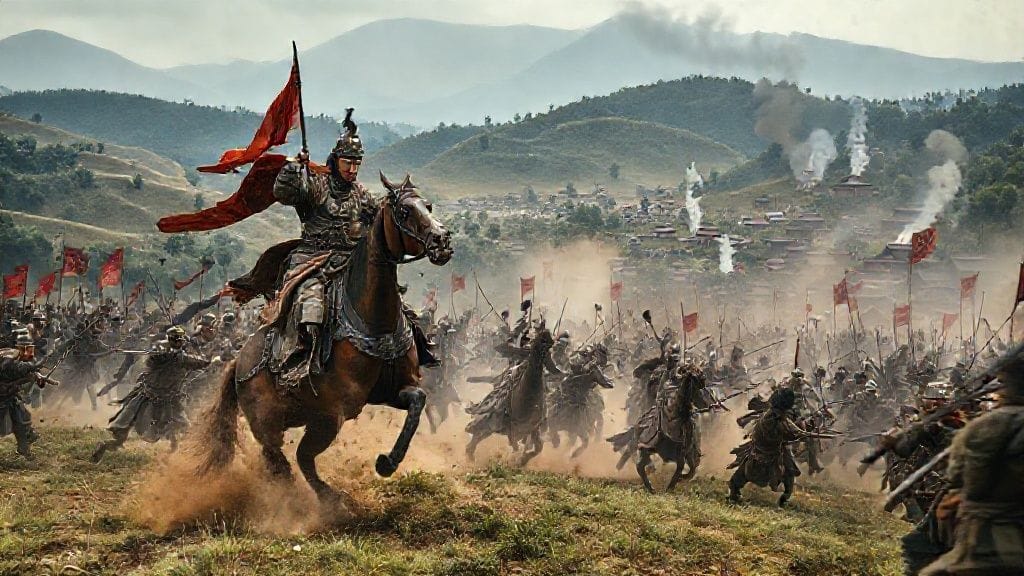
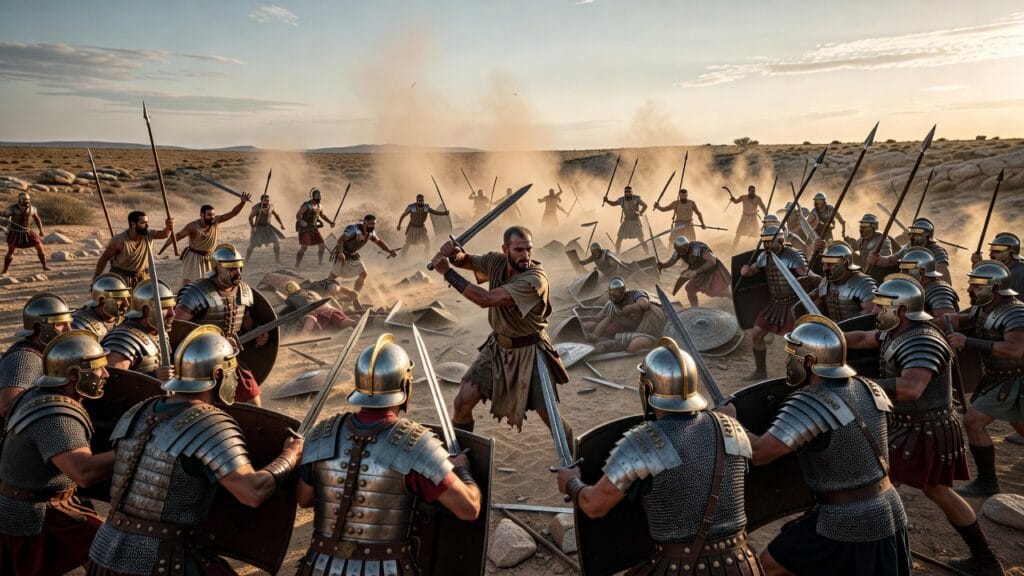
At dawn’s edge or in the last black before it—our texts disagree—Roman columns struck the periphery first, cutting down sentries and saboteurs before confusion spread. Tacfarinas, realizing the line wavered, is said to have charged forward to rally it and died in the crush. Without that central will, the camp dissolved into rout and capture.
Victories declared at Rome often blurred the edges. Yet here, evidence converges: a body of a leader, captives to display, and a notable silence thereafter in the annals of major African uprisings for some time. The revolt did not end the tensions it exposed, but it did remove the man who orchestrated them most effectively.
09 – After the Leader Falls: Punitive Sweeps and Surrenders
Dolabella pressed the advantage. He sent cavalry to ride down bands fleeing through ravines and thorn scrub, while infantry secured roads and wells. The pursuit resembled harvest more than battle, gathering stragglers and capturing supply animals that had sustained years of raiding. Discipline turned to administration almost overnight.
Client allies and surrendered rebels received a severe but predictable regime. Weapons were collected, hostages taken, and movements monitored along key tracks. Some communities saw their grazing curtailed near Roman estates or public lands. Others were folded into auxiliary units, a familiar Roman method of sorting yesterday’s enemy into tomorrow’s frontier police.
It is easy to forget how fragile this world still was. A good rain or a failed well could shatter plans more completely than a skirmish. The end of the rebellion restored predictability to tax schedules and trade caravans, but life for many remained a calculation around grass, debt, and the watchful presence of stone forts.
10 – Politics of Praise: Tiberius, Sejanus, and the Proconsuls
Back in Rome, victories were also about names. Blaesus had enjoyed triumphal ornaments before the war truly closed, a decoration thick with the favor of Sejanus, Tiberius’s powerful prefect. When Dolabella finished the work, the credit he deserved had to pass through the same tangled web of courtly considerations.
Tacitus implies friction in allocating honors, a familiar rhythm in imperial politics where outcomes were judged through filters of kinship and patronage. The Senate could vote thanks, but monuments and memories were curated by those who arranged ceremonies and controlled narratives. Even a clean battlefield end raised messy questions: who ended it, and who would be believed?
It is astonishing how much political weight could rest on a seal, a signature, or a hostage. Africa’s pacification fed Rome, but it also fed reputations. Dolabella’s campaign showed that method mattered, yet he stepped into a sequence of commanders whose reputations were made and unmade alongside the fortunes of a desert war.
11 – Building the African Limes: Forts, Roads, and Legio III Augusta
After the revolt, the province doubled down on infrastructure. Castella appreared in tighter patterns near vulnerable corridors, with small garrisons that could signal and hold until cavalry arrived. Roadwork stitched together these points, turning Rome’s reach into reliable days and weeks rather than gambling on perfect luck and weather.
Legio III Augusta refined a frontier style that would mark African defense for generations. Detached cohorts, flexible patrols, and seasonal reconnaissance turned a clumsy instrument into a lighter blade. Later centuries would leave bigger scars—the long ditch lines and massive bases—but the habits arose from lessons paid for in the years before AD 24.
We should not project all later systems back onto Tiberius’s time. Yet the surviving evidence points toward institutional memory: commanders trained successors with campaign journals and local scouts schooled new officers. A defeat avoided through water discipline might become a standing order, and a successful pursuit route would be cleared and used again.
12 – Grain and Pasture: Economy Behind the Campaigns
Rome’s African story is usually told through grain—reliable harvests, steady contracts, and coastal loading points. But the war’s roots also lay in pasture. As colonists pressed inland and surveys fixed boundaries, corridors that had once flexed with seasons narrowed. Fences, however primitive, made enemies when they blocked water or grass.
Tax and tribute also sharpened choices. Communities could profit from protecting caravans or raiding them, and the same family might do both across a decade. Recruiting into auxiliaries offered pay and prestige, but at the cost of old routes. Tacfarinas’s appeal exploited this ambivalence, while Dolabella’s measures tried to channel it back into collaboration.
In the short term, victory stabilized grain flows and pleased negotiatores who financed shipments. In the longer term, it nudged imperial policy toward recognizing that settlement without accommodation breeds insurgency. Later compromises about grazing corridors, even when imperfect, mirrored a lesson learned on the hard school of the North African frontier.
13 – Remembering Tacfarinas: From Bandit to Antihero
Roman authors framed Tacfarinas as a brigand chief more than a national liberator. The label served policy, but memory grows in the soil it finds. In North Africa, stories of a rebel who humbled governors and outlasted a parade or two likely traveled in tents and market stalls, shading into legend without becoming myth.
Later chroniclers claimed decisive victories for their preferred commanders, trimming ambiguity to fit neat honorifics. Modern historians remain cautious because the surviving record is fragmentary. Beyond Tacitus’s polished paragraphs, local memories and material traces do not easily yield their secrets, especially when mobile peoples left few inscriptions to balance elite narratives.
Even so, some contours are clear. A deserter understood both Roman rigidity and frontier elasticity, and he tried to force a compact that acknowledged the latter. Rome refused the compact but learned the lesson: mobility must be met with mobility, and a frontier cannot be managed by geometry alone.
14 – Mauretania and Beyond: Ripples Across the Western Mediterranean
Dolabella’s coordination with Ptolemy of Mauretania signaled how client kingdoms mattered in frontier wars. Cavalry from a friendly crown could chase rebels where provinces stopped. It also created debts and expectations that would ripple decades later, when Mauretania itself entered a crisis and was finally annexed under a different emperor.
The revolt’s end eased pressure on neighboring regions. Carthage and its hinterland returned to routine, and merchants planned routes with less fear of burned depots. But this was only the beginning of a subtler shift: Rome grew more comfortable projecting flexible power across the western Sahara’s edge, blending diplomacy with hot pursuit.
Immediate consequence:
Stability returned to Byzacena and Numidia; grain shipments resumed; frontier patrols adopted lighter, faster tactics; surrenders and hostages reconfigured local alliances.
Long-term consequence:
Institutional learning shaped the African limes; cooperation with client kings deepened; later Roman policy balanced colonization with managed mobility, though tensions never fully disappeared.
The western Mediterranean watched and learned. Governors in Spain and Gaul, confronting their own mobile threats, noted how a legion could be taught to move like an auxiliary and how client rulers could extend reach. A frontier victory in Africa became a lesson plan shared, adapted, and sometimes misunderstood elsewhere.
15 – Conclusion
The end came in a single, brutal morning near Auzea, but its roots lay in years of adaptation. Tacfarinas learned Roman methods and bent them to nomad ends. Rome learned frontier methods and bent them back. When tacfarinas revolt ends in AD 24, the empire consolidated a province and absorbed a set of tactics it would reuse far from Africa.
The victory solved one problem and created another: how to hold a mosaic of lifeways without forcing them to crack. Dolabella’s campaign offered a template—lighter forces, allied riders, patient logistics—while the memory of a deserter turned warlord reminded governors that recognition, not just repression, shapes the edges of empire. The frontier endured, taught, and remembered.
16 – FAQs
- When did the revolt end?
The uprising ended in AD 24 with the death of Tacfarinas near Auzea. In Roman narratives, this is the moment when tacfarinas revolt ends and provincial order resumes. - Where did the decisive action take place?
Near Auzea, a site many scholars associate with modern Sour el Ghozlane in northern Algeria, though the precise location remains debated in scholarship. - Who were the main figures involved?
Tacfarinas led the insurgents; Roman proconsuls included Lucius Apronius, Quintus Junius Blaesus, and Publius Cornelius Dolabella. King Ptolemy of Mauretania aided Rome with cavalry support. Emperor Tiberius presided over the politics of praise and policy. - What caused the revolt?
Pressures from Roman settlement, taxation, and fixed boundaries clashed with pastoral mobility and local autonomy. Tacfarinas, a deserter familiar with Roman methods, unified discontented groups into a flexible fighting force. - What were the main consequences?
Immediate security returned to grain regions, and roads, forts, and patrols were reorganized. In the long term, Rome refined frontier tactics in Africa, integrating lighter forces, allied cavalry, and dispersed garrisons to manage mobility. - What is the revolt’s legacy?
It shaped the development of the African limes and influenced Rome’s broader approach to mobile enemies. The episode became a case study in balancing colonization with accommodation, leaving a durable imprint on imperial strategy and memory.
17 – External Resource
18 – Internal Link
Other Resources
- Encyclopaedia Britannica – general search for the exact subject
- Google Scholar – academic search for the exact subject
- Internet Archive – digital library search for the exact subject
Sources and References
-
Tacitus, Cornelius. Annals, Book II, chapters 52–61; Book III, chapter 20; Book IV, chapter 23.
Note: Primary literary source for Tacfarinas’ revolt, including the chronology of campaigns under proconsuls Furius Camillus, Blaesus, and Junius Blaesus, the tactics of guerrilla warfare in Numidia, and the account of Tacfarinas’ final defeat. -
Raven, Susan. Rome in Africa. 3rd ed., Routledge, 1993.
Note: Provides contextual analysis of Roman administrative and military structures in North Africa, the role of client kingdoms and local tribes, and situates Tacfarinas’ revolt within broader patterns of provincial resistance and Romanization. -
Mattingly, David J. Tripolitania. Batsford, 1995.
Note: Discusses the frontier zones of Roman North Africa, garrison deployment, and relations with nomadic and semi-nomadic groups; supports details on the strategic importance of Roman forts and the logistical challenges Rome faced in suppressing revolts like Tacfarinas’. -
Shaw, Brent D. “Rebels and Outsiders.” In A History of North Africa in Antiquity, edited collection and related articles. (See especially Shaw’s studies on Roman North Africa in Past & Present and The Journal of Roman Studies.)
Note: Offers modern scholarly interpretation of revolt and banditry in Roman North Africa, including Tacfarinas as a case study for resistance, social banditry, and the interaction between Roman power and tribal societies. -
Goodman, Martin. The Roman World: 44 BC–AD 180. Routledge, 1997.
Note: Provides broader imperial context under Augustus and Tiberius: provincial governance, the role of governors and legates, and the political implications of military unrest in frontier provinces, which clarifies how Tacfarinas’ revolt was viewed in Rome. -
Lassère, Jean-Marie. “Africa under the Early Empire.” In The Cambridge Ancient History, Vol. X: The Augustan Empire, 43 B.C.–A.D. 69, 2nd ed., Cambridge University Press, 1996.
Note: Synthesizes archaeological and literary evidence on Africa Proconsularis and Numidia; supports information on provincial boundaries, economic conditions (such as grain and resource extraction), and the setting in which Tacfarinas’ revolt unfolded. -
British Museum. Collections and online catalogue entries for Roman North African inscriptions and military diplomas (accessed via https://www.britishmuseum.org).
Note: Epigraphic evidence for Roman military presence and organization in Africa Proconsularis; corroborates the existence and deployment of legions and auxiliary units active in the region during the early 1st century AD. -
École Française de Rome & Institut National du Patrimoine (Tunisia). Archaeological reports on Roman sites in Tunisia (e.g., Tebessa, Thubursicum, and the high plains of Numidia).
Note: Archaeological fieldwork clarifying settlement patterns, forts, and rural landscapes in areas affected by Tacfarinas’ operations, supporting discussion of geography, routes, and the practical challenges of Roman counter-insurgency in North Africa.